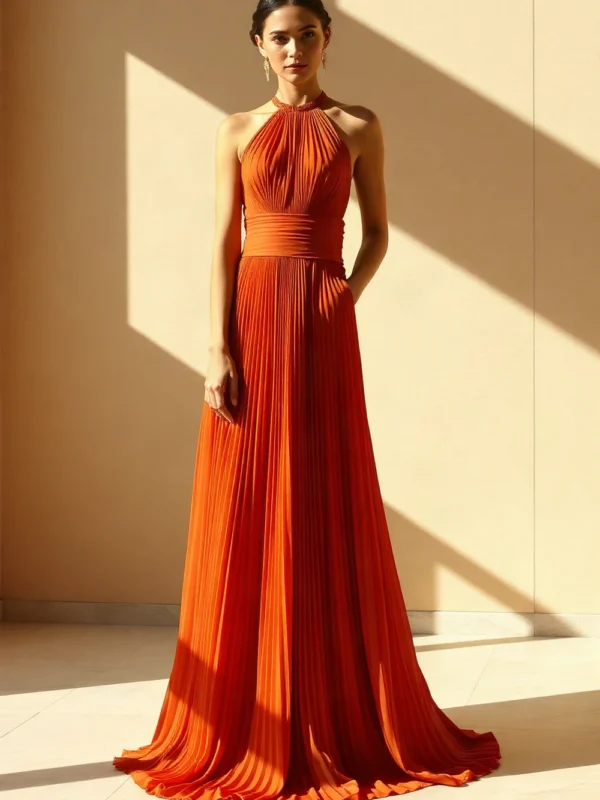
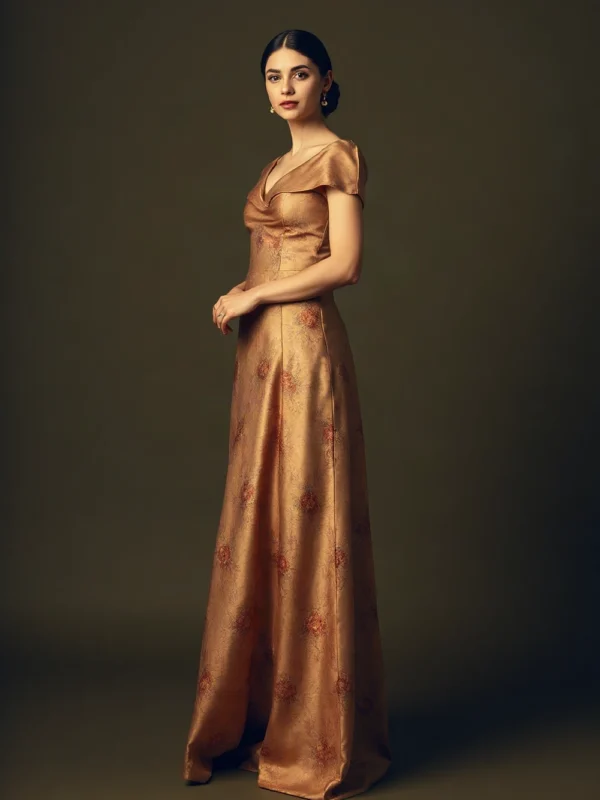
The shared theme in this gallery is controlled volume. Shape comes not only from how closely a gown follows the body, but also from the direction of its surface lines and the placement of its largest detail. The orange halter gown creates an uninterrupted rhythm with fine pleats, whereas the antique-gold look uses a calmer A-line skirt, a softly draped neckline and small scattered motifs.
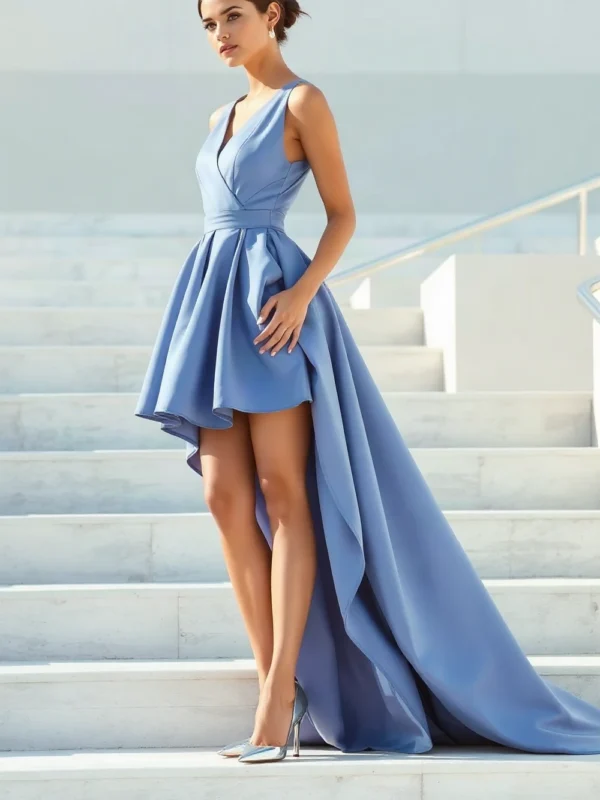
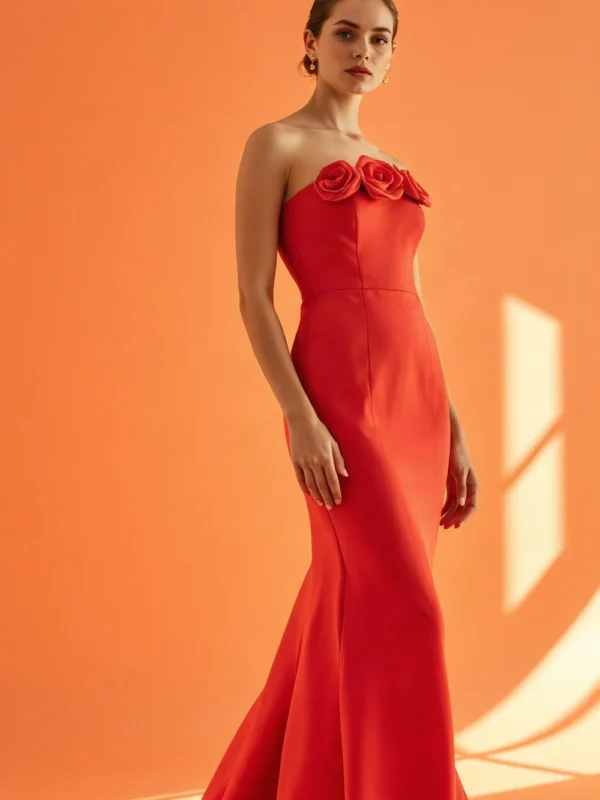
The blue high-low skirt concentrates fullness in broad folds below the waist and in a long back section. Its asymmetry reveals the legs and shoes. The coral gown takes the opposite route: it follows the body through the hips and reserves its flare for below the knees. Three dimensional roses at the neckline provide an upper focal point to balance that lower expansion.
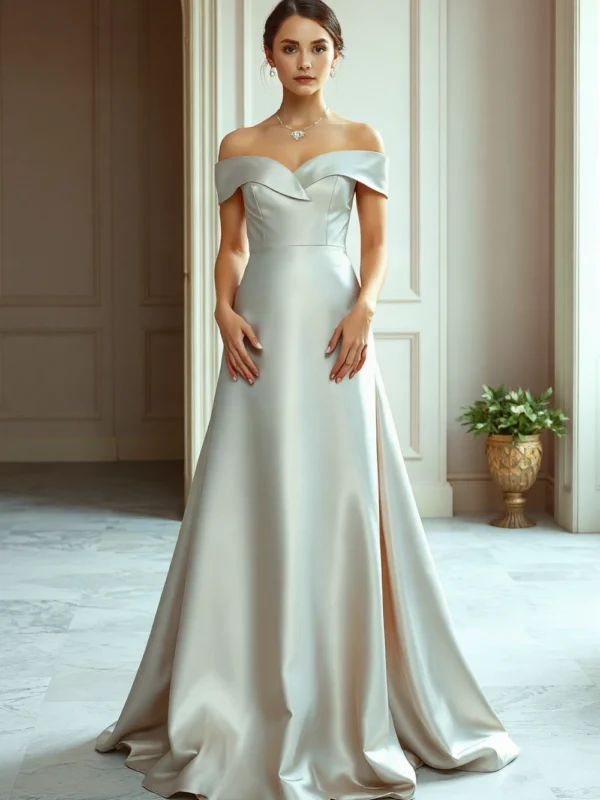
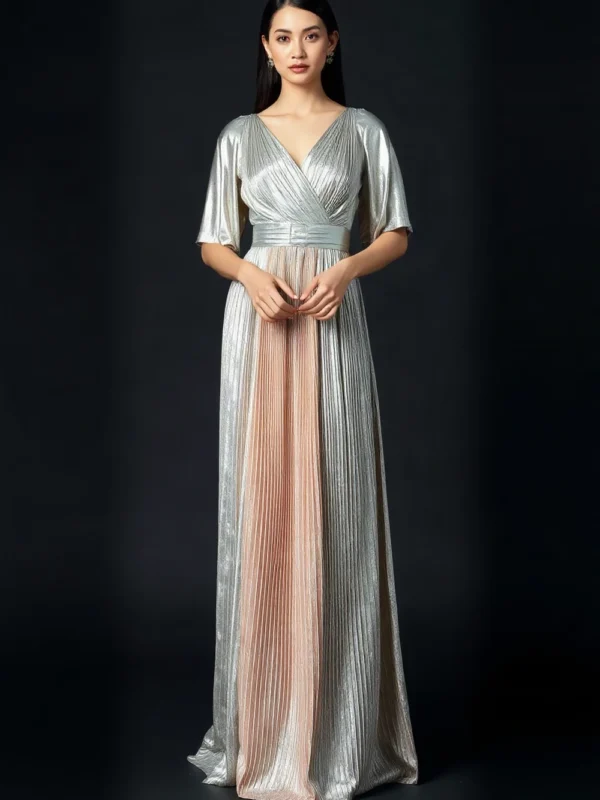
The pearl-gray gown combines a broad folded off-the-shoulder line with an uncluttered A-line skirt. The final silver concept layers a V-neck, loose elbow-length sleeves, a wide belt and narrow vertical pleats. Against the dark background, its silver surface and pale blush reflection become especially pronounced.
Begin a selection by deciding where you want volume to appear. Rose-like applications and broad folded collars emphasize the neckline, while narrow vertical pleats encourage a longer, flowing reading. A clearly defined waistband can act as a visual pause between detailed upper and lower areas. Consider whether the main feature should frame the face, define the waist or add movement around the legs.
The venue matters as much as the front view. Long back panels and hems that rest on the floor require attention on stairs, in narrow aisles and during a busy reception. Test sitting, walking, turning and access to the shoes. Rather than making jewelry compete with a dominant neckline or reflective surface, simplify it according to the gown’s existing focal point.