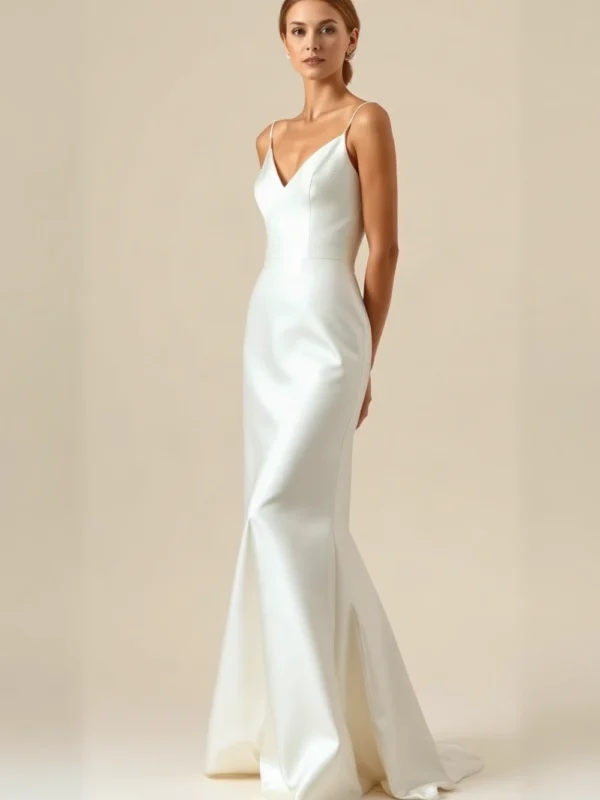
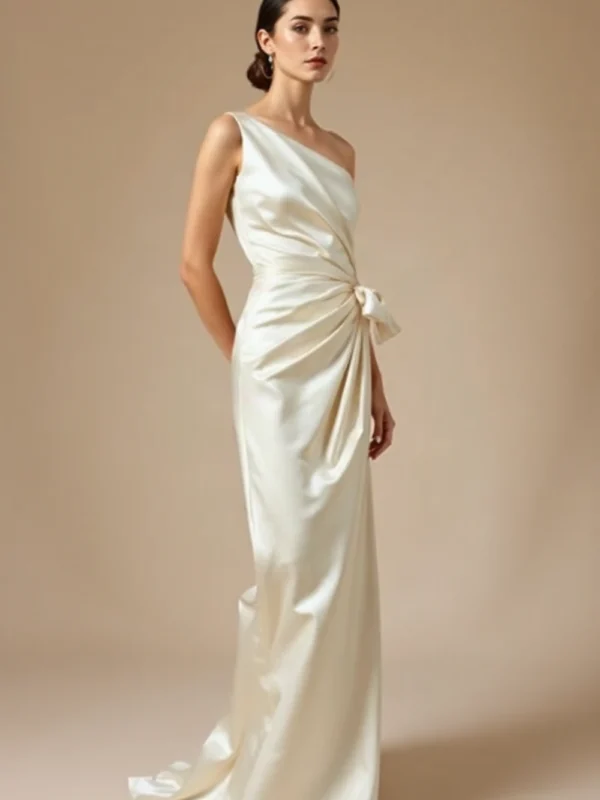
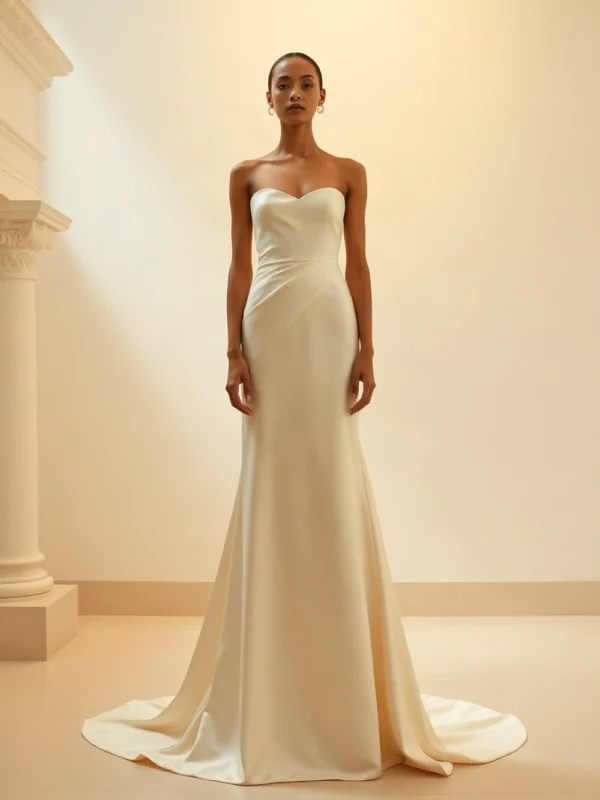
Minimalist satin-look wedding dresses do not necessarily make choosing easier. Without lace, dense embellishment or colour contrast, the eye notices neckline height, shoulder exposure, seam direction, closeness through the skirt and every fold across the reflective surface. It is therefore useful to look beyond the general idea of “simple” and identify exactly how each silhouette creates restraint.
These six visual concepts interpret the same ivory, light-responsive surface in distinctly different ways. A high-necked long-sleeve shape provides a covered frame, while a halter design turns attention toward an open back. A square neckline gains practical interest from pockets; two V-neck approaches use crossover construction with different degrees of softness. The final concept divides a covered back with a continuous button line. Rather than declaring one shape superior, the comparison connects visual character with movement, support, hairstyle and accessory decisions.
Coverage Through a High Neck and Full Sleeves
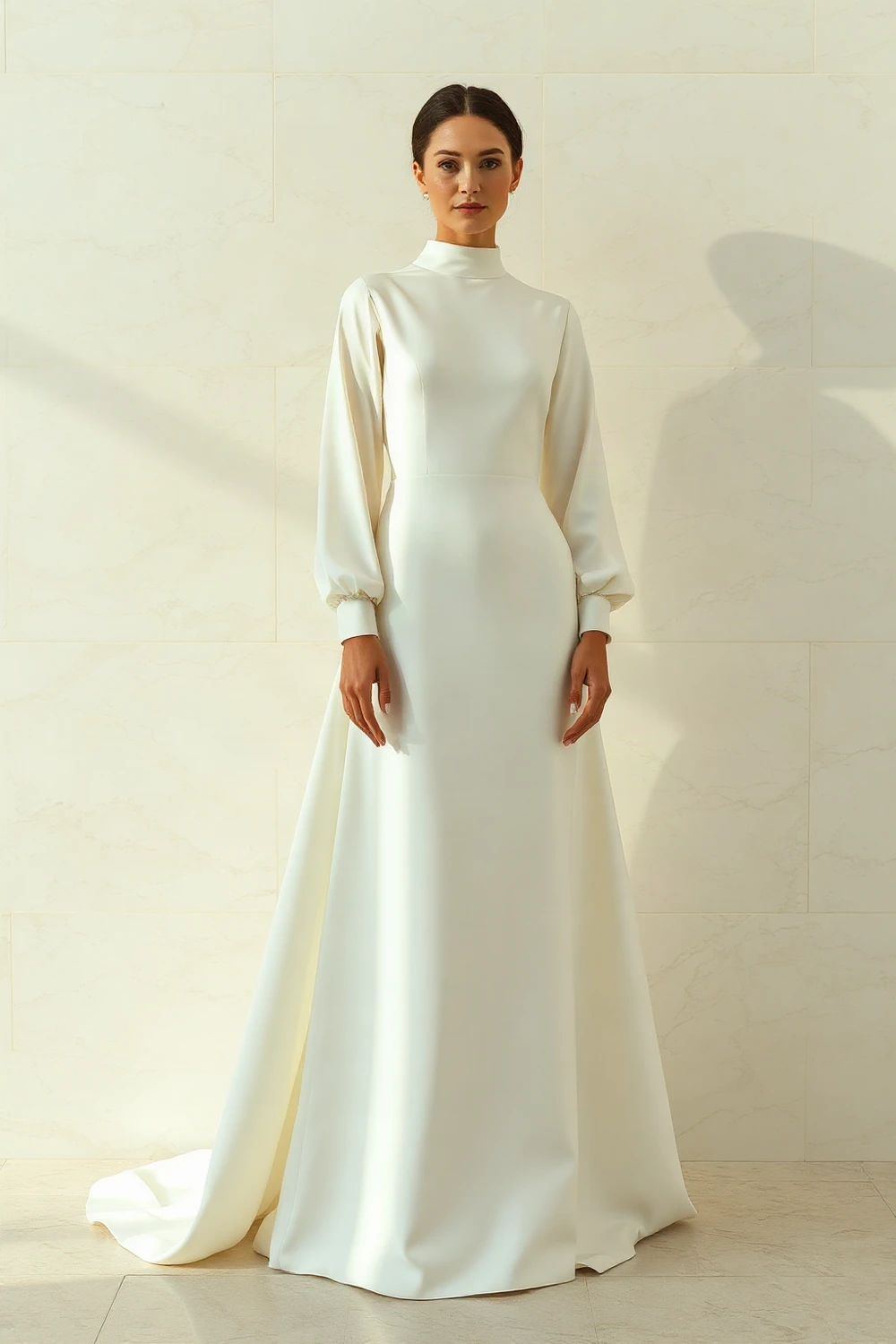
The first look balances a high neckline, long sleeves gathered into broad cuffs and a skirt that widens below the waist. Because volume is concentrated in the sleeves, the bodice stays quiet and the skirt reads as one long, uninterrupted area. The neckline frames the face and closes the space normally occupied by a necklace, making small earrings a more restrained option. The decision should not be based on a front view alone. Raise the arms, bend the elbows and sit to check for pulling across the shoulders, pressure at the neck or restrictive cuffs. Although the widening skirt offers room for steps, its small floor extension should also be observed during turns rather than only in a static pose.
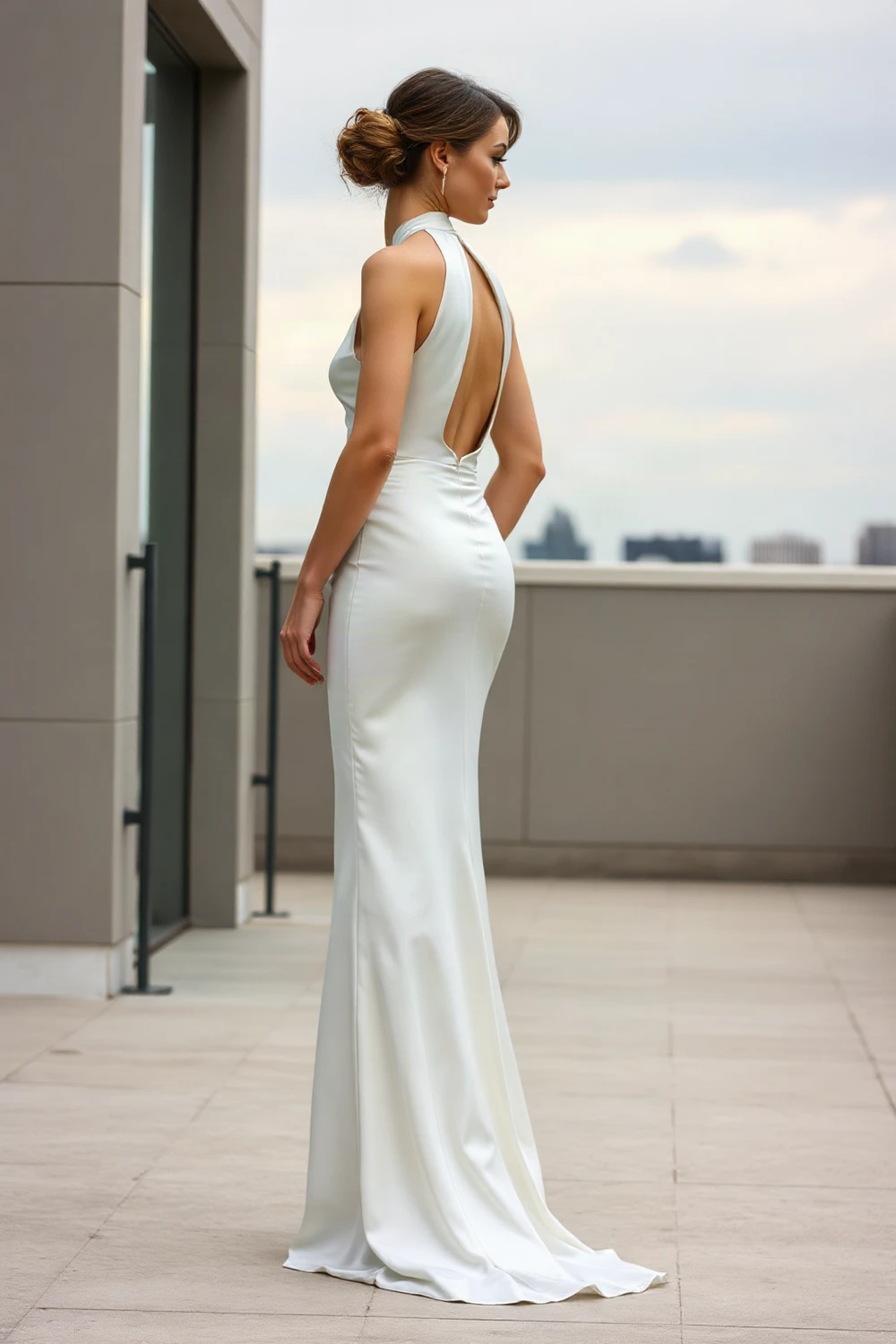
Support in an Open-Back Halter Silhouette
The second concept is a clear counterpoint to the covered first look. Halter bands meet around the neck, the arms remain bare and the back opening descends almost to the waist. A long skirt follows the hips before widening gently below, creating an elongated, close-fitting line. Support is as important here as the amount of exposed back. Test the pressure of the neck band, the stability of the armhole edges and whether the lower edge of the opening remains in place while sitting. An updo reveals the geometry, while loose hair may conceal much of it. The short train should also be tried with real walking steps, particularly if the route includes a terrace, textured floor or confined aisle.
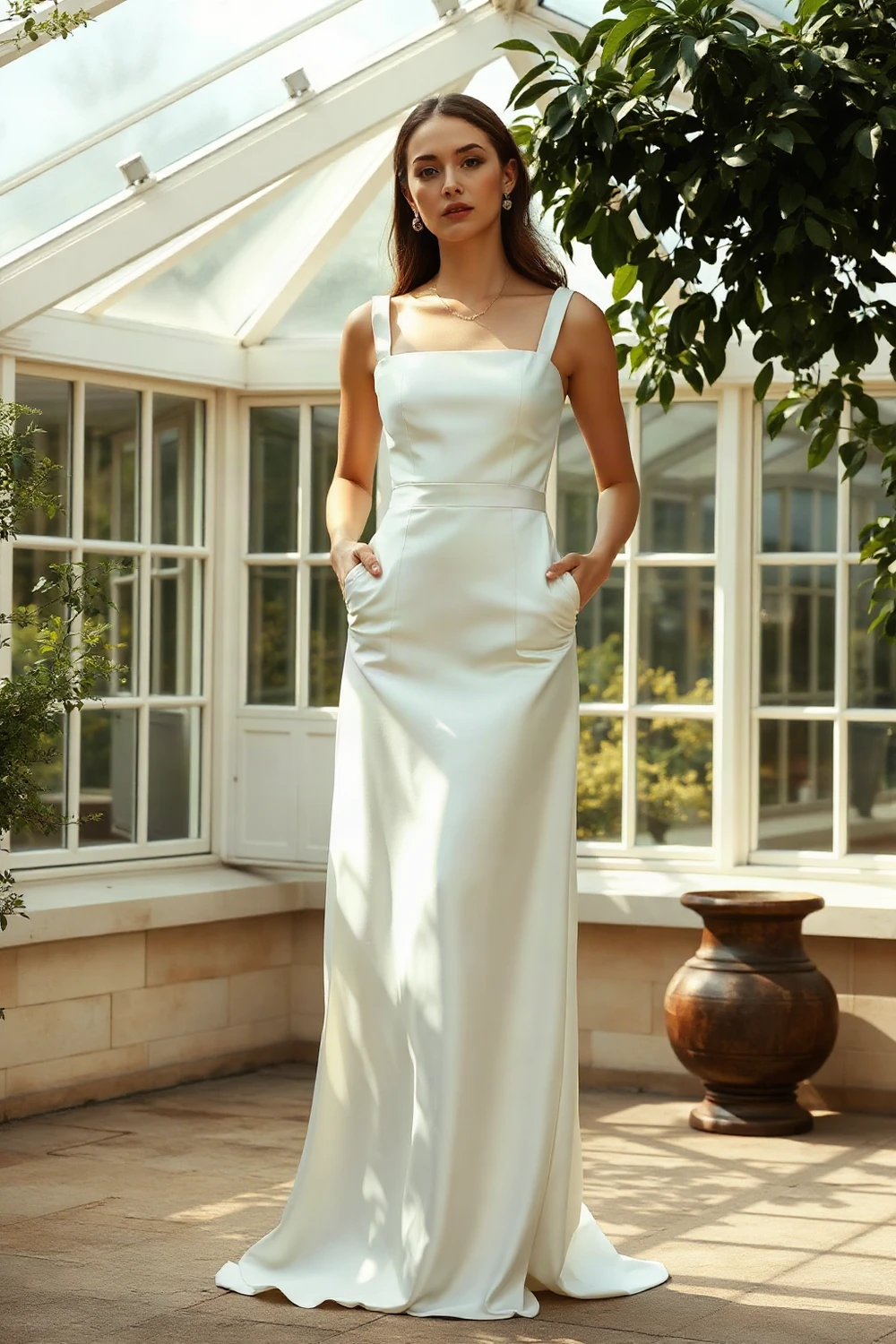
Practical Simplicity with a Square Neck and Pockets
In the third look, a square neckline and broad straps form a horizontal frame across the upper body. A slim waistband leads into a straight skirt with a pocket on each side, adding a relaxed practical idea to the restrained design. Pockets remain a visual choice as well as a useful one: hands placed inside create folds and can add width around the hips. During a fitting, examine the shape with the hands both in and out, and check whether the pocket bags show through the smooth surface. Compared with crossover V-necklines, the square corners feel more ordered and graphic. Secure straps, an uncreased waistband while sitting and sufficient stride room help preserve that clean geometry in motion.
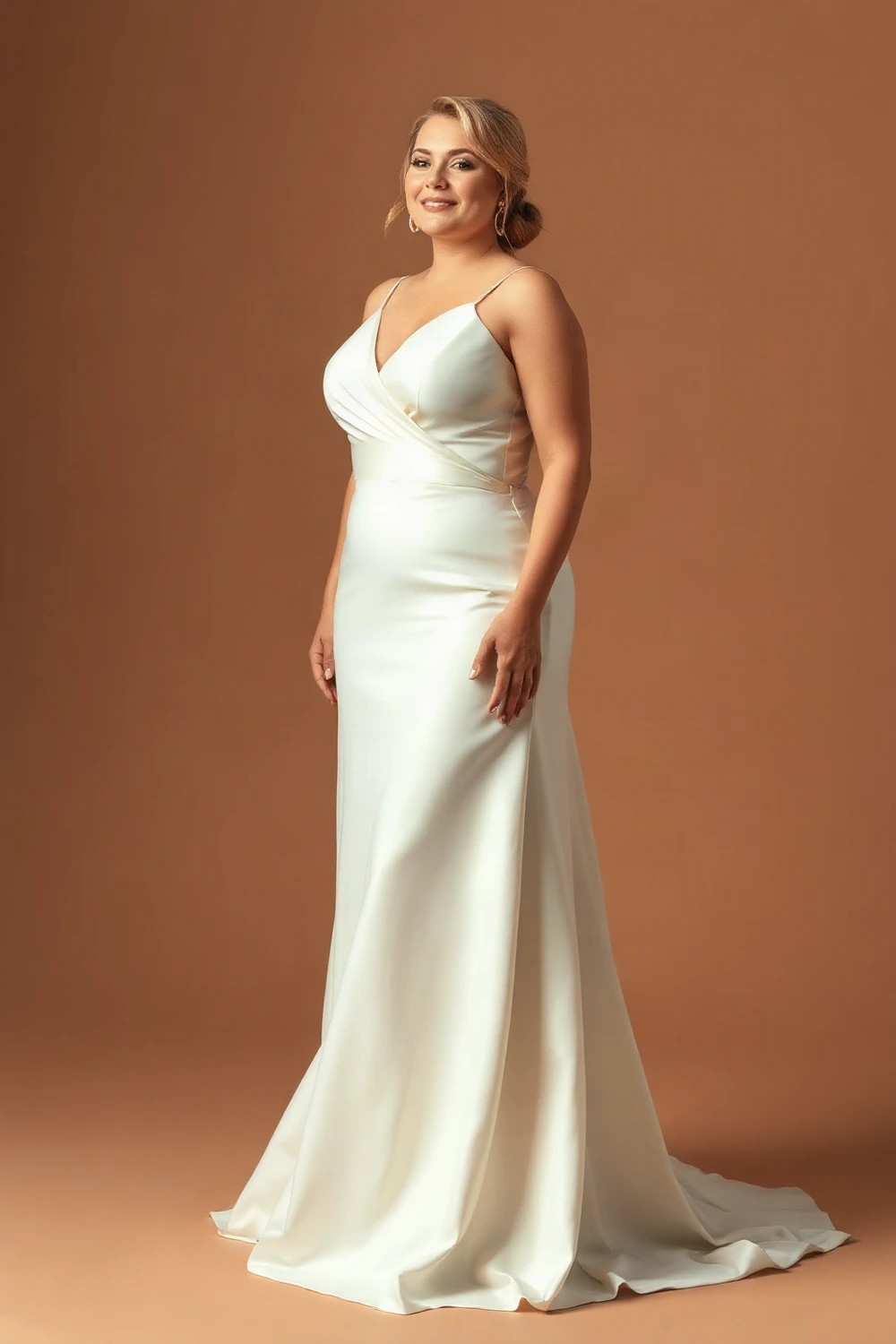
Fine Straps and the Movement of Soft Draping
The fourth design combines fine straps with a wrap V-neck formed by soft diagonal folds. Lines travelling from one shoulder toward the opposite side of the waist create movement across an otherwise undecorated surface, while the long skirt calms that directional emphasis. It feels more fluid than the distinct boundaries of the square neckline. During a fitting, see whether the V changes when bending or turning, whether the drape rests without tension across the bust and whether the narrow straps feel secure. Crossover folds may accommodate small variations in fit, but poor tension can also produce unintended creases. Since the neckline already establishes a strong visual direction, limited jewellery can keep the overall composition suitably restrained.
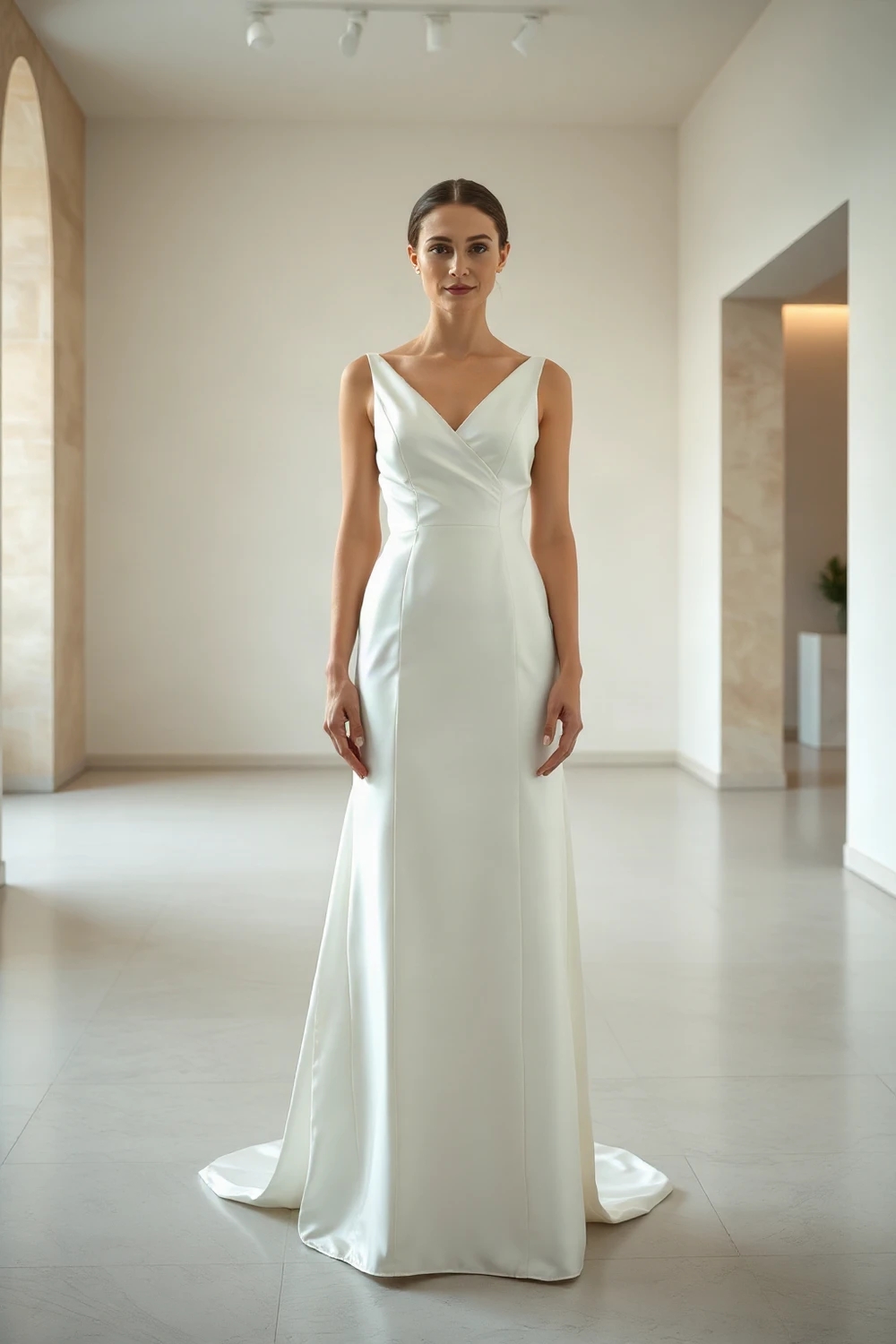
A More Structured V-Neck with Wide Bands
The fifth look also uses a crossover V, but broad shoulder bands and controlled panels produce a different result. Instead of the softer movement of the fine-strapped design, the upper body has a cleaner, more architectural frame. A long quiet area begins at the waist seam and continues down the straight front skirt. That simplicity can make fit issues easy to see: the crossover edge should not lift, the bands should remain on the shoulders while bending and the waist should not migrate upward. When comparing the two V-neck options, look beyond depth alone. The firmness of the folds, the amount of shoulder coverage and the available space for jewellery provide more useful distinctions between softness and structure.
Quiet Back Emphasis Through a Button Line
The final concept places emphasis behind the body rather than adding detail to the front. Small buttons extend from below the neck, through the centre of the skirt and into the short train, forming one unbroken vertical line across a covered surface. Broad shoulders and a defined waist seam keep that line within an orderly frame. It supplies a strong rear view with more coverage than the open-back halter. The image cannot confirm which buttons function, so the dressing method needs separate clarification. Sitting reveals whether the centre line causes pressure, while walking shows how it behaves near the hem. Hair worn up and restrained earrings can expose the starting point without competing with the detail.
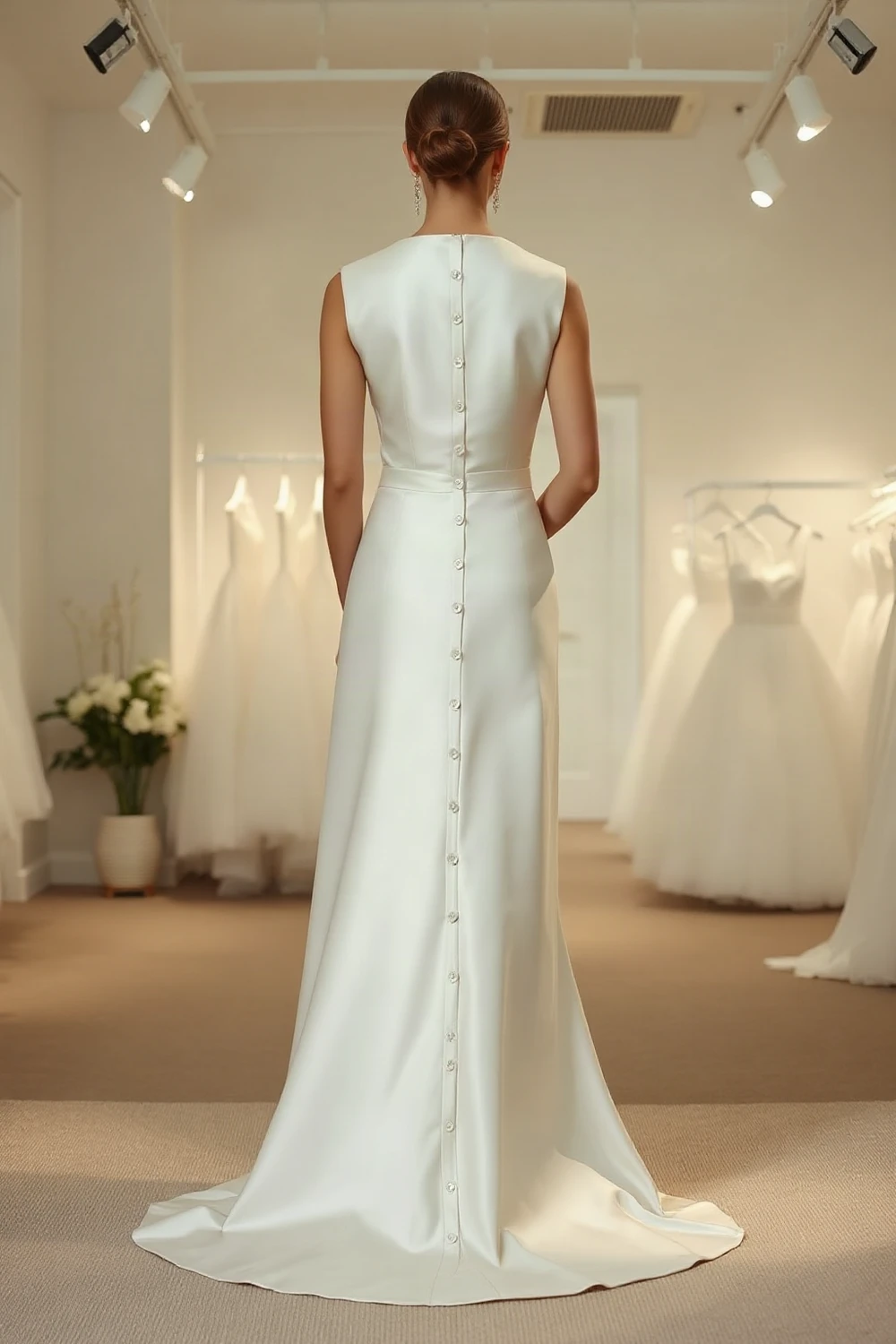
These concepts demonstrate that the character of a minimalist satin-look wedding dress can come from line placement rather than added ornament. A high neck and sleeves emphasise coverage, a halter highlights the open back, pockets introduce function, crossover necklines provide soft or structured movement, and buttons create a rear focal point.
Begin a shortlist with the support and movement required for the event, then compare the proportions of neckline, back and skirt. Assess every option while sitting, walking, lifting the arms and viewing it from behind. Hair, jewellery and shoes should be considered as parts of the same composition. A restrained design remains most convincing when its visual clarity and practical demands have been planned together rather than treated as separate decisions.
Compare six minimalist wedding-dress ideas, from a high neck and sleeves to an open back, pockets, wrap details and a full button line, with practical attention to movement and support.
Frequently asked questions
What should be tested when fitting a high-neck, long-sleeve wedding dress?
Reach forward and overhead, bend the elbows and sit. The shoulders should not pull, the neckline should not press and the cuffs should allow normal hand movement. Walk and turn as well, checking how the floor-length skirt and small extension behave near the feet.
How can support be planned for a deep open-back halter dress?
First establish the exact limits of the back opening, armholes and halter bands. Then compare support options that remain concealed, stay stable when seated and do not place unnecessary pressure on the neck. The full arrangement should be tested while walking and turning.
Do side pockets make a wedding-dress silhouette look wider?
Pocket-bag volume, opening position and hands placed inside can create folds around the hips, but the effect varies by cut. View the dress from the front and side with the hands both inside and outside the pockets, then repeat the comparison while walking.
How do soft draping and a structured crossover V-neck differ?
Soft draping creates a more fluid diagonal line, while a controlled crossover with broad shoulder bands frames the upper body more firmly. Compare stability over the bust, shoulder comfort, neckline depth and the amount of open space available for jewellery.
Which hairstyle works with a full button detail down the back?
An updo or a style that leaves the nape exposed keeps the beginning of the button line visible. If hair will be worn down, take a rear-view image during the fitting to see how much detail it covers before making the final choice.