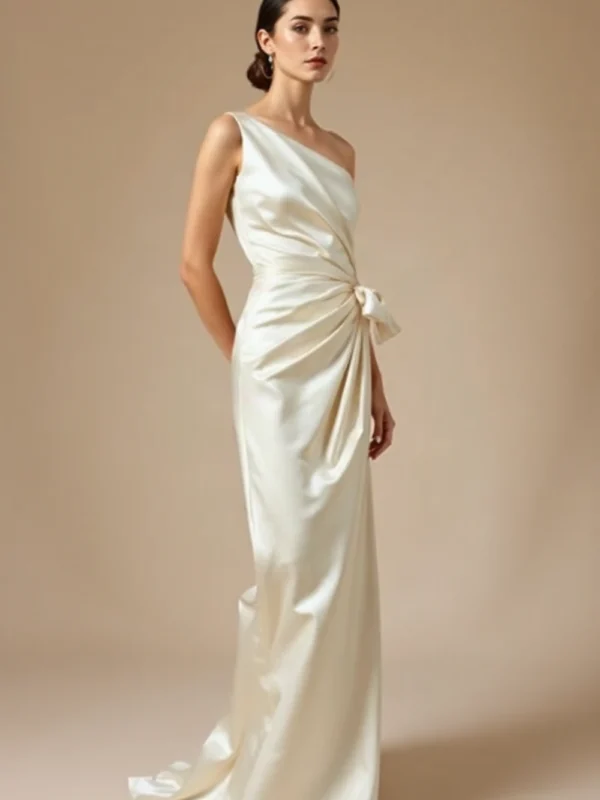
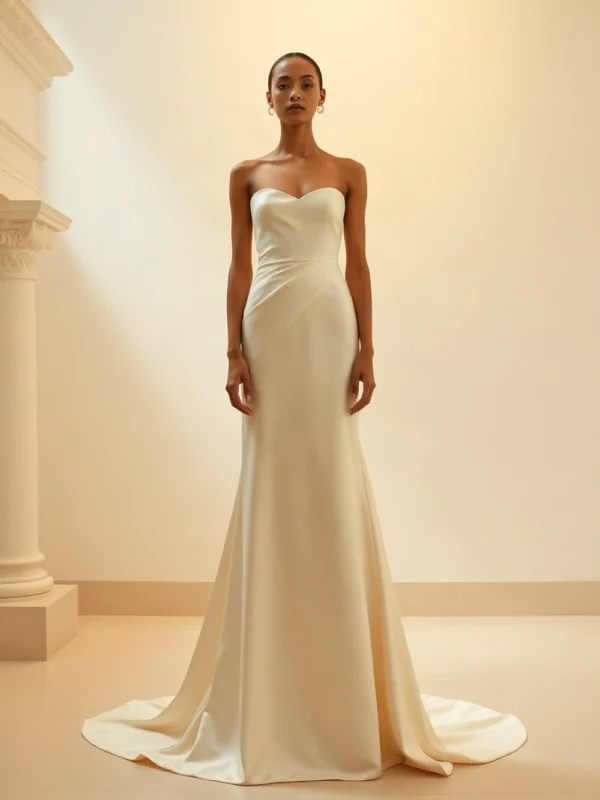
When embellishment is reduced on a minimalist satin-look wedding dress, neckline openness, sleeve length and the point where the skirt leaves the body become especially visible. These six concepts show how varied one restrained color and surface can feel: a deeply notched strapless bodice with a full A-line skirt; a high neck and long sleeves with a fitted flare; a square back; a short-sleeved soft V-neck; a crisp V on slender straps; and a crossover V shaped by diagonal draping.
The comparison is not intended to identify one universally preferable neckline. Coverage must be considered with support, movement and the proportions of the complete silhouette. Because a smooth satin-look surface reveals seams, folds and tension clearly, assess front and back balance, arm mobility, sitting, walking and the scale of the setting. Together, these factors turn an attractive visual idea into a coherent choice for the practical conditions of a wedding day.
Balancing a Deep Strapless Notch with Skirt Volume
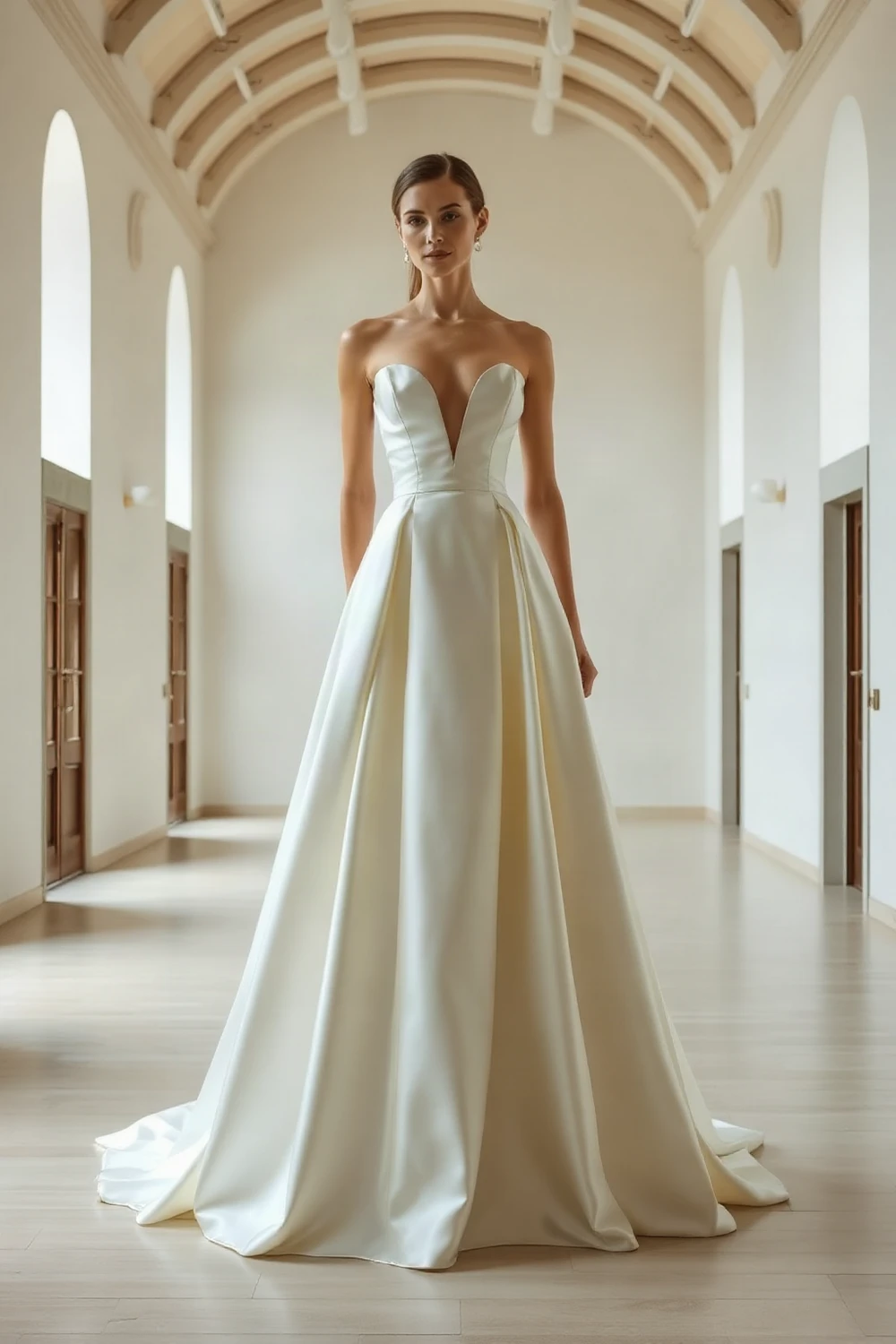
Two curved panels create a deep, narrow opening at the center of the first strapless bodice. This vertical detail is balanced by a wide, pleated A-line skirt beginning at the defined waistband. The upper section appears close and architectural, while the lower section supplies generous, symmetrical volume. Without lace or beading, the contrast between openness and fullness becomes the focal point.
The plunging shape should remain stable when the arms rise, and its internal support should not cause visible distortion. Check that the waist remains comfortable when seated. Although the broad skirt may provide stride room, it also requires space in narrow aisles, near chairs and during turns. The combination suits an open, emphatic neckline within an expansive ceremonial silhouette rather than a close column shape.
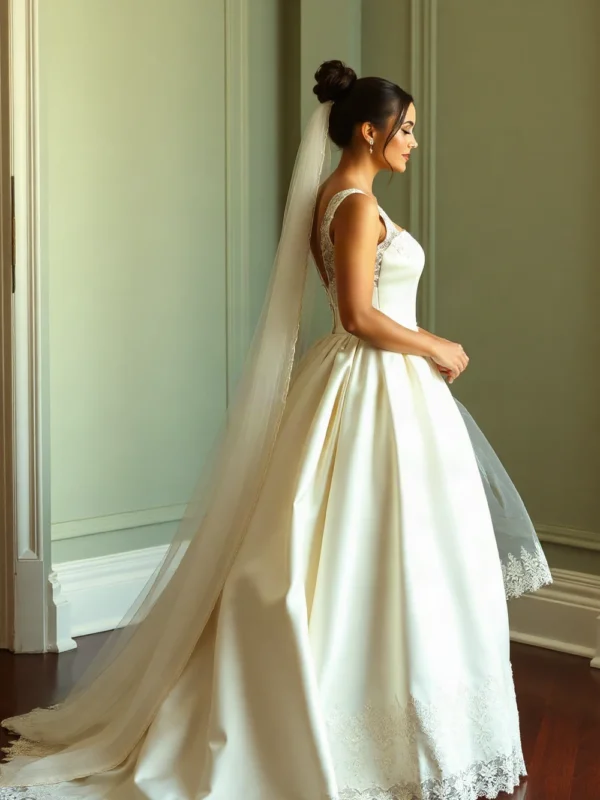
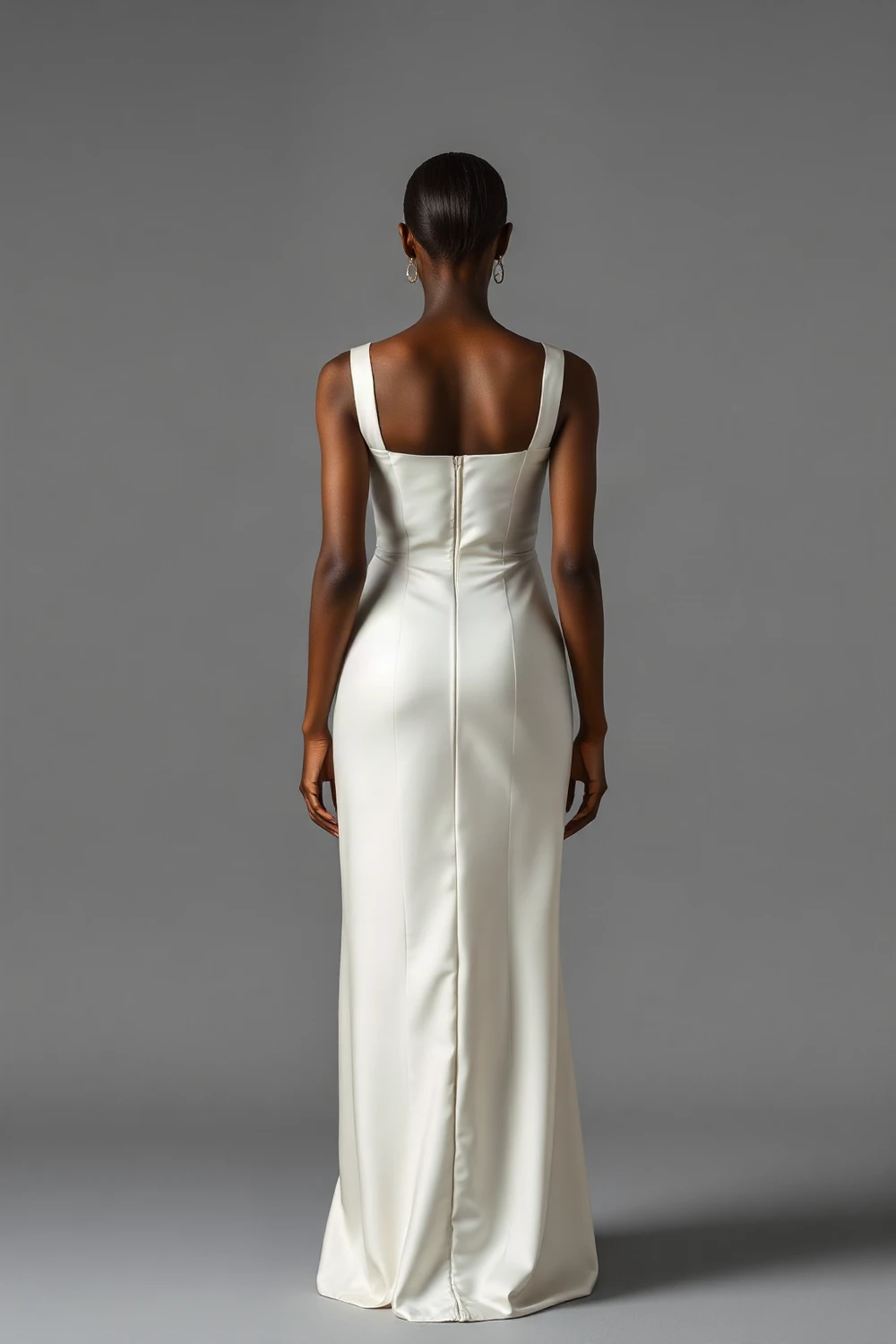
Using Straps and Seams to Define a Square Back
The second image does not show the front neckline, but it demonstrates how strongly the back can define a minimalist dress. Broad straps frame a square opening with an almost horizontal upper edge. A central closure and long vertical seams extend that direction into a narrow skirt. Unlike the first concept’s wide volume, this effect relies on precise placement, a restrained outline and an uninterrupted rear axis.
Back height affects both visible shoulder area and possible support. The straps should not drift toward the neck or stand away from the shoulders, while the horizontal edge should remain level. View the dress from behind when sitting and walking because lines across the hips may indicate limited ease. With an updo, earrings, a veil and the central closure share one visual field, so keeping them balanced preserves the square geometry’s calm.
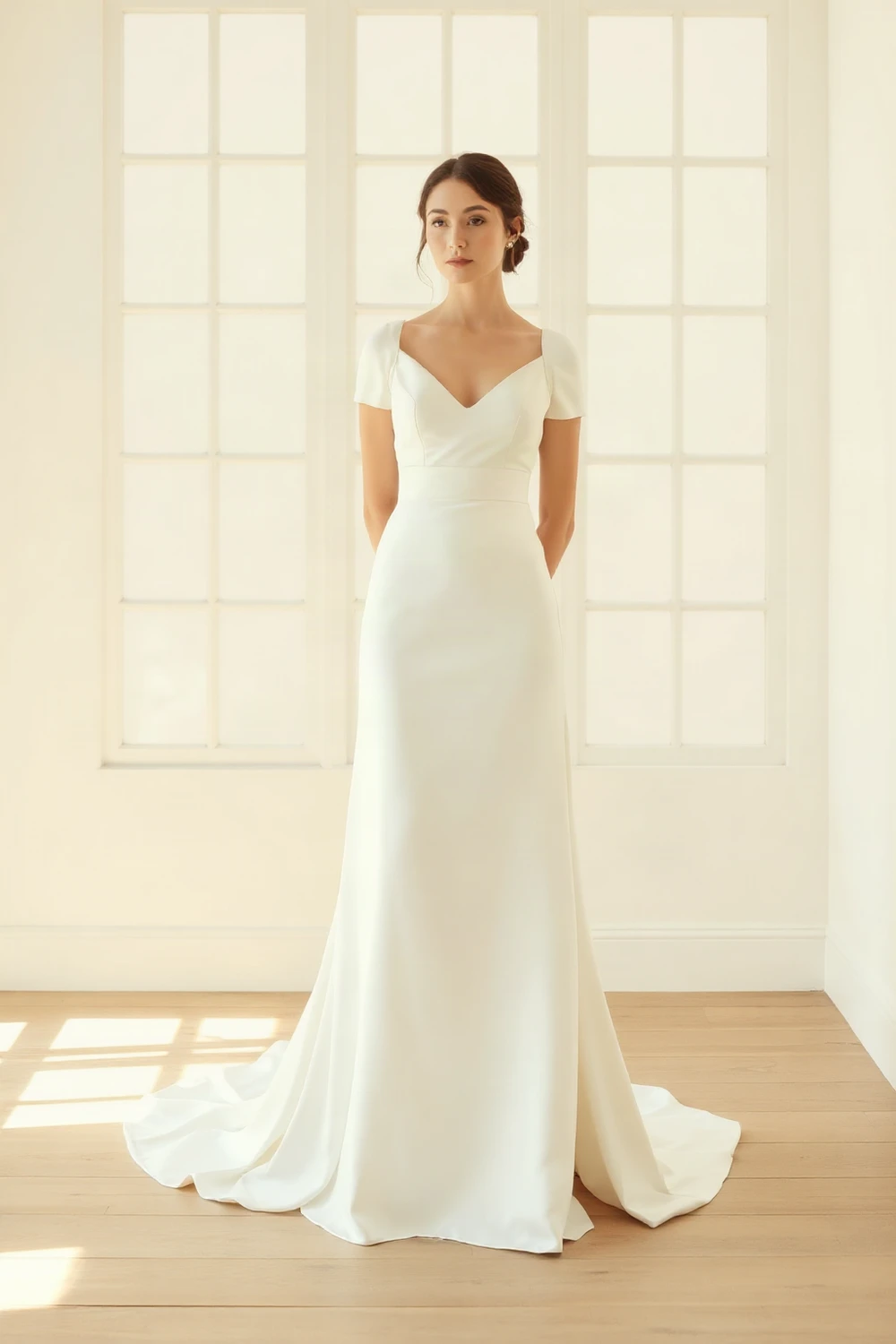
Creating a Gentle Transition with a Soft V and Short Sleeves
The third design pairs a soft V-neck with shoulder-covering short sleeves and a broad waist section. Its opening is less assertive than the strapless notch but less covered than the standing collar. A lightly expanding skirt and small train continue this measured approach, creating a quiet A-line. Window daylight spreads softly across the plain surface rather than producing harsh highlights.
Sleeve-edge placement can alter the upper body’s perceived width and horizontal balance. During a fitting, reach forward and upward to check whether movement pulls the neckline out of place. A sleeve opening that feels comfortable while standing may restrict embracing or dancing. The broad waist section should meet the natural waist without shortening the torso or folding when seated. This design offers open neckline geometry, visible shoulder coverage and moderate skirt volume.
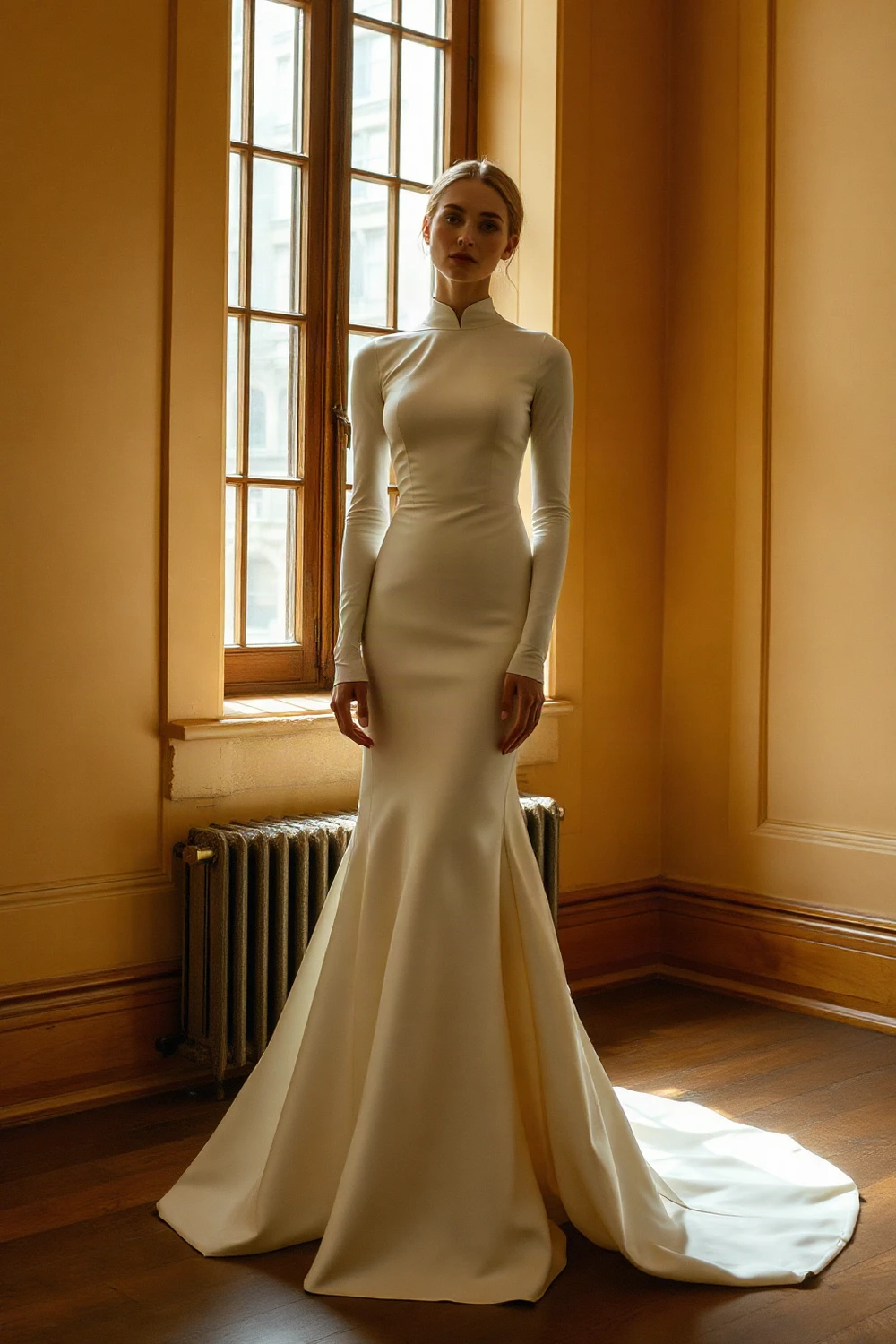
Extending the Line with a High Neck and Long Sleeves
The fourth concept has the most covered upper line, combining a small standing collar with sleeves extending to the wrists. It stays close through the waist and hips before widening around the knees into a long fitted flare. Emphasis comes from continuous length rather than exposed skin, while warm side light makes the transition from narrow torso to expanding skirt clear on the unadorned surface.
Coverage does not guarantee effortless wear. The collar should permit the head to turn without pressure, and the sleeves need room for raised arms and bent elbows. Test walking, stairs and sitting because movement in the close flare is concentrated around the knees. Long sleeves and a long train already create a strong vertical statement, so restrained accessories maintain the uninterrupted line. Here, shape, length and controlled expansion provide the emphasis.
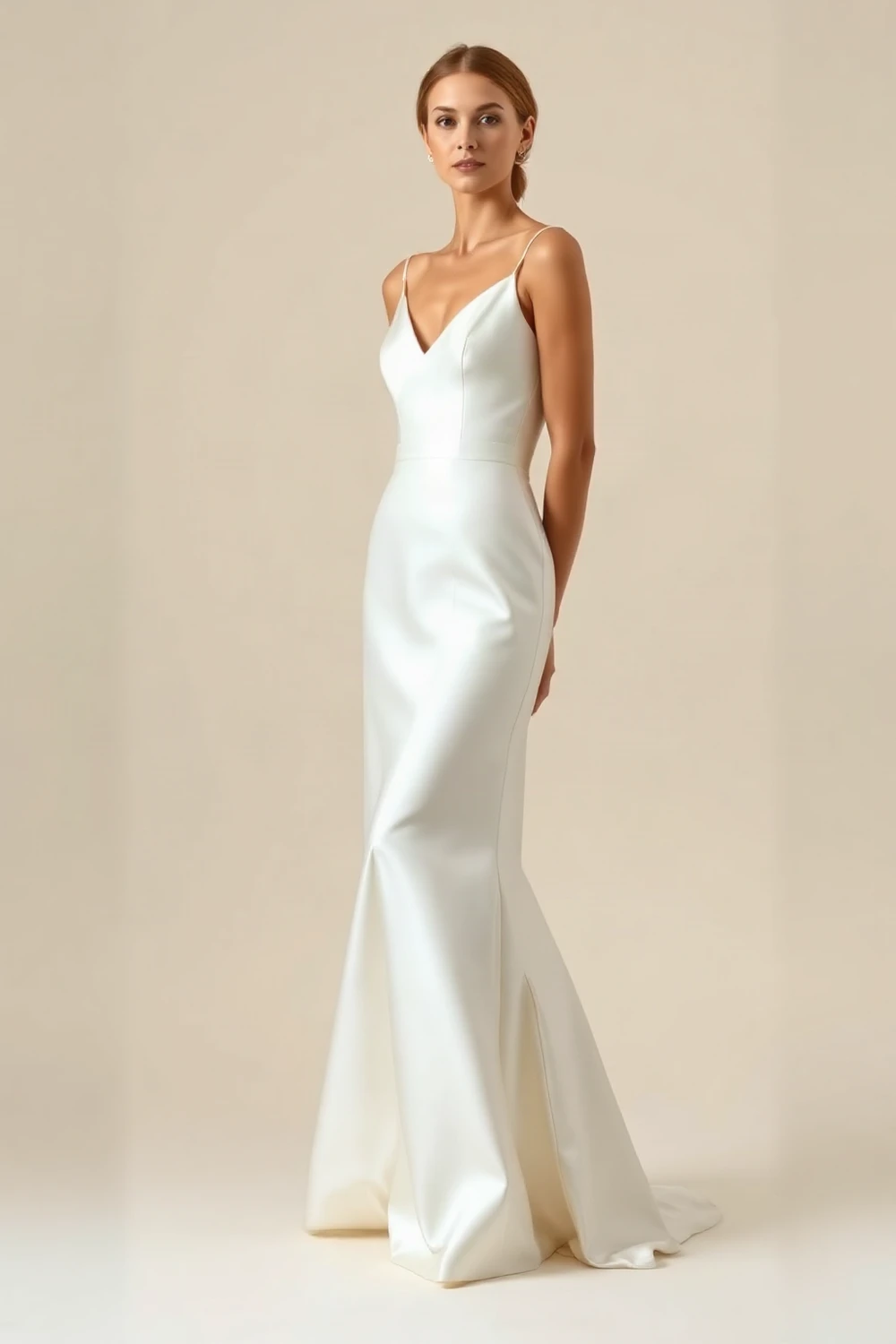
Keeping a Slender-Strap V-Neck Crisp
Slender straps and a clean V-neck form the fifth design’s close bodice, organized by only a few seams. Beneath a fine waistline, the skirt follows the hips and opens slightly near the floor. Without crossover folds or strong pleats, the effect depends on a long, uninterrupted surface, making small differences in fit and seam position especially visible.
The light-looking straps need not provide all the structure; evaluate the complete bodice. When changing strap length, check the V point, armholes and back height together. Adequate ease through the hips and knees lets the narrow skirt move without pronounced pulling. This treatment is more graphic than the draped design and defines the shoulders more explicitly than the strapless option. Its clean surface should hold while walking and sitting, not only while standing.
Softening a V-Neck with Crossover Draping
The sixth concept also has slender straps and a V-neck, but overlapping panels give it a softer character. Diagonal folds travel from the bust toward one side of the waist, tempering the neckline edges and creating a controlled focal point. Because the long skirt remains relatively straight, movement is concentrated in the bodice without introducing broad volume. The three-quarter view reveals how the folds change between front and side.
Draping may visually soften small fit variations, although excess material can gather in unwanted places. During fitting, confirm that the crossover panels stay secure when bending, the folds settle naturally at the waist and the side seam does not rotate forward. Restrained earrings or a fine bracelet can follow the directional lines without crowding the neckline. This is a middle option for someone who finds a crisp V severe but does not want ornate decoration.
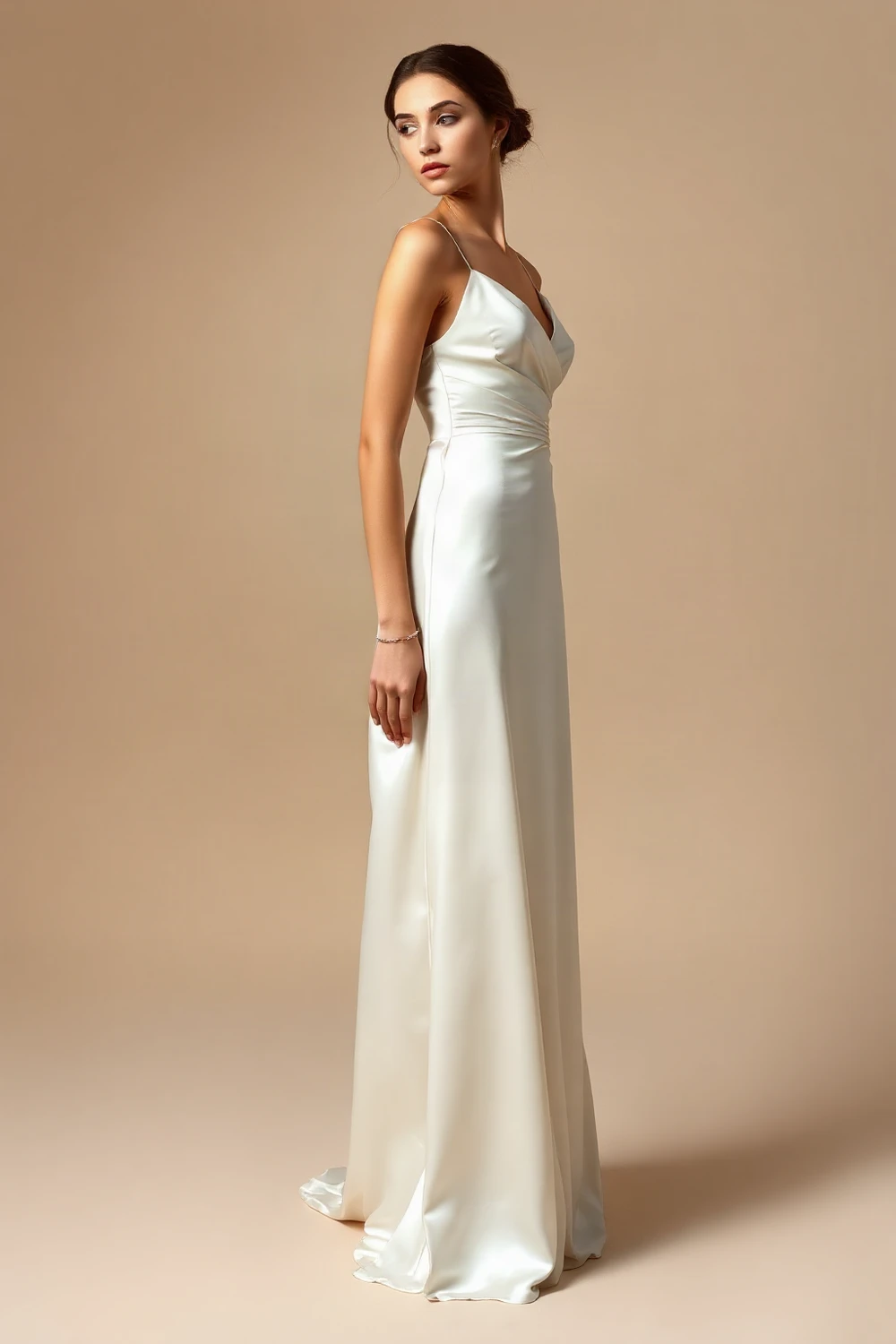
A minimalist satin-look surface does not prescribe one bridal mood. Full volume balances the plunging strapless neckline; vertical seams organize the square back; a restrained A-line complements short sleeves; and a fitted flare extends the high neck. The slender-strap V-necks differ through crisp construction and crossover draping. When choosing, examine front and back together, walk in the intended shoes, sit and raise the arms, and view seams and folds under different lighting. The strongest option connects preferred neckline geometry with dependable support, comfortable movement and skirt volume suited to the setting.
Six visual concepts compare how a plunging strapless notch, square back, short sleeves, high neck and two slender-strap V-neck treatments interact with restrained satin-look silhouettes.
Frequently asked questions
What skirt shape can balance a deeply notched strapless neckline?
A full A-line can counter the strong vertical opening with volume beginning at the waist. A more controlled skirt may suit a smaller setting, however, so available space, walking comfort and bodice support should guide the final balance.
What should be checked on a square-back wedding dress?
The straps should sit securely without shifting toward the neck, and the horizontal back edge should remain level. Check from behind that the closure lies flat and that walking or sitting does not create strong tension lines across the hips.
Are short sleeves necessarily easier to move in than long sleeves?
Not necessarily. A short sleeve can constrict at its edge, while a long sleeve can restrict the elbow or shoulder. Test reaching, embracing, sitting and raising the arms in either option rather than judging comfort by length alone.
How does a clean V-neck differ visually from a draped V-neck?
A clean V creates a more graphic, uninterrupted surface. A crossover draped V introduces diagonal folds and softer light transitions. The choice depends on whether the desired effect is precise smoothness or controlled surface movement.
How should a satin-look surface be assessed during a fitting?
View it from the front, side and back in both daylight and indoor light. Because seams, folds and tension can read differently under changing illumination, it is useful to observe or record the dress while walking and sitting.