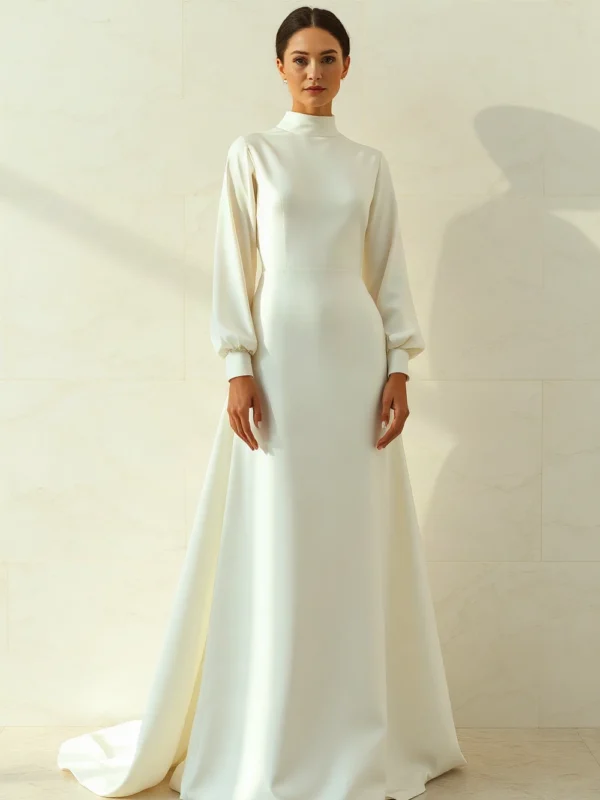
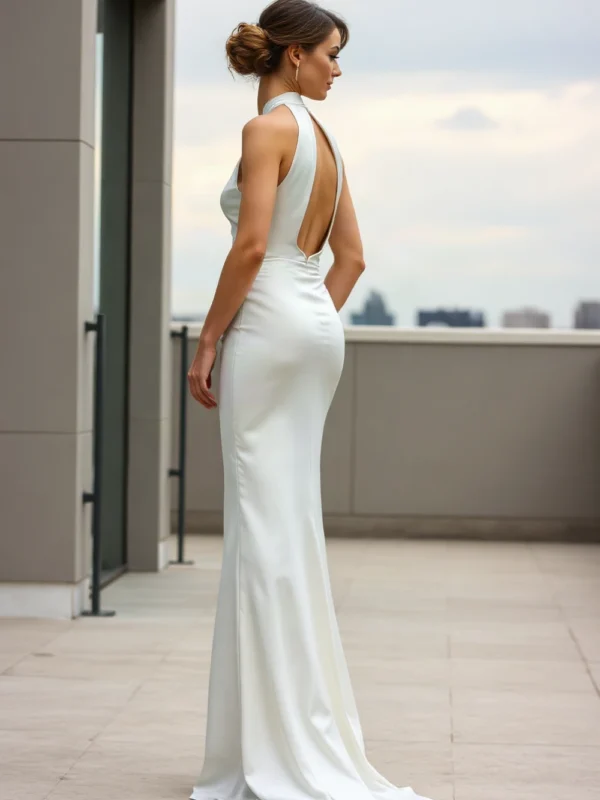
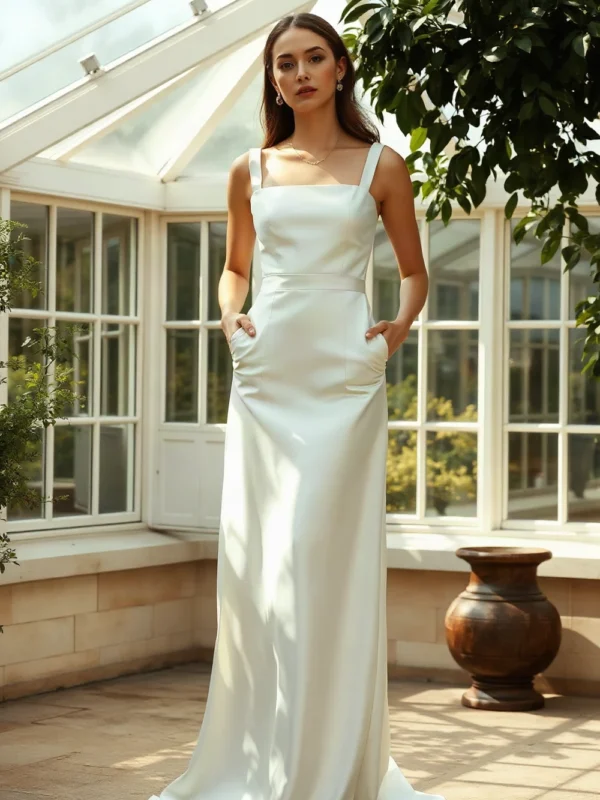
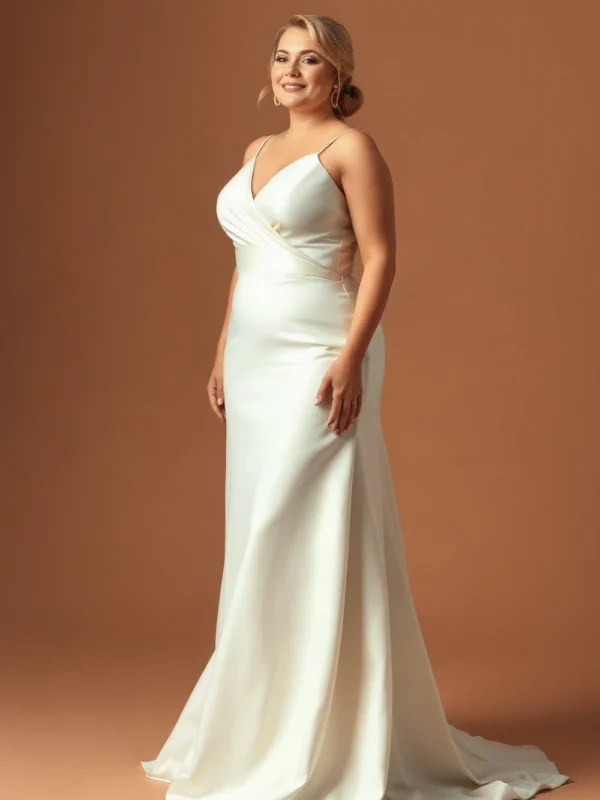
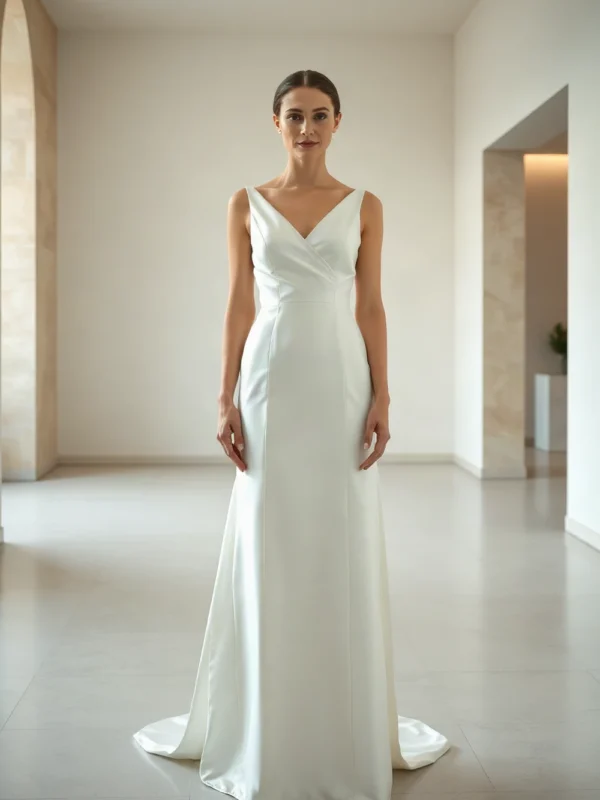
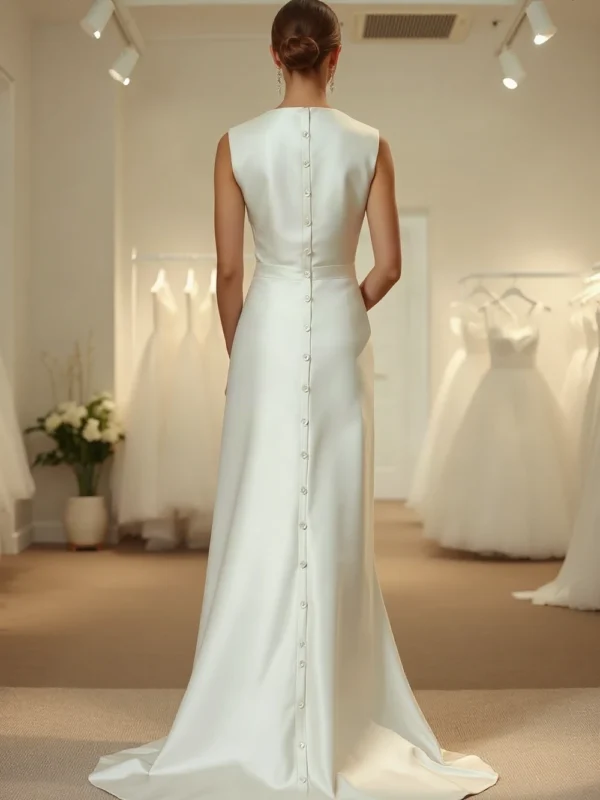
The shared language of this gallery is a group of ivory wedding-dress concepts that reduce decoration so silhouette, surface and construction lines can lead the composition. Their satin-like finishes respond softly to light. Broad uninterrupted areas feel quiet, while a fold, seam or row of buttons gives the eye a clear direction.
The first design provides the most coverage through its high neckline, long full sleeves and widening skirt. The second sits at the opposite end: a halter-shaped upper section, deep open back and close-fitting long skirt move attention behind the body. The choice between them is not only about exposed skin. Shoulder freedom, neck pressure and the way each dress supports the upper body matter as well.
The third concept adds a practical element to clean geometry through a square neckline, broad straps, defined waistband and side pockets. The fourth uses fine straps and a softly wrapped V-neck to create a fluid diagonal rhythm. In the fifth image, wider shoulder bands and a more controlled crossover produce a related idea with a sharper, more architectural character.
The final view is designed around the back rather than the front. A sleeveless upper section covers the shoulders, while a line of small buttons travels from below the neck to the hem. It provides a quieter alternative to the dramatic open back, creating emphasis without interrupting the broad surface with lace or contrasting ornament.
Do not end a comparison by standing still in front of a mirror. Sit, walk, lift your arms and inspect the back from several angles. Consider how neckline depth, back construction, pocket placement and floor length work with the required support, hairstyle, jewellery and planned movement. These practical relationships are what allow a restrained visual idea to remain coherent throughout an event.