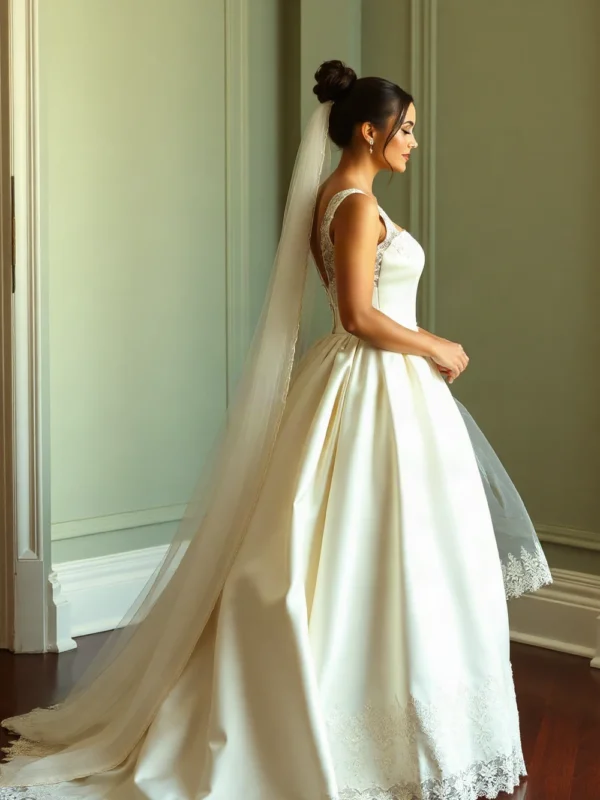
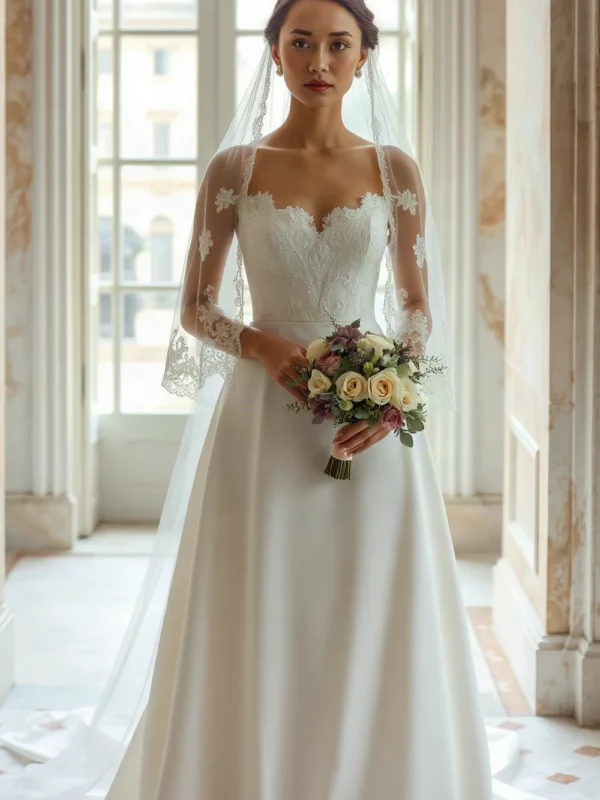
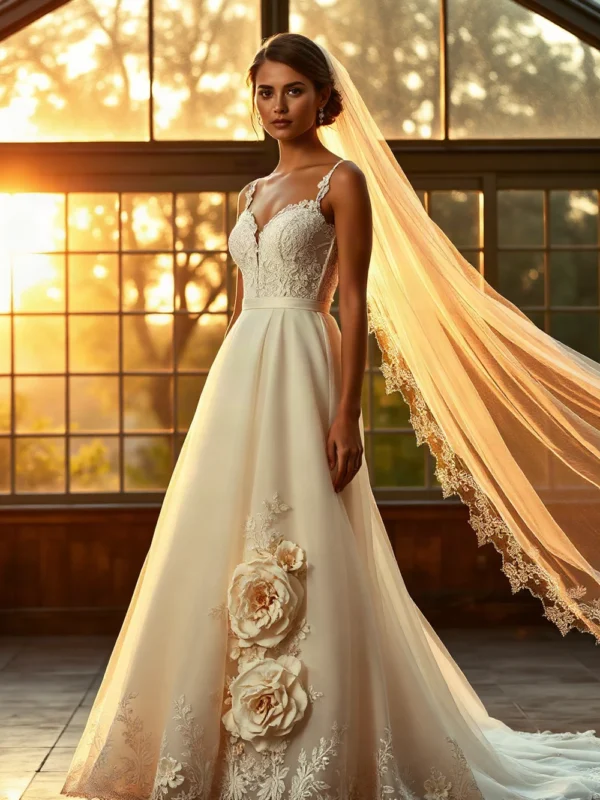
A minimalist wedding dress is not simply a dress with fewer decorations. When lace, beading and abundant layers recede, the neckline angle, waist seam, luminous surface and hem shape become more visible, so proportion, fit and movement demand close attention. These six off-white, satin-like concepts range from a high bateau and plunging V to strapless shapes, a wrap bodice, a dramatic train and a long-sleeved square neck.
Treat the images as styling references, not products to copy. Each connects one visual idea to coverage, support, mobility, venue, photographic light and accessories. Consider how favorite details work together: deep and high necklines need different support plans, an expansive train changes movement and timing, and a clean reflective surface exposes seam and fit accuracy. The best inspiration is a coherent direction suited to the wearer and setting.
Quiet Poise Through a High Bateau Neckline
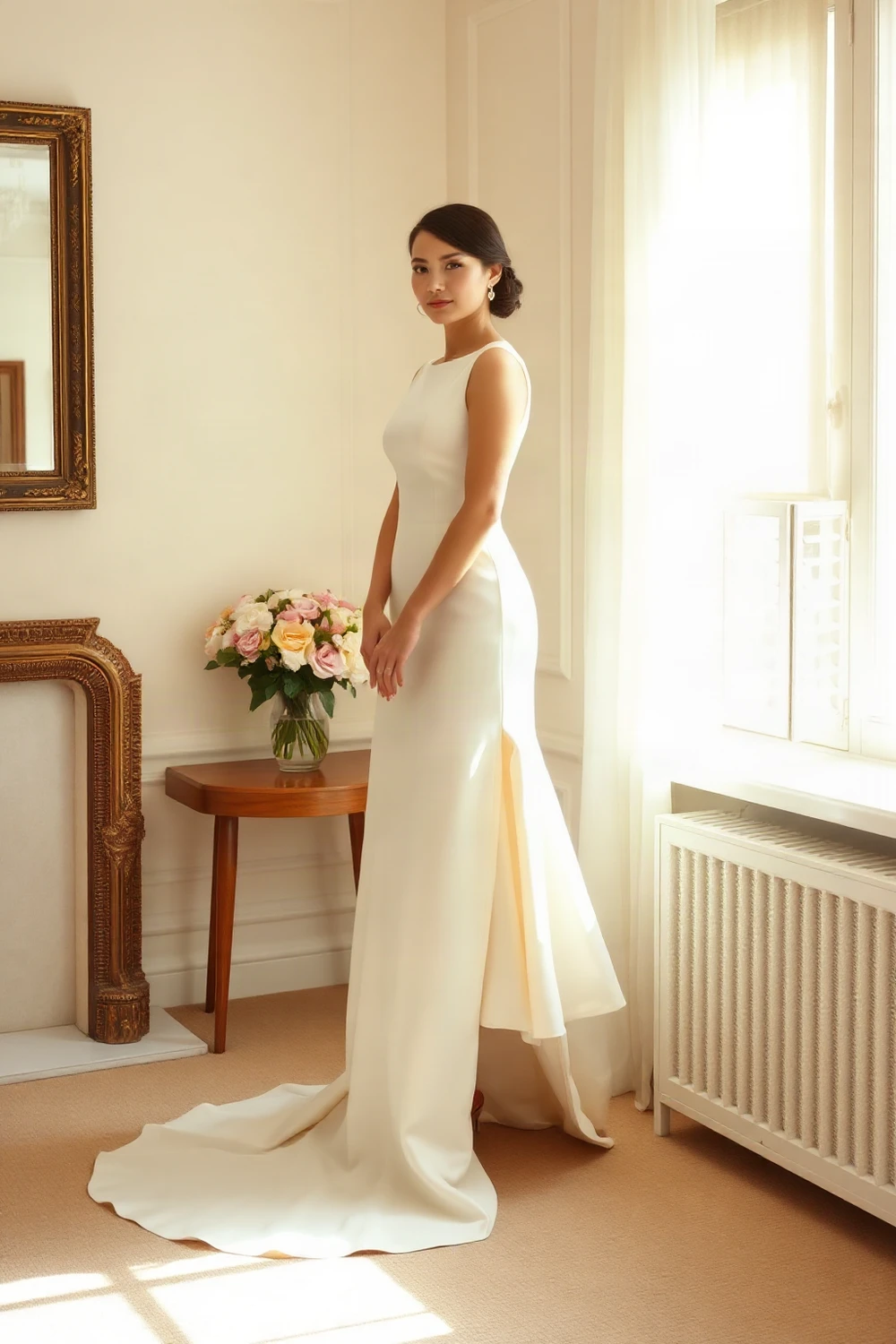
The first concept pairs a high bateau neckline with bare arms and a close, full-length skirt. Collarbone coverage stays light because the shoulders remain visually open, while a soft train completes the column-like shape. Warm window light, carved fireplace details and pastel flowers create a classical setting where the unadorned gown is a calm focal point, useful inspiration for an elegant interior where restraint must still register.
Assess the neckline’s contact with the neck, armhole height and stride allowance together. A tight edge can restrict head movement; a loose one may gap in profile. Compared with a plunging V, coverage and undergarment planning may seem simpler, but the uninterrupted front exposes small fitting issues. Hair away from the shoulders keeps the neckline clear, while small earrings avoid the interruption of a necklace.
Strong Vertical Definition with a Plunging V
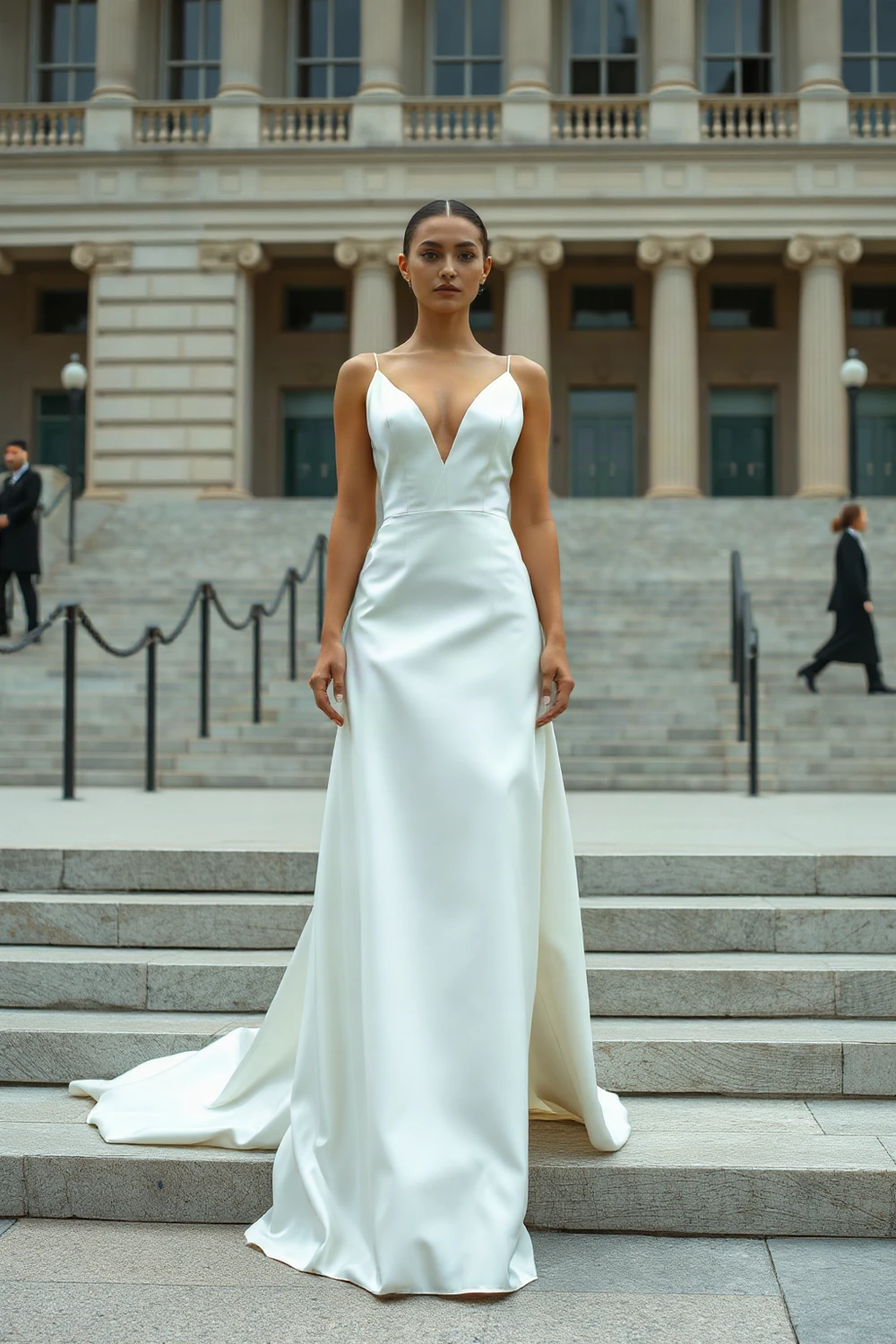
Fine straps and a plunging V direct attention to the body’s center; a waist seam begins a long, fluid skirt continuing that vertical movement. Monumental stone steps and columns reinforce the geometry, while the pale silhouette contrasts with gray masonry and shadowed doors. More open and assertive than the high neck, it stays disciplined without embellishment.
Test walking, sitting, leaning and lifting the arms, not just standing before a mirror, to ensure the neckline stays secure. Narrow straps should not carry all support; the bodice must contribute. On steps, the front hem should lift without catching a shoe or stair. A necklace may be unnecessary because the V supplies the focus. For similar openness with a broader shoulder connection, compare the wrap-style fourth concept.
Sculpted Balance Through a Sweetheart Edge
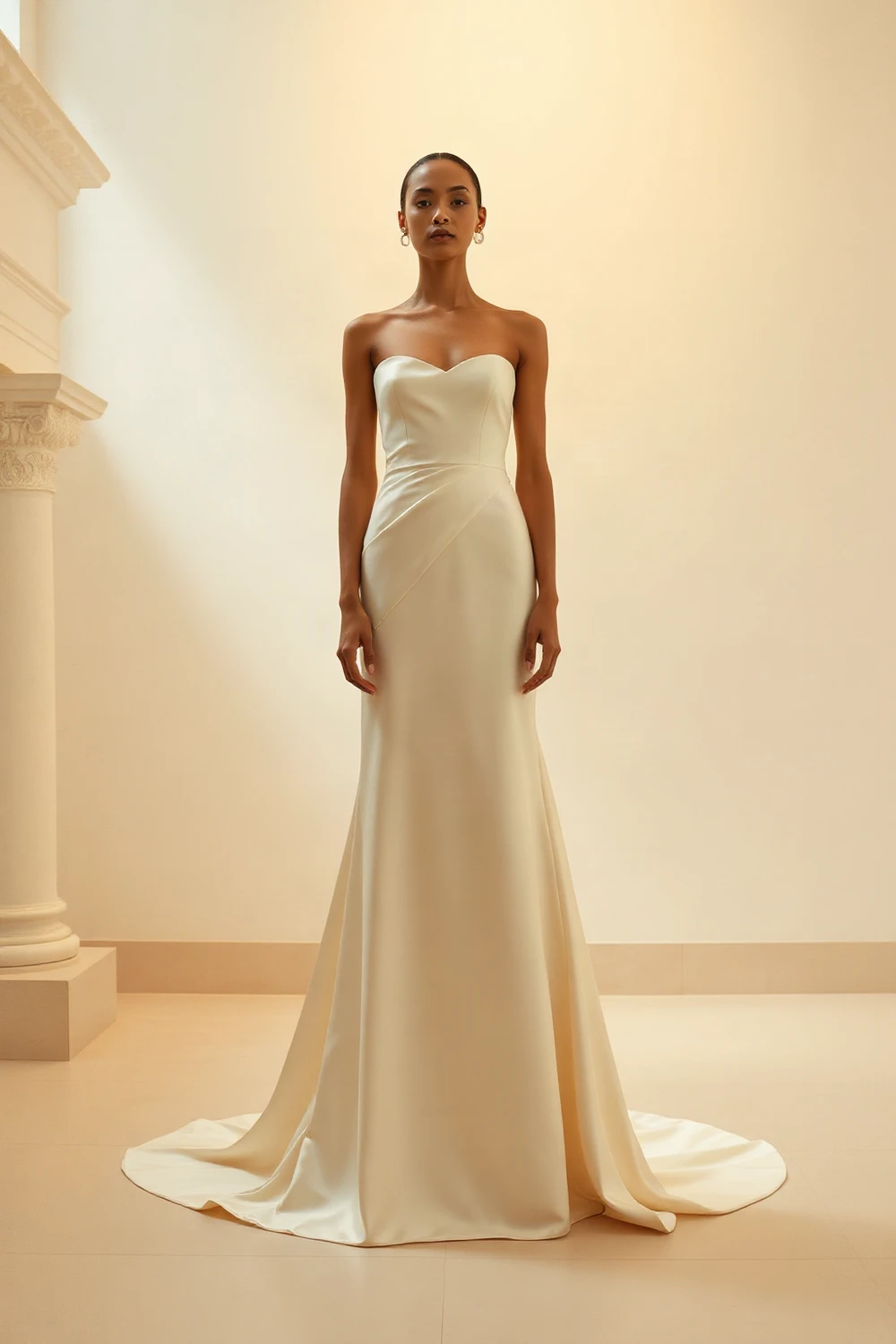
The third concept pairs a strapless sweetheart neckline with diagonal lines from waist to hip. The curved edge frames the shoulders, while the asymmetric seam animates the plain surface. The skirt opens gradually into a balanced, compact train; warm cream light and a fragment of classical architecture strengthen its sculptural quality without obscuring the silhouette.
Like the fine-strapped V, it reveals the shoulders, but forms a rounder focal point and uninterrupted upper edge. Secure fit should come from coordinated internal structure and weight distribution, not extreme tightness. At a fitting, breathe deeply, sit and repeat likely dance movements. Raising or lowering the diagonal line’s starting point changes apparent proportions. The shorter train suits a confined venue better than the expansive fifth concept. Earrings or a slender bracelet finish the look without crowding the shoulders.
A Defined Waist with a Wrap V-Neck
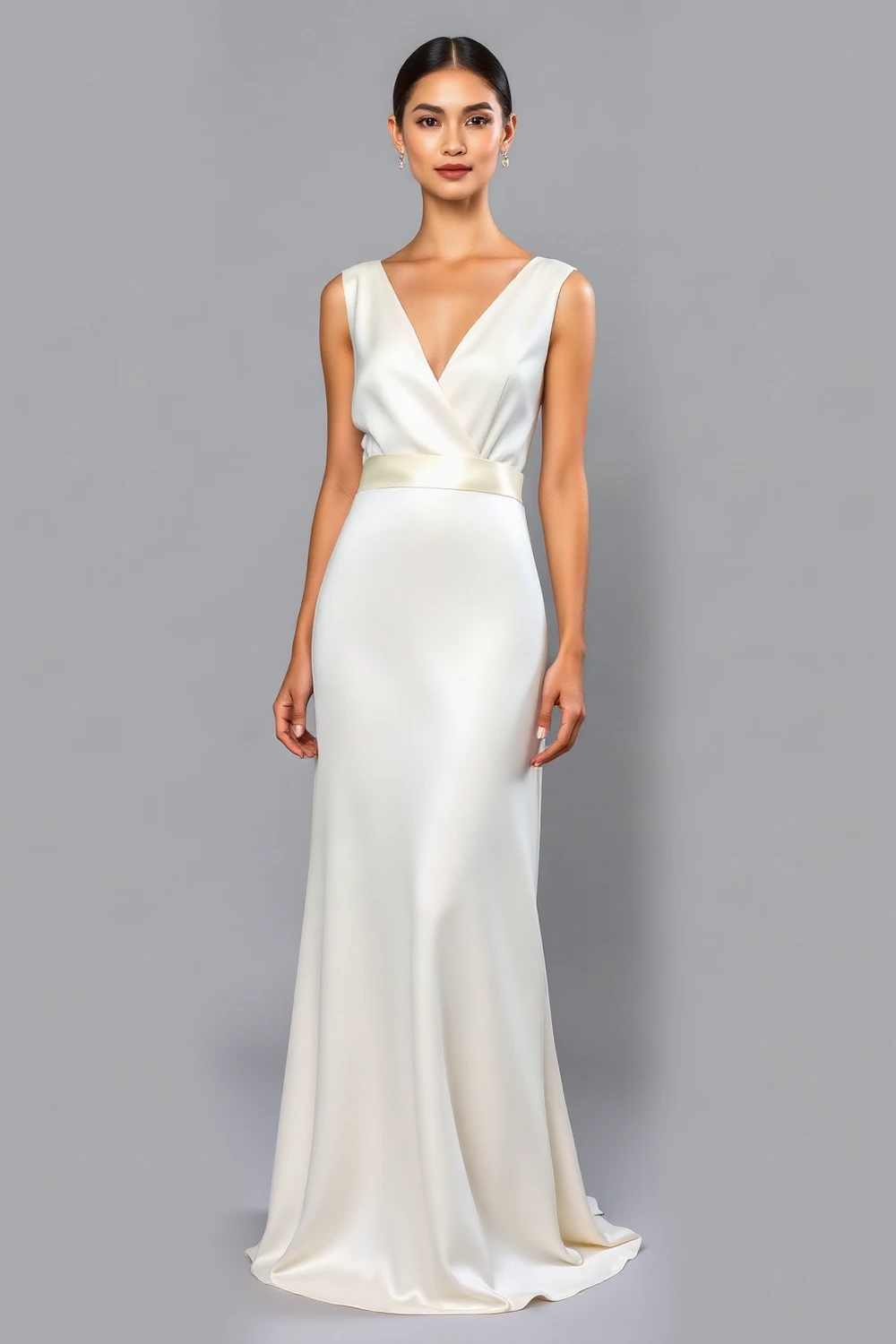
Broad shoulder bands, a wrap V and a luminous horizontal waistband give the fourth look three directions. The crossing bodice draws inward, the band pauses at the waist, and the slim skirt continues vertically. A neutral studio background removes architectural romance, exposing shoulder width, neckline depth, waist placement and slight floor pooling. It shows why clear full-length fitting photographs reveal proportion better than a highly styled setting.
The broad bands frame the shoulders more substantially than fine straps, though overlapping panels must remain stable in motion. Use front, side and full-length views with intended shoes to decide whether it balances best at the natural waist or slightly above. The restrained hem simplifies transitions between ceremony, dinner and dancing compared with a large train. As the wrap, band and sheen already supply structure, limited ornament preserves the clean hierarchy.
Drama Created by an Expansive Train
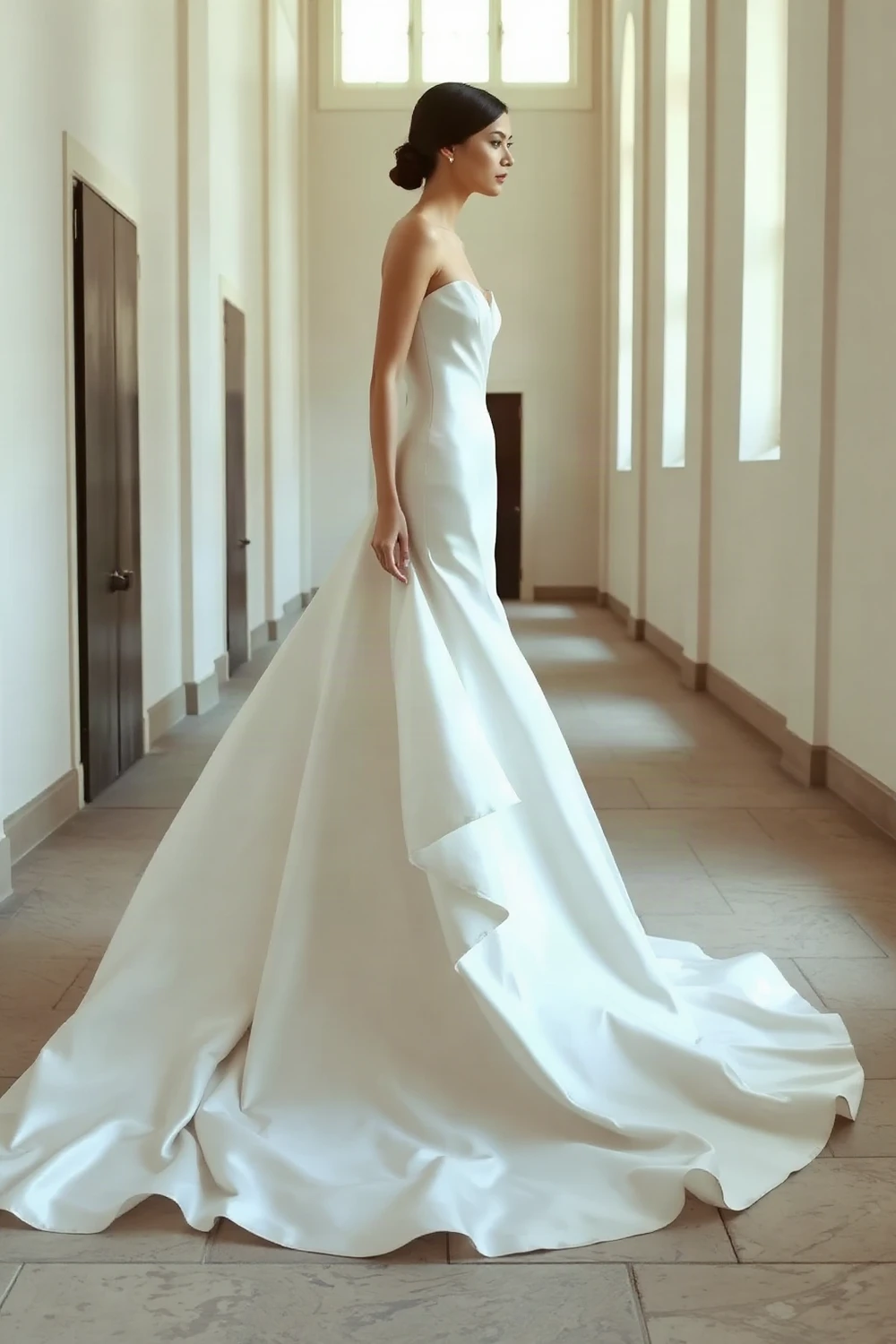
An uncomplicated strapless upper body contrasts with a train flowing down the corridor in broad waves. Its profile clarifies the shift from narrow torso to extensive volume. Minimalism here is not small scale: the smooth material’s amount, folds and movement create drama instead of lace or surface decoration. Corridor perspective exaggerates the length; pale walls and floor keep the setting tonally restrained.
Volume makes logistics part of the choice. Review aisle width, vehicle access, doorways, stairs, outdoor surfaces and how to gather it at reception; an assistant should practice lifting and arranging the train. Compared with compact trains in the third and sixth concepts, it limits spontaneous movement but creates a powerful outline from behind and in wide compositions. The strapless bodice must remain stable despite the emphasis below. A train that gathers or detaches can preserve the dramatic contrast when free movement becomes the priority.
Geometric Restraint with a Square Neck and Sleeves
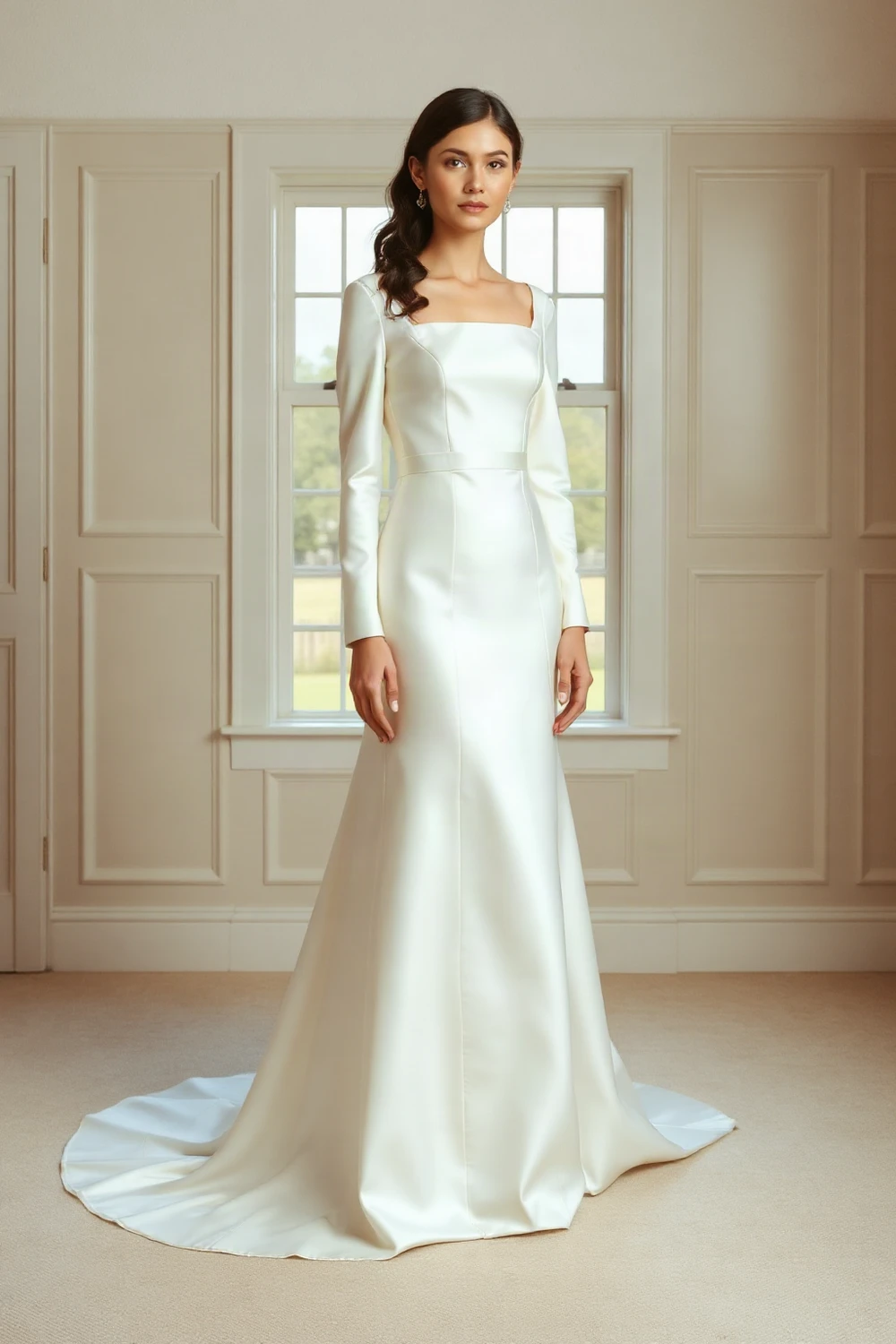
The sixth, most framed option uses a square neckline, narrow long sleeves, a slim waistband and controlled flare. Rectangular windows and wall panels echo its geometry, making the composition intentional. Vertical bodice seams meet the band and long skirt; a short train keeps formality without excess volume. The first look also offers upper-body coverage, but its bare arms and rounded bateau feel softer than these architectural corners and sleeves.
Test sleeve mobility rather than relying on seasonal assumptions. Reaching forward should not pull the shoulder, elbows need room to bend, and wrists must remain comfortable with jewelry. Square corners must lie flat because gaps or rolling show immediately on a clean surface. The measured skirt is easier to direct in a narrow room than a sweeping train and may suit frequent movement. Earrings and hair away from the shoulders preserve the open geometry better than a short necklace.
Together, these concepts show that minimalist bridal style depends on relationships between lines, not merely missing decoration. Start with the main need—coverage, an open shoulder, waist definition, easy movement or a memorable train—then test it against the venue, shoe height, support plan and schedule. At fittings, photograph front, side and back; sit, walk, turn and raise the arms. Examine the reflective surface in varied light. The strongest direction will look composed in a still image, retain its proportions, remain manageable and support how the day should unfold.
Compare simple satin-look wedding dresses with bateau, V, sweetheart and square necklines, waistlines and train details.
Frequently asked questions
How should I choose between a plunging V and a wrap V-neck?
Choose the plunging V for a sharper, more open central line, or consider the wrap V for broader shoulder framing and softer crossing panels. Test both while sitting, leaning and raising your arms to compare coverage and stability in motion.
Can an expansive train work in a small ceremony venue?
It can, but aisle width, doorways, stairs, seating and the method for gathering the train must be planned. In a compact room, a short train or an easily secured interpretation will usually require less handling than the fifth concept’s broad volume.
What should be tested during a strapless fitting?
Check that the upper edge stays in place while breathing and moving the arms, that internal structure supplies support, and that skirt weight does not pull the bodice downward. Security should not depend on making the upper body uncomfortably tight.
How can accessories complement a smooth minimalist surface?
Let the neckline determine the focal point. A deep V, sweetheart or square opening may need only small earrings or a slender bracelet. The aim is to frame the face and upper line without covering the clean geometry that gives the look its identity.
Besides weather, what matters when choosing long sleeves?
Evaluate movement at the shoulder, elbow and wrist, as well as how the sleeve creases while sitting. Reach forward and upward to confirm that the bodice does not pull and that the neckline remains flat during normal movement.