A romantic bridal look is not created simply by adding more lace. Silhouette width, motif placement, the relationship between veil and back, and the line of the train work together. These six ivory concepts prioritize different ideas: a circular ball-gown train, a smooth light-reflective skirt, a sheer V-back, botanical appliqués in warm light, a fan-shaped lace train and a long-sleeved keyhole back. Study the balance between volume and detail rather than pursuing one formula for romance. Consider venue width, the ceremony route, time spent sitting and important photographic angles. These images are visual inspiration for fittings and styling conversations, not purchasable items; each aesthetic choice raises practical questions.
Make an Entrance with a Circular Train
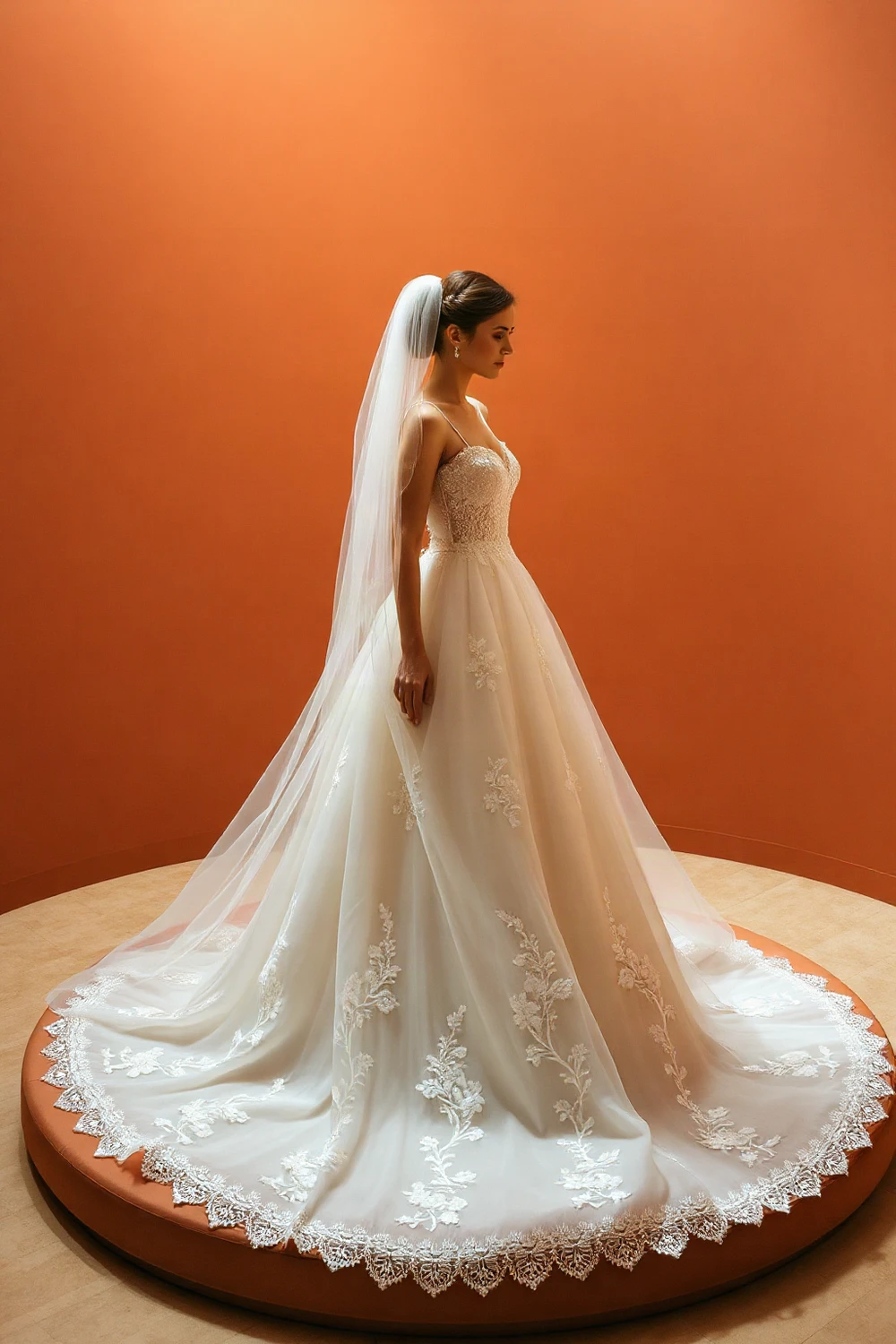
The first concept moves from a slender-strap, heavily embellished bodice into a full ball skirt. Botanical appliqués spread out below the waist, then gather along the lace perimeter of the enormous circular train. A long sheer veil blends into the skirt’s left side rather than forming a separate block. The curved orange background sharply defines the pale silhouette and its footprint.
This works best when the aisle and ceremony area allow the train to open fully. Narrow passages, tight table spacing or frequent direction changes need more planning. With lace concentrated on the bodice and outer edge, restrained jewelry and a simple bouquet preserve the hierarchy. At a fitting, make a full turn, step backward several times, and test how quickly another person can gather and release the train.
Use Lace Selectively on a Smooth Surface
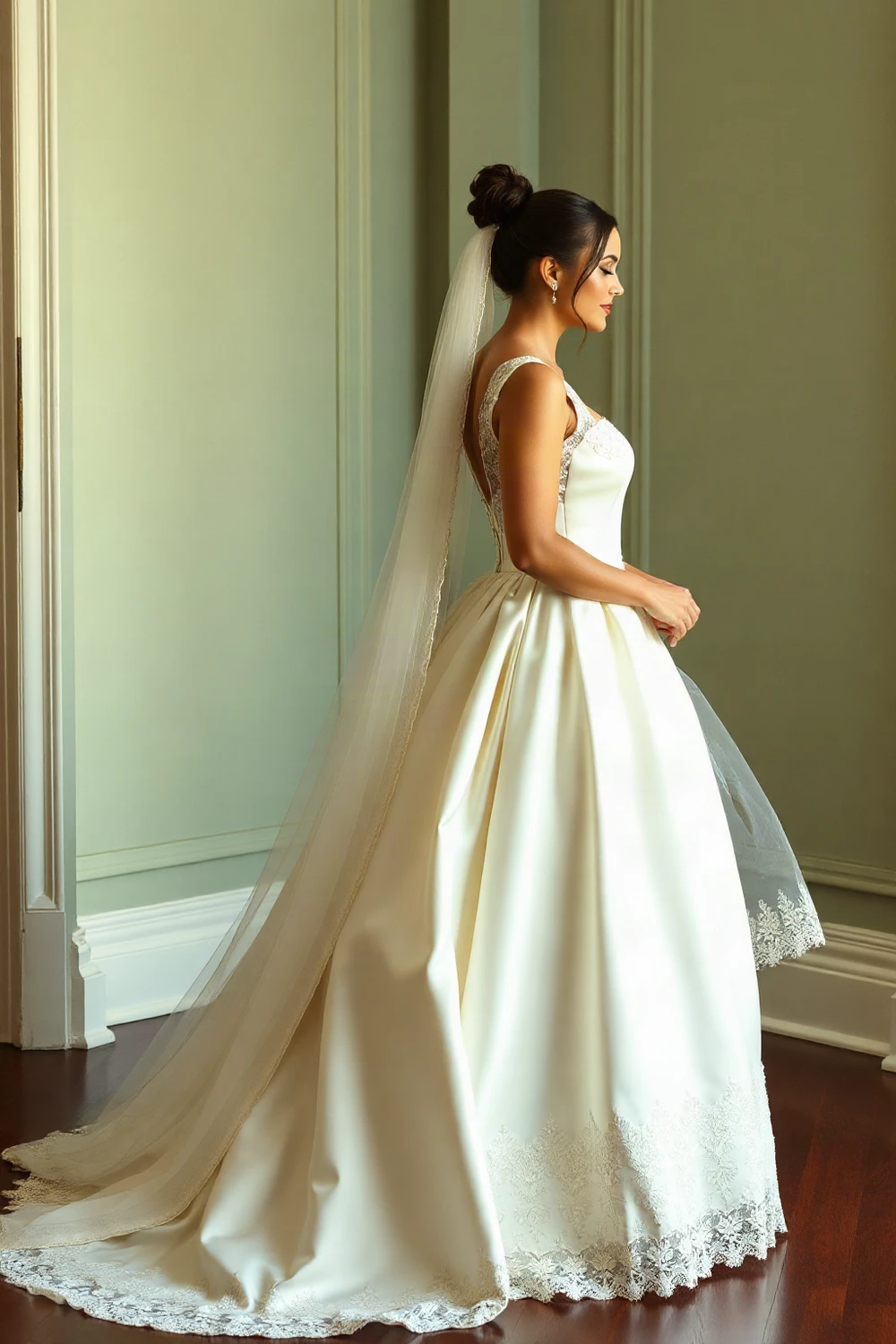
The second look shows that romance need not cover every surface. Its full skirt is smooth and reflective, while lace appears mainly at the shoulders, lower edge and narrow border of the long veil. Folds from the waist create volume, but vertical highlights keep it orderly rather than heavy. Pale green wall panels and dark wood flooring reinforce the clean lines.
Unlike the first image, where perimeter motifs dominate from afar, these details emerge gradually, suiting a restrained, daylight-filled interior. The long veil adds occasion, but its attachment and trailing layer should be tested in motion. Smooth surfaces may reveal creases and reflected light, so include a sitting test. When repeating lace in small zones, seek compatible scale and density rather than identical motifs.
Frame the Back without Hiding It
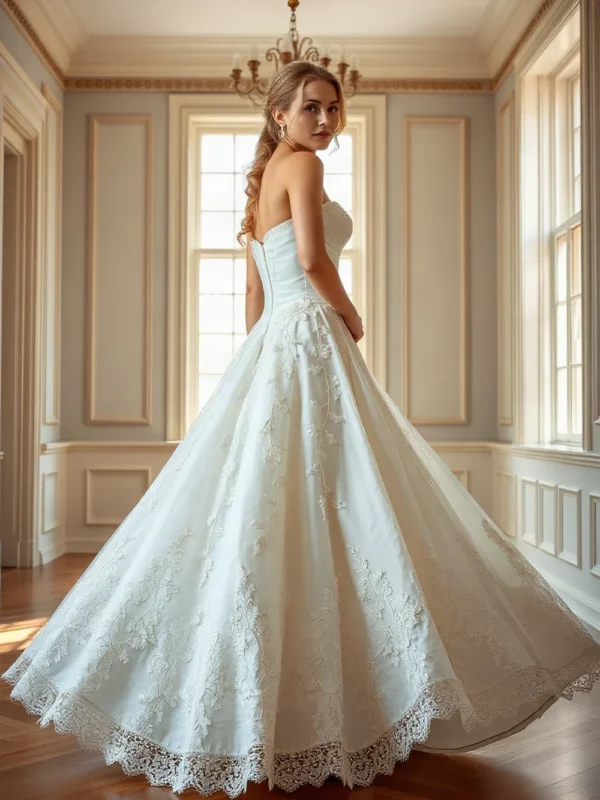
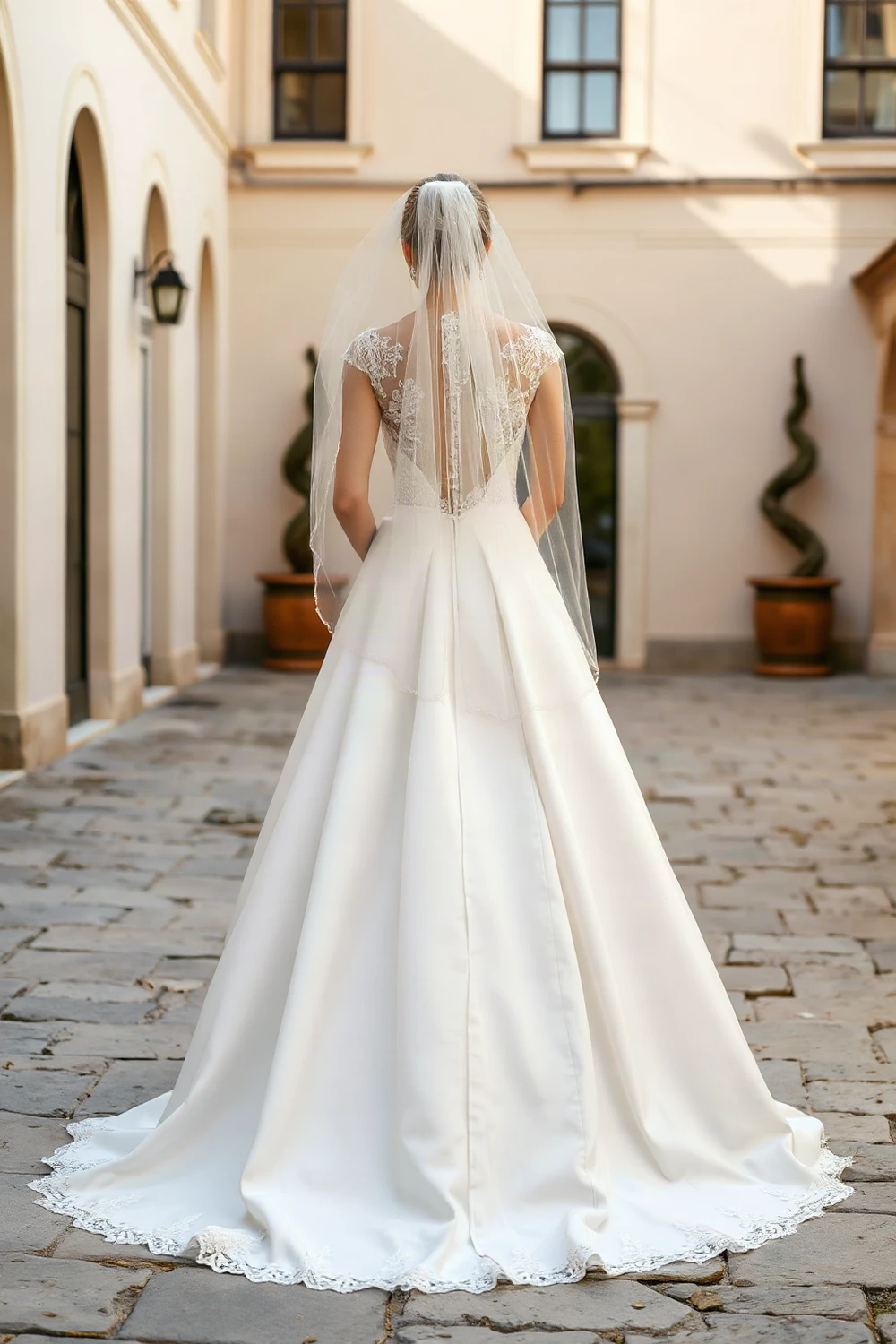
The third concept centers the rear view. Lace cap sleeves meet a sheer upper section, with motifs framing a deep V toward the waist. The broad skirt is almost entirely clean; only a narrow lace finish around the train repeats the upper detail. A light, hip-length veil leaves enough of the back exposed for both elements to remain clear.
This suits someone who values processional photographs without an extremely long veil. In the second look, the veil is the main vertical feature; here it supports the back. Assess the opening’s shape, the transition between skin and underlayer, and closure visibility from a distance. An updo exposes the frame, while partially loose hair may cover upper motifs. Photograph the fitting in sun and shade to see how the sheer area changes.
Build Rhythm with Botanical Appliqué
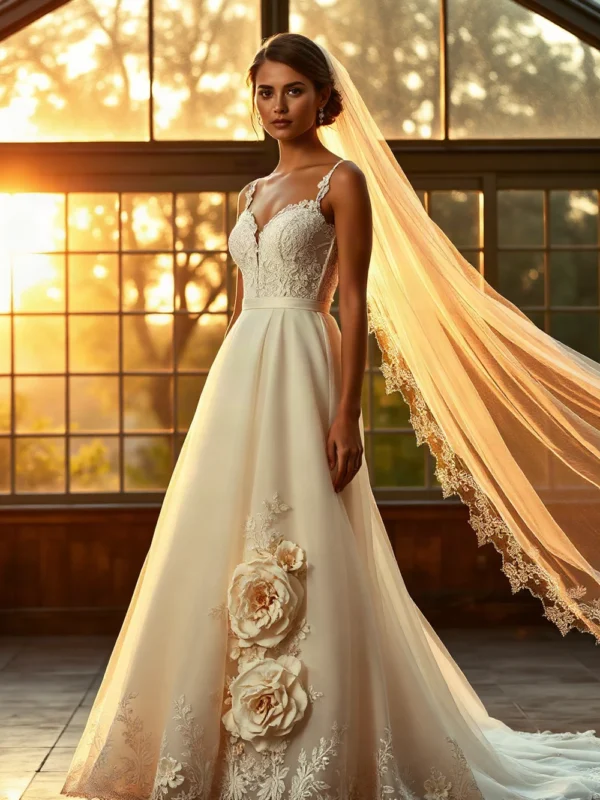
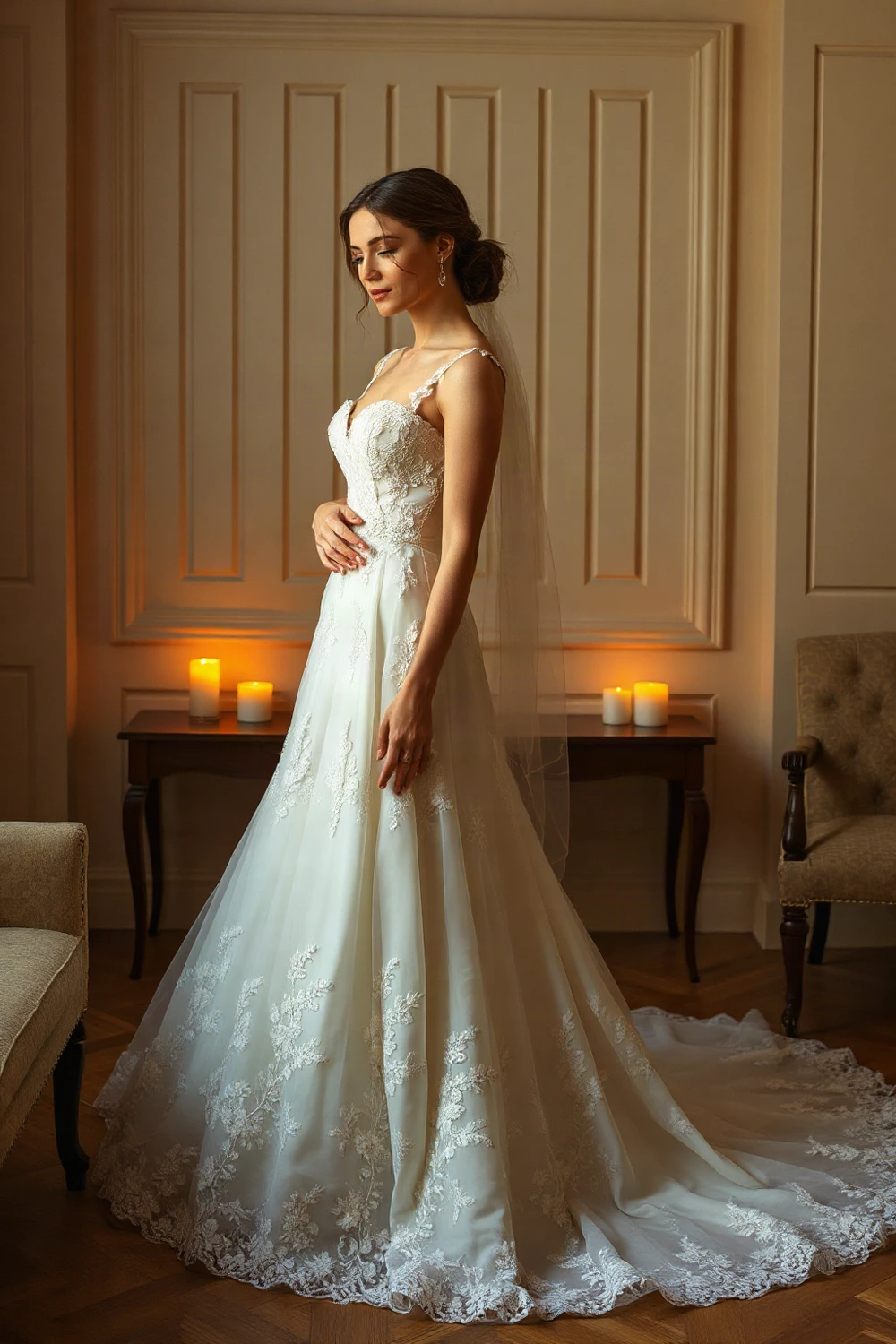
In the fourth look, romance comes less from maximum volume than from appliqué moving through a warm setting. Slender floral straps join a textured bodice; motifs separate into branching forms across the skirt and grow dense again near the hem. A long veil creates a fine screen behind the body, while the train extends right to balance the three-quarter pose. Candlelight strengthens shadows and relief on the ivory surface.
This composition suits an intimate interior where front and side views matter. The first concept’s circular train feels more ceremonial, while this side-directed arrangement creates a softer portrait. Warm illumination can change the appearance of white and raised lace, so photograph a fitting in similar light. If the bodice is already strongly textured, small earrings may be clearer than a prominent necklace, keeping the face, neckline and waist from competing.
Shape a Sculptural Rear View
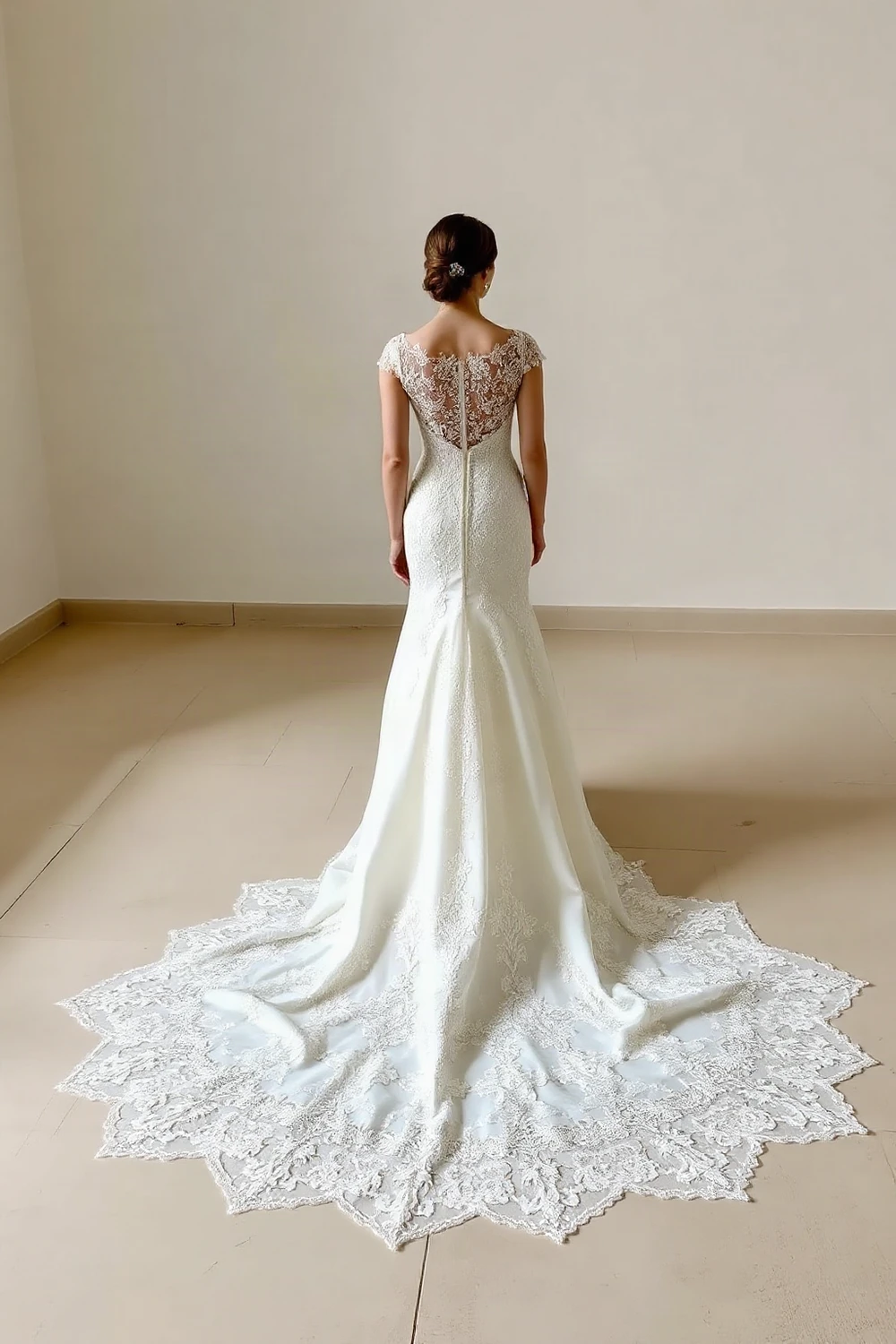
The fifth concept replaces the ball skirt with a closer line. Lace cap sleeves and a sheer back converge at the waist around a strong central closure. The silhouette follows the hips and upper legs before opening into a broad lace fan with deep scallops across the floor. Without a veil, the line from shoulders to train is uninterrupted.
This is a strong option for an elaborate back and distinct train without another sheer layer. In a full A-line, movement space starts at the waist; here it begins lower, affecting sitting, stairs and dancing. At the fitting, walk naturally rather than shortening every step for the pose, and ensure the bustle point does not pull sharply on lace motifs. Photograph the rear fully spread and gathered because the configurations can read differently. A simple hairstyle keeps the upper frame clear.
Balance Long Sleeves with an Open Back
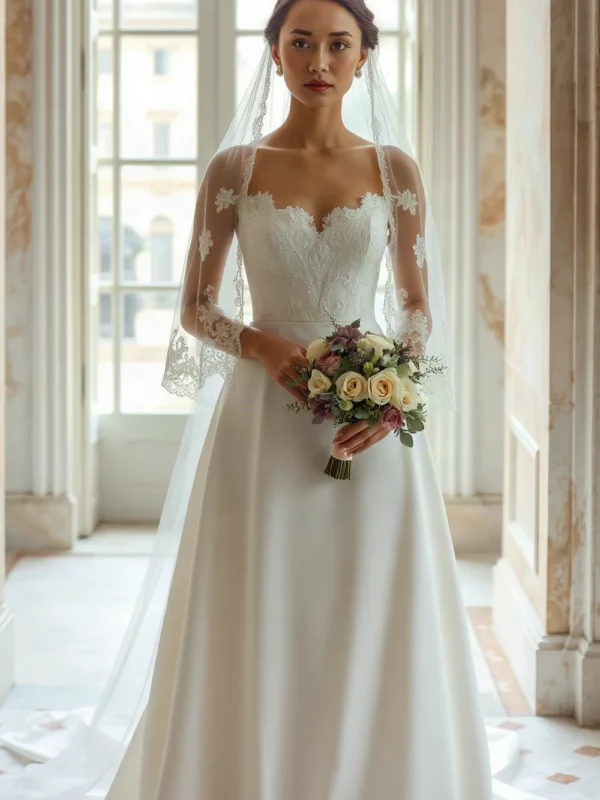
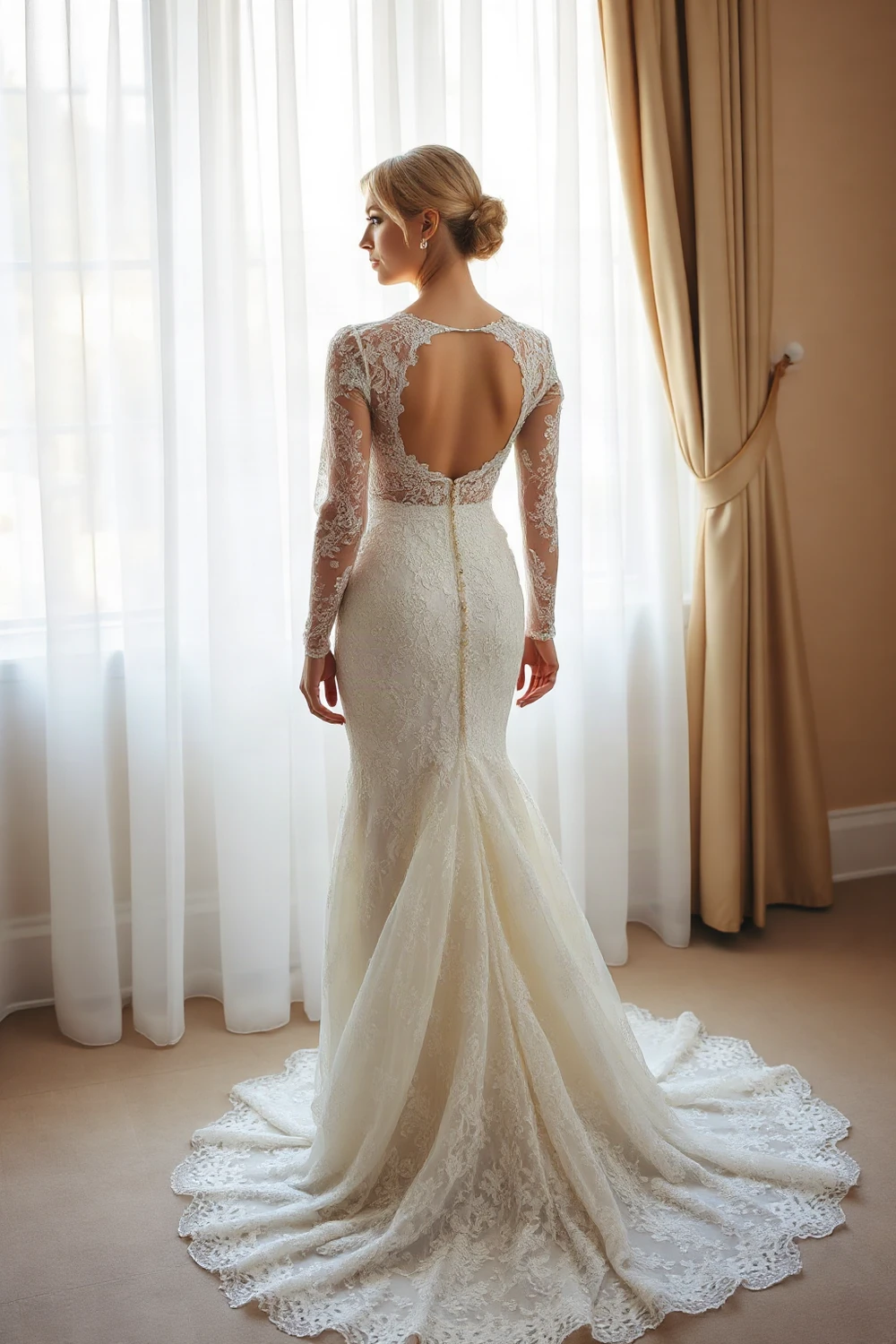
The sixth look combines coverage and exposure. Sheer lace sleeves run from shoulder to wrist, while a large rounded opening centers the back. Below the waist, the close silhouette continues toward the knees, then opens gently into a short lace-edged train. Bright window light defines the sleeves’ transparency and keyhole outline.
The fifth look covers more of the back with patterned transparency; here the exposed area is larger, balanced by long sleeves. Although the pairing may suggest cooler weather, sleeves do not guarantee easy movement. At the fitting, raise both arms, bend the elbows and imitate an embrace; also observe the opening’s edges while walking and sitting. A veil remains possible, but if the keyhole is the focus, a plain transparent layer will compete less than a dense lace border.
The best choice among these ideas is not the one with the most detail, but the one suited to the ceremony’s movement, venue scale and preferred view. A circular train creates grandeur; a smooth skirt brings calm contrast; a shorter veil preserves the back; side-swept appliqué softens a warm portrait; a scalloped fan makes the rear sculptural; and long sleeves around an open back create tension. Choose one primary focus instead of combining every appealing element, then simplify its support. The goal is not maximum ornament, but a clear hierarchy that works throughout the celebration. At the final fitting, photograph the front, side and back in different light, and walk, sit, turn and gather the train. Those checks turn visual inspiration into a coherent, manageable style.
Compare lace wedding dress backs and train shapes, from full skirts to fitted silhouettes, with veil and motif styling ideas.
Frequently asked questions
Should a long veil or a visible back detail take priority?
If the open or sheer back is the main feature, choose a short, plain or highly transparent veil so the construction stays visible. If the entrance matters more, use a longer veil but test how fully it covers the back and whether it catches on raised motifs.
How can I choose between a ball skirt and a fitted silhouette?
Compare the venue’s passage widths, seating plan and expected movement. A ball skirt distributes volume from the waist and suits generous spaces; a fitted silhouette occupies less width but requires careful testing around the hips, knees and stride.
Where should lace be concentrated for a balanced look?
A single main focus usually creates clarity. Pair a dense bodice with a calmer skirt, or a simple upper section with a strong lace train. If motifs repeat in several areas, prioritize compatible scale and visual weight rather than an exact pattern match.
What should be tested with a long or wide train?
Practice a full turn, backward steps, stairs, sitting and dancing. Ask someone to spread and gather the train, confirming that the bustle point does not pull the lace edge and that the motif still looks intentional when lifted.
Why check sheer backs and sleeves under different light?
Daylight, shade and warm interior illumination change the contrast between skin and sheer layers. Fitting photographs help evaluate the underlayer color, closure line, motif boundaries and the way an opening sits during movement.