A mermaid wedding dress centers shape by following the torso and hips before opening through the lower skirt, yet the silhouette can create very different effects. An open back adds rear drama, a plunging V sharpens the front, and a high lace collar gives the fitted line a ceremonial frame. Embellishment, bows, sheer sleeves, and skirt tiers further change how the eye moves across the dress.
These six images are styling concepts, not identified purchasable products. Comparing them involves more than choosing an attractive detail: setting size, movement, front and rear photographs, support needs, and contact between decoration and skin all matter. Considering each visual strength alongside its practical demands can turn inspiration into a focused fitting conversation.
Balancing an Open Back with a Long Train
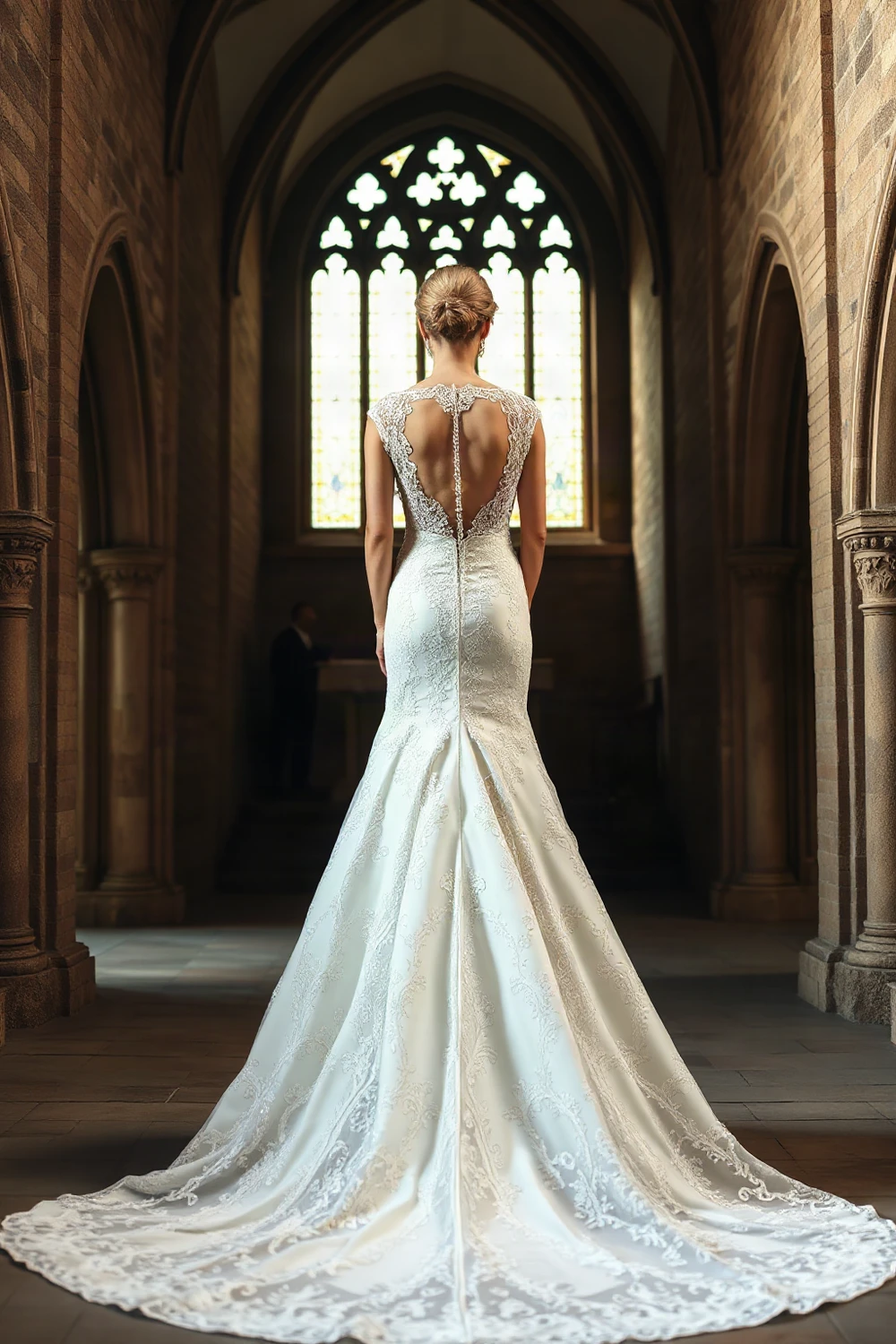
The first look gains strength from an uninterrupted rear axis. A broad opening with lace-like borders leads through a fine central line to the narrow waist and body-skimming hips. Below the knees, the long patterned train spreads along the architectural aisle, creating a ceremonial effect suited to entrances and wide photographs from behind.
That rear impact requires planning. A broad train may need frequent arranging in narrow passages and a secure way to gather it for dancing. During a moving fitting, confirm that the back edges do not gape and the waist stays smooth. The fifth image also emphasizes the rear but replaces lace with an oversized bow and plain surface. The first favors romantic texture; the fifth offers graphic simplicity.
Combining a Plunging Neckline with Tiered Volume
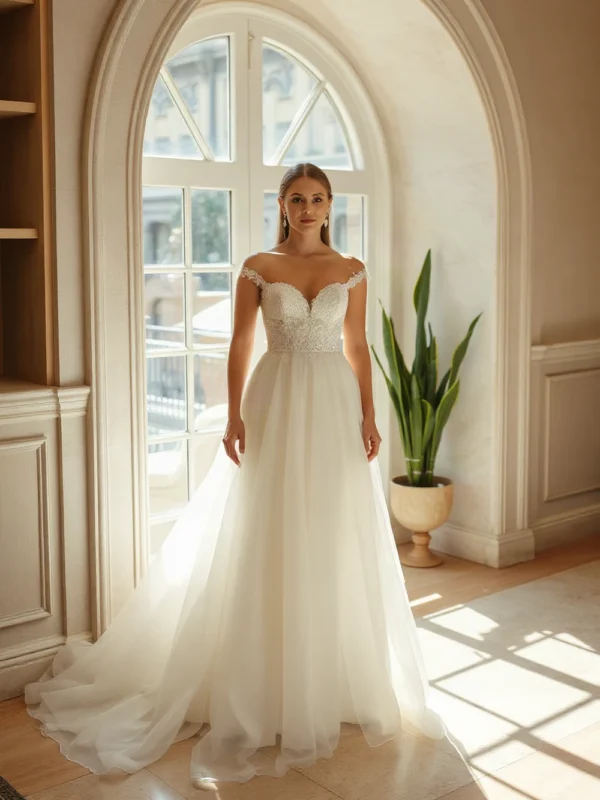
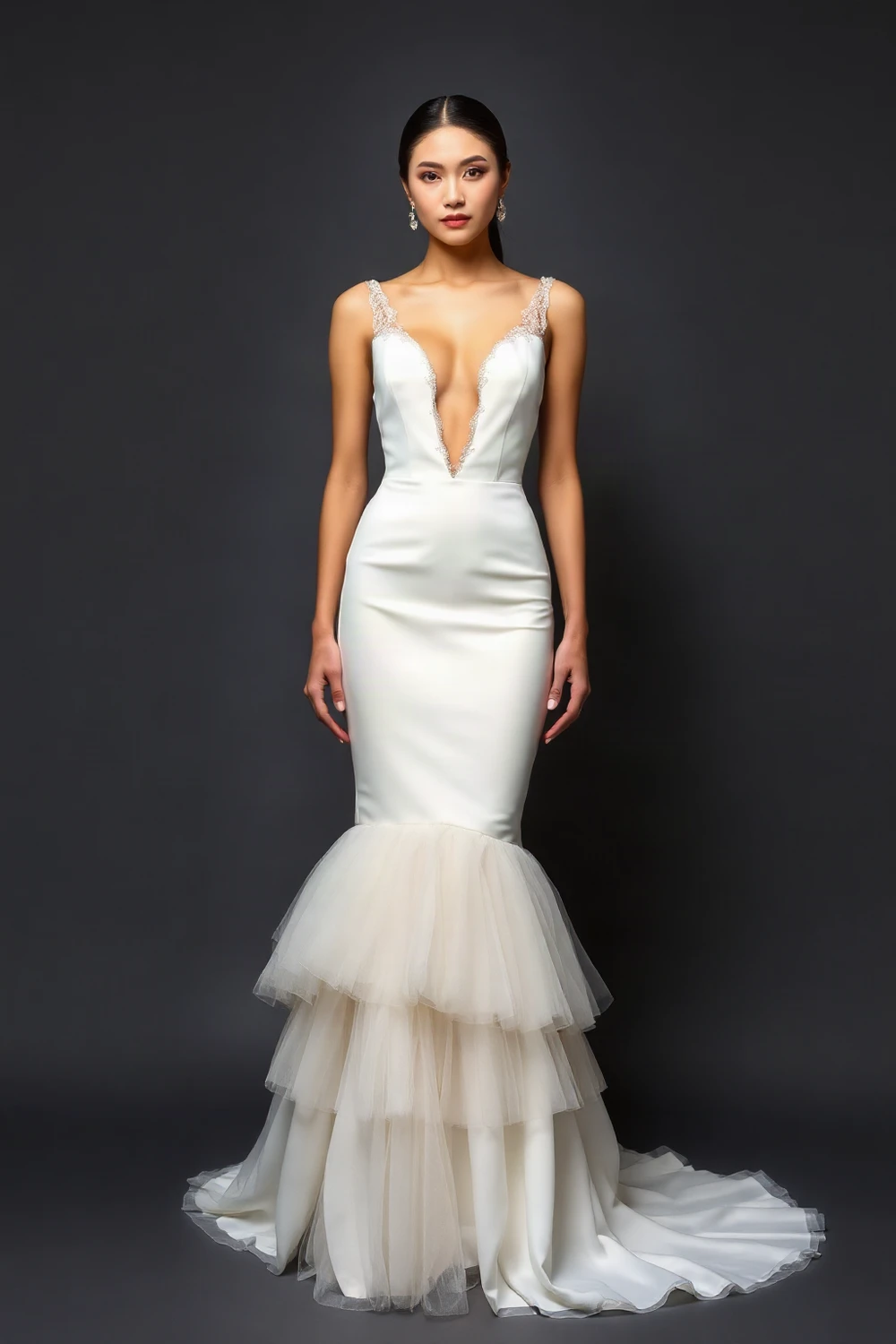
The second concept combines two strong contrasts. A sparkling-edged V reaching toward the waist creates a sharp vertical line, while the smooth fitted middle stays quiet. Tulle-like tiers beginning around the knees add horizontal movement and soft volume. Attention moves from the neckline to the stepped skirt, making the silhouette feel both clean and theatrical.
This direction suits someone who wants lower-skirt motion rather than one continuous sweep. Check that the tiers move freely, do not pile rigidly when seated, and clear the shoes safely. The deep opening also needs individualized support and inspection from several angles. By comparison, the fourth image uses a softer sweetheart neckline and calmer skirt. The second is more fashion-forward; the fourth controls brightness and shape more quietly.
Creating a Vertical Frame with a High Lace Neck
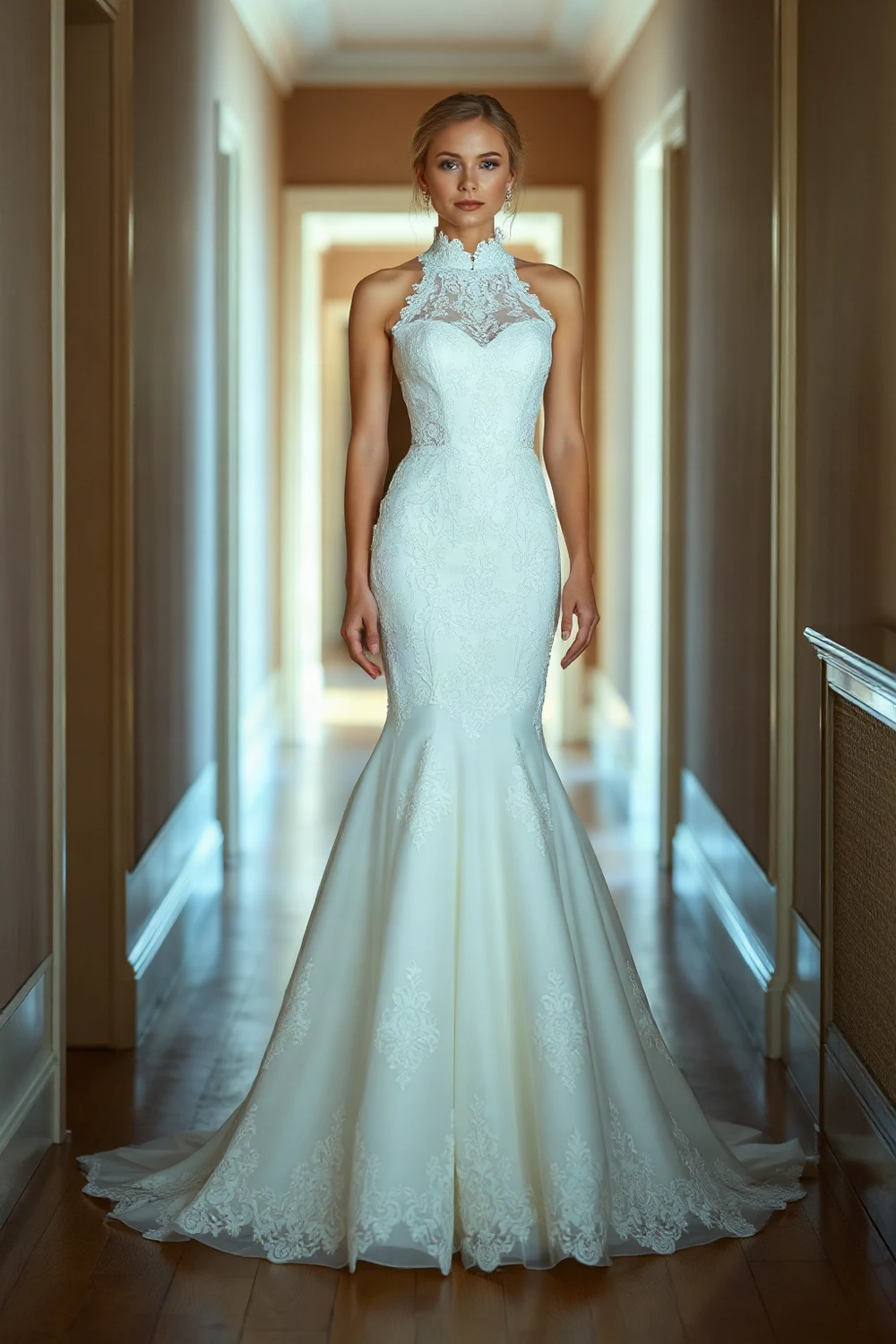
The third look balances coverage and exposure through a high lace-like collar and completely bare shoulders. Its translucent-looking patterned panel frames the face, while the opaque bust, fitted patterned body, and gradually widening skirt form one vertical flow. Denser motifs near the hem emphasize the flare without the pronounced interruption of the second design’s layers.
A high collar may make a necklace unnecessary, leaving room for earrings or swept-back hair. Comfort should be tested in motion: turn the head, sit, and speak to learn whether the edge rubs or the upper panel pulls. Unlike the first look’s rear emphasis, this design highlights the face and front bodice. The sixth provides an open neckline and sleeve volume for comparison when choosing between neck detail and shoulder softness.
Limiting Sparkle Around a Sweetheart Bodice
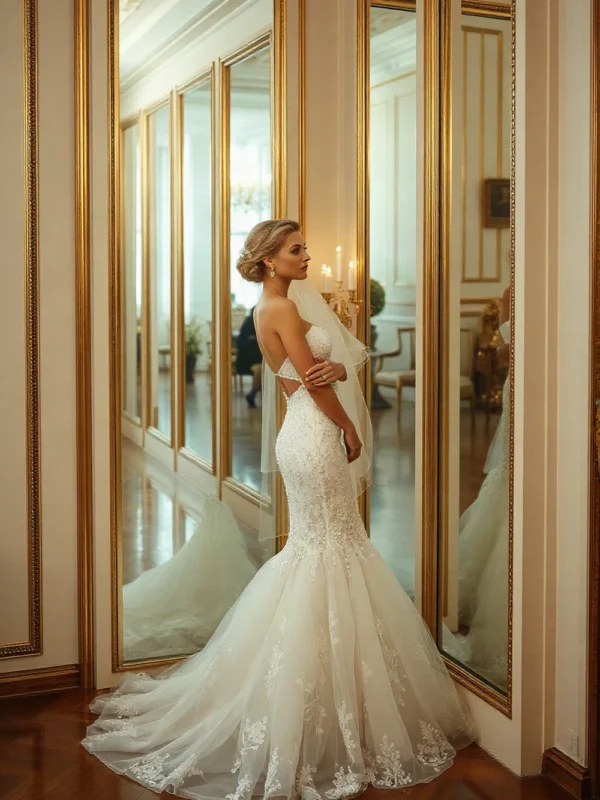
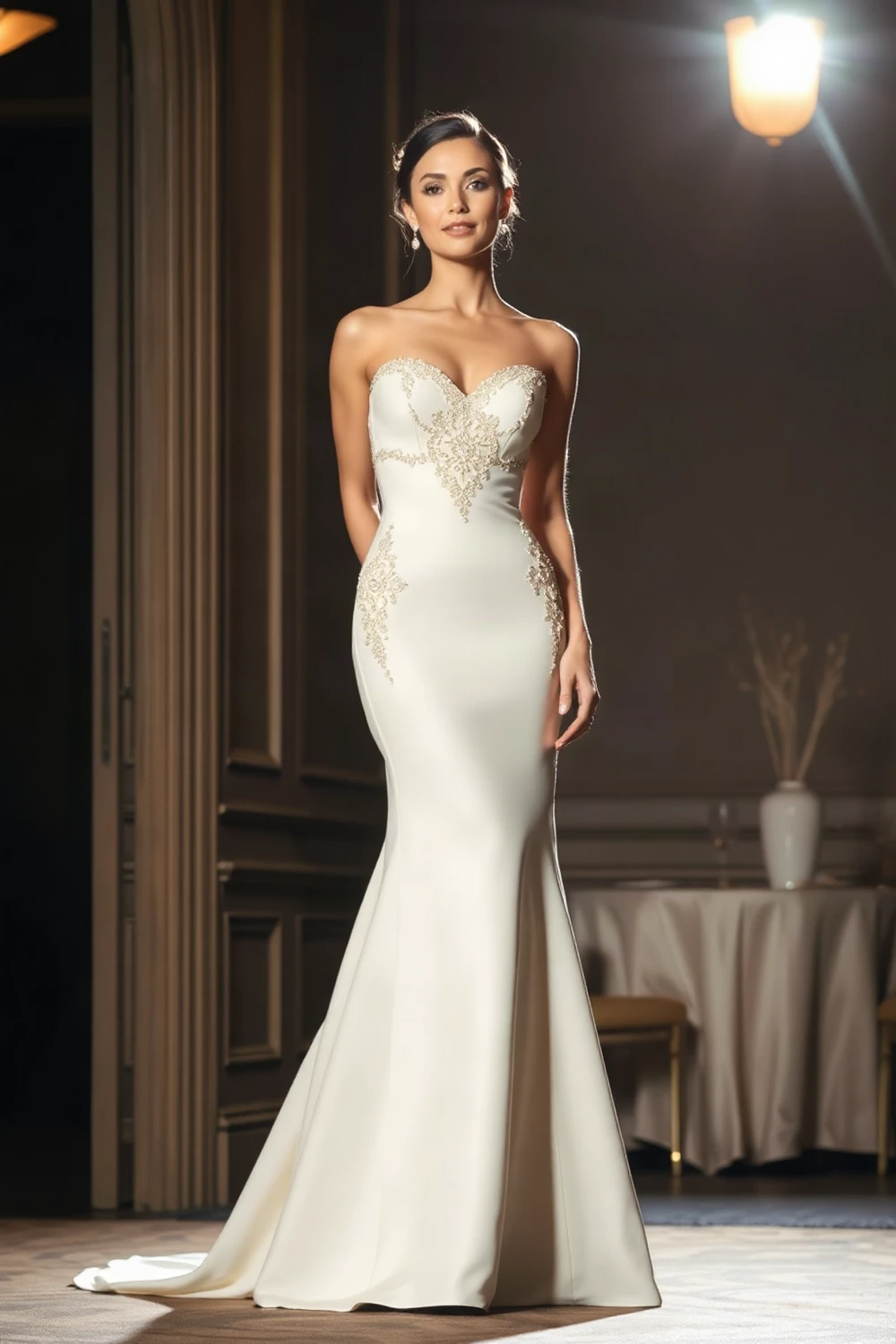
The fourth look brightens a smooth mermaid foundation with selective embellishment. Metallic-toned motifs define the strapless sweetheart edge, bust center, and hip sides, while much of the dress remains quiet. The placement emphasizes curves without allover lace, and the clean flare provides a calm base beneath the concentrated upper shine.
Restrained decoration keeps accessories flexible: simple earrings preserve lightness, while a more visible veil gains definition against the empty surface. The strapless bodice must stay supportive when the arms rise and during long periods of sitting. Walking can also reveal whether hip motifs touch the inner arms. Compared with the second look’s exposure and the third’s dominant texture, this design offers a quieter balance of classic neckline, measured luminosity, and a clearly sculpted silhouette.
Making a Bow the Signature of the Back
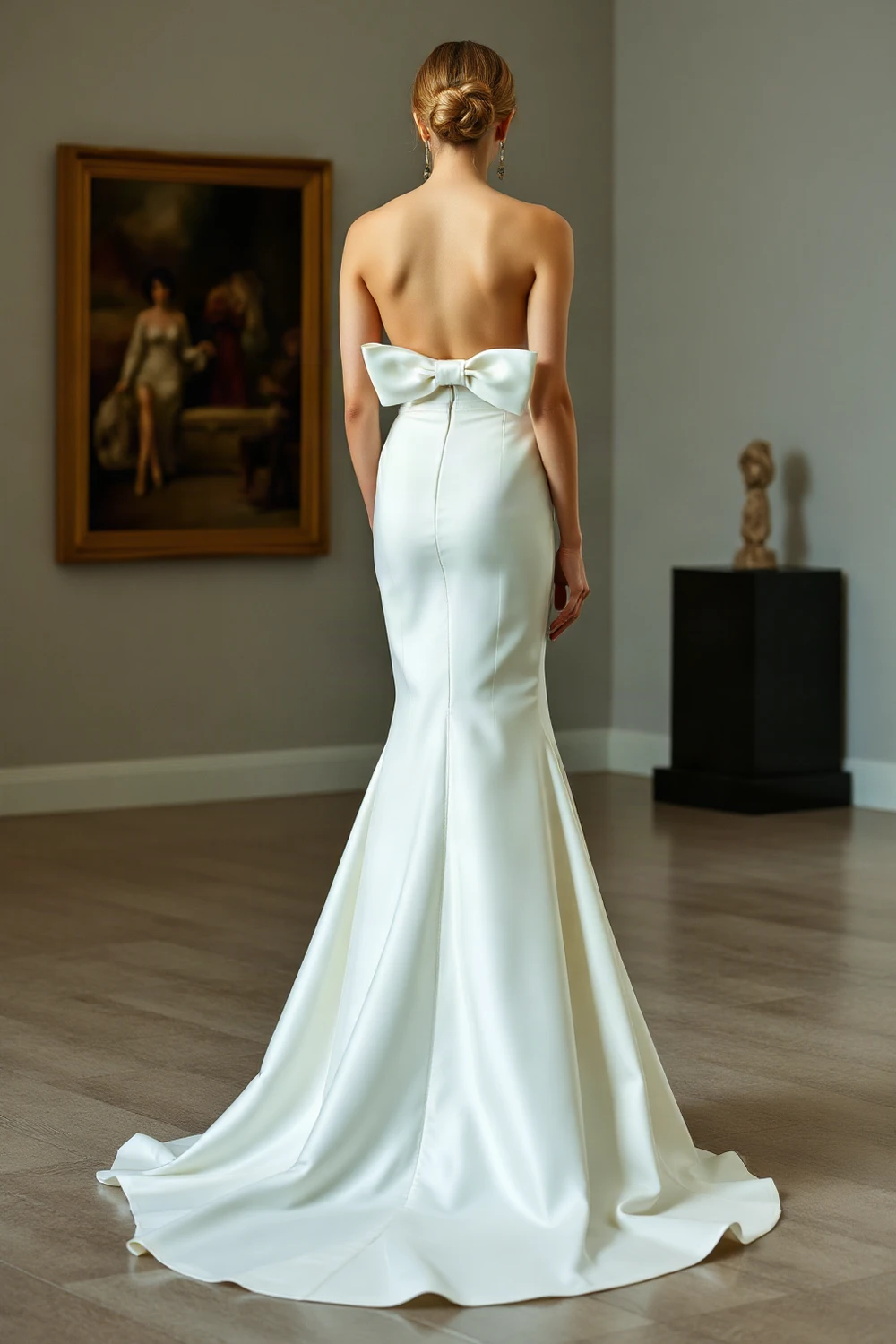
The fifth idea shows how one large feature can transform a minimal surface. A horizontal bow at the waist of the completely open back interrupts the long vertical seam, creating a stopping point before the train. Below, the smooth skirt widens from the hips and spreads across the floor in broad folds. Without competing pattern, the bow’s scale and shifting light on the fabric become prominent.
This direction combines simplicity with a distinctive rear detail. Check whether the bow is comfortable against a chair, remains visible beneath a veil, and holds its form after the train is gathered. Where the first image creates a richly patterned back through lace and a broad train, this version stays clean and graphic. Anyone who dislikes a large waist feature could shift attention upward through the sixth image’s sleeve volume.
Adding Shoulder Volume with Sheer Sleeves
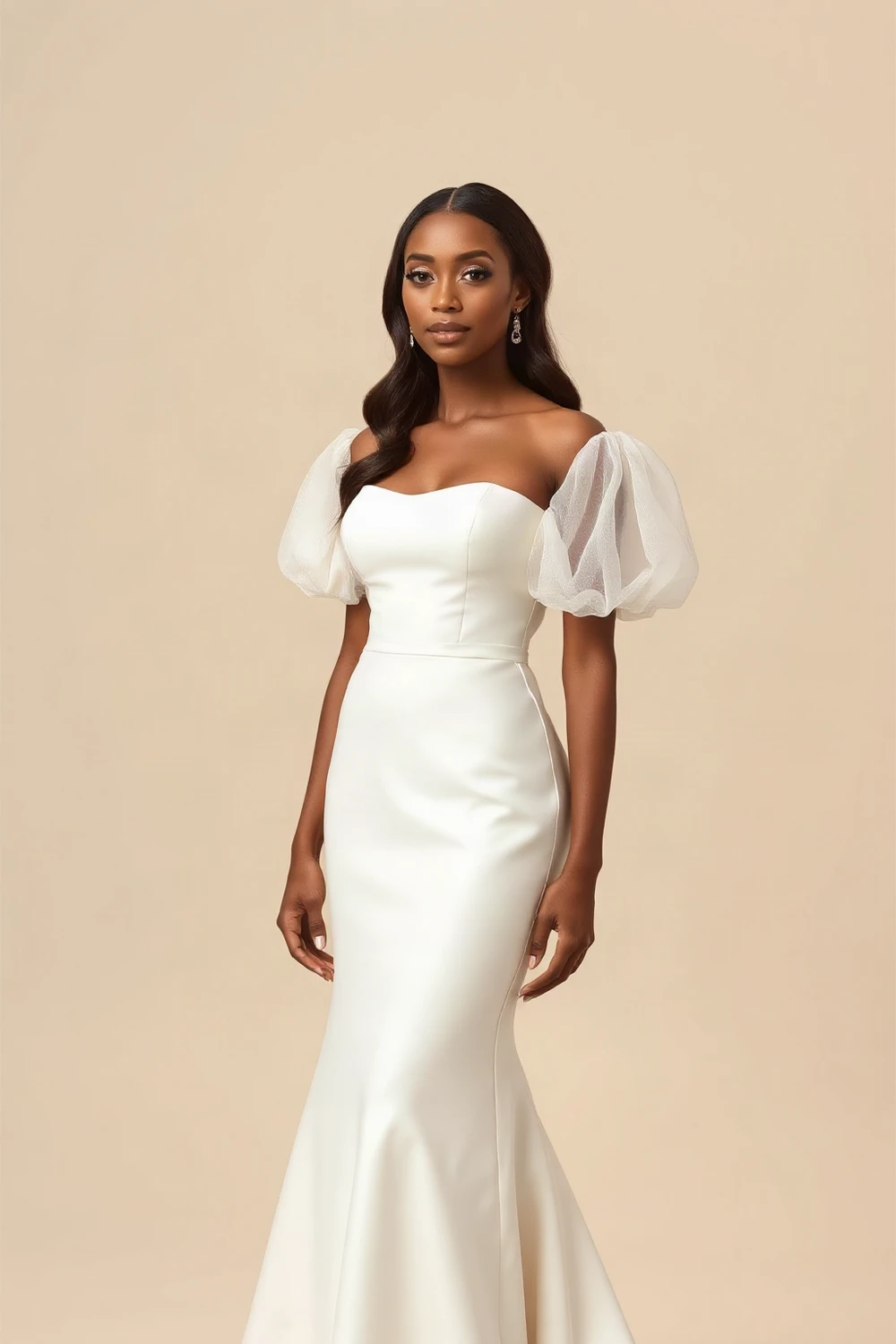
The sixth look adds soft volume to an unembellished bodice and skirt through sheer puff sleeves. A softly angular open neckline leaves the neck free, while vertical bodice seams keep the torso composed. Rounded sleeves contrast with the narrow waist and long skirt, creating interest through proportion rather than dense lace or beading. The concept remains clear in a close front-facing portrait.
Assess sleeve volume in movement as well as at rest. Reach forward and upward, imitate dancing, and test an embrace to ensure the tulle-like surface neither pulls nor gathers under the arms. Coordinate the sleeves with hair and earrings so the upper half does not feel crowded. Unlike the fourth look, which exposes the shoulders and places shine on the bodice, this design softly frames the face while preserving a calm, minimal surface.
The best sculpted mermaid look is not necessarily the most detailed, but the one that supports your priorities. For a memorable rear entrance, compare a lace-framed opening with a bow. Near the face, weigh a high collar against puff sleeves. A plunging V supplies front-facing drama, while an embellished sweetheart bodice provides measured shine.
At fittings, walk normally, sit, raise your arms, and inspect the silhouette from the front, side, and back. Relate the train to the setting, the neckline to support, and surface detail to accessories and skin contact. Choosing one main focal point—and keeping the remaining elements calm enough to support it—offers the clearest route to a coherent sculpted silhouette.
Compare open backs, trains, necklines and surface details across six mermaid wedding dress concepts.
Frequently asked questions
Should I choose a long train or a shorter, simpler finish?
A long train can suit a spacious ceremony setting and dramatic rear photographs. If your route includes narrow passages, steps, or substantial dancing, a shorter finish or a dependable way to gather the train may be more practical.
How do I choose between a plunging V and a strapless sweetheart neckline?
A plunging V creates a sharper, more vertical and contemporary focus; a sweetheart neckline makes a softer frame while exposing the shoulders. Test both while sitting, leaning, and raising your arms to compare support.
Which accessories balance a high lace collar?
Because the collar already creates texture near the face, a necklace-free arrangement with defined earrings and swept-back hair can feel balanced. Adjust the choice to the actual height and visual density of the collar.
Can an oversized back bow work with a veil?
Yes, provided the two elements do not compete in the same area. View the veil's length and transparency together with the bow from behind, and check that lifting or removing the veil does not crush the bow.
How should sheer puff sleeves be tested during a fitting?
Move your arms forward, outward, and overhead, then sit and imitate hugging or dancing. Confirm that the sleeve openings do not pinch, the material does not bunch under the arms, and the shoulder line stays in place.