A wedding dress with detachable sleeves requires a confirmed change function, not simply a sleeve that projects beside the upper body. Our five independent references show different visible arm areas: a floral close detail, longer finer arms, short broad puffed surfaces and low floral bands. None demonstrates one dress before and after removal. Use these images to describe your desired shape, then ask to see the exact offered connection and the garment remaining after the stated change. A shared pale colour does not make these separate references compatible parts of one outfit.
1. Establish the offered change before choosing a silhouette
Ask which exact dress and sleeve version are being offered. Is the arm area part of the existing garment, a separate supplied accessory or a proposed alteration? Have the included pieces named and a stated change shown on that same model. Keep both views together so the upper edge and remaining garment can be inspected. An unexplained close photograph cannot supply this demonstration, even when the sleeve’s outline looks separate from the bodice. You also need the actual connection explained rather than naming unseen snaps, buttons or ties yourself.
The manufacturer explicitly describes Medfield Sleeve 99185SL as detachable off-the-shoulder puff sleeves. This is a different named accessory, not an identification of our archive pictures. Its function cannot be transferred to their projecting floral edges. The wedding dress buying guide supports recording the model, actual version and supplied pieces. Treat an agreed change as specific information about that offer, keeping it separate from a wish based only on a similar-looking sleeve.
2. Compare length and volume independently of removal
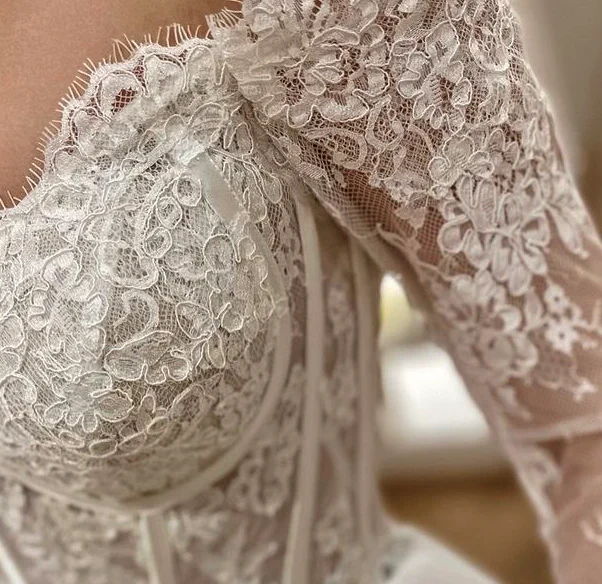
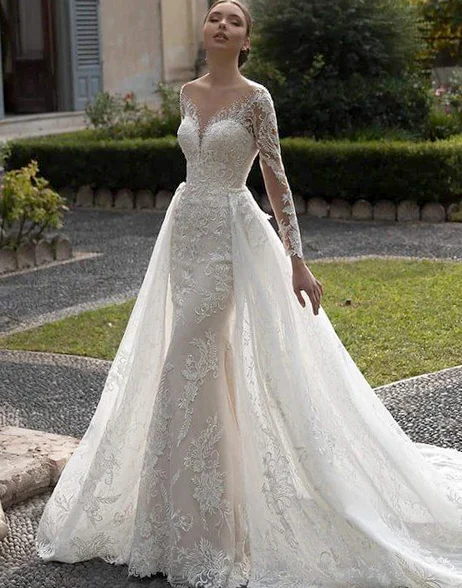
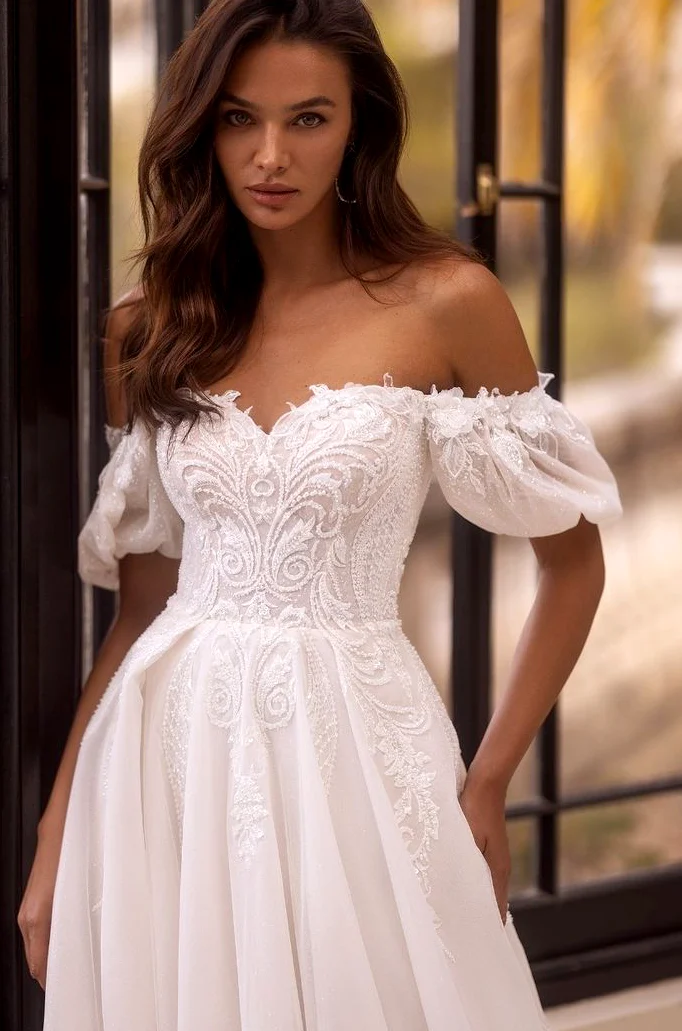
The close main detail has denser flower forms, fine openwork-like spaces and a scalloped upper border with projecting fine lines. A patterned arm surface sits beside the bodice. It does not contain the complete sleeve length or whole dress. The broader garden front instead shows longer closer floral arm areas above a wide floor-length lower form. Shorter puffed areas appear in the front with curling drawing, while the reflective closer reference has low floral upper-arm bands. Those are several different outlines before their functions are known.
Choose the region you want to compare first: upper-arm width, length towards the wrist or the border beside the chest. The off-shoulder wedding dress guide helps distinguish an upper frame from its arm areas. A short puffed surface and a longer close sleeve are not two confirmed states of the same garment here. Keep your preferred outline separate from actual detachability and ask for the offered model’s own corresponding side and rear before deciding that the connection suits your request.
3. Clarify the actual upper layers and coverage
Fine ground and floral drawing appear with different density in these pictures. The side-profile reference has more visibly fine areas beside its denser centre and projecting short upper-arm surface. The curling front concentrates repeated pale routes over its upper middle, with larger fine puffed areas at the sides. Neither picture explains every existing inner layer. A low outer edge does not establish that an arm area can be removed without affecting another part, and vertical bodice lines alone confirm no particular inner support.
The sheer wedding dress guide develops the difference between fine-looking ground and actual coverage. Ask about the exact offered construction and try your planned underwear on the real piece. Inspect front, sides and rear in suitable ordinary lighting. If you want more coverage, describe its precise location and request assessment before planning new lining. Keep the existing execution and proposed modification separate, including what remains unresolved, rather than treating another pale reference as evidence for unseen layers.
4. Compare the real garment before and after a confirmed change
Start with relaxed arms and a normal complete front on the actual model. Try ordinary arm movements, sitting and turning. If a removal function is genuinely offered, have it demonstrated and repeat those observations on the remaining garment. Compare the same upper edge, sides and rear instead of looking only at the detached accessory. The archive’s side-profile hand at the hip and skirt-held front are posed views, so neither substitutes for your own normal trial. A change function also does not guarantee a particular comfort or weight.
Wear your planned shoes while completing the length. The garden front shows wider lower surface reaching the ground, while several close views omit the complete hem and feet. They cannot measure your final length or establish the corresponding rear. If work is agreed, arrange another complete fitting after it. Ask which actual components need checking again rather than assuming the first whole-outfit result remains unchanged. Your preference for a sleeve should remain connected to the real offered dress throughout that process, including the version without it when applicable.
5. Add hair and accessories to each actual version
Loose longer hair frames the curling front. A pale branching hair ornament appears at the side of the profile view. The reflective low-band reference instead includes a V-shaped neck detail beside hair taken back. These are separate styling observations, not an included set or compulsory jewellery rule. Try planned hair beside the actual sleeve edge first. Add one jewellery piece and then your real veil or bag, keeping the rest unchanged so the contribution of each addition remains visible.
Check for yourself whether those components touch one another or the garment during ordinary movement. If the sleeve is confirmed removable, compare accessories on both actual versions instead of assuming one arrangement works identically. Have supplied pieces named separately from your own additions. A decorative hair branch establishes neither genuine pearls nor a particular metal. The neck detail is not confirmed as supplied with its pictured dress. You can prefer a different accessory scale without abandoning the sleeve outline that originally interested you.
6. Record care for the actual finished pieces
Care follows the specific finished components and their instructions; GINETEX explains textile care information. Neither fine floral appearance nor a detachable function establishes hand washing, ironing or one cleaning method for all pieces. Clarify uncertain directions before intervention. A wedding dress with detachable sleeves becomes a concrete choice through demonstrated execution, confirmed inclusion and your full trial of each offered version. The archived year and photographed setting cannot replace those answers or establish a shared collection, temperature performance or event requirement.
Compare long fine arms, shorter puffed areas and low floral bands. Establish actual removal on the specific offered dress; independent views do not demonstrate one garment before and after.
Frequently asked questions
Does a wedding dress with detachable sleeves become identifiable from a projecting sleeve edge?
A wedding dress with detachable sleeves needs its own confirmed function. A projecting sleeve edge in a photograph does not show removal, the connection or the remaining garment.
Can every wedding dress receive the same detachable sleeves?
Wedding dresses do not have universally confirmed compatibility with detachable sleeves. Ask about the exact garment, accessory and existing connection before planning a combination or alteration.
Are detachable sleeves automatically included with a pictured wedding dress?
Detachable sleeves are not automatically included because they appear beside a wedding dress. Have the actual supplied dress version and any separate accessory named individually.
Can a wedding dress with detachable sleeves be cleaned using one rule for every part?
A wedding dress with detachable sleeves needs care information for its actual finished components. A removal function by itself establishes no shared cleaning method for dress and sleeves.


