A wedding dress with a flared skirt is easier to compare when you trace where the lower outline begins to open. The bell-like impression is a visible shape preference here, not proof of a particular pattern piece or hidden support. Six pale references offer different upper frames and surface distributions. The main image looks back over the shoulder; five fronts are separate models rather than confirmed matching views. Begin with your preferred waist-to-skirt line, then ask how the actual candidate combines it with the top you want.
1. Describe where the skirt opens
In the main rear three-quarter reference, the lower shape opens gradually below the waist. Floral motifs continue down from the upper back while larger quieter panels form the lower skirt. A broad pale area spreads across the wooden path behind. This provides a rear outline preference, with shoes hidden. It does not establish the front shape or a named inner layer.
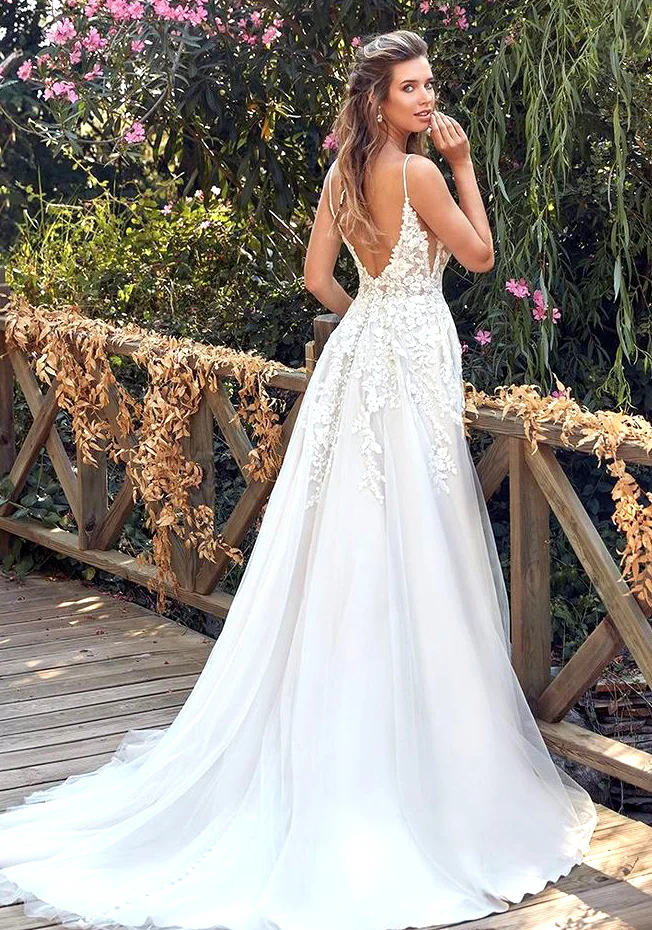
Maggie Sottero distinguishes an outward A-line from a fuller ballgown. That distinction helps separate degrees of volume; it identifies no archive dress. The A-line wedding dress guide develops the shape question. Decide whether you prefer a gradual opening or a much broader early expansion rather than treating every long pale skirt as the same silhouette.
2. Choose the upper frame separately
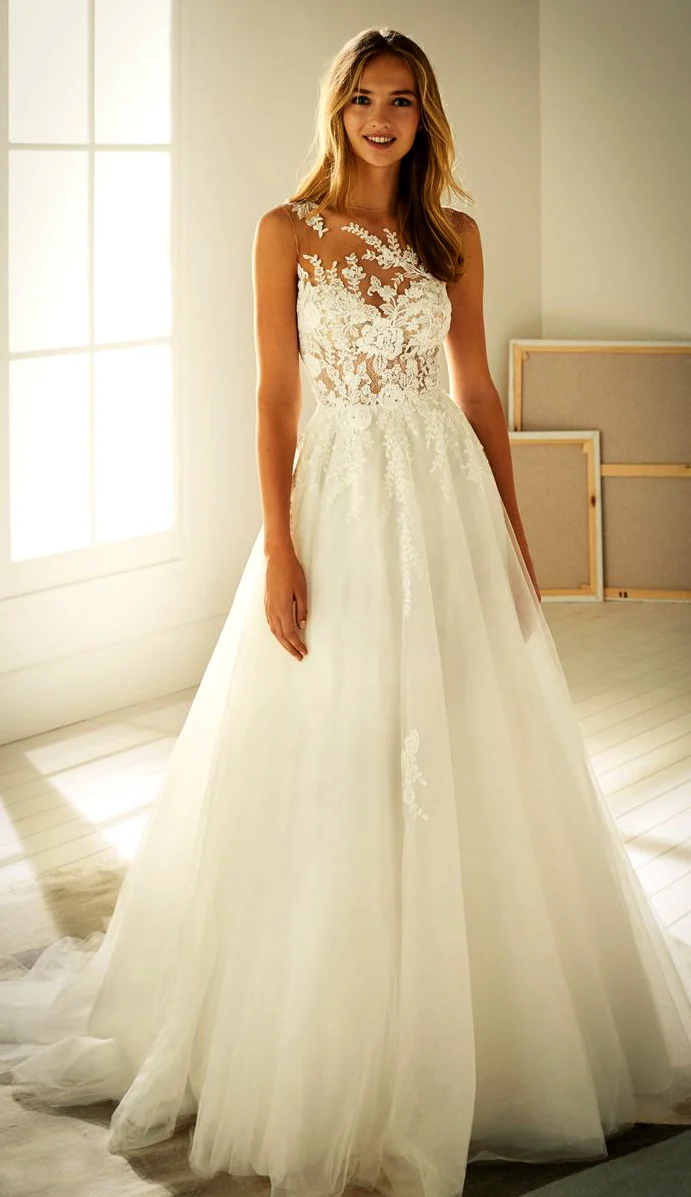
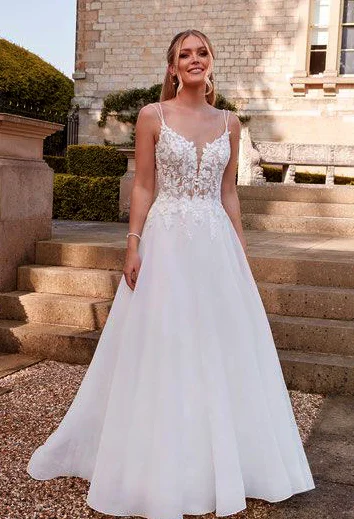
The main rear view has a deep open V bordered by floral shoulder areas and thin lines above. The fronts offer different information: one has a higher fine-looking upper ground with branching floral motifs; another has narrow straps and a deeper front centre. Two more use broader floral shoulder pieces beside V-shaped fronts. A pale pink view combines thin straps, floral pattern and a fine-looking side area.
Do not assume your preferred skirt obliges you to adopt one of these upper arrangements. Name the desired edge and coverage separately, then request their actual combination on a candidate. Similar colour and decoration are not enough to join an unrelated front to the main back. Keep the model reference with every view, especially when several pale images appear together in an online selection.
3. Compare where the pattern gives way to quieter cloth
The higher-ground front distributes floral drawing over the upper body and upper skirt, leaving larger quieter lower areas. The smaller narrow-strap front also concentrates decoration above the lower outward form. One broader-shoulder view has denser upper floral pattern; another extends scrolling motifs further over the upper hips. Those differences can guide how much unbroken lower area you want to see.
Trace the motif endpoints rather than assigning a lace technique or fibre. A photograph shows distribution, not textile composition. Compare a complete ordinary standing view before choosing a surface from a close detail. Ask which pattern and lining belong to the offered version. If an alteration is proposed near the waist or lower edge, have the affected motifs and resulting finish explained on that actual dress.
4. Distinguish the skirt from a veil behind it
The pale pink thin-strap front includes a fine veil falling behind the shoulders and spreading towards the left. Its outer edge is not automatically the skirt’s edge. The main rear view also has fabric across the path, but it is a different image, not the missing reverse of the pink front. Request separate views of the actual garment and any accessory to understand their combined outline.
The bridal accessories guide helps add the veil and other pieces individually. Start without additions when checking the skirt shape. Then add the intended veil and view the whole outfit from behind. Visible overlap confirms no detachable connection or supplied set. Ask what the actual offer includes before planning two different ways to wear it.
5. View the waist and lower finish with relaxed arms
Hand positions vary across the fronts. In the pale pink fountain reference, one hand rests near the upper edge. In another broad-shoulder front, the bouquet is held low beside the skirt rather than over the waist. The smaller narrow-strap front has lowered arms. Use those differences to understand what is visible; do not infer a shared movement sequence or a tested walk from separate photographs.
Try the real candidate with your intended underwear and shoes. Stand with relaxed arms, sit and take a few ordinary steps. Ask for the whole rear and both sides. A skirt spread over the ground shows a photographed arrangement, not its only possible distribution. If you want an alteration, discuss the complete front and rear finish with the actual shoes rather than requesting one general new length from a cropped image.
6. Record your chosen line without inventing its interior
Write down three visible preferences: where the skirt opens, how much quieter lower area remains and which upper frame you want. Add your planned footwear and veil, if any. The backless wedding dress comparison helps if the rear edge is also important. Confirm the matching front and back of the real candidate before settling on their combination.
A bell-like outline establishes neither a hidden hoop nor a particular number of underlayers. Have the actual construction explained instead. Treatment follows the finished garment’s label; GINETEX explains care symbols. A wedding dress with a flared skirt then becomes a specific shape choice within a complete outfit, rather than a promise about body type, material or the photographed setting.
Follow where the skirt opens below the waist, then compare the upper frame, lower pattern and matching views of the real candidate.
Frequently asked questions
Does a wedding dress with a flared skirt confirm a hidden hoop?
A wedding dress with a flared skirt does not confirm a hidden hoop or number of layers. Ask about the actual candidate’s construction.
Must a wedding dress with a flared skirt have one neckline?
A wedding dress with a flared skirt need not have one fixed neckline. Compare the upper edge and lower outline separately, then inspect their actual combination.
Are these fronts the matching views of the flared-skirt rear reference?
These front references are not confirmed matching views of the flared-skirt rear image. Similar pale colour or floral pattern does not establish model identity.
When should I test shoes with a flared wedding-dress skirt?
Test your intended shoes with the actual flared wedding-dress skirt before agreeing alterations. View the entire front and rear lower finish together.


