A spaghetti strap wedding dress starts with a very narrow line over the shoulder, but that detail does not explain the rest of the dress. The main reference shows one clearly visible fine strap from a rear angle. Two other photographs offer different shoulder arrangements: low billowy arm sections and longer sleeves attached at a covered shoulder. Use them to decide which area you want visible. They are separate references, with no confirmed matching front for the main image.
1. Trace the narrow strap before comparing the neckline
In the monochrome rear image, follow the fine pale line down from the nearer shoulder. Long loose hair partly hides the other side. A patterned fine-looking back area descends towards the hip, with quieter pale side areas beside it. The close lower form opens further down. This is useful evidence of one visible strap and a rear transition, rather than a complete specification of the front.
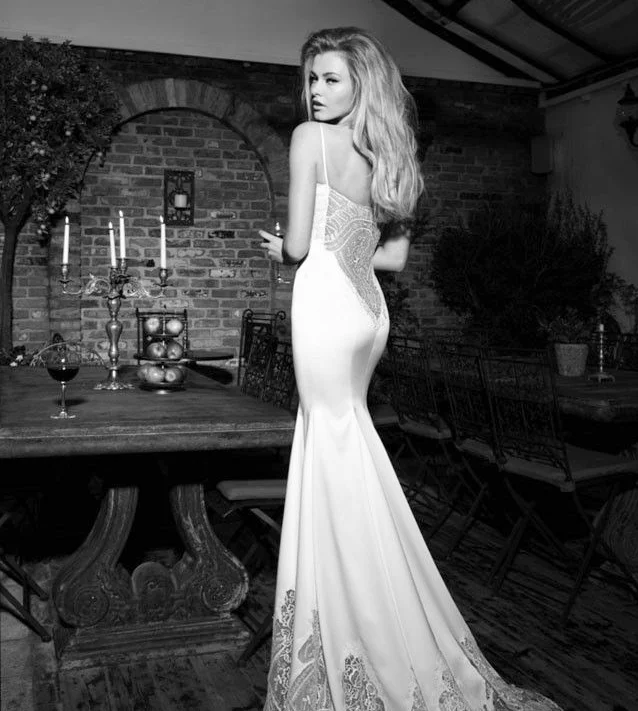
Maggie Sottero describes spaghetti straps as thin straps. That terminology names the visible feature; it identifies no archive model and promises no particular support. When an offer uses the same name, ask to see the actual strap width and both ends. A title alone should not supply connections that the photograph leaves hidden.
2. Request the matching front and side views
The main image does not show the front neckline. Neither the pale heart-shaped bodice in another photograph nor the deep front opening in the sleeved reference automatically belongs to it. Ask for front, side and rear views of the same offered model. Keep that identity clear if several pale dresses appear together in a fitting room or online product selection.
The backless wedding dress guide adds questions about the rear edge and its transitions. Here, the fine patterned back area also needs a closer explanation of its actual ground. It should not simply be called entirely bare skin. Record whether your priority is the narrow strap, the lower back outline or their particular combination before comparing another design.
3. Compare low arm sections without calling them straps
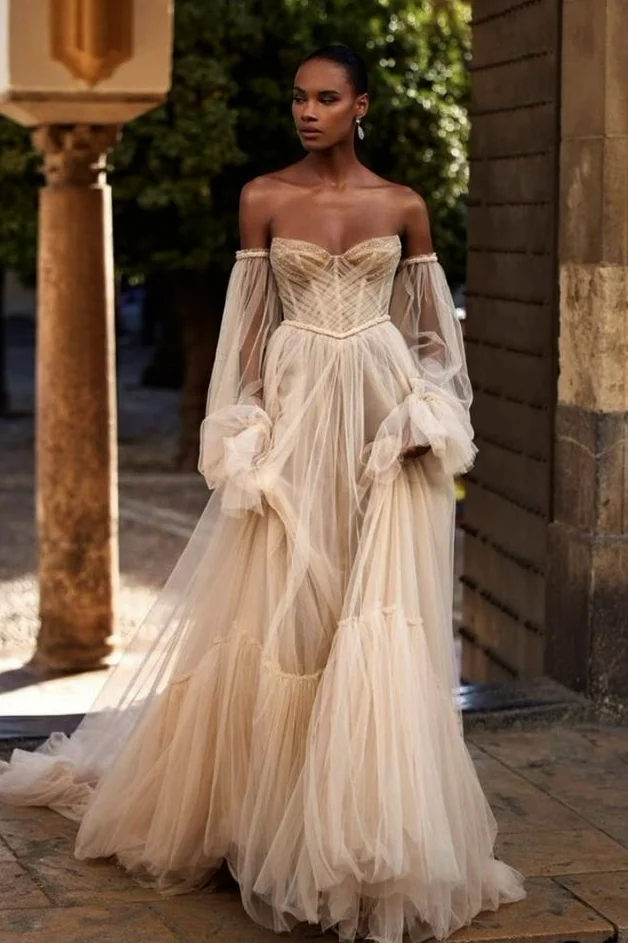
The champagne-coloured front reference has bare shoulder tops above low fine-looking billowy arm sections. Its shaped bodice has close diagonal lines and a pointed lower centre. The broad skirt continues down, with fabric held at both sides. A low upper-arm band in this image is a different visible arrangement from the main photograph’s fine line over the shoulder.
Use the comparison to decide where you want an edge to sit. Then inspect the actual candidate with your arms down, reaching forward and after a few ordinary movements. Ask which parts are attached and which pieces, if any, are supplied separately. A low position does not prove removability, and an appearance of volume explains neither a particular fibre nor how the arm section feels on you.
4. Keep the sleeved alternative as a separate choice
The other pale front view covers the shoulder and continues into long billowy sleeves. Patterned bands cross the upper body and skirt, while a deep central front opening and a high leg opening add separate lines. It is not another thin-strap example. The complete lower finish and feet are outside the crop, so the image leaves an additional length question unanswered.
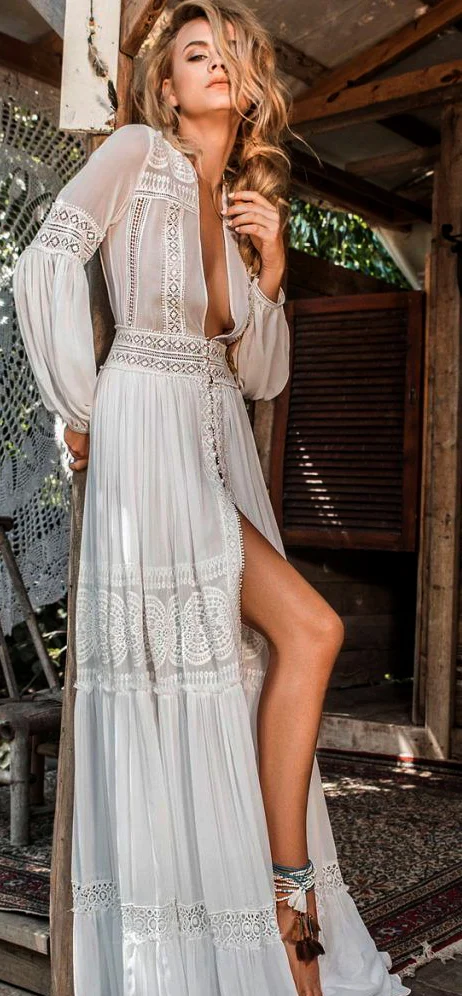
Compare that shoulder coverage with the main rear view before choosing the rest of the outfit. The high-neck wedding dress comparison offers another upper-edge question if you want to explore more coverage. You can borrow that question without adopting a whole photographed outfit. Confirm the exact front and sleeve arrangement on the candidate being offered to you.
5. Test the actual upper fit with your planned additions
Try your intended underwear with the real dress, rather than deciding from strap width alone. Ask the fitter to explain where the offered construction provides support and whether a change to the straps is feasible. Do not assume that shortening them is automatically the right answer. A proposed alteration needs to be assessed together with the front edge, back edge and your normal arm position.
The bridal accessories guide helps add jewellery and hairpieces after that first decision. In the main image, loose hair already obscures part of the upper arrangement. View your planned hairstyle from behind, with the actual dress. Add earrings individually, then look again at the strap line instead of letting a close jewellery view replace the missing front.
6. Finish the comparison with the entire dress
A fine shoulder line and a wide skirt are separate choices. The main image has a closer lower outline that opens further down; the champagne reference has a broader skirt below the waist. The sleeved front adds patterned bands and a leg opening. None of those differences determines which style you must choose. Request the entire offered dress with your shoes, including the lower areas absent from a crop.
Keep notes on what you have actually seen and which questions remain for the appointment. Treatment follows the finished garment’s label; GINETEX explains care symbols. A spaghetti strap wedding dress can then be compared through its real shoulder line, confirmed matching views and complete outfit, with the photographed alternatives kept in their own roles.
For an enquiry, give each image a clear role: the rear view supplies the narrow shoulder line, while the fronts remain alternatives. Ask which corresponding views of the offered model are available and which actual version you could try at an appointment.
Separate a narrow shoulder strap from a low arm section or covered shoulder, then examine the offered dress from front, sides and back.
Frequently asked questions
Does a spaghetti strap wedding dress always provide a particular support?
A spaghetti strap wedding dress’s thin straps do not establish its internal support. Have the offered construction and fit assessed with your intended underwear.
Does the rear photograph show a spaghetti strap wedding dress’s front?
This spaghetti strap wedding dress reference does not show its front. Request the confirmed front of the same offered model.
Are low billowy arm sections spaghetti straps?
Low billowy arm sections sit below the shoulder tops in the comparison. They differ from the fine over-shoulder line of the spaghetti strap reference.
Can spaghetti straps on a wedding dress simply be shortened?
A change to wedding-dress spaghetti straps needs assessment on the actual garment. The front edge, back edge and normal arm position belong in that decision.


