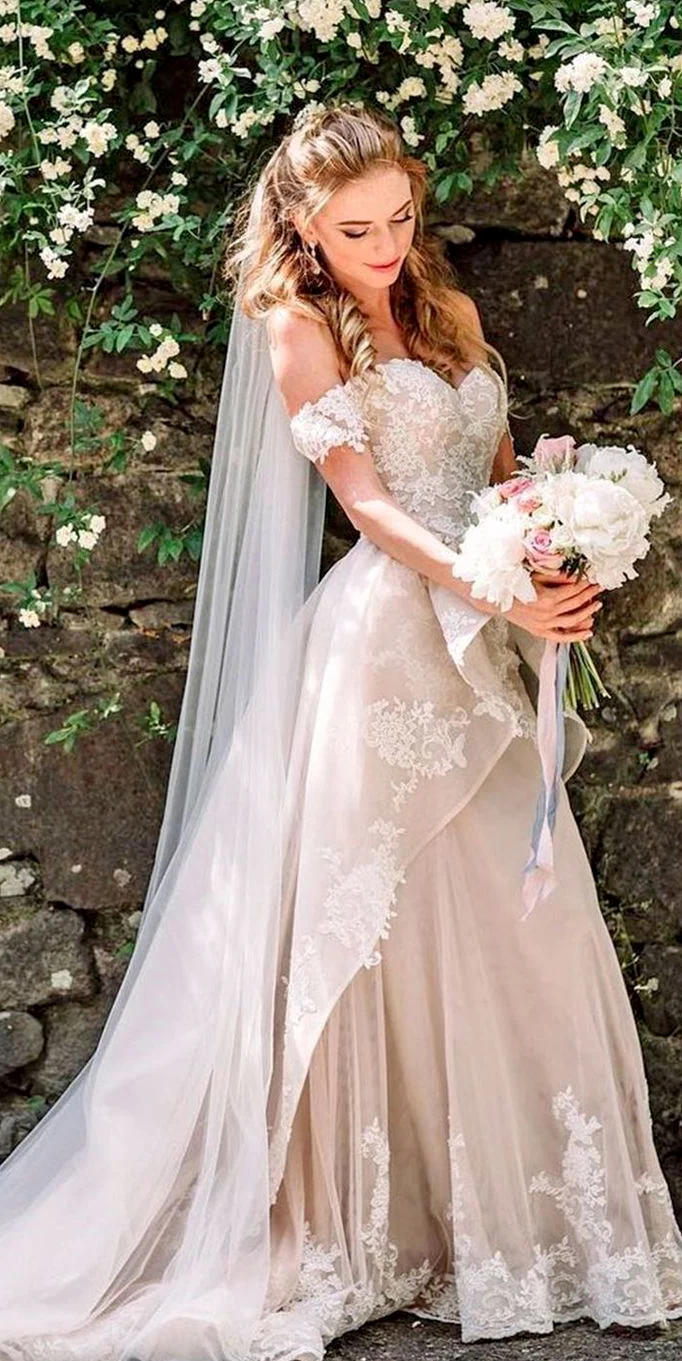
The pale, slightly blush-looking long dress carries low floral areas around the upper arms. Its front border curves inwards centrally. A diagonally directed floral outer edge lies over quieter lower surfaces. A long fine veil begins at the head and runs behind the person to the ground. Both hands hold a pale bouquet before the body, obscuring part of the middle area.
Assess the visible connection between upper-arm drawing and upper border initially. Floral lines also occupy longer skirt areas without proving a particular date of manufacture. Veil, bouquet and setting document neither age nor previous use. Name intended individual details independently from an unconfirmed history if this appearance appeals.
Actual condition and existing components need clarification before planned alterations to an older candidate. Compare your own veil on the real garment afterwards, where professional assessment permits use. An unobscured view without flowers supplements its front centre. The pictured direction remains a shape idea rather than promising how another existing dress can be changed.