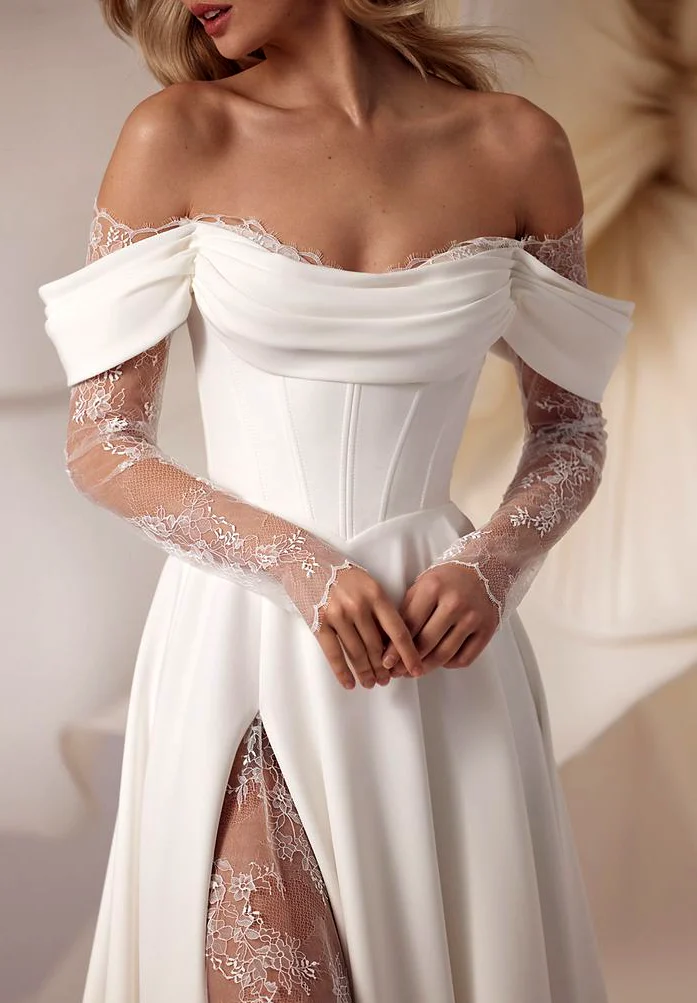
Simple wedding dresses need not look equally quiet everywhere. You may like a lightly patterned skirt while wanting to keep long decorated sleeves. Perhaps the folded upper edge is the feature you want, with clear surfaces below it as well. These photographs place such different distributions alongside more floral bodices. Use them to compare individual choices. They establish no common maker, fibre or particular construction. Name the area you want quieter before giving every pictured dress the same overall label. Your preference can concern one part without requiring the entire combination.
1. Locate the quieter area you want
Begin with one mark: chest centre, waist, sleeve or skirt. The original featured picture combines a quieter folded upper section with longer floral sleeves. Lower down, less patterned outside areas frame a floral inner section. The whole dress is therefore not simply free of pattern. If the upper centre is what you like, record that specific area. You can then place an offer with different sleeves beside it without first committing to the complete photographed combination. A marked area makes the distinction clearer than a general style label.
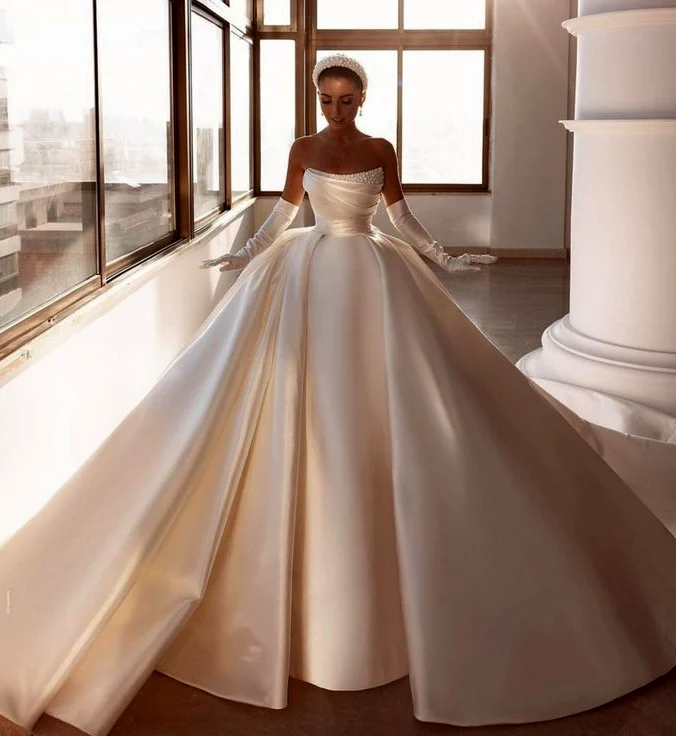
The broad strapless front uses quietness differently. Folds and a fine pale border structure its bodice; larger surfaces open across the skirt. A floral V front places many small shapes around the upper centre and leaves more space below. Which distribution do you want to find again? The simple wedding dress comparison develops the choice of individual quieter areas. Record what attracts you before searching for a complete equivalent. That description also gives you a specific feature to compare on the next candidate.
2. Choose width separately from pattern
A broad skirt and a quieter surface can occur together. The picture with long gloves shows large folds and an extensive lower outline. The bluish back also combines breadth with a less patterned centre. Volume alone therefore cannot tell you where your eye finds the greatest number of small details. Compare two outside lines first and two surfaces afterwards. Broad is not a necessary opposite of simple. Neither option has to outrank the other; your own preference can combine width and drawing in several ways.
Manufacturer terminology supports no single compulsory shape either. On the official Justin Alexander Signature overview, “Clean” appears for the closer Lucida design and for Rosalind with a broad ball-gown skirt. This identifies none of the archive photographs. It only demonstrates that a quieter style description can accompany different outlines. The full-skirt wedding dress comparison helps assess outside breadth separately from surface drawing. Examine the complete skirt of your actual candidate afterwards rather than assigning its shape from a cropped detail.
3. Compare upper edges alongside sleeves
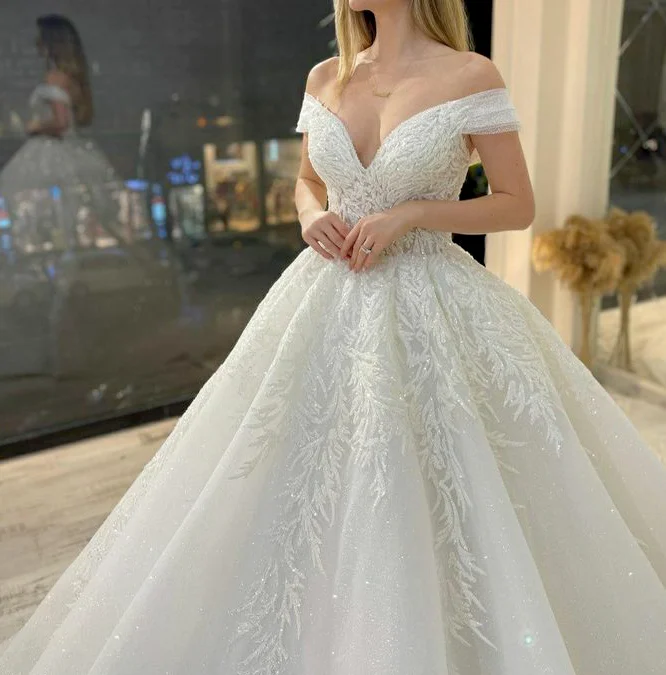
The selection ranges from a folded strapless front to short low shoulder bands and long sleeves on a fine translucent-looking ground. Similar quieter skirt areas therefore do not mean identical upper boundaries. Mark the lowest centre point and the edge’s route beside the upper arm. Seek another photograph taken from sufficient distance. A close crop may show the border drawing without establishing the complete sleeve width or entire bodice. Ask for the missing view instead of mentally completing an unseen edge.
Try the offered version with both arms lowered. Compare its shoulder line without a hand against a wall or in front of the waist first. Afterwards repeat an ordinary movement from your own plans. Patterned sleeves cannot predict support or wearing sensation. A higher fine upper area and a lower floral edge are visible arrangements to begin with. Actual connections need explaining and demonstrating on the real dress. Do not assume removability, adjustment or unrestricted movement from the photographed form alone.
4. Follow the change from pattern to open area
Pattern can stop at the waist, extend onto the skirt in individual branches or fill an inner section between quieter outside surfaces. Those differences change where visible detail gathers. Floral shapes continue downwards in the closer V picture; a larger quieter skirt begins beneath the pointed-waist front. Compare more than the number of flowers. Trace where the dense drawing ends and which surface follows it. Describing that distribution makes a more precise request than naming a pattern without locating its boundary.
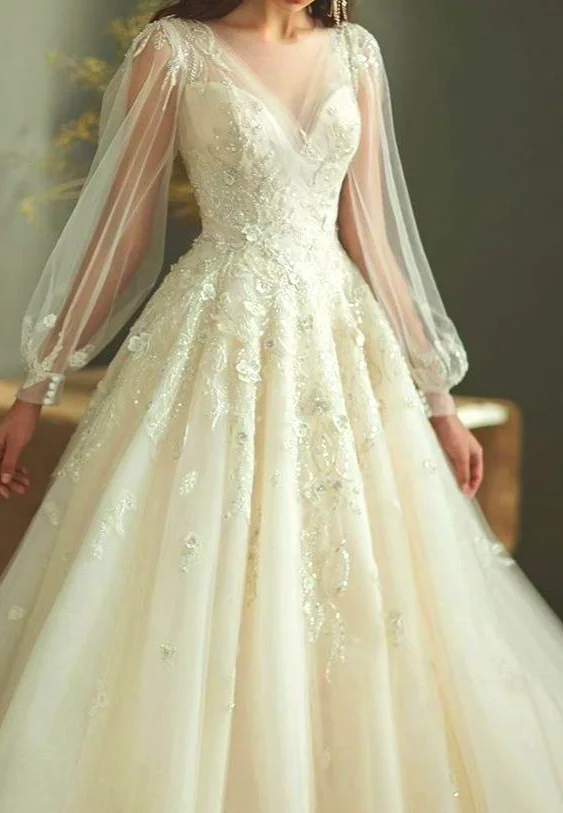
Take one personal picture from ordinary distance and a second for that transition if photography is allowed. Keep stance and light reasonably similar. A hand before the waist or a braced arm may conceal exactly what you want to compare. For a remote offer, request another view if the boundary falls into shadow. More pictures cannot replace product information, but they help turn a general impression into a specific unanswered question. Tell the seller which area is missing rather than asking only for a better picture.
5. Check colour and additions on the same candidate
The bluish back belongs here as an independent colour reference. It is no established reverse of another pale front. Exact colour names cannot be reliably determined from a pale photograph either. Ask for the offered shade’s name and examine an available sample beside the actual bodice. If the quieter surface attracts you, separate that preference from whether you want this particular blue impression. A similar distribution may interest you in another colour. Do not assume a screen view reproduces the same shade in every setting.
Add one piece you actually intend to use next. Long gloves change the visible arm area differently from a narrow hair ornament. The bridal accessories page offers further comparisons. A quieter skirt obliges you to wear neither more nor less jewellery. Try additions individually on the same dress. That keeps it possible to see which piece changes your preferred upper edge or open centre. Replacing the entire combination at once makes the effect of each addition harder to identify.
6. Confirm the complete offered version
Finish with three notes: the quieter area you want, preferred outside line and one detail picture still missing. Ask about materials, actual connections and the extent of any planned alteration on the real offer. A close crop contains no complete hem; a spread surface does not document an ordinary step. Try the offered length with your intended shoes while standing, sitting and making a small turn. Assess your own observations instead of deriving general suitability from a photograph. Record what you still need to examine again.
Care follows the product rather than the word simple. GINETEX explains care symbols; use the actual label’s instructions. Shine, folds and small floral shapes prescribe no common cleaning process. Your three notes can guide the next offer: where is its quieter area, how broad is the complete shape and what needs confirming? These questions keep the comparison concrete even when the photographs show very different dresses. Make the final choice through confirmed information and your own trial.
Mark the quieter area you want. Compare outside width and neighbouring details separately, then confirm the complete offered version of the same dress.
Frequently asked questions
Must a simple wedding dress have no pattern anywhere?
A simple wedding dress can combine a quieter centre with patterned sleeves or a decorated upper edge. Decide which particular area you want to keep quieter.
Is a narrow shape automatically simpler than a broad skirt?
Width and surface drawing are separate choices on a simple wedding dress. A broad lightly patterned skirt or a closer outline can each match your preference.
Are all the dresses in this selection white?
The simple wedding dress comparison also includes a distinctly bluish rear view. Photographs cannot establish an exact product colour; compare the offered shade on the actual dress.
Can I infer care from a quieter-looking dress photograph?
Care for a simple wedding dress follows its actual label. A lightly patterned surface establishes neither fibre composition nor permitted treatment.


