A Greek-style wedding dress can be selected as a modern styling idea through draping, longer fold lines and distribution across the upper body. These six references do not show one uniform historical garment. They combine different neck frames, waist areas and front openings. Name the visible feature you like first, then obtain the actual offered dress’s details. A style label explains neither its inner construction nor its fit on you. Keeping those questions separate makes the visual comparison more useful.
1. Separate modern styling from historical clothing
The Metropolitan Museum of Art overview of ancient Greek dress describes rectangular fabric arrangements secured at the shoulders and belted or folded around the body. Arrangements varied. This is historical context rather than confirmation of an ancient cut or production method for these modern dresses. It supplies no fibre identification for an archive photograph either. Visual resemblance cannot establish identical construction on a present-day garment.
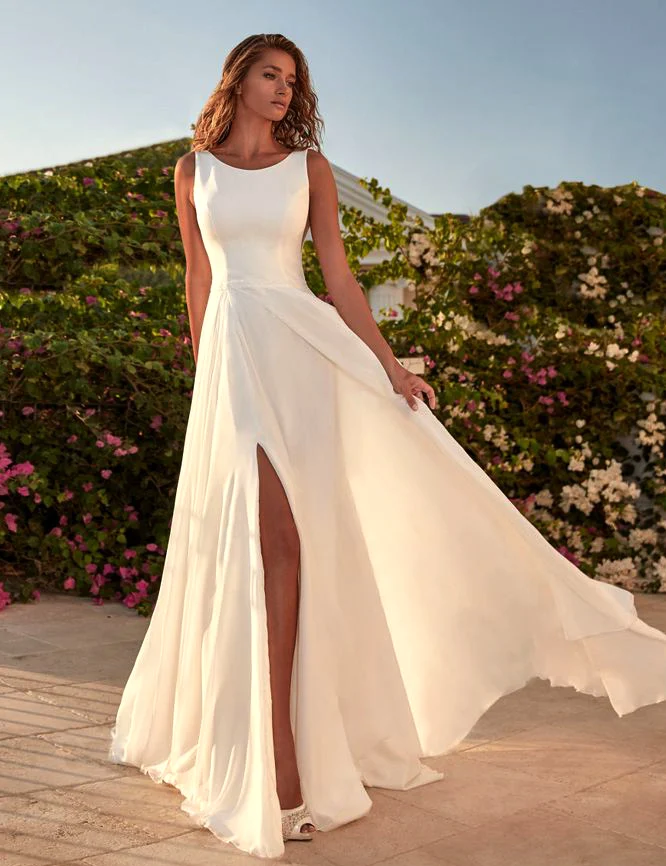
For your selection, describe a precise visible preference instead. Do you want an asymmetric bodice, a pronounced high band or a long skirt with narrow vertical folds? These features need not appear together. The quieter sleeveless reference with its rounded neck frame has a different upper line from the V views. It can still belong in your personal comparison without becoming a binding definition of the style. Treat each view as a separate design question rather than choosing one as the only correct example.
2. Choose neckline and shoulder distribution
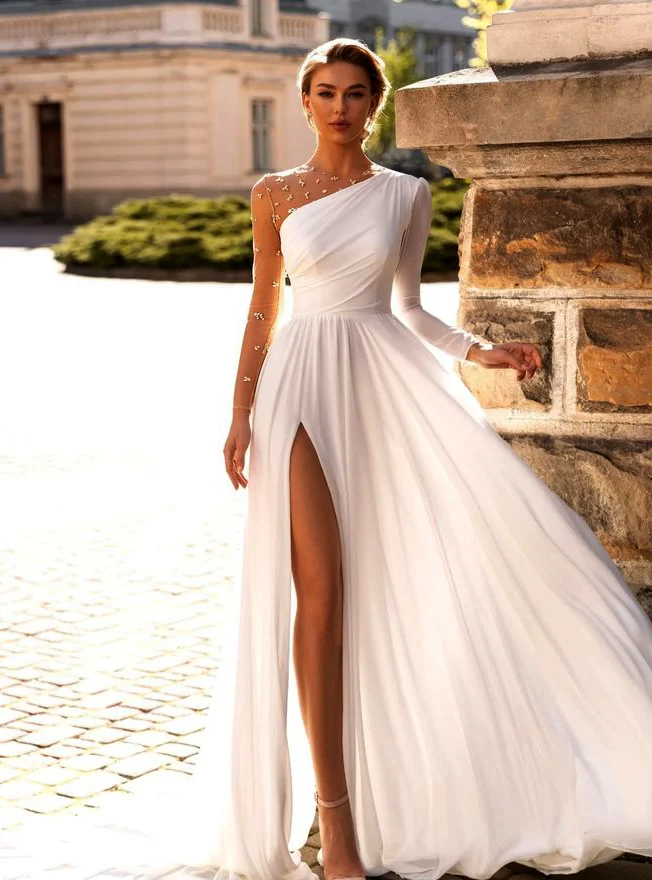
The group compares a rounded neckline on a sleeveless bodice, broader V connections, narrower straps running towards the neck and fabric over a single shoulder. Start with distribution of the upper surface. A V frame and a side opening are different questions. The ivory dress with a broader high band connects broad shoulder areas to a V; the one-shoulder reference instead carries fabric diagonally across the upper body. You can compare either effect without requiring their other features.
Another photograph shows a denser long sleeve on one side and a translucent-looking area with small gold-coloured motifs across the opposite arm and chest. That side should not simply be described as a bare arm. Consider the patterned area as deliberately as the denser sleeve. Add a relaxed-arm view of the real model so that posture is not mistaken for your preferred distribution. The actual layer beneath that visible effect still needs the garment’s own explanation.
3. Read band position separately from fold direction
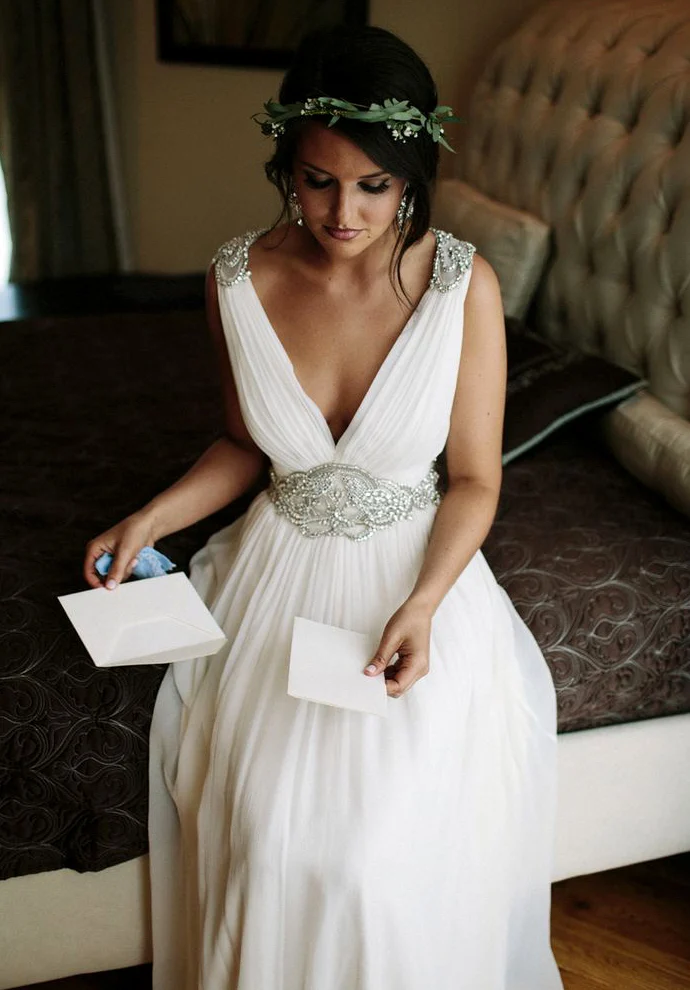
The seated V reference places a broader pale reflective accent relatively high. The standing ivory dress also shows a broad high band beneath the bust area, with longer folds extending down below. Other views gather fabric lower or to one side. Pale decoration alone does not explain the actual bodice-to-skirt connection. Ask about that connection if band position is central to your choice. Brightness or colour should not be treated as proof of a seam.
The Empire waist evening dress guide helps distinguish a high connection from decorative borders alone. It creates no requirement for that shape in a Greek-inspired bridal look. Select fold direction separately: horizontal at the band, diagonal across the bodice or lengthwise down the skirt. The draped bridal bodice comparison develops direction and gathering points without treating folds as proof of a particular material. Similar colours can contain quite different arrangements.
4. See the skirt without a changing hand hold
In one V view, both hands hold the long skirt outwards. The quieter sleeveless reference draws outer fabric out at one side. These poses show different distributions at particular moments. They prove neither ordinary standing width nor an internal support. If the extended line appeals, have the actual candidate shown with relaxed arms and without side pull as well. The held width alone cannot settle the garment’s usual fall. A further view of that same dress must answer the open question.
The seated photograph imposes another limit: the long folded skirt’s lower ending is outside the image. It can show upper distribution and jewellery ideas, but not complete length beside the shoes. Add the missing standing view of the same actual model. Do not combine different archive images as supposed before-and-after evidence for one garment. Identical model membership would need independent confirmation. Another similarly coloured skirt cannot replace the absent lower section.
5. Add openings, shoes and jewellery concretely
Several standing references show a front leg opening, but poses and incomplete shoe views differ. Compare opening position separately from outer skirt length. On a real dress, include your own standing, sitting and ordinary steps. A visible open area establishes neither stride range nor your preferred coverage. Set the hem with the shoes you actually intend to wear. A single visible foot does not complete the whole lower combination; your own full view is still needed.
The evening dress shoe comparison develops open straps and closed shapes beside the real hem. Add jewellery individually afterwards. A fine pale hair line, two narrow hairbands or a larger waist accent are different visible ideas. The photographs establish neither the metals used nor a historical meaning for these decorations. You need not adopt the photographed jewellery to choose the draping you prefer. See the dress line first, then compare your own additions.
6. Turn the image idea into two real offers
Bring a few concrete observations to the consultation, such as broad V frame, vertical skirt folds and a preferred front opening. Have the actual offer’s included pieces, matching rear and inner construction shown. Try the intended undergarments with that precise dress. A smooth or finely folded surface proves neither weight, support nor comfort. These questions need product information and a personal fitting. Enjoying a photographed effect cannot guarantee how it will be created on the real candidate.
The wedding dress buying guide moves from initial preferences to comparable offers. Care depends on the particular garment’s markings; GINETEX explains care symbols, but no photograph prescribes a treatment. Finally compare two real candidates with the same shoes and chosen additions. The style label remains a starting point while visible preferences and clarified product properties guide the decision. Resolve missing construction or length information on the actual garment instead of borrowing it from another reference.
Choose a Greek-style wedding dress through visible draping and upper distribution. Separate the modern styling idea from historical clothing and assess the real complete model.
Frequently asked questions
Does a Greek-style wedding dress prove an ancient cut?
A Greek-style wedding dress is a modern styling idea here. Visible folds and accents establish neither ancient production nor historical origin for the pictured dress.
Must a Greek-style wedding dress have a high waist?
A Greek-style wedding dress need not combine every illustrated feature. Choose band position, neckline and fold direction separately; pale decoration alone establishes no particular bodice-to-skirt connection.
What must I clarify about the actual wedding dress construction?
For the real Greek-style wedding dress offer, ask about included pieces, inner construction and care markings. Try your undergarments and additions with that precise model.


