Choose an embellished wedding dress by deciding where decoration should sit before comparing individual flowers or flashes of shine. Should it begin at the neckline, continue across the skirt or accompany a quieter surface? Decide how much of that arrangement you want to see in the complete outline. The six references show different visible distributions. Their appearance establishes neither luxury quality nor handwork, particular fibres or real gemstones. For an order, confirmed information about the actual model matters alongside the visual effect you prefer.
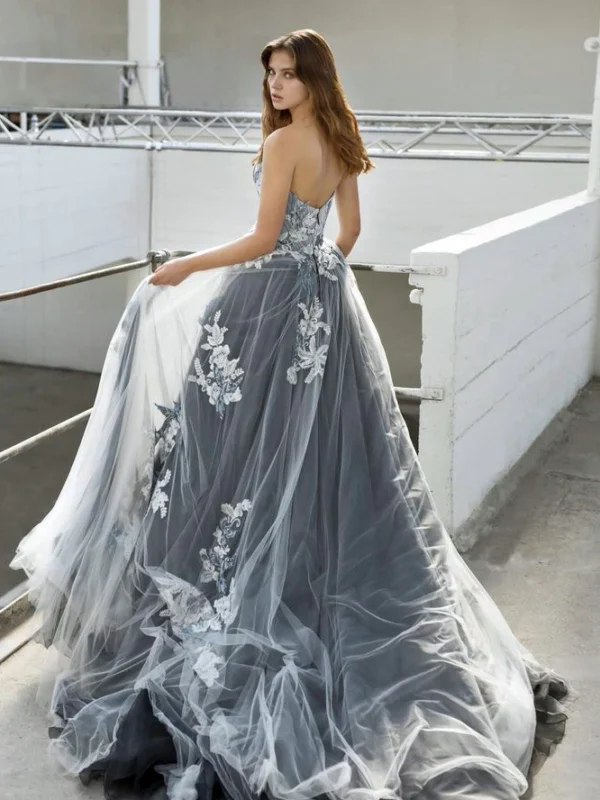
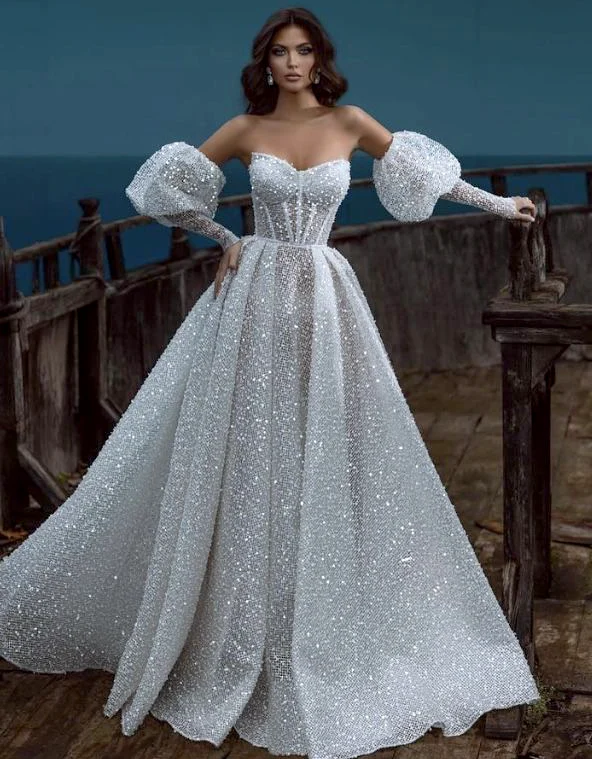
The selection ranges from more pronounced flowers at an upper edge to reflective front surfaces and long floral lines leading downwards. Another image distributes dense leaf and flower shapes across a broad skirt. In the high decorated neck reference, strand-like details cross diagonally over the upper skirt area. Compare these directions separately instead of treating every photograph as one uniform style. You can then describe where your own dress should remain quieter and where it should place emphasis. Start with that arrangement and examine individual details afterwards.
1. Where should your embellished wedding dress place emphasis?
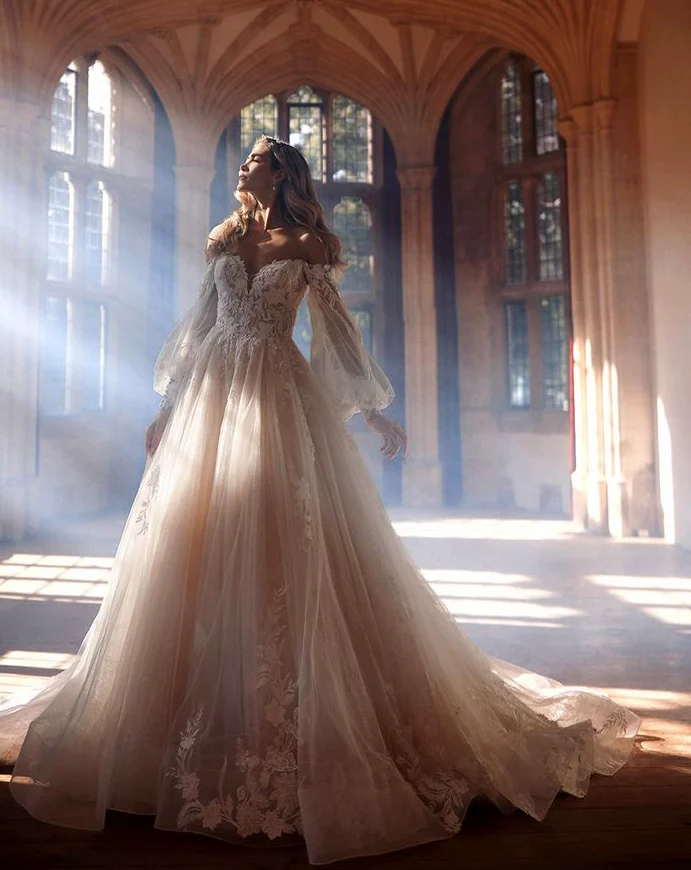
Begin with an overall view. The reference with longer, more spaced floral lines leads the eye down the skirt. The more densely patterned image places more decoration beside itself across the surface. Imagine a similar skirt shape with each distribution and decide which you want to notice from a little further away. A close look at an individual flower is a later question. A detail crop alone can make a feature occupy more of your attention than its share of the complete dress would suggest.
Mark one main area in your selection: neckline, bodice, waist or skirt. That note is more precise than a request for greater luxury. If the upper line is your main interest, the sweetheart neckline comparison adds a separate shape question. Decoration and neckline can be considered independently. Liking the distribution in one picture does not mean you must also copy its complete neck edge. Ask to see actual models offering the combination you want rather than assuming every reference feature can be combined in one product.
2. How can you separate visible texture from confirmed details?
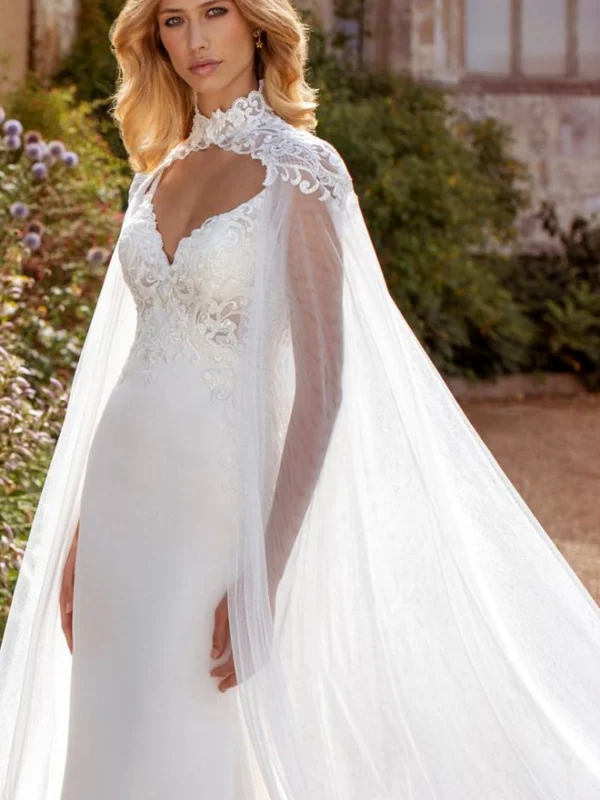
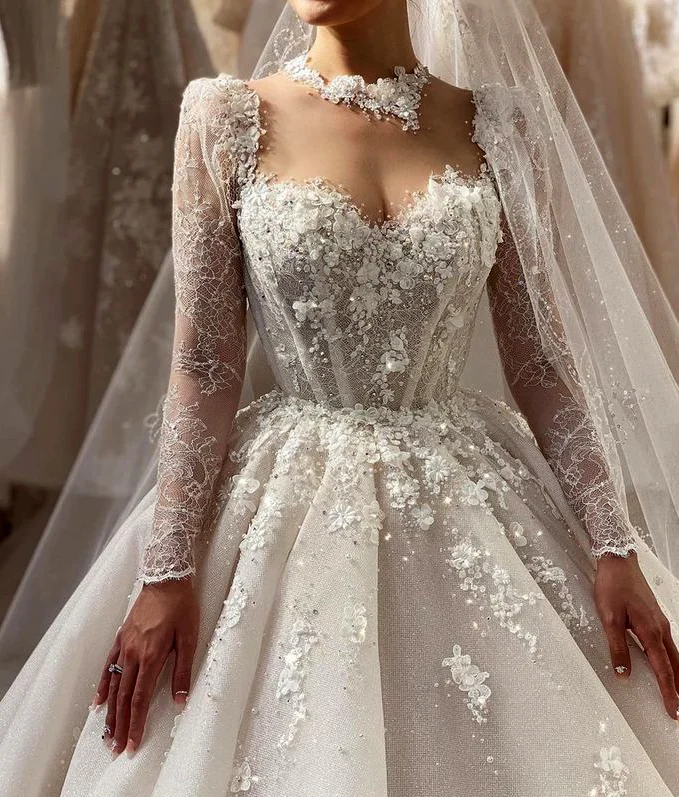
In the closer reference with long sheer-looking sleeves, larger flower shapes project near the upper edge. Other images show smaller reflective points or flatter floral lines. Describe those visible differences first. Terms such as pearl, crystal, lace or a particular fibre need appropriate product information. A reflection in the photograph cannot establish that identification. Ask about the material, the connection of the decoration and the version of a specific dress that you can actually order. Decoration density alone does not determine its production method.
A separate product example makes the distinction clear. Pronovias explicitly describes three-dimensional floral decoration on its named HYLLIS model. That information belongs to that product; it does not identify our archive photographs as HYLLIS or that brand. The references support a visual comparison while the source shows how a particular version can be described. If vertical bodice divisions interest you, the comparison of corset appearance and construction explains why visible lines likewise do not establish an internal function. Keep your preferred appearance and confirmed construction separate in the notes.
3. Under which conditions should you compare shine?
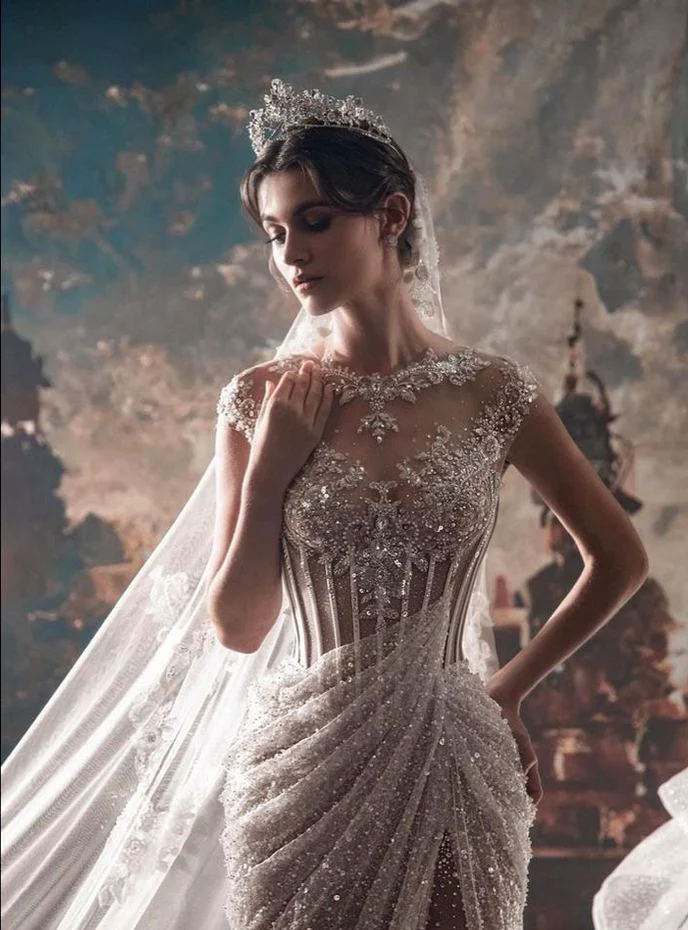
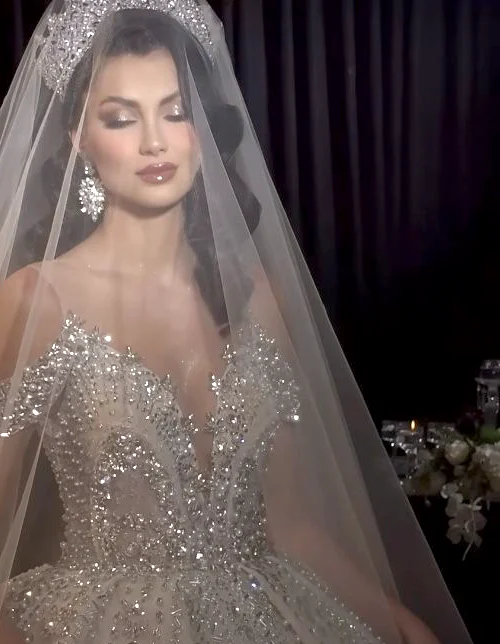
The close image with a veil over the face has pronounced points of reflection. Other references have more even lighting and quieter-looking broad pale surfaces. Those are different picture conditions. They cannot establish which real dress shines more or has better workmanship. Use the reflective photograph to name a visual direction you want to explore. For the actual comparison, view the dresses on offer from a similar distance and under reasonably comparable lighting. Return to the same area rather than comparing unrelated patches of each garment.
Look at one decorated spot and then at the whole dress. Ask for a view in the available daylight and the intended indoor lighting where that is possible during the fitting. If photographs are permitted, record the conditions in which you took them. You do not need an exact recreation of the inspiration image. What matters is whether you like the real effect with your hair, skin and accessories. A digital record can help your memory, but it does not replace looking at the actual material yourself.
4. How should jewellery and a veil meet the decorated surface?
Start with the area you want to leave open. In the high decorated neck reference, the upper area is already filled, while diagonal strand-like details lead toward the waist and skirt. Adding another necklace raises a different question from adding earrings. The reference with larger flowers projecting near the neckline places its emphasis lower down. Introduce jewellery one piece at a time and observe the line you want to retain rather than simply counting the number of shiny pieces in the combination.
Add your intended veil to the actual arrangement afterwards. Observe which areas it covers and where you want to guide it while moving. The closer photograph with a veil over the face is a styling idea, not confirmation of another veil’s handling. If you are considering an extra shoulder layer, the bridal cape comparison supports a separate decision. Establish included and additional pieces explicitly, even when a reference shows them together. The actual offer determines what is supplied and which connections belong to the version you can try.
5. What should you discuss before altering a decorated dress?
Show the area to be changed together with its surroundings. For length, the question concerns more than a number: it also involves how the visible pattern would continue toward the new lower finish. An adjustment to the bodice may bring neighbouring motifs into the discussion. Ask how the specific proposal is expected to look on the actual dress. The image can guarantee neither straightforward shortening nor moving individual details. Record the expected appearance explicitly so the proposed measurement change and its visual result are discussed together.
Ask which work would be included, what is offered separately and when you can try the result again. Note the affected areas and the final version agreed together. Try that arrangement with the intended shoes and relevant accessories afterwards. A smaller amount of alteration is not proof for or against quality. The point is an appropriate solution for this dress. If the transformation you want cannot be confirmed, compare another actual model on offer instead of inferring feasibility from a photograph of a similar-looking garment.
6. Which details do you need for ordering and care?
Beside your favourite, record the desired distribution, confirmed model name and discussed version. Keep unanswered questions separate. Make sure the offer identifies included accessories and the agreed alteration scope. You can then compare actual work and supplied pieces without assuming that denser decoration means more handwork or better fibre. No brand or price claim about the archive photographs is needed for that purpose. They can remain references for the visible style details that prompted your preference, while the real product is identified through its own confirmed information.
Confirm treatment of the finished product using its label and accompanying information. GINETEX explains care symbols; the decoration itself supplies no reliable washing or cleaning instruction. Ask about the veil and other pieces separately as well. Before taking the dress home, check its agreed version as a whole, including side and rear views. Keep the offer beside your comparison note. Your desired visual effect, the properties actually confirmed and the work agreed can then be distinguished clearly when making the final choice. Use inspiration images alongside those records.
Choose where decoration should be concentrated on an embellished wedding dress first. Then compare the close detail, complete outline and actual garment under similar lighting.
Frequently asked questions
Is a very shiny embellished wedding dress automatically higher quality?
Strong shine and plentiful embellishments on a wedding dress establish neither workmanship nor fibres. Compare the actual version and product information, and assess shine on the real dress under similar lighting.
Can every flower on an embellished wedding dress be repositioned?
Repositioning every flower on an embellished wedding dress cannot be promised generally. Show the specific area on the offered model and ask for an explanation of the work scope, expected appearance and possible alternatives.
What should an embellished wedding dress offer identify?
An embellished wedding dress offer should identify the confirmed model name, agreed version, included pieces and discussed alteration scope. Keep unanswered material or care questions separate from the visual effect you want.