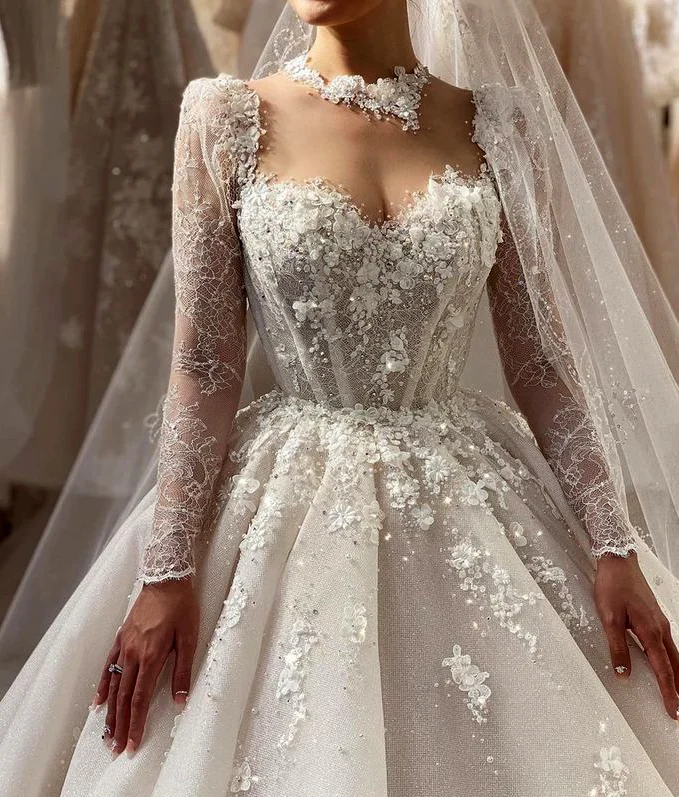
The wedding dress with flowers concentrates larger raised-looking forms near its upper edge. The centre extends lower, with long sheer-looking floral sleeves at the sides. Vertical lines divide the bodice. Further flowers spread with larger gaps across the visible skirt. A close neck ornament and a veil add to the arrangement. The lower hem remains outside the closer crop, so the upper distribution is the main comparison available here rather than a complete skirt outline.
Begin with the transition from denser to more spaced decoration. Do you want the stronger flower area near the neck edge and quieter gaps underneath, or would you prefer a more even emphasis? Describe that distribution in the actual selection instead of treating every flower in the image as essential. Then look at a wider view of the same real model to understand the share of the upper decoration in the complete dress.
Try jewellery one piece at a time beside the chosen bodice. The close neck addition in the picture is neither a requirement nor confirmed as included. If the type of flower interests you, ask about the offered garment’s construction. Projection alone explains neither material nor handwork. A specific order needs actual product information alongside the visual effect that attracted you.