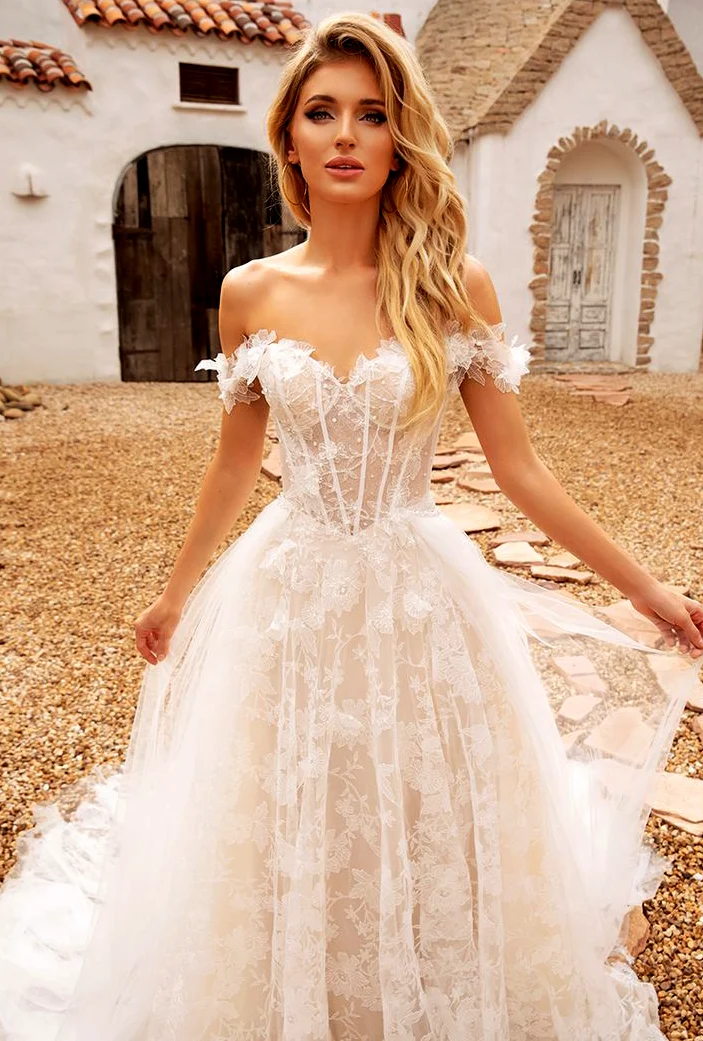
A softer point above a held skirt supplies a comparison with the clearer close middle. Narrower vertical sections organise the bodice, with smaller lowered areas beside the shoulders. Below the middle, the shape enters the floral skirt less sharply. The hands hold side surfaces outwards. This reveals more pattern while placing less emphasis on the lower section’s ordinary fall. The amount of visible skirt should therefore remain separate from the boundary you are choosing.
Begin at the lower bodice course. Do you want this softer connection, or should the point read more clearly? Similar decoration can accompany either preference. Avoid mistaking the width exposed through holding for the form of the central boundary. Looking at the transition itself is enough for that first question; the larger skirt arrangement can wait until you compare volume.
Request another view on the actual candidate with arms relaxed and the skirt falling normally. Compare front and side afterwards. If a bouquet is planned, add it only at the next stage and observe what it covers. You can then choose the softer middle deliberately without treating the whole photographic arrangement as necessary to obtain it.