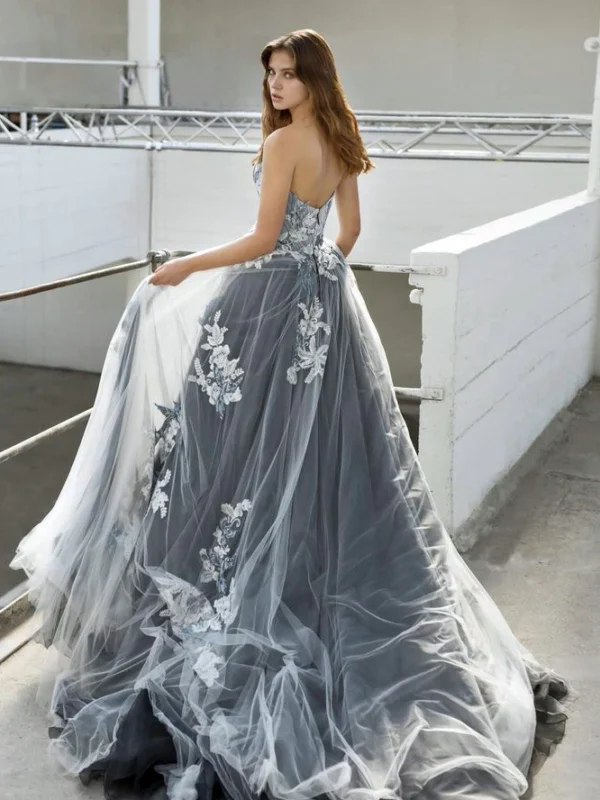
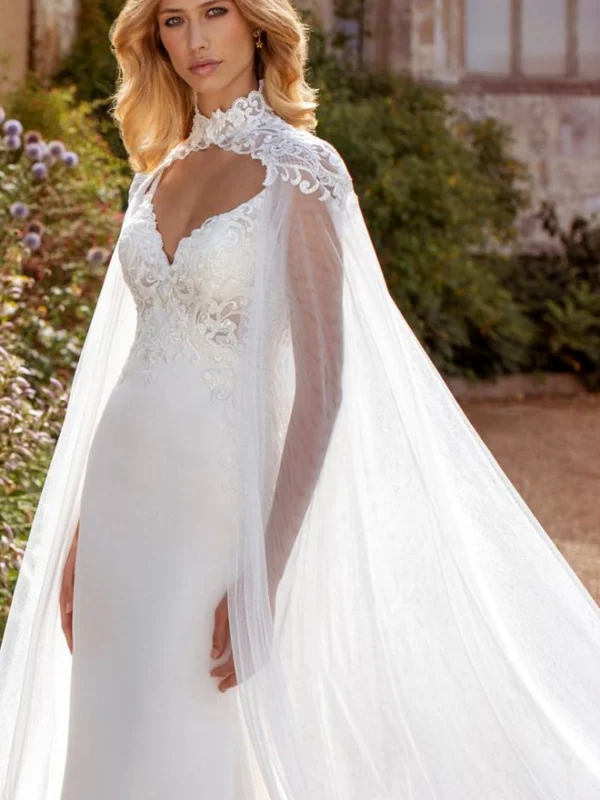
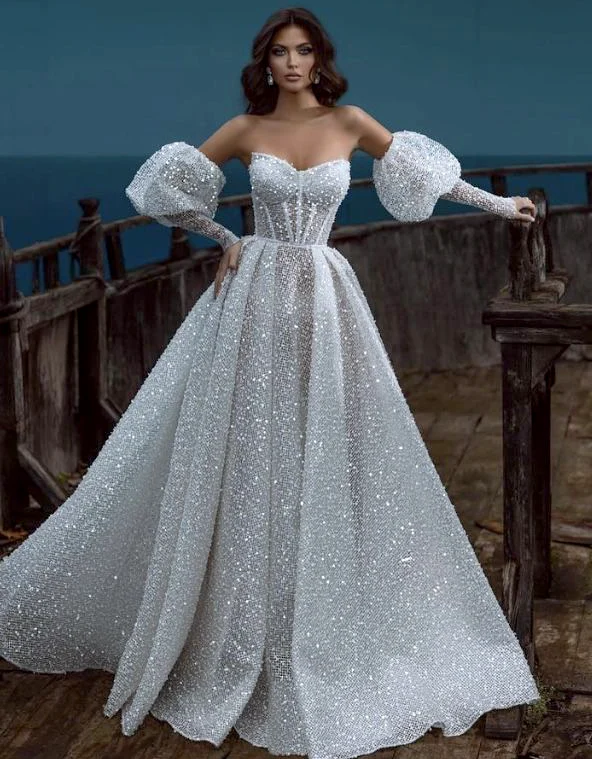
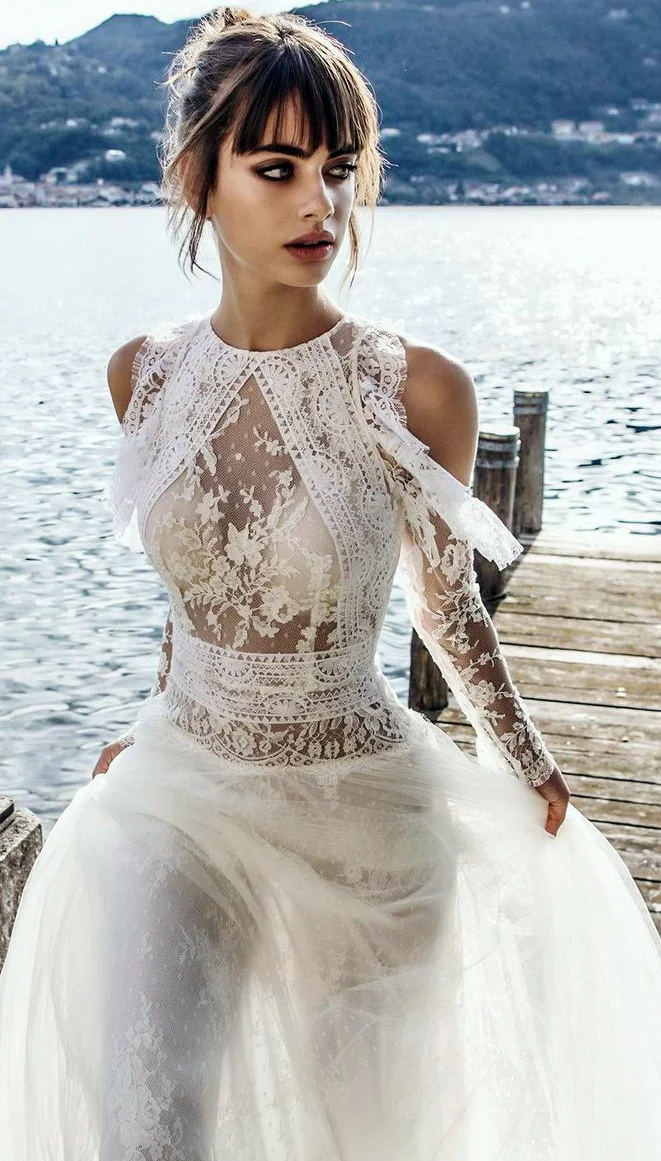
A cold-shoulder wedding dress can have a higher neck edge and long sleeves while leaving the shoulders open at the sides. The leading example combines these openings with floral areas and more clearly defined bodice bands. Three sleeveless or thinner-strap comparisons help identify the upper outline you want. Choose which shoulder area should remain bare and which fabric should stay visible above it first. Then compare sleeves and real jewellery on the dress you wear instead of treating every bare-shoulder arrangement as identical.
Product names can describe neckline and shoulder arrangement separately. Justin Alexander’s historical campaign archive, for example, lists a jewel neckline together with cold-shoulder sleeves. That illustrates separate features without identifying any unknown garment in this selection. Your own candidate needs its own views and product information.
Recognise the cold-shoulder wedding dress at its upper edge
Follow the leading image’s rounded neck edge across the chest towards the shoulders. Part of the shoulder remains open at the side, with a long patterned sleeve continuing below it. Fabric is still visible closer to the shoulder above the opening. This differs from a dress whose whole upper edge sits below the shoulders. If you want that second arrangement, the off-shoulder wedding dress guide helps. Here the choice concerns an opening within an upper design that continues higher around the neck.
At the fitting, show where you want the opening to begin and end. Request clear front and side views of the actual model with arms relaxed. Assess the exposed area in relation to neck edge and upper sleeve. Another person’s size does not supply your measurement. Choose the visible arrangement on yourself and establish the existing connections on the garment. Discuss a proposed change specifically; the opening shape you want does not by itself confirm that the available model can be altered to provide it.
Assess the neck edge separately from the front opening
The leading example has a higher rounded outside edge above a translucent-looking floral front. Motifs and narrower geometrical-looking bands create further lines inside it. The comparisons’ deeper V instead opens the actual front boundary downwards. Choose side shoulder openings, a more open front centre or both. A higher outside edge does not automatically explain how covered the area below it is. Assess these sections separately before choosing the whole upper outfit through a single neckline name that may not describe the coverage you want.
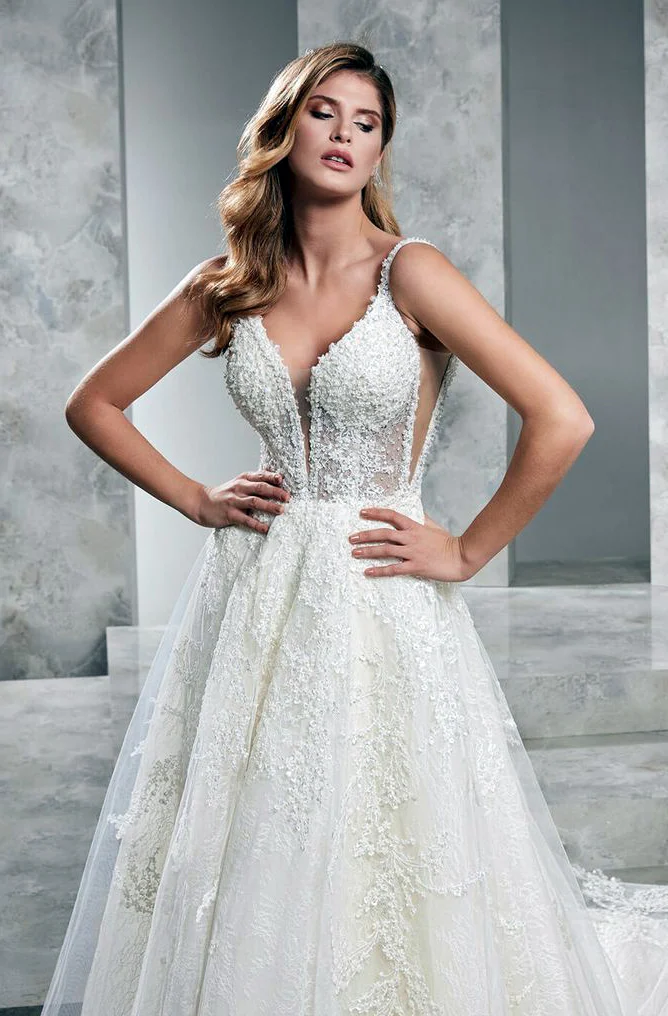
Try the actual version with intended underlayers. View the front and slight side to identify the areas you prefer covered. Compare a genuinely available different inner layer if needed. Pale motifs in the image cannot replace product information about composition or construction; the worn combination matters. If you like the shoulder opening but want another higher front border, find that arrangement on the real candidate instead of mentally inserting a second reference’s neckline. This keeps the visible design preference and actual available garment connected.
Compare long sleeves with bare arms
The leading reference carries pattern along the long sleeves to near the hands. A smaller waved or gathered edge sits above beside the shoulder openings. The other images leave the arms bare through thinner straps, tied side bands or wider shoulder sections. Choose whether you want the longer arm area as part of the look. Bare shoulders and a long sleeve are two areas seen together, rather than the same choice as a completely sleeveless bodice. Compare the real garment rather than assuming the similar floral surfaces offer equivalent coverage.
Assess the long sleeve standing normally and reaching your arms forward. Relax them afterwards and look again at the shoulder edge. Describe the line you want to keep or change specifically. The long-sleeve wedding dress guide expands sleeve and ending choices. Here the shoulder opening’s position remains the focus. Ask about another sleeve width on the actual product without presuming interchangeable or detachable construction. The fitting should reveal how you like the upper opening alongside the real sleeve after ordinary movement.
Coordinate hair and earrings with the higher frame
The leading photograph has hair up with shorter strands beside the face. Higher fabric edges remain visible alongside it. Try the intended hairstyle with your actual dress and assess both sides. Choose whether hair should partly overlap the shoulder opening or leave it clearly visible. Keep earrings unchanged initially. Changing hair and several accessories together makes it harder to identify which difference you enjoy beside the shoulder line, especially when the cloth already carries several decorative bands and floral areas.
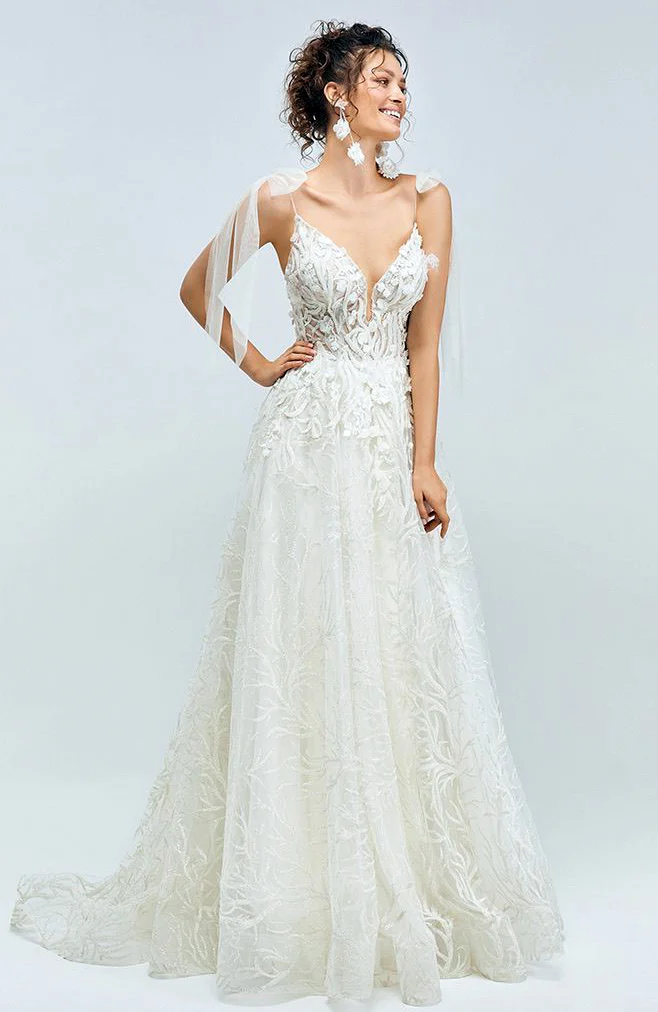
The reference with side shoulder ribbons has large pale floral earrings, while the thinner-strap V comparison shows smaller visible jewellery details. Use them to compare scale on your own dress without inferring a particular material. Try earrings without an extra necklace first. Add a necklace separately and assess its distance from the higher neck edge. Choose whether the upper fabric design should remain clear alone or whether you want another accent beside it. An open shoulder does not automatically require larger jewellery to fill its exposed area.
View wrists, flowers and skirt shape together
Hands remain visible below the long sleeves in the leading example and guide parts of the skirt outward. The photograph does not show the entire lower length. On your model, begin standing normally with hands relaxed, then add flowers or an intended bag. Choose how much sleeve ending and shoulder opening you want visible. If you intend to wear a bracelet, test the real piece beside the actual sleeve rather than only against an isolated fabric close-up. Your own objects determine the hand positions worth assessing.
Choose skirt shape separately from the shoulders. The counterexamples include wider patterned skirts, a quieter lower area and a pale waist ribbon. A similar V or related floral pattern does not make these garments interchangeable upper and lower components. Request complete side and rear views of your actual candidate and wear the planned shoes. Walk and sit so the shoulder choice belongs to a tested dress. Fabric held outward should supplement that ordinary movement trial instead of replacing the complete view of skirt, sleeves and intended accessories.
Once the shoulder line is settled, the bridal accessories guide adds bouquet, hair ornament and bag comparisons. Choose one actual piece at a time and check whether it leaves the intended opening visible.
Establish connections, alterations and care before choosing
On the cold-shoulder wedding dress, have the actual upper fabric route and wearing arrangement explained. Request the back and fastening and try putting it on according to the provider’s instructions. If you want less or more exposed shoulder, identify the particular place and discuss a possible change on the available model. Choose an outer layer afterwards. Try it over the dress, then assess neck edge, hair and sleeves again. This checks the combination you actually plan rather than assuming every jacket sits the same around the openings.
Before cleaning or pressing, the actual product label matters. GINETEX explains care symbols; a pale floral surface does not determine treatment. Choose your cold-shoulder wedding dress through the intended opening, a deliberate neck edge and tried long sleeves. Add hair, jewellery, real hand movements and complete skirt length. That develops an outfit with a clear shoulder decision whose actual version and use you understand, rather than merely recognising a similar motif across several photographs of different garments.
Choose a cold-shoulder wedding dress by opening position and size first. Compare neck edge and sleeves separately, add hair and jewellery and test the real connections moving normally.
Frequently asked questions
How is the shoulder opening different from a lower shoulder edge?
Follow fabric above the exposed shoulder area. The pictured cut-out keeps a higher upper section, while the lower alternative places the whole edge below the shoulders.
How should I test jewellery beside long sleeves?
Try earrings and any intended necklace individually. Add a real bracelet beside the actual sleeve ending and hold your planned flowers or bag.
Can the shoulder opening be altered?
Show the intended beginning and ending on the actual model. Have existing connections and a possible alteration explained specifically before choosing the version.