Compare sheer wedding dresses by identifying the part you can actually see through. A floral bodice, a loose veil and an outer cape shape answer different visual questions. Not every pale garment in these six references is sheer. Begin with the area of your body you want visible, then choose pattern, additional layers and jewellery. That turns a broad search term into a clear enquiry about a real offered dress. Describe the visible area before guessing at construction you cannot see.
1. Compare sheer wedding dresses by visible area
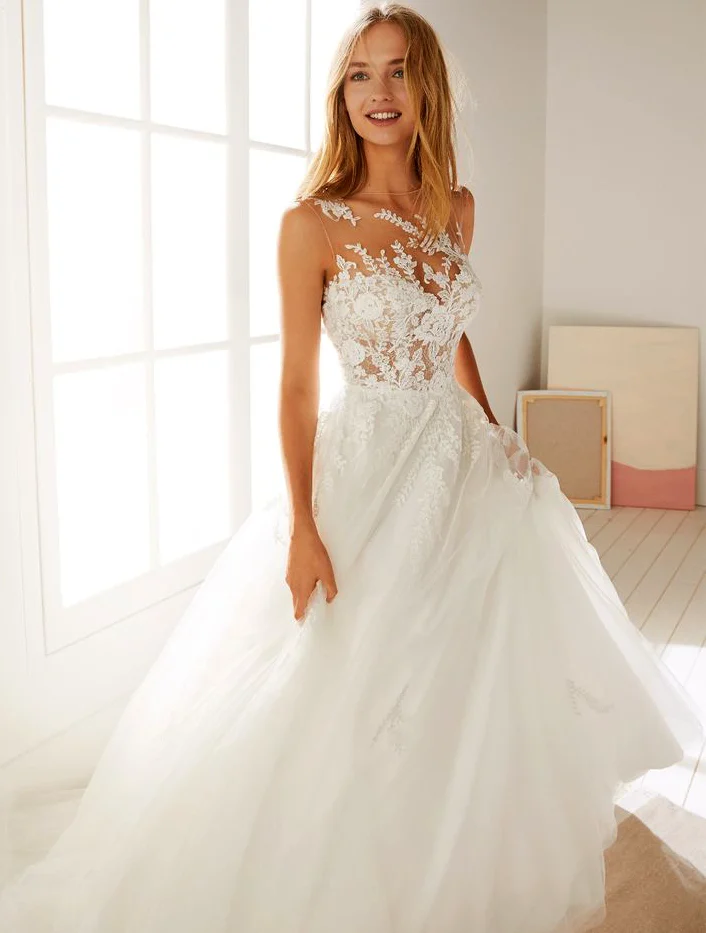
The original featured photograph shows a sleeveless upper area with pale flower and leaf forms. Skin is visible between the motifs, which extend higher than the denser chest section. The broad skirt looks more closed beside it. This is a useful starting point for a translucent-looking upper body with a quieter lower area. It establishes neither a particular fabric nor hidden construction. Identify desired spaces near the upper chest and waist separately during a consultation rather than asking for an unspecified transparent effect everywhere.
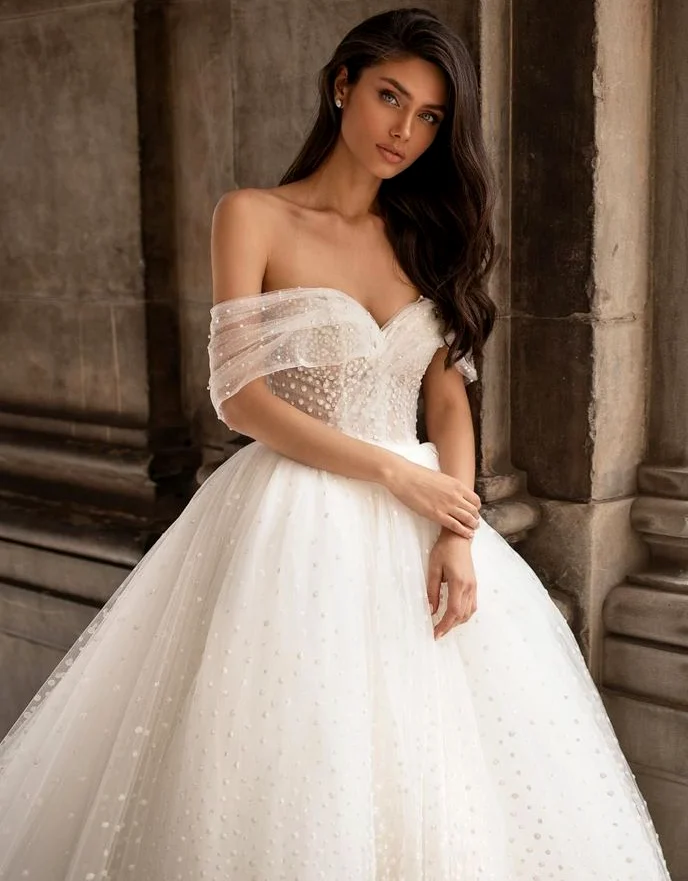
The closer dotted reference distributes contrast differently. A darker translucent-looking side area appears between pale dots and vertical lines beneath the lowered shoulder bands. Crossed arms conceal part of the centre. Save it for the side pattern without inferring the whole front lining arrangement. The comparison of sheer wedding dress panels develops placement choices. For these six photographs, first establish which garment part and crop supplies the information. Different visible openings cannot automatically be assembled into one bodice.
2. Separate a sheer veil from a sheer dress
A long fine layer spreads over the head and both outstretched arms in the picture with transparent round balloons. Beneath it are a densely sparkling strapless bodice and a full skirt. Being able to see through the veil therefore confirms no equivalent transparency in the dress. If that image appeals, choose whether you want its outer frame or the upper garment surface first. They can be independent preferences. Request the actual candidate without a veil when assessing its own coverage.
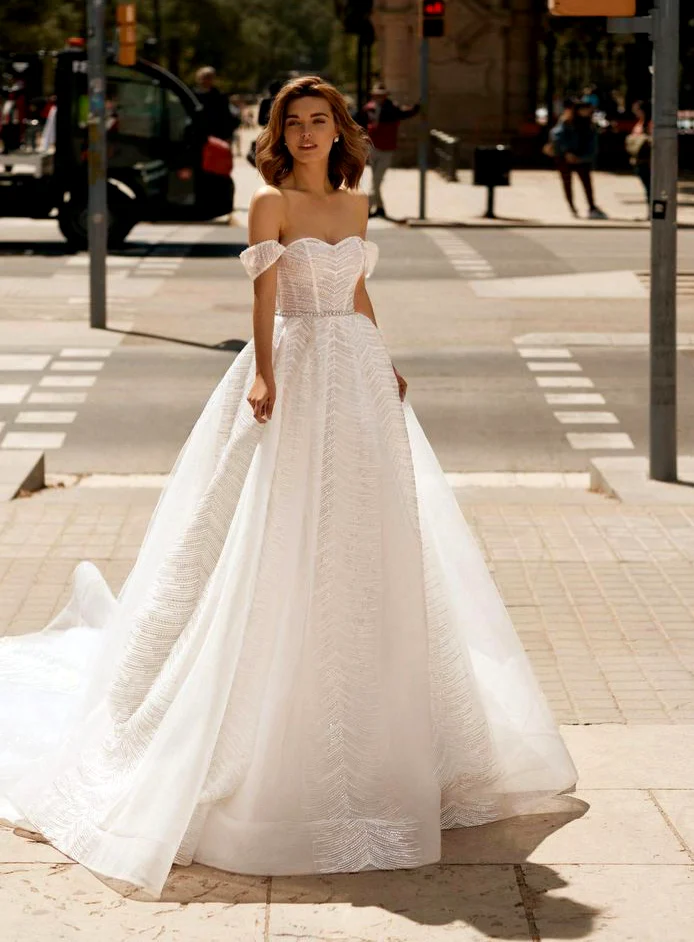
The street photograph adds a pale off-shoulder dress with repeated angular lines across bodice and skirt. Rear fabric rests on the ground at one side. Its pale pattern cannot reliably explain how many inner layers are present. Use the photograph for line distribution and a broader silhouette rather than as evidence of a sheer skirt. One lighting arrangement cannot answer the lining question. Request closer and complete views of the same offered version instead of treating a bright area as proof that no underlayer exists.
3. Ask about lining and the version supplied
A named product shows why that question needs a specific answer. Justin Alexander lists a fully lined bodice option for style 88044 alongside its illusion bodice. That information belongs to that model and identifies none of these archive photographs. Ask your provider which version you are viewing and which you can actually order. Similar floral pattern alone cannot promise the same options. Record the actual product and offered configuration together.
Have existing inner layers shown on your real candidate. Try the desired version with intended underwear and compare front, side and back in that same state. Do not automatically choose a shade described as nude; assess the actual ground beside your skin and the pale motifs. Keep the chosen area unobstructed initially. Add a bouquet or wrap afterwards so the coverage decision remains visible. Seeing the same garment’s back also prevents a well-lit front from standing in for the whole dress.
4. Assess motif edges separately from the outside neckline
Individual motifs extend beyond denser areas in the floral examples. Their highest point need not coincide with a continuous fabric edge. Follow the actual outside neck border first, then the distribution of leaves or flowers beneath it. The lace wedding dress guide helps compare pattern and ground. A photographed floral shape establishes neither a botanical species nor a handwork method. Describe what appeals while asking about the actual material separately.
The closer strapless view with several hands instead shows a curved upper border and vertical and curved pale decoration. It is particularly useful for bodice pattern. Hands across waist and torso, together with the tight crop, limit information about the whole garment. Other people visibly assisting do not establish final fit or a particular internal support. Request an unobstructed view of the same candidate before making a fit decision from this close-up. Relax your arms and reassess its upper edge on the actual dress.
5. Try a sheer outer layer as an independent choice
The pale blue reference combines a lighter closed-looking inner bodice with a translucent floral outer layer. Its higher neck border and broad front opening frame the middle, while side areas reach the floor. The photograph cannot establish whether or how that layer comes off. Ask about included pieces and their connections on the actual offered product if you want this relationship between surfaces. Liking the shape does not confirm other ways of wearing it.
Try the real outer layer over the chosen dress and through its intended handling. Stand with relaxed arms, bring your hands forwards and sit. Assess where floral lines overlap and which garment borders remain visible. If a head veil interests you instead, the wedding veil styling guide develops comparisons of its edge and rear area. A cape shape and a veil worn over the head are different references here. Keep the dress unchanged when comparing an outer frame so its particular effect stays clear.
6. Confirm the selected area in the complete outfit
Compare the same areas on two real candidates at similar distance and in similar light for the final choice. Request photographs of the actual offered version with an unobstructed middle and naturally falling skirt where possible. Include intended shoes for length, then hair and jewellery for the upper frame. Choose whether visible skin, motif pattern or an overlying layer is your main preference. Other pieces can respond to it without recreating every part of the reference photograph. Include your ordinary stance in the comparison.
Record the confirmed version and unresolved questions about included components or alterations. Care depends on the actual garment’s information; GINETEX explains textile care symbols. A translucent impression supplies no universal washing or pressing instruction. A useful choice joins the intended visible area, established lining and a completely viewed combination. Sheerness then remains a deliberate personal preference on a real dress, supported by the product’s own information rather than an assumption about every pale photograph.
Choose the intended visible area when comparing sheer wedding dresses. Separate bodice, veil and outer layer, then confirm the offered version on the actual garment.
Frequently asked questions
Are all six bridal references sheer dresses?
The six bridal references show different areas. A sheer veil or outer layer confirms no equivalent transparency in the dress underneath.
Can I order different lining for every sheer bridal bodice?
A different lining version for a sheer bridal bodice needs confirmation for that exact model. The lined option listed for Justin Alexander 88044 is not a universal promise.
How can I check coverage on a sheer wedding dress?
Compare the actual sheer wedding dress with intended inner layers and underwear from front, side and back. Keep the chosen area clear of flowers, hair and outer layers initially.


