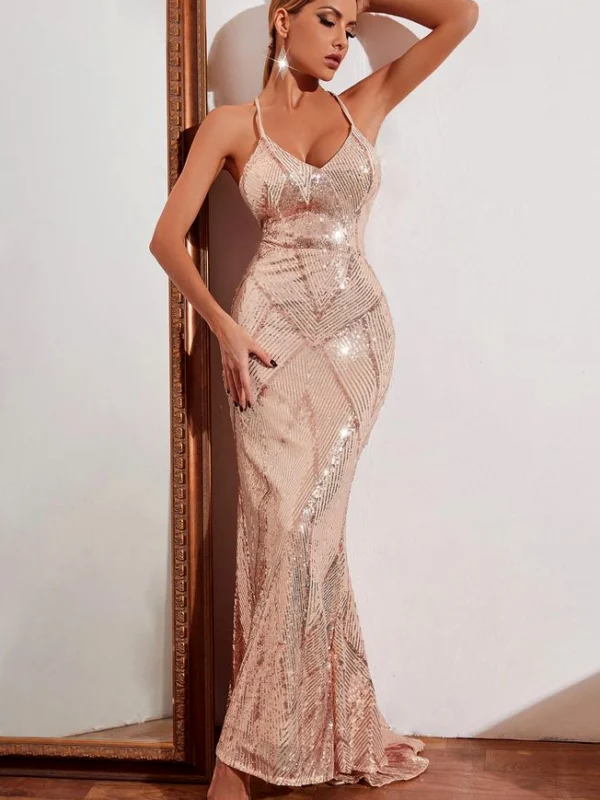
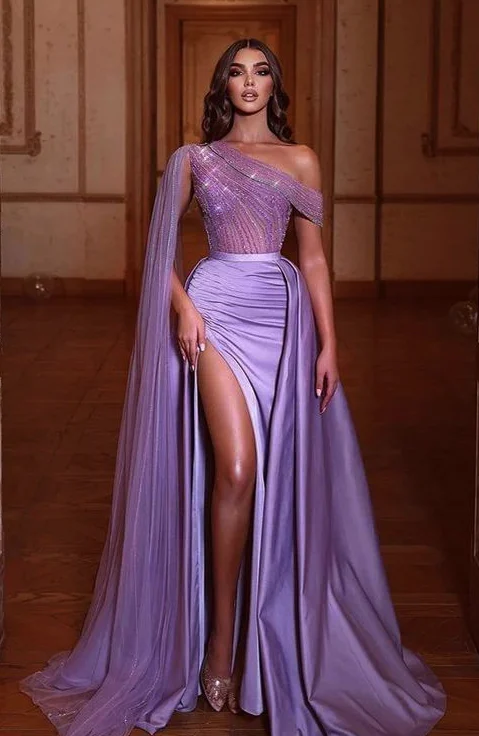
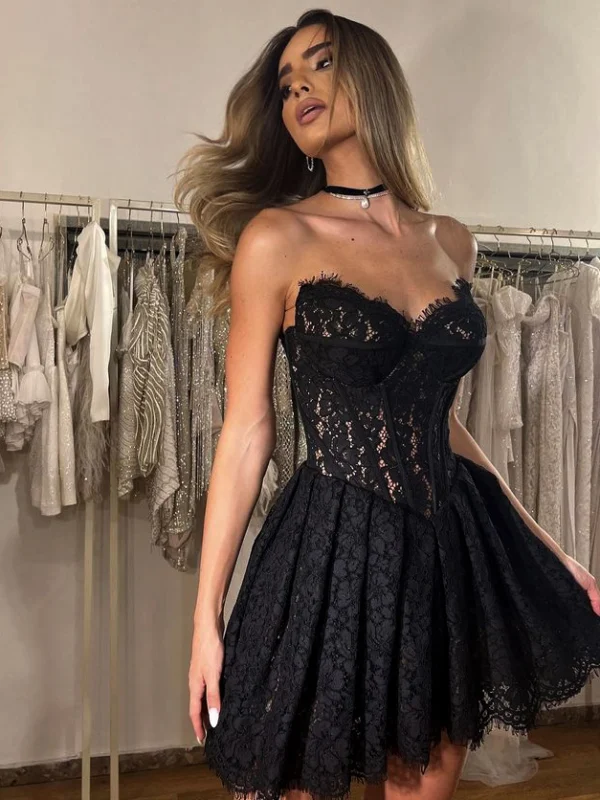
A midi cocktail dress leaves part of the lower leg and the shoes visible without ending like a mini. Approximate length is therefore only one part of the choice. An even full hem, a narrow shape with an opening and a sloping finish frame the footwear differently. Compare those lines with the shoes you actually plan to wear. A fixed measurement explains the relationship less effectively than looking at the real outfit together.
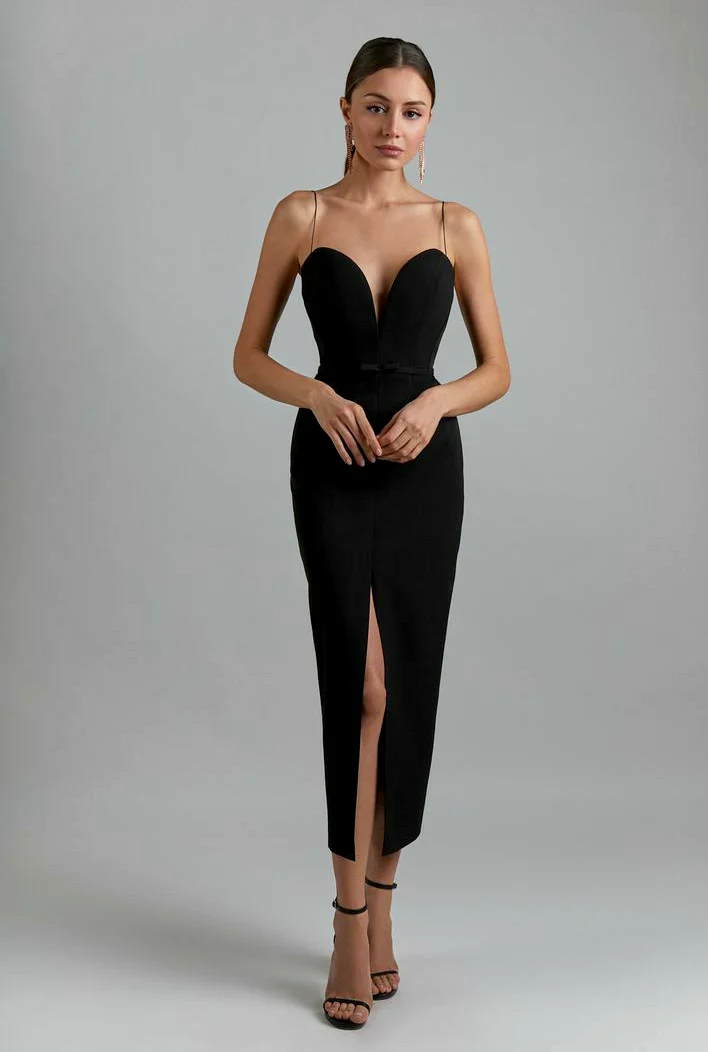
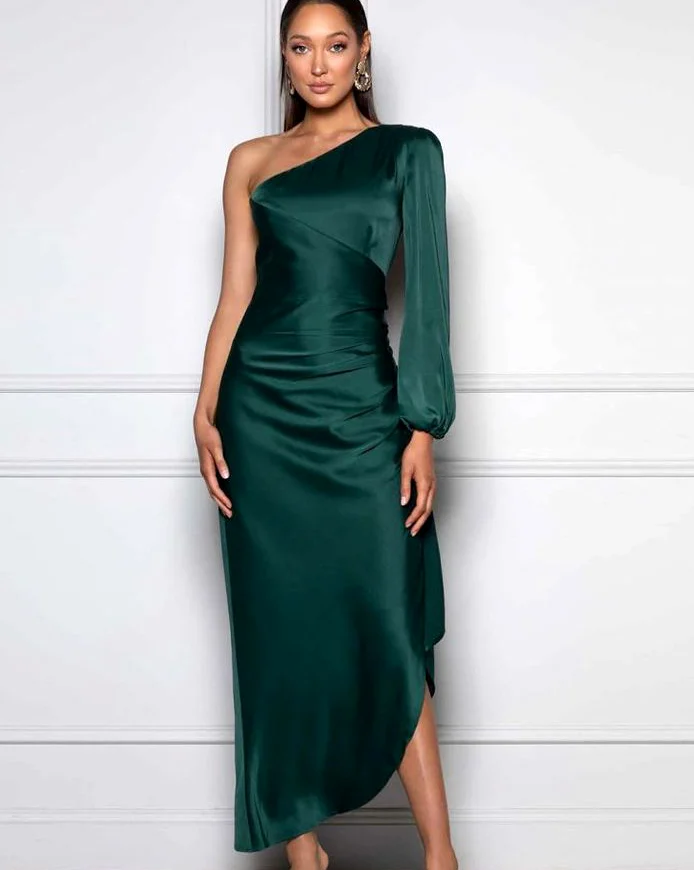
The pictures include a full black midi, a narrow black model with a front opening, and green and blue asymmetric shapes. A short mint dress and a floor-length green reference mark the differences towards shorter and longer outlines. They are included to compare the lower shape, without claiming that every example has the same length or establishes a binding dress code.
For the separate self-portrait Silver Sequin Embellished Mesh Midi Dress, the maker states the model’s height and worn size alongside the midi name. Those details belong only to that product. They illustrate reading a product image beside its specific sizing information; hem placement on you still needs the actual garment and your own shoes.
Choose a midi cocktail dress from the complete lower view
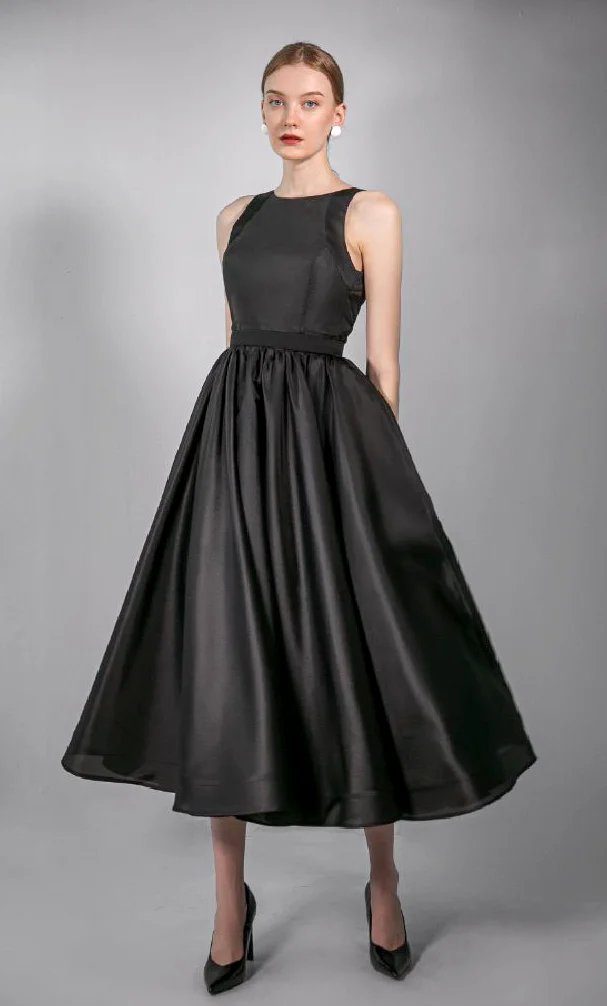
Begin with an ordinary whole-outfit view. Assess the hem alongside the visible lower leg and shoe. The full black skirt creates a broad, mostly continuous edge above the footwear. The opening in the narrow black dress draws another line upwards. Both can belong within your desired midi direction while producing a different picture. Decide whether a quiet continuous edge or an interrupted front line matters more to you.
Consider the upper half afterwards. A striking neckline or sleeve may appeal without answering the question about your preferred finish below. If comparing several dresses, keep the shoes the same initially. This makes hem differences clearer. Pictures from a similar height and distance help as well. Unusual camera angles can change the comparison without anything about the garment itself changing. Use a reasonably ordinary view before adding deliberate poses to your selection.
Distinguish an even edge from a sloping hem
The full black dress offers a relatively clear lower curve. With a similar shape, check whether you like the full skirt width together with the shoes. A broad skirt does not make footwear disappear: it gives that area a different boundary. Look at both feet in an ordinary stance and take a normal step as well, so the selection does not rely solely on a photograph with the skirt spread out.
The dark green reference ends diagonally instead. Part of the lower leg becomes visible sooner on one side than the other. Decide whether you want that uneven boundary and how it looks with your shoes. The blue model adds a front overlap and a longer rear line. One length description is insufficient here. Examine the lower outline from the front and a slight side angle rather than treating the shortest point as the whole garment.
Look at the opening and shoe straps together
The narrow black model places a central front opening above dark strapped shoes. Several separate lines result: hem edge, opening and straps. If considering a similar dress, start with your preferred footwear. Decide whether you enjoy those lines together. The uncovered area does not need filling with extra straps, although you may deliberately choose that repetition. The choice comes from the outfit you want rather than an automatic accessory requirement.
Take a short step and sit down afterwards. Observe the front opening in the situations relevant to you. A chosen visible area can change position during those movements. Your preference determines the decision, rather than a general rule about leg shape or height. A still picture cannot establish adequate movement space or hidden finishing either. The actual dress and shoes provide the practical information needed for your own choice.
Select the shoe as a shape in its own right
The full black midi is pictured with dark pointed pumps. The narrow black version shows open dark strapped footwear, while the blue dress shows only part of one pale decorated shoe at the lower crop. Treat these as different finishes. Would you like a closed dark shape, a more open line or a lighter accent below the hem? That is a more concrete question than claiming midi dresses always need heels or one particular shoe colour.
Try your pair with the complete dress and other items you intend to carry. If substantial standing belongs to the plan, include a suitable test. If you expect to change shoes, compare both combinations. A different shoe shape changes the picture beneath the edge even when the dress length remains identical. Record that difference before discussing an alteration to the garment itself. Your choice might be solved by the combination rather than a change to the hem.
Use mini and floor length as boundaries
The short mint dress reveals substantially more leg beneath a comparatively straight lower edge. The long green ruffled dress reaches the floor and extends beyond it. They explain why not every image in a cocktail selection establishes a midi length. Use them as explicit boundary comparisons. They help you describe how much space between hem and shoes you would like and which overall outline you prefer to see.
The broader cocktail dress guide covers additional outfit questions. The shimmering party dress article adds surface comparisons. This page keeps its decision attached to the lower edge and shoe area rather than a complete event plan or upper asymmetry. Colour and decoration may accompany that choice without replacing it. The useful outcome is a clear description of the lower view you want from your own dress.
The evening dress shoe comparison develops the choice between open straps and a closed toe. Assess both beneath your selected hem instead of turning midi length into a fixed heel rule.
Confirm the selected line while wearing it
Finish with front and side pictures in the intended shoes. Walk, sit and stand up again. Check whether you still like the visible area and the opening’s position. If an alteration seems necessary, show the real lower outline to an appropriate professional. A diagonal edge or opening deserves a more precise conversation than simply requesting an arbitrary amount removed. Describe the intended finished shape as well as the reason for considering a change.
For treatment, read the label on the actual dress. The GINETEX care symbols explain washing, drying and ironing among other processes; visible length cannot reveal suitable care. Your final selection should answer a straightforward question: does this hemline with these shoes produce the picture you want and suit the movements you tested? That makes midi length a practical decision about an outfit rather than an isolated measurement.
Choose the lower hemline together with the shoes, comparing full, narrow and sloping shapes and openings on the actual outfit.
Frequently asked questions
Can I compare shoe shapes before altering the hem?
Compare a closed toe and open straps beneath the same unchanged midi cocktail dress hem first. This shows how much the shoe shape contributes to your preferred lower view.
Do midi dresses always require high heels?
No fixed heel height is prescribed here. Try your intended shoes with the actual hem and your own movements.
Does the shortest point describe a diagonal hem sufficiently?
No. Examine the longer area from the front and a slight side angle to include the complete lower outline.