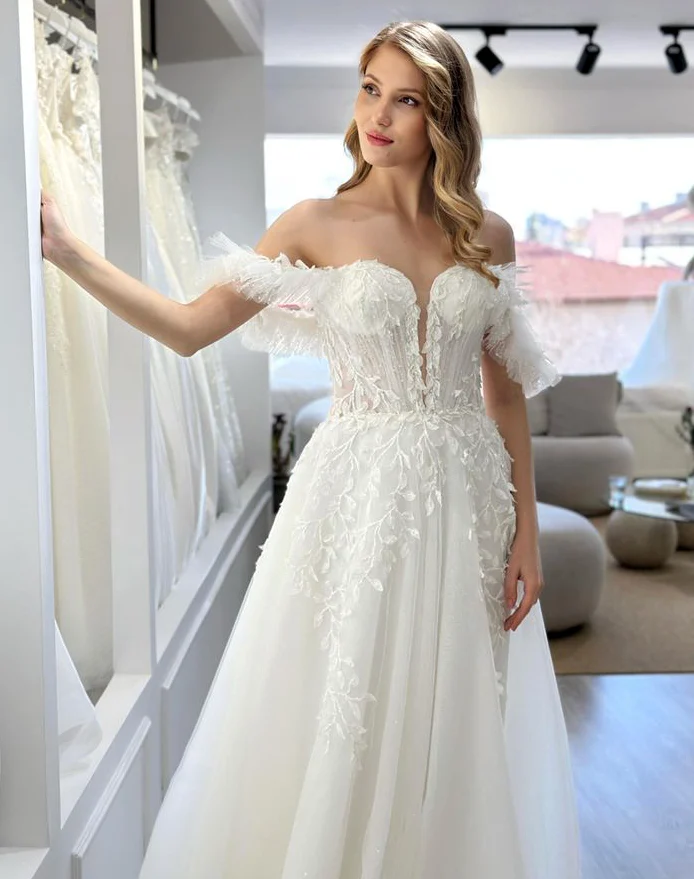
Skirt leaf motifs trail from the drawn waist onto a broader pale area in this front view. The upper section has vertical lines and a narrow deep centre. Short fringed or feather-like decorations sit beside the upper arms; their actual material cannot be established from appearance. The skirt itself has no clearly identifiable horizontal tier rows.
If movement through separate motifs appeals to you, this offers an alternative to repeated edges. Compare the trailing leaves with the tier reference. Do you want longer individual directions or many short horizontal endings? Describe that preference separately from the side arm details so the skirt decision stays clear. Several active areas in one picture do not have to become one inseparable preference.
For a similar outfit, examine only the area below the waist first, then bring in the side details and bouquet. This shows which zone provides your intended emphasis. The photograph demonstrates motif placement rather than confirmed alteration options. A different skirt or added rows must be discussed for the actual garment. Marking the lowest trailing leaf can make your preferred direction particularly concrete.