A wedding dress for dancing is chosen around your planned sequence. You might want a quiet partner dance, freer steps or both. These references offer different skirt shapes rather than demonstrated dance performance. Wide side sections, a more fitted lower shape and visible leg openings create specific questions for a real fitting. Choose the movements you want first, then assess the actual gown with your shoes instead of treating an attractive standing silhouette as a finished dancing solution.
Test a wedding dress for dancing against your own plans
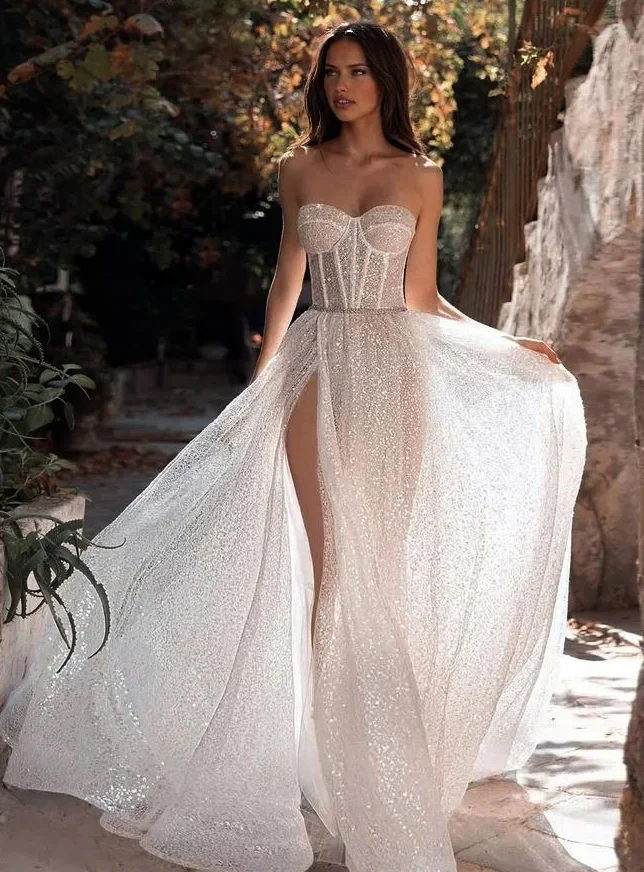
Explain your plans to the shop: small shared steps, a turn with a raised arm or a longer period of freer movement. You do not need a finished choreography to communicate the main requirement. In the first full strap-dress reference, large outer skirt sections are held out at the side. That shows fabric volume, rather than the skirt position during a dance without constant hand support. Let your candidate fall in a normal stance first.
Choose a short sequence that you repeat consistently in different dresses. Begin with ordinary walking, a small turn and sitting down. Carefully add the actual dance steps you intend afterwards. Compare whether you want to keep readjusting the bodice or skirt. If something needs changing, name the exact area and ask how a possible solution would work on the real garment. This makes the choice more specific than describing the dress only as light or comfortable.
Separate wide outer layers from space around the feet
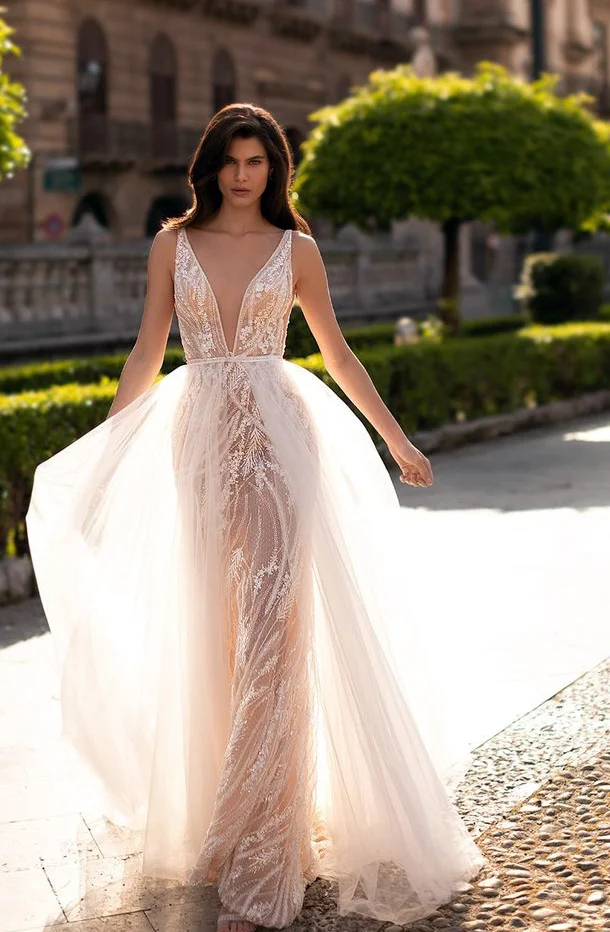
The floral strap reference shows a more fitted line beneath wide fine outer skirt sections. Use that as a prompt to have the different layers of your actual gown explained separately. Visible external width is not the only question. Assess where the real lower construction sits beside your feet and how the parts above it fall while you walk. Only then gather the skirt in whatever way is intended for a particular part of your route.
If you are still choosing fullness itself, the full-skirt wedding dress guide compares different starting points for volume. Your movement trial has another central question: can you make the intended steps in this exact complete model? A wide-looking skirt can have a different arrangement inside. Have the offered gown shown with the layers actually supplied and try them together rather than deriving movement room from a single outer photograph.
Compare the bodice during ordinary arm movements
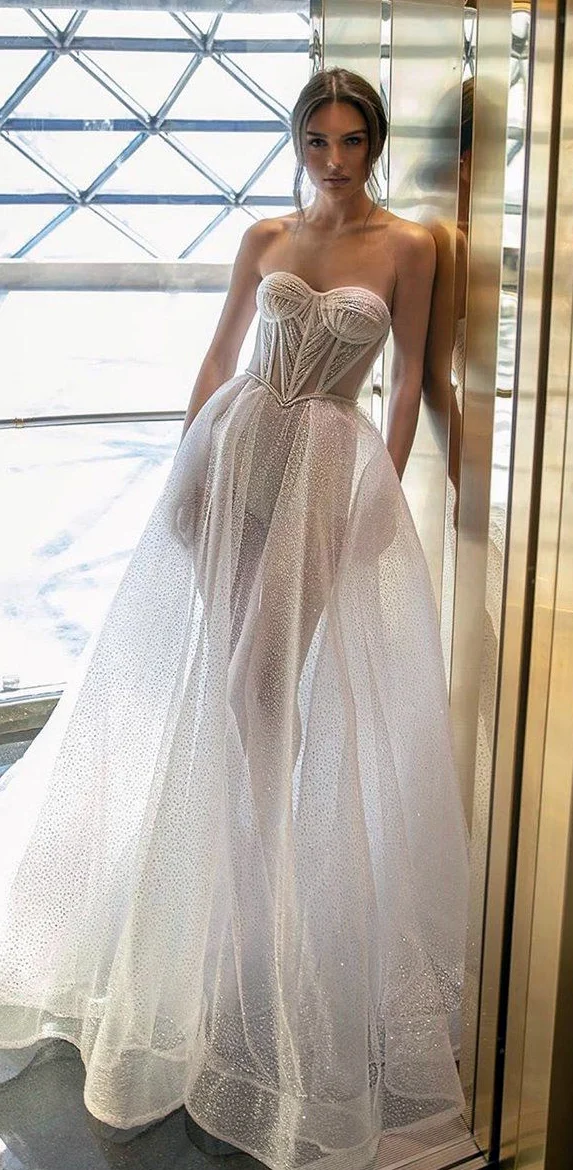
The fine-strap dress by the window has arms placed widely to the sides. The strapless example with a pointed lower waist transition offers a different upper arrangement. Compare these directions on yourself with arms relaxed first. Then carefully raise an arm to the height involved in your planned dance. Decide whether the upper edge stays where you want to wear it, rather than correcting your stance only to produce a preferred photograph.
Fine straps or a strapless bodice do not independently establish a particular internal support. Ask about the actual construction and intended adjustment on your selected model. Add the planned underlayers too. If coverage or a fine outer layer is a particular concern, the sheer wedding dress guide supports that related choice. Here it is combined with the arm and step trial, rather than decided from a neckline standing still.
Use a more fitted skirt and leg opening as comparisons
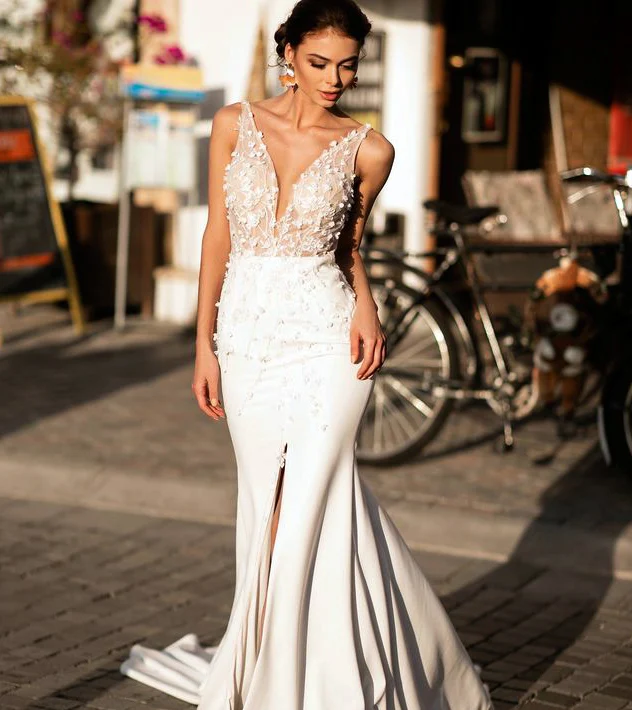
The floral fine-strap dress has a quieter fitted front skirt and a clear leg opening. The shape widens farther down. Compare it with the fuller alternatives if you want less side fabric. The visible opening does not automatically establish possible stride length, however. Assess both questions on the actual gown: how far your legs can move and how much fabric remains outside beside you. Those are separate comparisons even when they appear in one outfit.
The other strapless reference combines a wider fine skirt with a high front opening. One hand holds fabric at the side and the leg is deliberately exposed. Release that supported pose during your own trial and sit once. Assess where the edges fall and which coverage you want. A leg opening can be your personal choice; it is neither a requirement for dancing nor a substitute for a complete movement trial with the supplied inner layers.
Have an offered train solution demonstrated and practise it
If your selected gown has fabric resting on the floor behind, discuss its handling specifically for the dance. The Maggie Sottero bustle guide describes a gown-specific solution and recommends a fitting demonstration with a helper. This does not assign a particular fastening to the photographs. Ask what is offered for your model and how the resulting shape looks on the actual garment after it is arranged.
Have the solution put in place and released once. If someone will help, practise the sequence together. Repeat the same steps afterwards and sit with the altered rear fabric position. Decide whether you want that arrangement for the planned part of the evening. Note where the required help will be available. Handling then refers to a demonstrated state of the real gown rather than a possibility mentioned only in conversation.
If you are considering a later change, identify why: another skirt shape, fewer outer layers or a separate second look. The guide to changing your bridal look helps plan the sequence. Try the actual first combination before deciding whether a change would usefully complement your own plans.
Complete the dance version with shoes and a seat
Finish in the preferred candidate with your intended shoes and all selected layers. Repeat the short sequence without adding a new special pose. Check rising from a chair and picking up a planned bag too. If you intend to gather the skirt at certain moments, decide which hand will be available. A second outfit can be useful if you personally want one, but start with the actual first combination you have tested.
Your wedding dress for dancing has not been declared suitable because of a photograph. You have compared your own planned movement in a specific model. Record outstanding alterations, selected shoes and the intended train arrangement. Ask for the real composition and care information too, so transport and later treatment are clear. The basis for your choice remains the complete worn state that you actually tried at the fitting, including any demonstrated change you intend to use.
Choose a wedding dress for dancing through planned movements on the real model. Assess skirt, bodice and any actually offered train solution together.
Frequently asked questions
Is a full skirt automatically better for dancing?
No. Compare actual movement room with the amount of fabric around your feet and seat. The full outer silhouette alone does not answer both questions.
Do I need a second wedding dress for dancing?
Not as a general rule. First assess your chosen model with the planned steps and any offered alteration. An outfit change is a separate optional choice.
What should my helper learn at the fitting?
If you need help with an offered train fastening, have it demonstrated and practise together. Also decide who will arrange the skirt before and after the dance.
Which shoes belong in the movement trial?
Use your intended shoes or a comparable height agreed with the shop. Repeat the trial with the final pair before the skirt length is completed.


