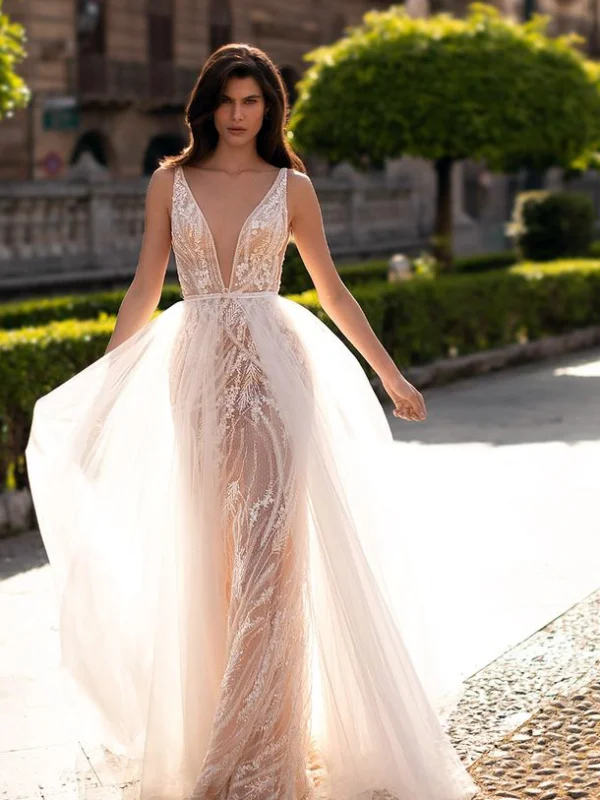
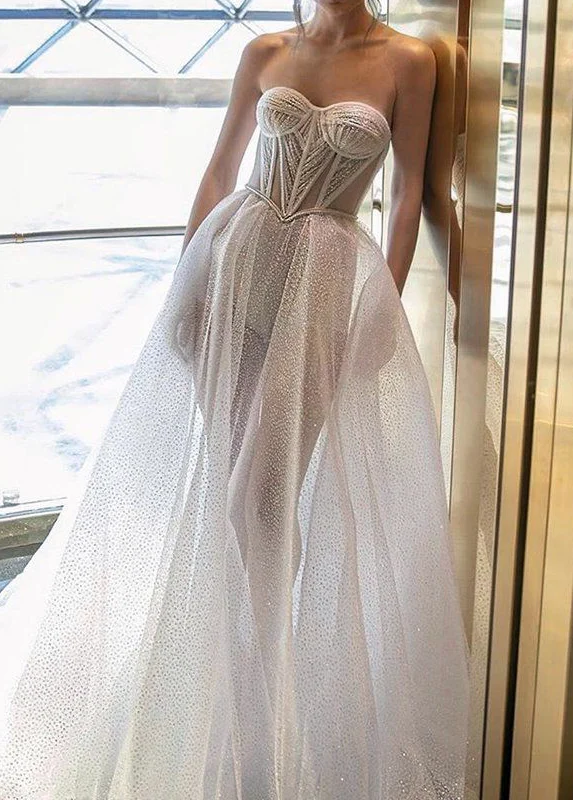
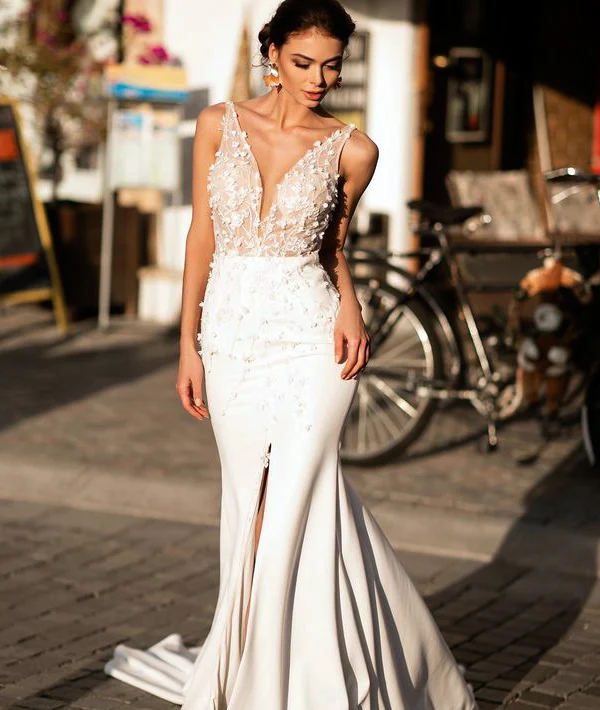
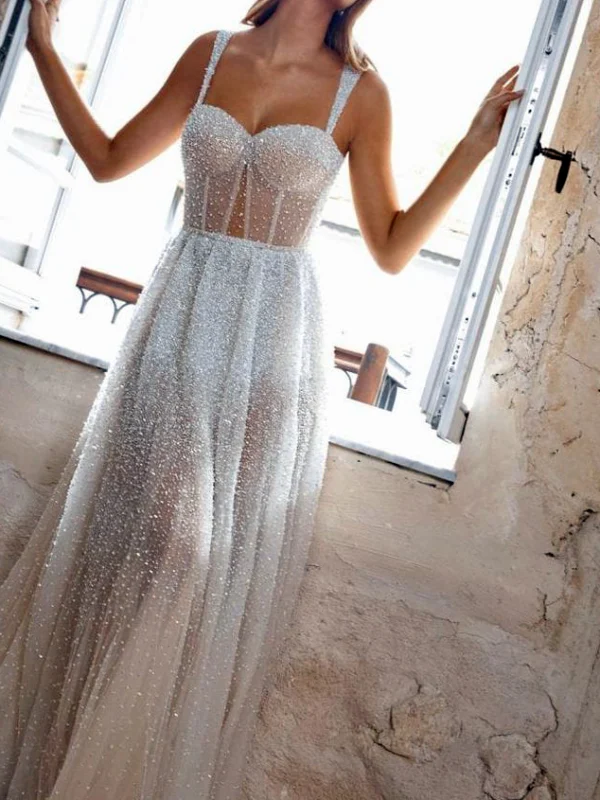
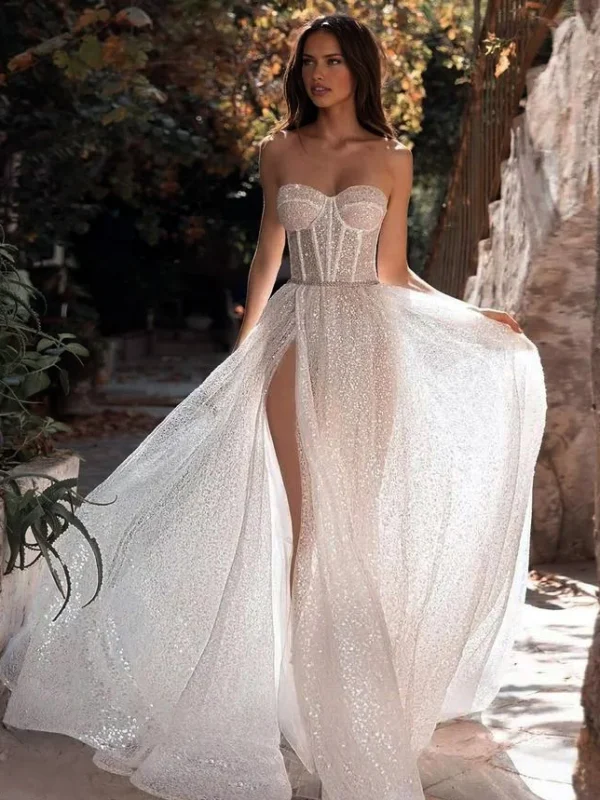
Bridal skirts for a movement trial provide different starting points in this sequence. The floral strap dress has large outer sections held out to the side. A strapless example adds a pointed lower waist above a broad fine skirt. A more fitted floral shape has a leg opening, before two further wide models introduce other upper edges. These displayed poses do not demonstrate a dance sequence.
Guide to comparing these images
Turn a standing skirt view into useful fitting questions
Take one specific question from each view to your own appointment. Where do the actual lower layers sit without hand support? How does the upper edge stay during a normal arm lift? Which edges open when you step? The answers come from wearing the available gown, rather than the spread external skirt alone.
Repeat the same short sequence with your intended shoes: walk, turn carefully, sit and stand again. Add the actual dance steps afterwards. If a train solution is offered, have it demonstrated and repeat the sequence with it. The references help you request different skirt and bodice shapes precisely, while your own movement completes the actual choice.
Start with the distribution of outer fabric. The floral strap reference has large side areas over a narrower visible line. The fine dotted-looking strapless model has a distinctly downward waist transition. On the other strapless dress, the transition is more horizontal and the skirt opens at the front side. These observations name different starting shapes before discussing any dance step. Each photograph shows a garment in a particular pose; they are not before-and-after views of an alteration to the same model.
The more fitted floral reference adds less side fabric and a visible front opening. The window photograph instead emphasises a sideways arm position. When organising these images for the appointment, give each a particular question: skirt layers without hand support, upper edge during an arm lift or opening during a step. Reserve the actual assessment for the worn model. A broadly spread skirt cannot show how inner layers accompany your movements, and a visible leg opening does not replace that information. This is why the image selection belongs alongside a repeatable movement sequence of your own.