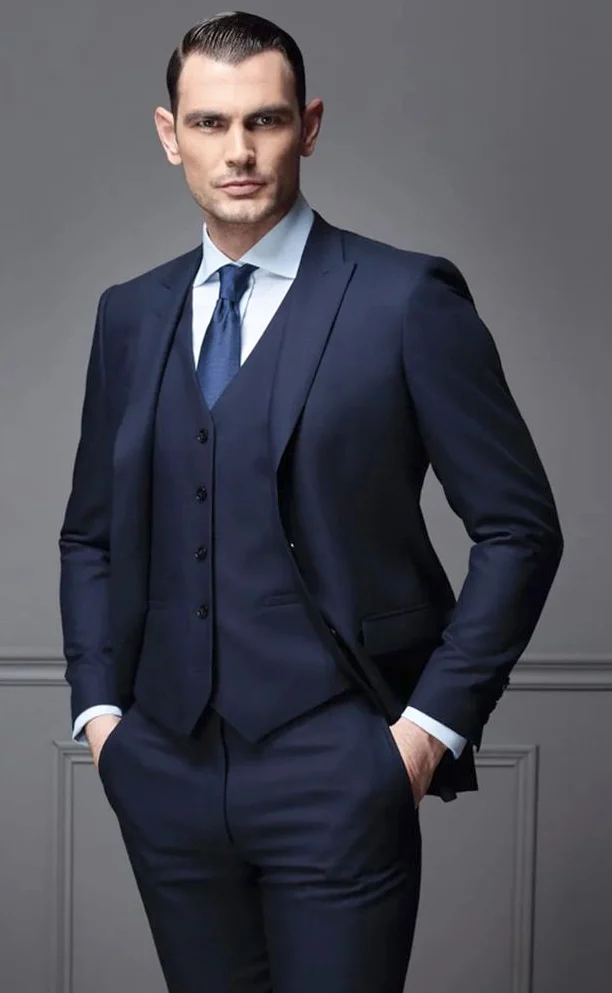
Blue tie and waistcoat create a longer central line over a pale blue shirt here. The darker waistcoat leaves that narrow middle visible, with the jacket’s narrower notched lapels alongside it. Pale shirt cuffs appear at the wrists. Both hands sit in the trouser pockets. Complete lower trouser length and shoes lie outside the picture. This view is deliberately used as a tied alternative to the dark bow-tie fronts. It establishes neither particular tuxedo construction nor automatic suitability for the same invitation or shared material across the garments.
Compare the waistcoat opening and clear shirt area on the real outfit first. Decide afterwards whether you actually want the longer tie line instead of the bow tie as a separate combination. Clarify applicable clothing guidance before selecting that alternative for your event. Request an ordinary front without hands in pockets on the specific model, having the intended pieces shown together. The quiet blue picture then supports a deliberate change of direction without treating the same word waistcoat as evidence of a shared formal category across every image.