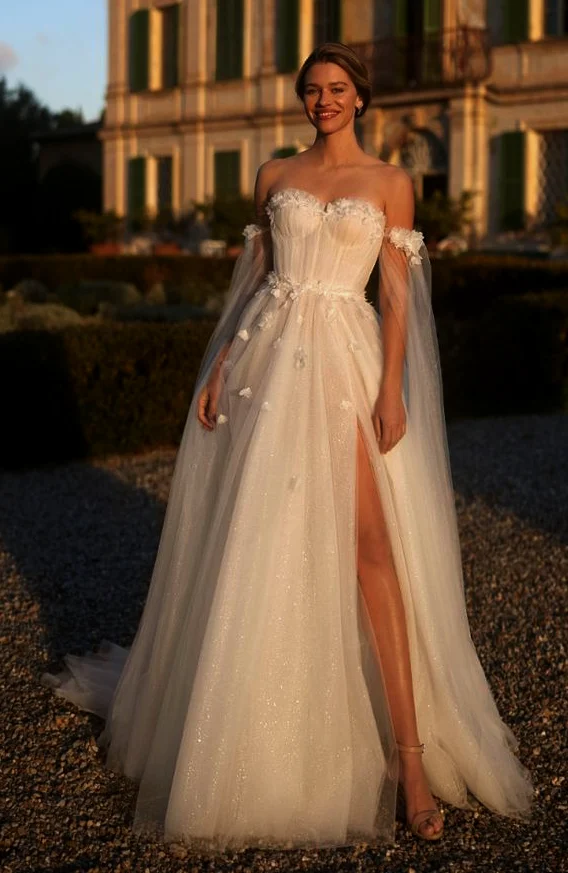
A fuller skirt with small motifs opens the lower silhouette considerably here. The waist remains narrower, with pale floral accents around the transition and parts of the skirt. Small bright points add further texture. Long loose side arm areas accompany the open upper edge. One leg extends through the front opening, revealing the shoe and more leg. Fabric arranged on the ground also enlarges the outside outline.
Compare this amount with a gentler falling skirt if fullness remains unresolved. Keep shoe height unchanged for the first trial. Look at the two outside edges, then turn sideways. Decide afterwards whether you want the shoe as clearly visible. More skirt and more opening need not be chosen together. Separating those questions makes your own priority easier to explain.
Let both hands fall normally during your assessment. The side arm areas should sit as you actually want to wear them. Include sitting and an ordinary step. Small reflections cannot establish a decorative technique. Describe their distribution as a preference while inspecting execution and actual hem position on the offered garment. The greater fullness and open photographic arrangement then remain two clearly identified properties rather than one inseparable image effect.