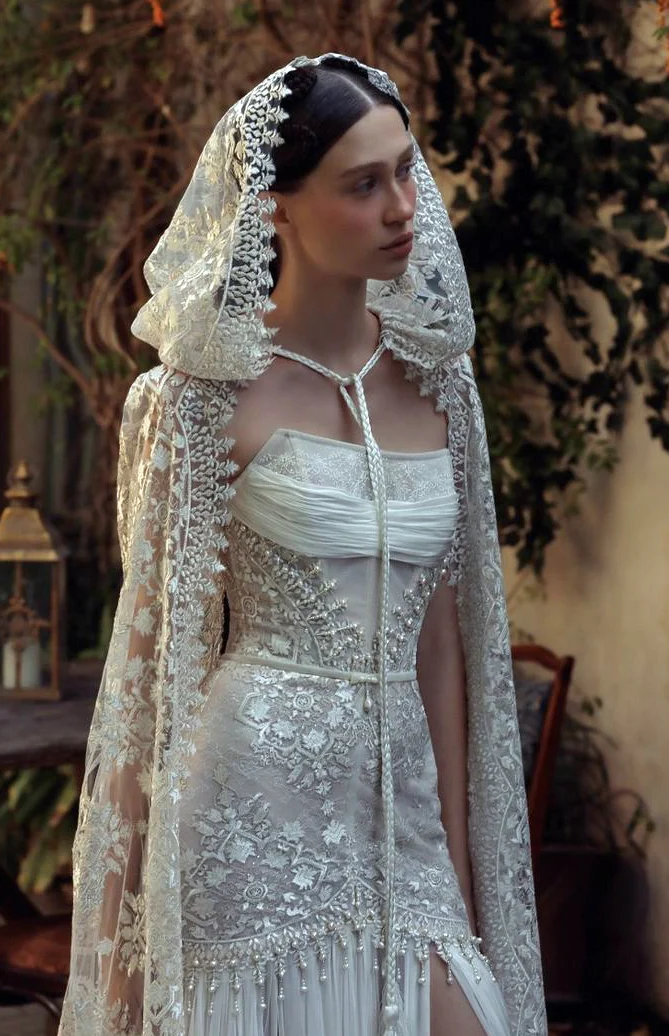
A floral hooded cape frames face, arms and bodice with pale flower-and-stem shapes. The edge carries a denser motif sequence than some areas beside it. Two long pale cords meet at the neck. A horizontal ruched chest band and further floral and small bright details remain visible below the outer layer. The crop includes neither full skirt length nor a complete hand view. It is particularly useful for comparing a strongly patterned edge near the upper dress, rather than supplying lower-length information that could be completed from another cape.
When choosing a star cape, use this counterexample to decide whether the border should register strongly or individual stars should stay farther from the edge. Fit the desired motif density over your real bodice. Added decoration beneath changes the effect even if both pieces are pale. Compare the upper area without another necklace first so the pattern remains legible. Full selection needs the same candidate’s lower edge and rear view. A cord does not establish removability or a special supporting mechanism; ask how the actual garment is intended to be worn instead.