A pocket square with a suit can create a small pale edge, a pattern or a softer spot of colour. Choose its job first: should it echo the tie, brighten a dark jacket or stay restrained beside another lapel detail? Three references show a folded brown square, a smaller warm patterned corner and a dark patterned square. Two further pictures provide comparisons without a clearly visible square. Use those differences to choose colour, size and position on the actual jacket rather than selecting an attractive accessory in isolation.
Choose a pocket square with a suit from the jacket colour
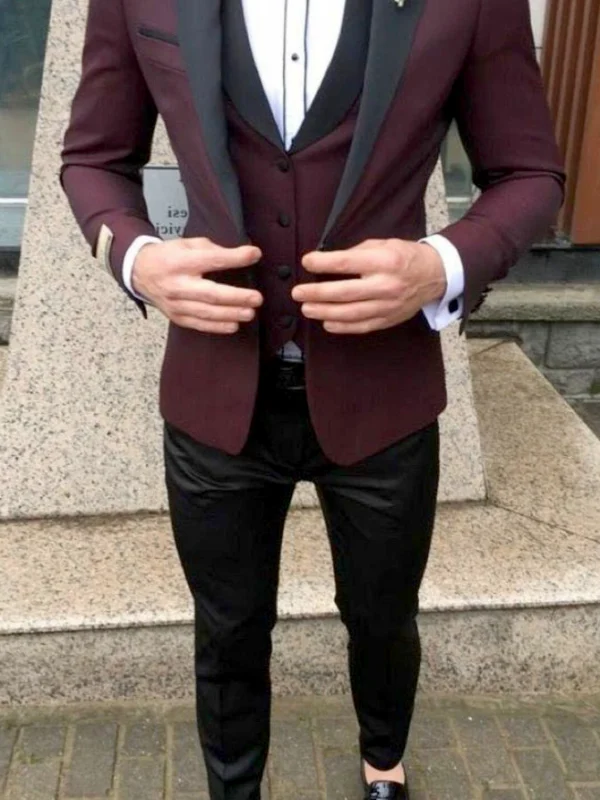
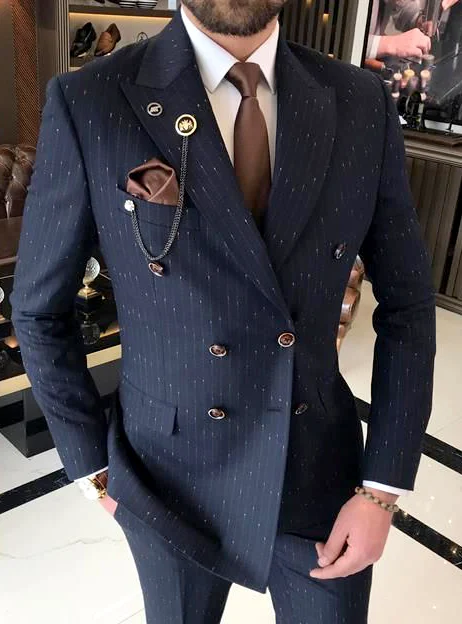
Start with the jacket rather than a randomly matching tie. The brown square in the navy double-breasted reference makes a clear warm spot against the finely marked dark fabric. In the burgundy jacket, a dark patterned square remains closer to the main colour. Hold a lighter and a darker option against your own jacket first. Decide which gives the intended size and brightness from normal conversation distance. Tiny differences within the pattern come afterwards, once the whole shirt front and jacket can be seen together.
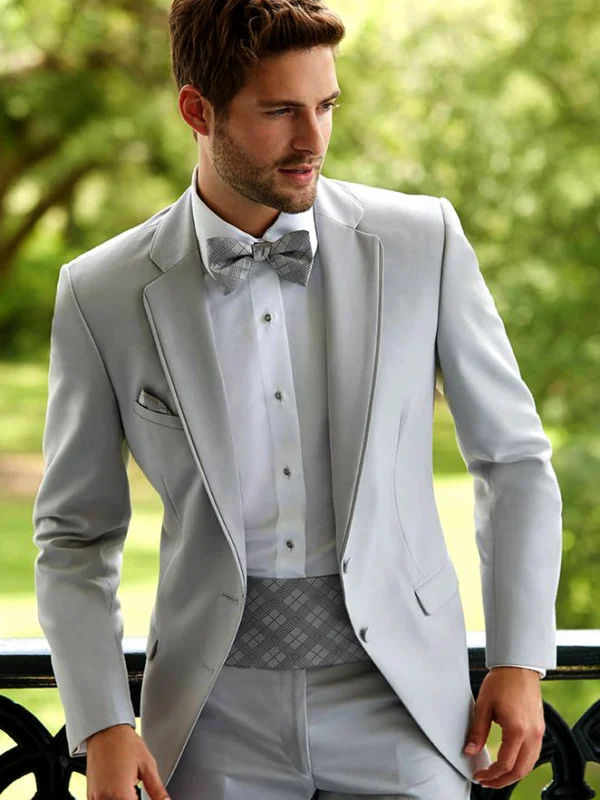
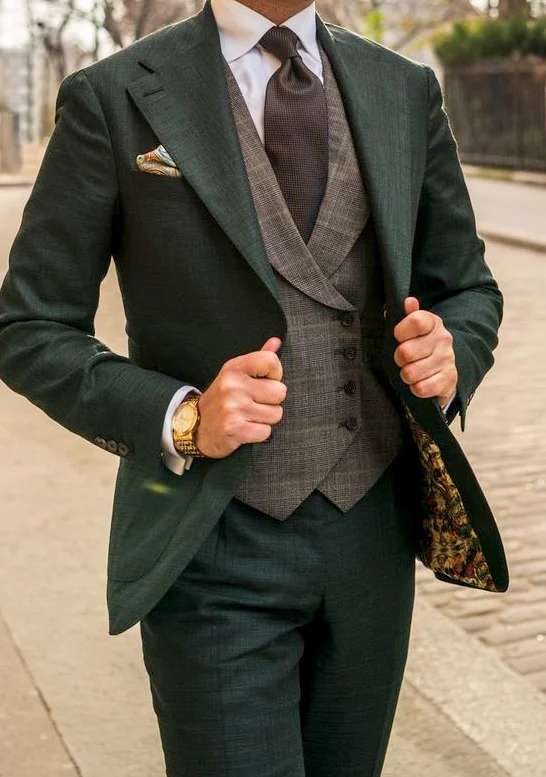
A small warm corner against green creates a different focus from a broad white edge. The grey-waistcoat reference shows a little yellowish patterned tip, rather than the entire square. Pull your real piece slightly higher, then place it deeper in the pocket. This separates liking the colour from liking its visible amount. Identical brown, blue or gold colour names on two product pictures do not guarantee the relationship you want in the real outfit. Compare the pieces themselves and keep the visible quantity comparable while judging colour.
Connect tie and square through one shared feature
The double-breasted reference has a brown long tie whose colour returns in the square. You can use that relationship without demanding an identical pattern. Try a plain tie with a small-patterned square, or a patterned tie with a largely plain square. Hold both against the white shirt beside the lapel. You can see their real proximity and whether the intervening pale shirt gives you the quiet separation you wanted. Make the final comparison with the tie worn and square pocketed, since its reduced visible size changes the effect.
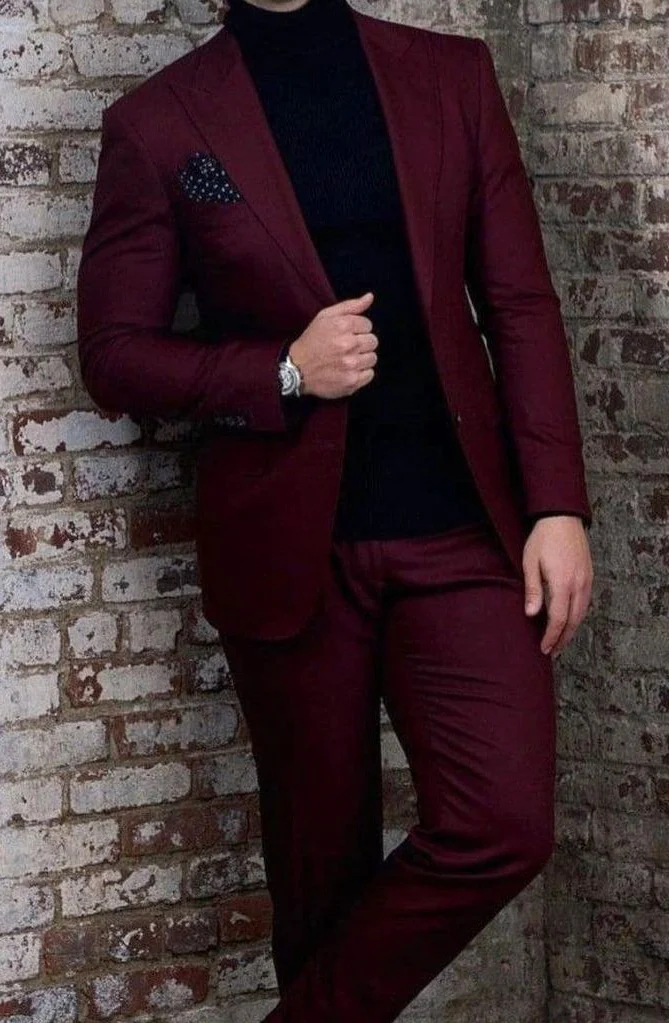
The burgundy comparison offers another route: a black rollneck has no tie, leaving the patterned square as a small independent detail. If you want this arrangement, assess it before adding further neck jewellery. The suit pattern mixing guide adds comparisons for several visible patterns. In particular, consider different motif sizes. A pocket square need not contain every pattern and colour already present in the outfit. Decide whether the small pattern itself matters or whether continuing the dark colour relationship is the main point.
Fit the fold to the real pocket and cloth
For a straight finish, lay the actual square flat and fold it to your breast pocket’s width. Fold the lower length inward so only a little initially protrudes, then insert it without other objects in the pocket. Adjust the upper edge in a mirror. Decide whether you want a straighter line or a slightly relaxed finish. This gives your actual jacket a workable starting size instead of copying a centimetre measurement from another photograph. Compare the pocket opening’s angle too, rather than forcing every edge into the same horizontal position.
For a softer puff, hold the square approximately at its centre, gather the rest loosely and insert the lower bundle. M&S illustrates a flat rectangular fold and a centre-pinched puff; use those two shapes as starting points for your own pocket. Turn the visible part slightly until you like the shape.
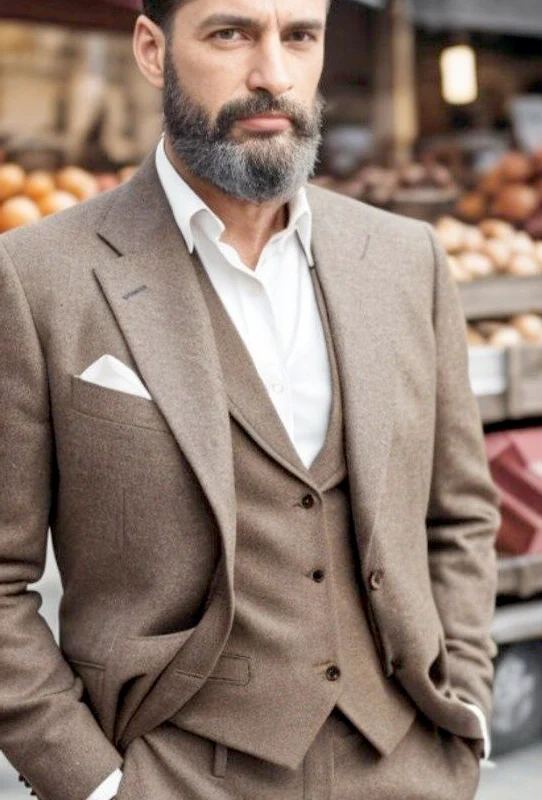
With a pattern, bring one corner forward, but try the other face before rejecting the colour. The result depends on the real square. The photographed soft brown finish proves neither a particular fibre nor identical folding behaviour in another product. Assess it inside the pocket, where depth and remaining bulk become visible, and compare a smaller exposed amount before replacing the piece entirely.
Compare visible height with lapels and shoulders
Step farther from the mirror after inserting the square. A higher fold may approach a lapel or nearby pin; a lower version leaves more jacket between them. Compare with relaxed arms. Hands hold the green reference’s jacket open, revealing patterned lining too. That pose is not a neutral measurement of the square’s size. Check your own jacket in its ordinary open or intended closed position. When comparing a straight fold and a small patterned tip, use the same stance so a pulled-open front does not obscure the difference.
Move your arms, sit and stand again. If the fold shifts substantially, try less height or a different lower fold with the same square first. Any pocket holder needs testing with the real jacket as well; none is established by these pictures. Separate an attractive shape from whether you want to readjust it continually. A smaller corner may be preferable if it already gives the effect you wanted. You are choosing a finish for your own movement, rather than a shape that works only while you hold a fixed pose.
Avoid collecting square, flower and chain automatically
Alongside the brown square, the navy double-breasted reference shows small lapel details and a draped decorative chain. The green outfit with a floral-patterned tie instead has a prominent lapel flower; no square is clearly visible. Compare these priorities individually. Insert only your square first, then add the actual pin or flower you intend to use. Photograph from several steps away to see whether both details remain distinct or one accent is enough. Do not assume an unseen pocket watch behind the photographed chain; its visible position is the documented feature.
A look without a visibly protruding square is a complete comparison too. The blue set with dark tie and waistcoat already has several clear garment edges. Every breast pocket need not be decorated. The dark suit guide helps compare the effect of the darker background. Choose a pocket square with a suit because it serves a purpose at the chest, rather than to reach an accessory count. Photograph the unadorned option under the same conditions so it receives a fair comparison with the other candidates.
Test the selected fold during its intended use
Try the things you will actually carry. Do not place a phone, glasses case or other object beneath the square for the fitting if it will be elsewhere later. Decide their positions, then view the jacket from front and side. If you will remove it, briefly test carrying it over an arm or placing it in the intended location and check whether the square slips. Repeat after putting the jacket on again. This is a handling test of your own set, not a claim about the pictured fabric’s properties or another product’s performance.
Before cleaning or pressing, obtain composition and care information for the purchased piece. GINETEX explains care symbols; use the actual label. Your pocket square with a suit should now have three clear decisions: the intended colour contrast, a fold tested in your pocket and enough space beside the chosen lapel details. This lets you reuse an existing piece deliberately or select an additional one with specific criteria. If you cannot test before choosing, request dimensions and cloth information instead of assuming a small photographed corner will behave identically in your pocket.
Choose a pocket square with a suit by its contrast against the jacket first. Connect it deliberately to the tie, test the fold in your breast pocket and add other lapel details individually.
Frequently asked questions
Must tie and square be identical?
You can repeat one colour while choosing different patterns. Compare both on the real shirt and jacket rather than assuming the same motif is necessary.
How much square should show above the pocket?
Compare a small amount and a higher version in your actual pocket. Check distance to lapels and pins and the fold after arm movement and sitting.
Can I wear a square beside a lapel flower?
Fit the flower alone first, then add a small square edge. Decide from conversation distance whether both have space or a single accent is enough.