A short-sleeve wedding dress can expose the upper shoulder while creating a visible frame around the upper arm. Two views offer different solutions: a translucent-looking floral layer and a larger folded side section. Both differ from a long sleeve reaching towards the wrist. Choosing therefore begins with the shape you want beside the torso rather than a general summer rule. Compare position, width and direction before bringing hairstyle, veil and jewellery into the arrangement. An exposed shoulder and a visible short sleeve are separate aspects of the same upper design.
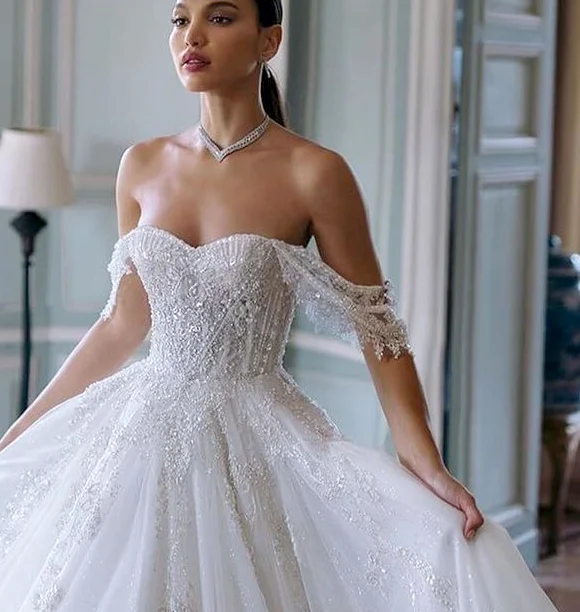
This short-sleeve wedding dress shows narrower patterned upper-arm areas below exposed shoulders.
Choose a short-sleeve wedding dress through its side line
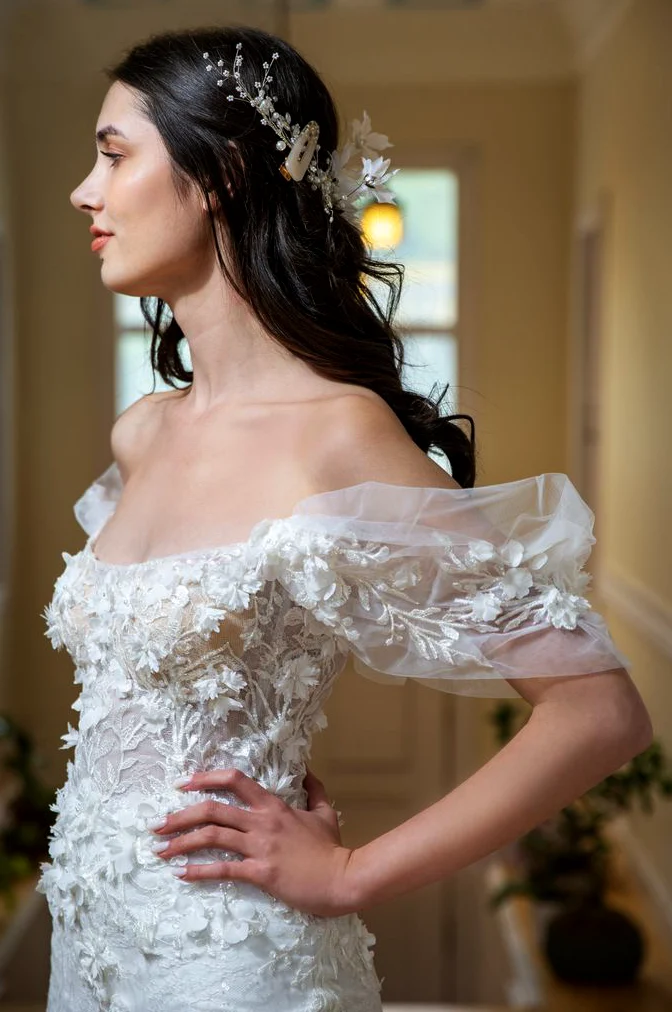
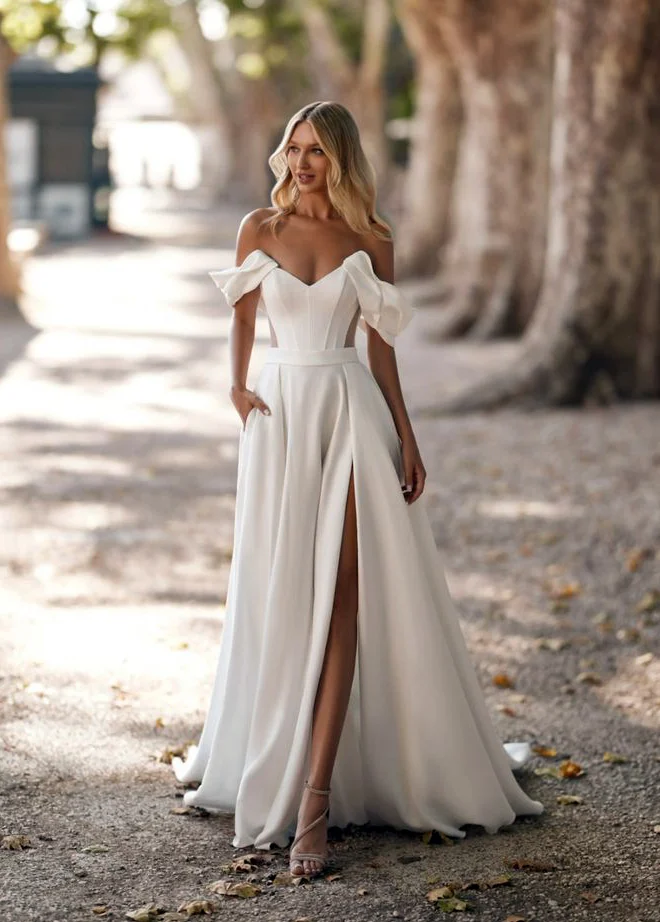
The floral close-up leaves the upper shoulder exposed. Its shorter side area looks translucent in places and gathers around the upper arm, with pale motifs linking it visually to the bodice. The other picture has a larger folded surface and more pronounced edge, drawing a stronger side shape. Decide first whether a more interrupted boundary or a clearly apparent fold beside the torso appeals. Sleeve length alone does not describe the difference between these two arrangements.
Do not settle this automatically alongside skirt width. A more projecting sleeve area can sit beside a quieter middle, while a floral layer can continue a patterned bodice. Consider the upper half without outerwear first. Which outline would you like visible from slightly further away? That priority helps explain why a later addition accompanies the choice or hides its side emphasis. Combining both ideas in one dress is not a requirement for a complete arrangement.
Short-sleeve wedding dress: compare exposed shoulders and sleeve width
Both photographs expose the upper shoulders, but their side finishes occupy different locations. A short sleeve need not sit directly on top like a small cap. Describe the intended position: more beside the upper arm or nearer the shoulder edge. This is more useful at a consultation than stating sleeve length alone. It also identifies the area you would like to leave exposed, reducing the chance that the same label is understood differently by another person.
Look at the front neckline and then the side. If the neckline appeals but you want a smaller arm frame, name both preferences explicitly. Ask whether a corresponding version exists or which alteration is actually possible on the offered model. A loose-looking section is not automatically separate or detachable. Visible shape starts the selection without fully describing attachment. Keep the design preference and technical availability as related but distinct questions when choosing a real garment.
Short-sleeve wedding dress: floral sleeves or pronounced folds?
The floral sleeve zone extends pale motifs from the closer bodice. In the second view, larger side folds meet a quieter-looking upper surface with vertical lines and a narrow middle band. This separates two design directions. Continuing a motif connects the arm more closely to its neighbouring surface, while a more pronounced fold may read as its own element. Decide which relationship appeals across the complete dress rather than comparing decoration quantity without its placement.
The lace wedding dress guide provides further questions about pattern and coverage. The simple wedding dress comparison offers another route towards quieter surfaces. Use these alternatives to identify why the sleeve idea appeals, not to collect as many details as possible. You may prefer its pattern, its side outline or the way it meets a particular waist. A clear reason makes another candidate easier to assess.
Compare hair jewellery and a necklace with short bridal sleeves
Decorative hair jewellery sits behind the ear in the close-up, while the floral-looking sleeve area already draws attention beside the shoulder. Begin a corresponding combination with a decision about those two locations. You could retain the hair ornament as an upper accent and keep the neck quieter. Add other jewellery individually if wanted. This distinguishes a piece accompanying the existing line from another independent centre of attention. Look without it again to recognise its specific effect.
The larger folded section can also be assessed without a necklace first. Compare a small earring beside the intended raised or loose hairstyle before trying a stronger accent. A broad sleeve does not prescribe one jewellery type. See the relation between ear, neckline and side surface as a whole in the mirror. A close crop of decoration alone cannot describe that distribution. The actual accessories you have are more useful here than reproducing an assumed material from a reference.
Include objects you will actually carry
One hand sits at the waist in the floral view. The full-length photograph has one arm nearer the side and another beside the skirt. Those positions present the sleeves differently. Try more than the photographed pose: hold a bag, reach for a glass and sit at a table. Inspect the same side area each time. Decide which change you like and when you would want to rearrange the surface. This connects a visible feature to an ordinary sequence of use.
A particular movement also provides a useful alteration question. Show where the edge sits afterwards instead of requesting more freedom in general terms. Discuss the real version and available adjustments. There is no need to arrange the sleeve perfectly for every view. Choosing a smaller side surface because you prefer its ordinary position can be a considered result. It separates your own preference from the most deliberately spread photographic arrangement rather than assuming both must be identical.
Connect short sleeves to waist and skirt
The full-length view includes a narrow band, wider long skirt and front opening beside the larger folds. The floral photograph is cropped more tightly and does not explain the whole lower shape. You are therefore not comparing two complete identical silhouettes. Use the close-up for the arm frame and the other view for one possible relation to a quieter middle. Choose the skirt you would actually want afterwards instead of assuming an unseen lower arrangement.
Try the selected upper idea with actual shoes and outerwear, requesting a rear view too. Phillipa Lepley describes mock-up fittings followed by further garment refinements. This gives a concrete example of staged checking without attributing the same service to every seller. Record sleeve position, preferred side width and the most important accessory question for your own choice. The short sleeve then becomes a deliberate design decision rather than an incidental consequence of the neckline.
For a short-sleeve wedding dress, assess shoulder exposure, sleeve width and side volume separately. Compare loose floral layers, larger folds and narrower patterned sleeves before choosing jewellery and the waist arrangement.
Frequently asked questions
Can a short-sleeve wedding dress leave the shoulders exposed?
A short side-sleeve section may sit below the shoulder. Assess its actual position rather than only the exposed upper skin area.
Does a short-sleeve wedding dress always have removable sleeves?
Their shape cannot establish that. Check attachment and available versions on the actual offered garment.
Does a short-sleeve wedding dress with broader sleeves need a statement necklace?
Not necessarily. Assess the existing shoulder and arm line first, adding jewellery individually to identify your preferred emphasis.



Thoughts on this article