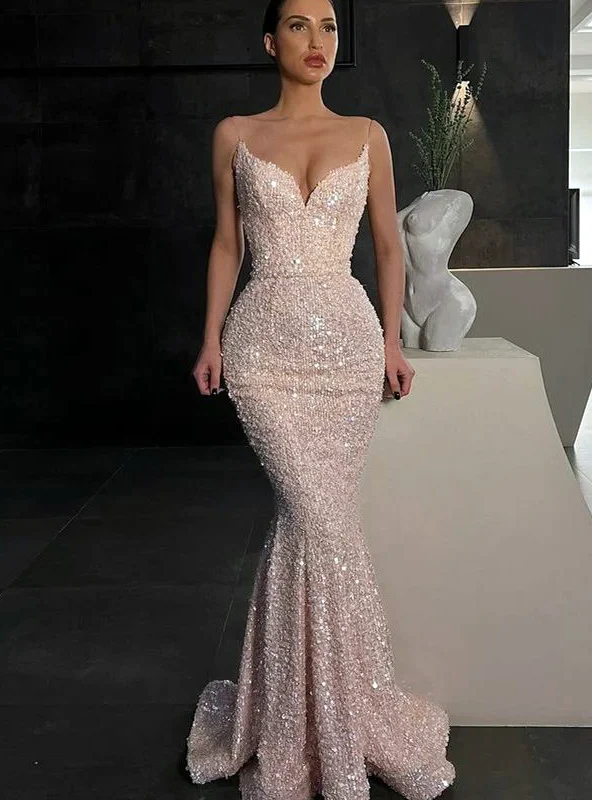
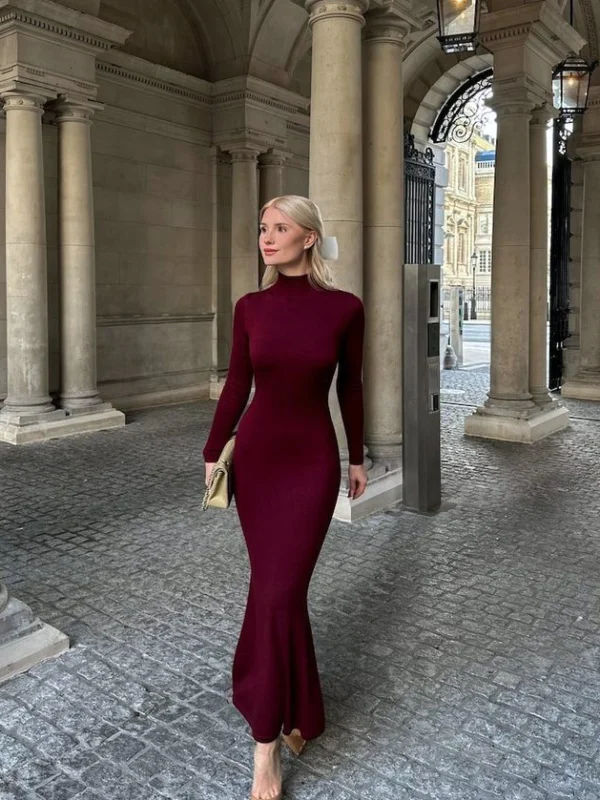
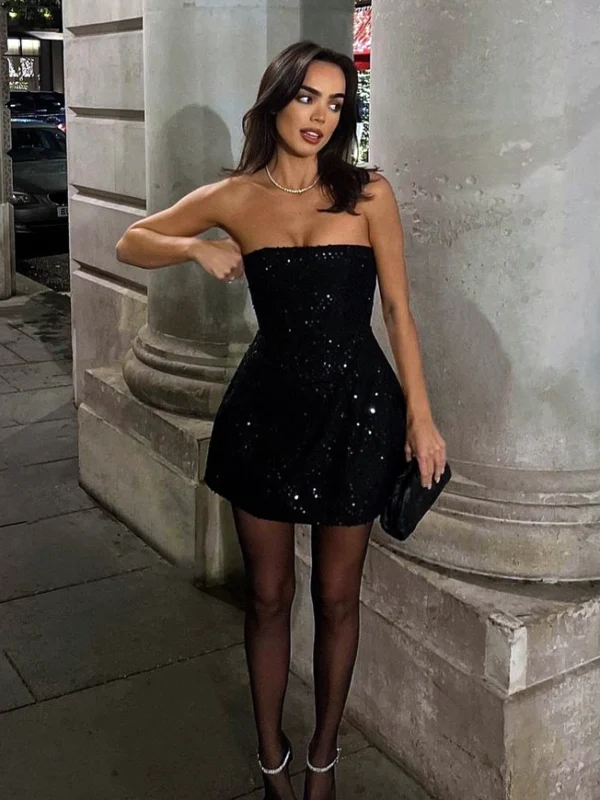
A high-neck evening dress is identified by the edge at the neck, rather than the length of its sleeves. A red gown with long sleeves can leave the shoulders open, while a sleeveless dress could still reach the neck. The burgundy reference here provides an actual high neckline. Three other pictures show a deep V, a strapless edge and open shoulders as deliberate comparisons. Together they help you describe the upper area you want on your own dress. Choose the neckline first, sleeves second, and jewellery and hair after that. This sequence makes different dresses easier to assess.
High-neck evening dress: choose the upper edge first
Look at the space between the chin and the fabric edge on the burgundy dress. Its visible line sits close to the neck and continues into the bodice without a deep front opening. That is the relevant observation. You can mark your preferred edge on a reference picture before a fitting. Then compare two actual dresses with reasonably similar skirts. Otherwise a dramatic train or a much lighter colour may change your impression at the same time as the neckline. A visual reference is particularly helpful when sellers use different terms for similar cuts.
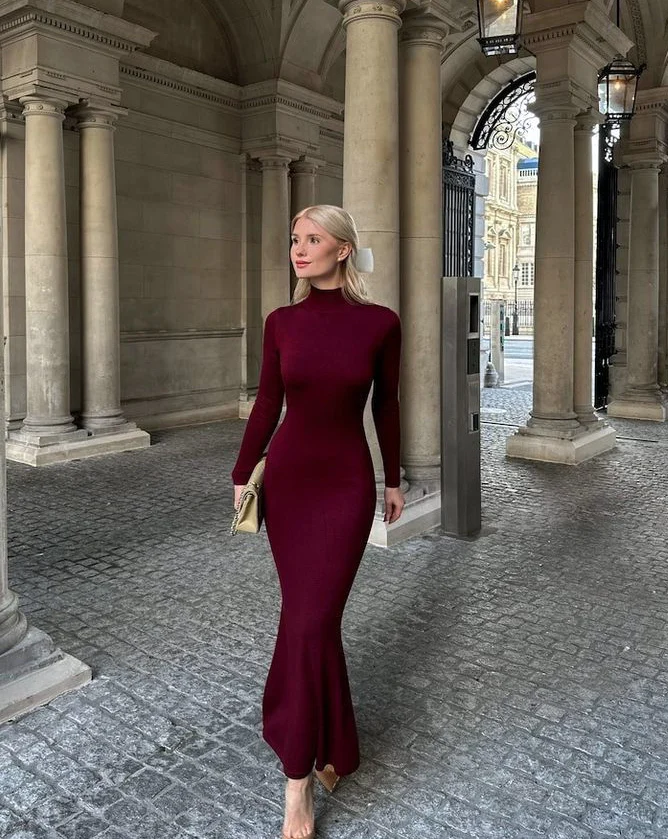
Try the neckline without a necklace and with your hair moved back initially. Look straight ahead, turn to the side and glance down. Decide how close you want the edge to sit and whether the contact feels comfortable to you. If it interferes with talking or turning, ask to compare another shape. A picture does not reliably establish stretch or fastening construction. Ask about the actual dress instead. A small adjustment to the neckline may matter more to the desired appearance than introducing a more noticeable piece of jewellery.
Treat sleeves and upper coverage as separate choices
The burgundy reference continues its closed upper outline through long sleeves. The red comparison also has long sleeves, but its upper edge runs across below the shoulders. Place those shapes side by side and describe which areas you want covered. If a high neckline is your aim, a search for long sleeves alone will not specify it. Equally, liking a high neckline does not automatically commit you to full-length sleeves. Look for actual front and back views in an offer before deciding that a dress meets your preference.
At the fitting, let your arms rest first and then lift them one at a time. Observe whether movement in the sleeve pulls the neckline with it. If the evening involves reaching for things or greeting people with a hug, this relationship matters more than a neat standing pose. Add the intended bag afterwards. A shoulder strap may cross precisely the part of the upper outline you wanted visible. You need not rule it out, but compare the complete area with the bag in place as well as without it.
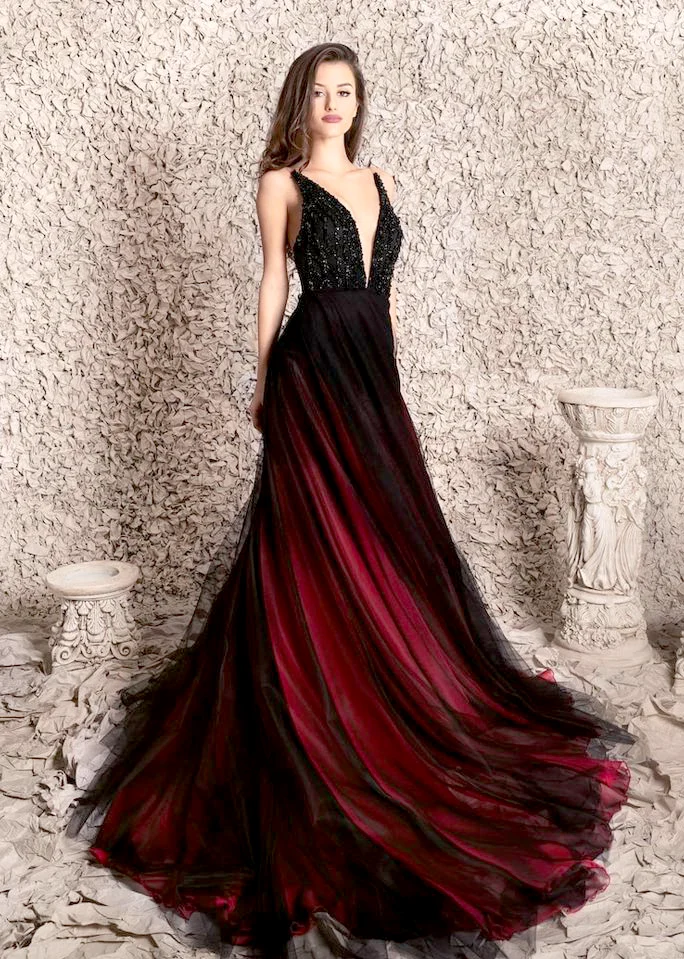
Read the deep V as a clear alternative
The black and red dress shows a deep V between two decorated bodice sections. Its long full skirt does not make the neckline high. This comparison separates two different wishes: a long formal silhouette and coverage over the upper chest. They can be combined, but neither implies the other. If the V-neck picture appeals mainly because of its sweeping skirt, record that specific preference. Look for a comparable lower shape with your chosen neckline rather than treating the whole photograph as an indivisible target to reproduce.
Jewellery also occupies a different visible area. In the V-neck reference there is an open space between the bodice sections; in the burgundy reference that space becomes a quieter dark surface. Hold the same earrings beside both pictures during your first comparison. Decide whether an accent near the face feels sufficient or whether you want a necklace over the closed bodice. There is no need to apply a universal prohibition on necklaces with high necklines. Your useful question is where each chosen piece sits in relation to this particular edge.
Distinguish strapless edges from open shoulders
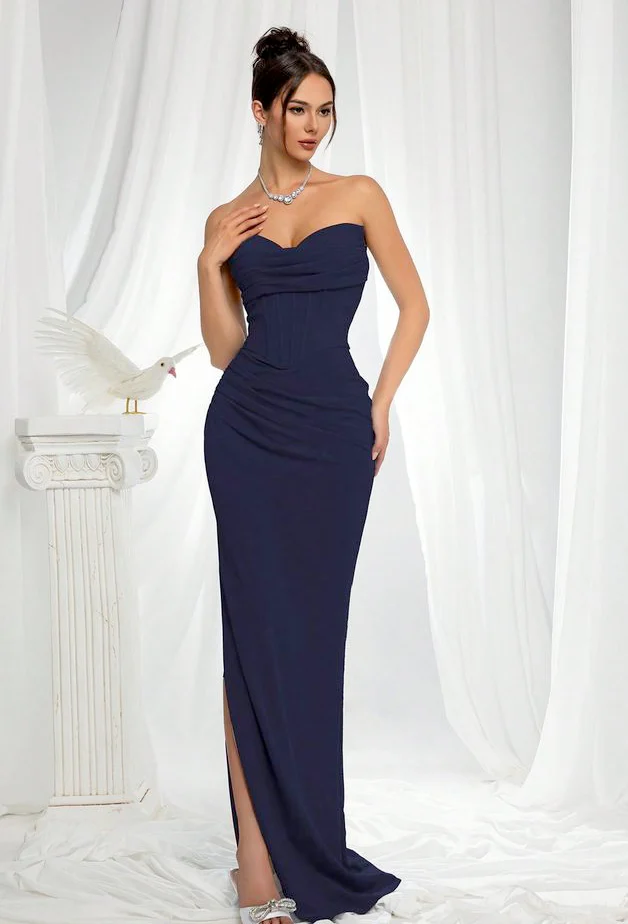
The navy comparison ends below the shoulders with a curved front edge. It frames the neck differently from the high-neck example, although both have a relatively close upper silhouette. If what appeals is the composed dark colour, assess that colour separately from coverage. On an actual strapless garment, support and internal construction require their own inspection. They cannot be established just because the bodice appears smooth in one image. Ask to see how the garment is intended to sit, and try it through the movements you expect to make.
The red dress adds long sleeves and hanging side fabric to its open shoulder line. Several directions are visible together: the horizontal upper edge, the length of the arm and the side panel. On the burgundy dress, the upper boundary instead sits nearer the face. Choose which direction you would like to emphasise. For a clear comparison photograph, leave the bag and jacket out first and add them separately afterwards. You will be able to identify which extra line changes the appearance you were trying to achieve.
Coordinate hair, jewellery and a jacket at the neck
Try earrings with the hairstyle you actually intend to wear. Move your hair behind your ears once, then place it over a shoulder if that is your plan. With a high neckline, a larger earring may appear closer to the fabric edge. That is a spacing choice rather than an automatic mistake. Look in profile to see whether jewellery and neckline touch. If you want to add a necklace over the bodice, test one length at a time and notice whether it stays where you place it.
Finally, put on the intended jacket and open it again. Its lapels or collar introduce another frame at the neck. Decide which edge you want to lead the arrival outfit. For later cleaning, read the actual dress label: GINETEX explains the processes represented by care symbols present on a garment. A high fabric edge can look smooth in a photograph without revealing an appropriate cleaning method. Resolve missing information before buying, then make the style decision from the real neckline, its movement and its interaction with the other pieces.
For a closer comparison, use the guide to straps and necklines and the jewellery comparisons for statement dresses.
Choose the height of the neckline first, then sleeves, and try jewellery and hair against the actual upper edge.
Frequently asked questions
Do long sleeves automatically mean a high neckline?
No. The red comparison covers the arms while leaving the shoulders open. Sleeve length and neckline height are separate features.
Must I avoid necklaces with a high neckline?
There is no universal rule to apply. Try one length at a time over the bodice and check its position as you move.
What does the deep V comparison clarify?
It separates a preference for a long full skirt from the decision about upper coverage.
What should I try at the neck edge?
Turn your head, glance down and move your arms to assess contact and any shifting on the actual dress.