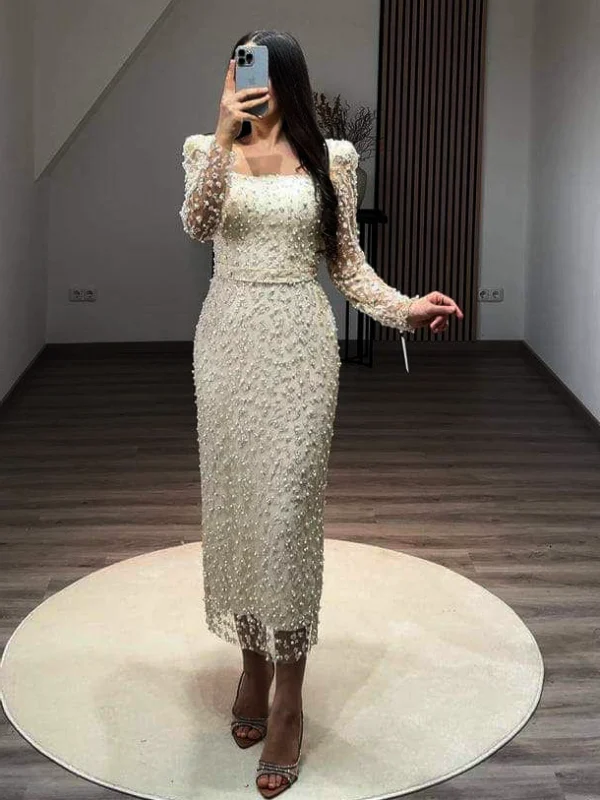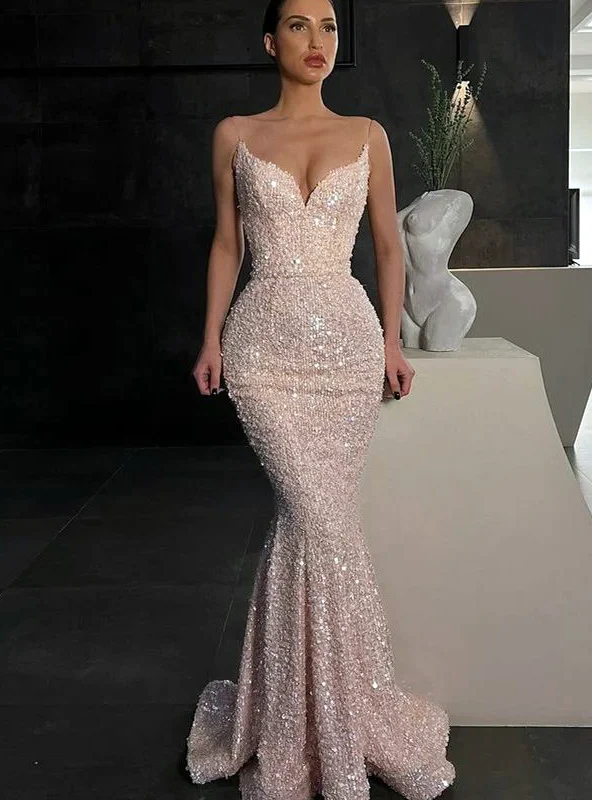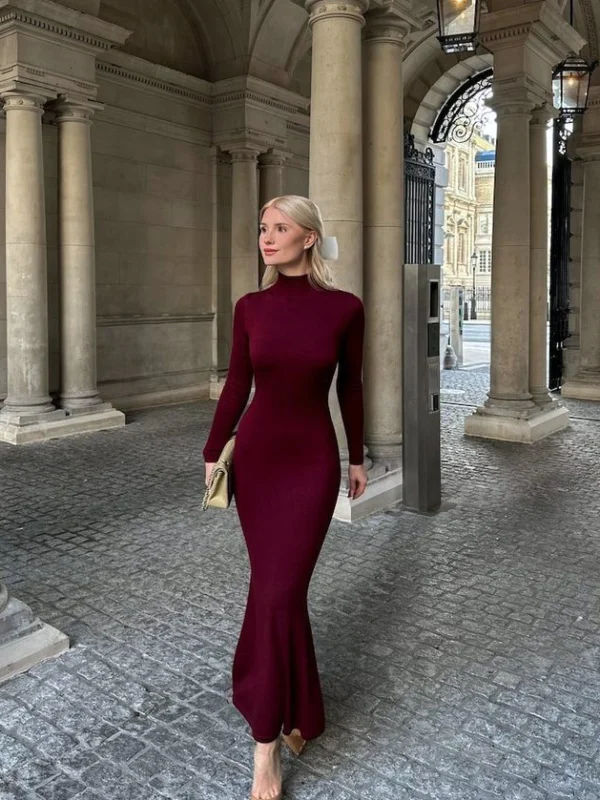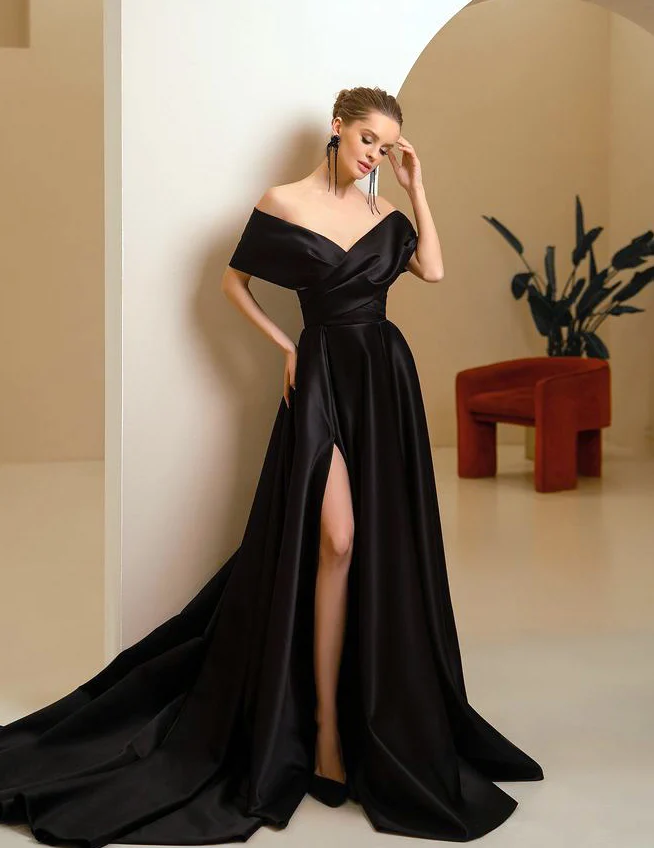
A wedding guest evening dress needs to fit a particular invitation before it fits a photograph. A long black dress with a train, a pale blue full skirt and a short cocktail dress make different statements even when all are described as festive. Begin with the hosts’ wording, your role and the stages you will attend. Then choose the design that works through those stages without requiring you to manage it continuously.
The question is not simply whether a dress is elegant enough. A very elaborate gown may exceed the intended formality, while an otherwise suitable neckline may need an additional layer for one part of the day. Keep a short written brief beside your shortlist: ceremony, meal, evening reception, travel and any specific clothing request. This makes two appealing dresses easier to compare fairly.
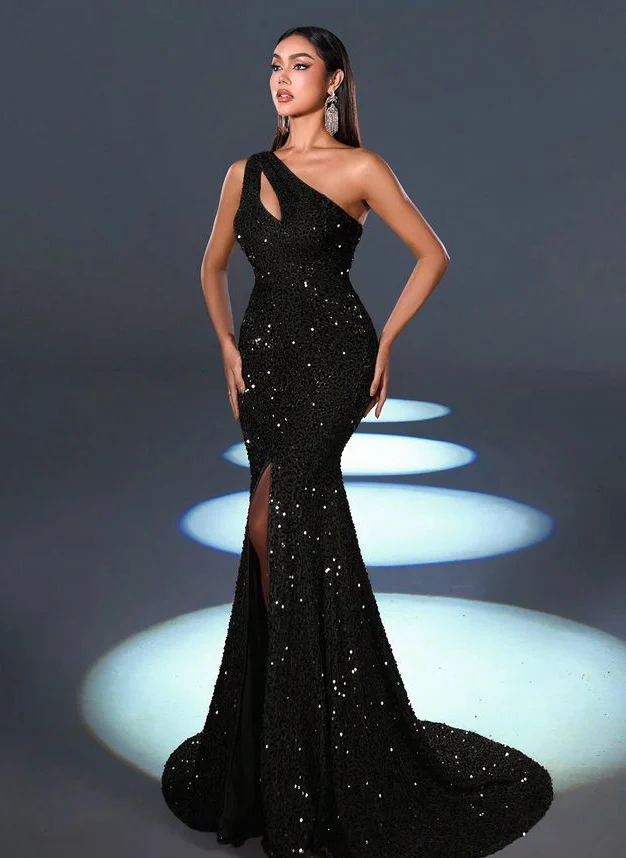
Wedding guest evening dress: read the actual invitation
Separate an explicit instruction from your own association with the venue. A hotel can host a relaxed lunch or a formal evening reception; a garden can host an event with a precise dress code. If the invitation uses a term you do not understand, ask the hosts or their nominated contact what they expect. A concrete question about length, colour or coverage is easier to answer than asking whether an entire outfit is acceptable.
Also confirm which parts you are invited to. A guest arriving only for dancing needs a different plan from someone attending a ceremony, travelling between locations and sitting through dinner. Avoid buying a second outfit merely because the event changes location. First see whether a removable outer layer and a suitable bag can make the same dress work for the complete invitation.
Distinguish dark drama from quiet formality
The black one-shoulder example combines a reflective surface, a cutout, a leg opening and trailing length. The broad off-shoulder black example has a quieter surface but an expansive hem. Both show why colour alone cannot describe how conspicuous a gown will be. Compare the number and scale of the features, rather than treating black as an automatic sign of restraint.
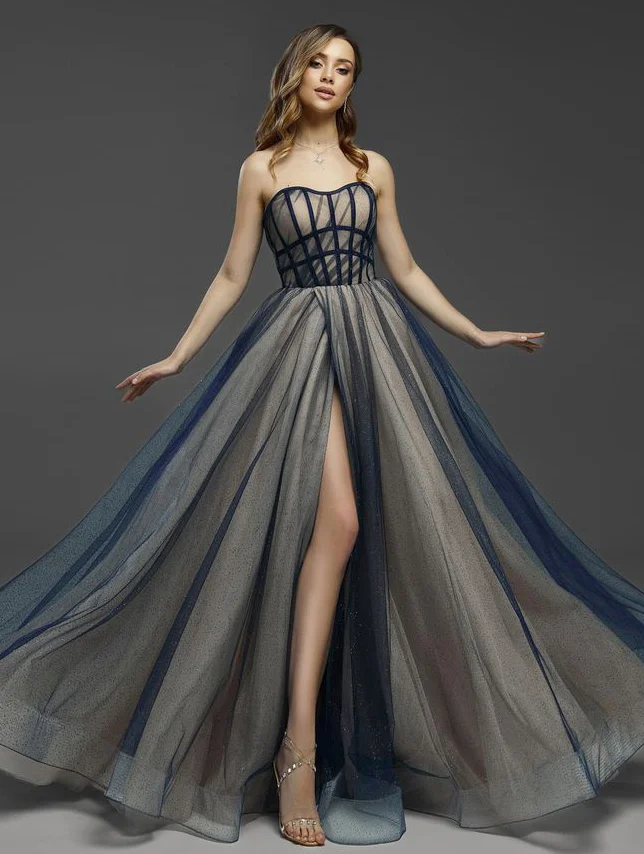
For a wedding with a clearly formal evening brief, you might favour one pronounced feature and simplify the others. That is a styling choice, not a universal guest rule. Lay out two complete alternatives: perhaps a clean neckline with a fuller skirt, and a more detailed bodice with a simpler lower half. Judge them in a full-length mirror before adding jewellery or deciding that more decoration is necessary.
Assess pale colours as a complete design
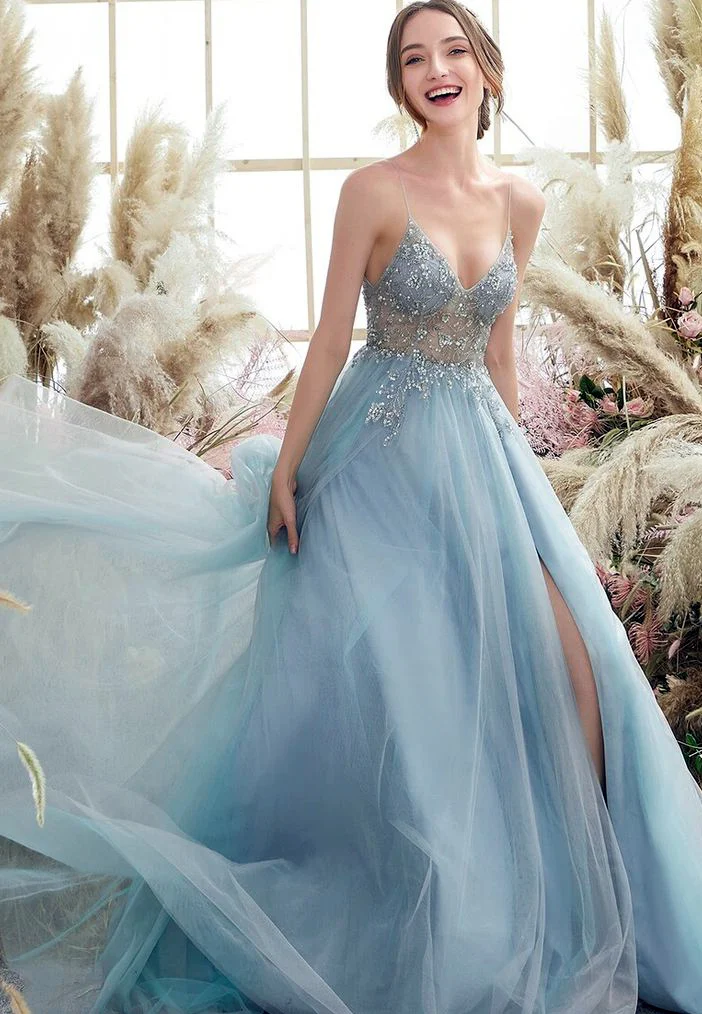
Pale pink and blue are not automatically interchangeable with strong pink and blue. On the pictured pale dresses, broad skirts, light layers and trailing hems contribute to the overall impression. If a guest outfit looks close to the bridal direction, a darker clutch will not necessarily change that impression. Compare the whole silhouette and the actual colour in ordinary daylight, then ask the hosts when the brief remains unclear.
The pale blue example also shows a sheer-looking area around the waist and a heavily decorated upper section. Those details matter independently of colour. Decide whether you want that degree of visual exposure and decoration at the ceremony and at dinner. A photograph cannot establish the lining of the item you will wear, so inspect the actual garment rather than relying on the catalogue pose.
Plan coverage as part of the outfit
Choose a ceremony layer before finalising the neckline. A jacket ending at the waist changes the outline of a wide skirt; a wrap crossing a decorated bodice can create a different focal area. Try each option closed and open. If a ceremony has a stated clothing requirement, check the complete covered outfit against that request instead of assuming a loosely draped scarf will be sufficient.
The pale blush example has sleeves sitting below the shoulders. That is a visible design feature, not evidence of how far the wearer can raise their arms. Try reaching forward, greeting someone and holding your bag while wearing the actual dress and layer. The off-shoulder line should remain comfortable enough that you are not repeatedly rearranging it during the event.
Give the hem a realistic route
A train looks controlled when arranged for a still photograph. A guest has doorways, chair legs, neighbouring seats and possibly an outdoor path to negotiate. Check where the back hem falls when you stand naturally in your chosen shoes. Walk forward, turn and sit without adopting the model’s pose. Ask about any proposed lifting loop or alteration on the actual dress; its existence cannot be inferred from the image.
A high opening adds another practical question. Sit at roughly the height of a dining chair and see where the opening settles without pulling it into place. If you change shoes later, repeat the hem check with the second pair. A lower shoe can change the relationship between the skirt and floor, so buying a backup pair is only useful when the two work with the finished length.
Finish the guest look and prepare it for reuse
Take the bag you expect to carry to the fitting. Its position beside the hip can interrupt a draped waist or catch against decoration. Select jewellery after seeing the neckline with your hair arranged as planned. The guide to jewellery with a statement dress offers a more detailed comparison of the available spaces. For a less gown-focused alternative, compare elegant party outfits against the same invitation.
Before committing, read the actual care label and consider what will happen after the wedding. GINETEX explains the care symbols; the numbers in the wash tub indicate maximum washing temperatures. This does not establish that a pictured dress is washable. A useful final choice has a clear event role, a workable full outfit and a care plan based on the real garment.
Choose a guest dress from the hosts’ actual brief, then compare its colour, coverage and trailing length across the ceremony and reception.
Frequently asked questions
Does an evening reception automatically require a floor-length dress?
No. The reception time alone does not specify a dress code. Read the invitation and ask about an unclear instruction before choosing the length.
Can a pale blue dress be too bridal for a guest?
Yes, a very pale colour combined with a full skirt, embellished bodice and train can resemble bridalwear. Compare the whole design and ask the hosts if its suitability is uncertain.
Should a guest choose a dress with a train?
Only when the invitation and setting support it and the trailing length is manageable. Try the actual route and seating arrangement; a photograph does not establish a workable way to lift the train.
Can one dress cover both ceremony and reception?
Often it can, provided the ceremony layer, neckline and hem work together and any planned change is rehearsed with the actual garment.