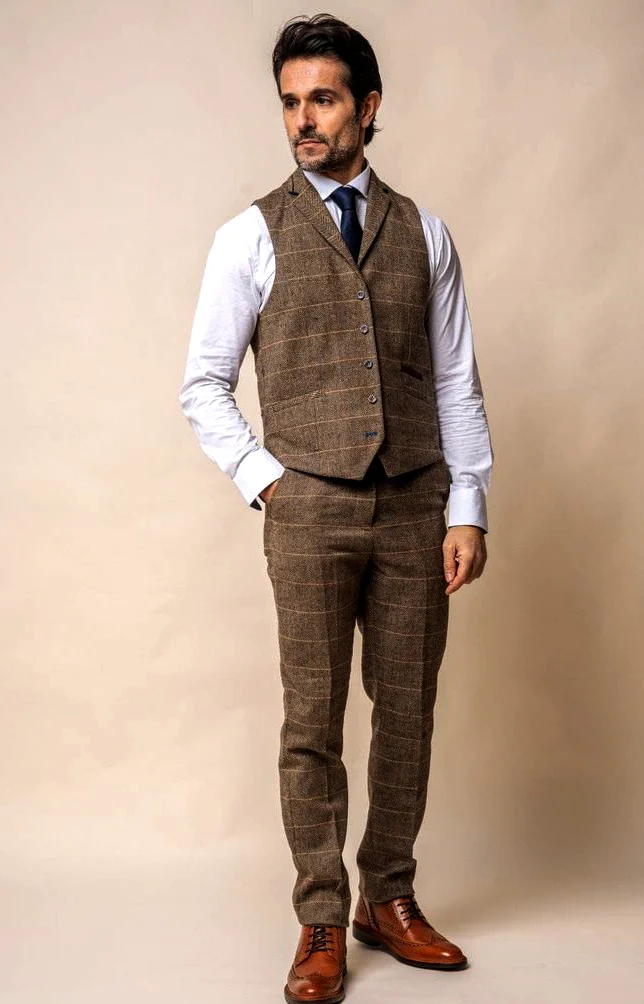
Waistcoat and trousers without the jacket reveal the complete middle connection here. The brown waistcoat has its own lapels, a button row and two lower points. A similar check continues across the visible trousers. Pale shirt sleeves frame the sides, while a dark tie and brown shoes add upper and lower accents. This supplies another state to consider when selecting a three-piece look.
Try that second view on your actual candidate if you expect to remove the jacket later. Check the waistband transition with relaxed hands and then while sitting. Decide which shirt area may remain visible and whether the waistcoat length suits that preference. A higher trouser rise or another waistcoat shape alters the relationship; discuss those requests separately.
Then view the shoes with the real trouser hem. A complete picture supports a different proportion question from a close upper-body crop. Request the actual waistcoat back as well. The jacket absent from this image, or a shared sales set, cannot simply be added by assumption. Use the reference for the visible second state and confirm every included piece through the offer.