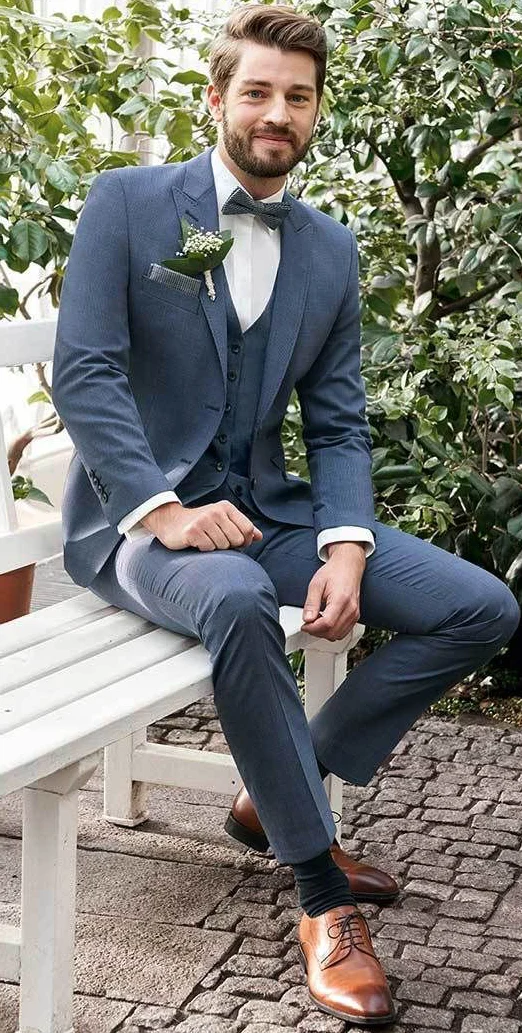
A pale shirt with a bow tie makes the middle look different from a long-tie arrangement in this seated blue outfit. A continuous pale area remains beneath the short neck accessory. The waistcoat limits it at the sides and below. A pale pocket square and plant-like lapel detail add to the upper area. The forearms sit differently, making the cuffs visible by different amounts. Treat the pose as a reason to test your own pieces rather than a fixed instruction.
Try a bow tie with your actual shirt and assess the space beneath the chin. Compare the waistcoat edge next. Would you like the pale centre clearly visible or limited higher up? Sit for both alternatives with relaxed hands initially. This avoids letting a changed arm position create the apparent difference.
The brown shoes occupy another colour area and need not repeat the pale shirt. Include them after the neckline decision to assess the complete impression. A bow tie does not make this photographed combination automatically appropriate for every celebration; use the actual invitation when choosing your version.