A short or long party dress changes the lower line and visible leg area most directly. This decision can be separated from colour, shine and neckline. The references show two short looks and two long shapes: fine reflections on a short dress with long sleeves, a black asymmetric mini, a long red dress with an opening and a narrower pale long line with ornaments. Do not automatically adopt an entire photograph. Compare the length and coverage you want for your own evening first, then assess the other areas separately.
Short or long party dress: separate length from opening
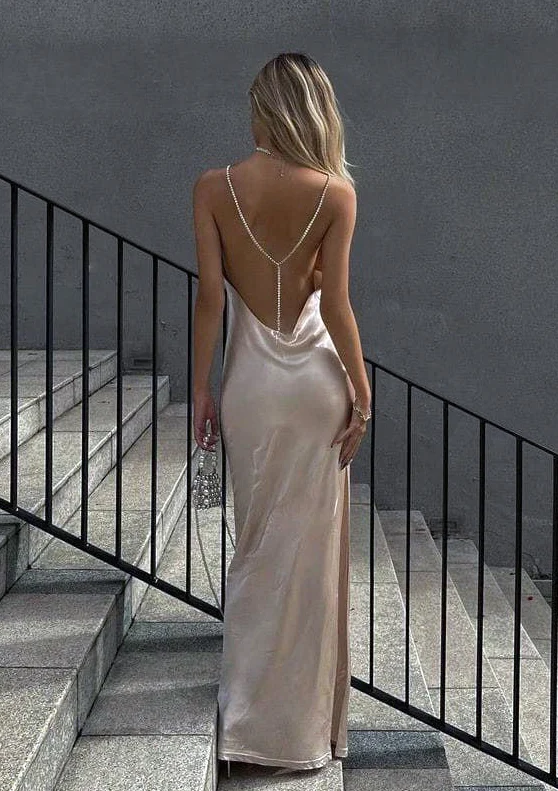
On a short dress, the main surface finishes farther above the ground. On a long version, part of the leg may still remain visible through an opening. The red example demonstrates that distinction: a long outer line beside a higher front opening. The pale ornamented dress keeps the lower area more continuous. Ask two questions separately: where should the hem sit, and where may the skirt be open? Those answers can lead to several actual shapes rather than one automatic definition of a long dress.

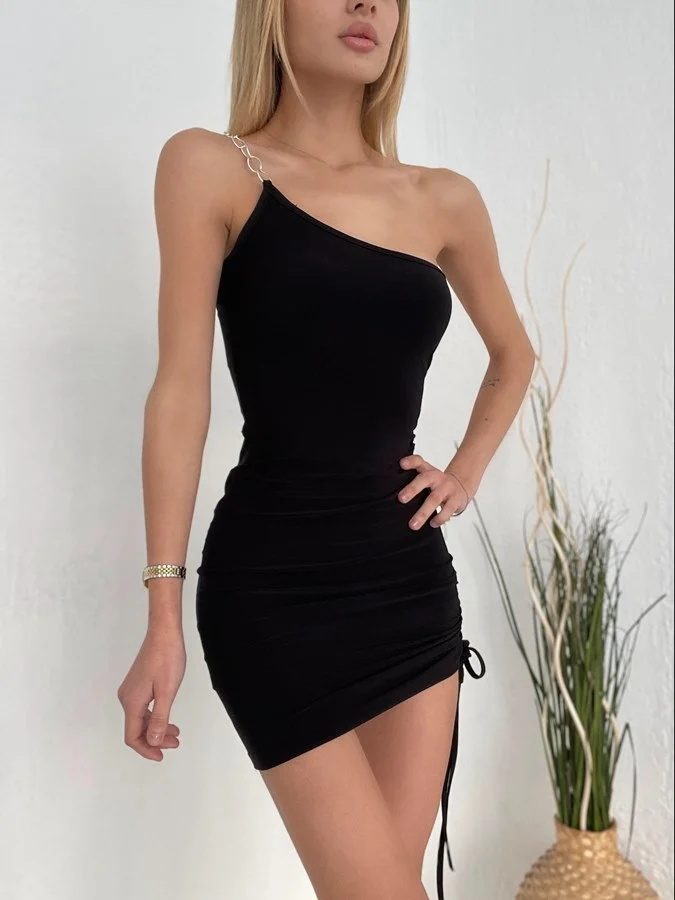
The short black dress adds an angled hem and visible side gathering. Its two sides do not finish at the same height. Look beyond one point at the front centre. Compare the shorter side, longer side and transition between them. You can enjoy the angle while preferring a different overall length. Seek a real version combining both preferences instead of assuming an alteration is straightforward from the picture alone. A visible side cord does not establish unlimited adjustment or every possible finished length.
Check seated coverage in the actual shape
Sit on a suitable chair in your selected short dress. Observe the hem before pulling it into place. Decide whether the visible leg area feels comfortable in that position. Stand again and see whether you want to rearrange the sides constantly. The shorter side of the black version needs different attention from an even lower edge. Check the real garment rather than using its most flattering photographed pose as the only basis. The ordinary transition between standing and sitting provides additional information.
With a long dress, look at the opening and surface around your knees. Sit, turn slightly and stand again. Watch how the skirt falls. A deliberately forward leg in a picture can reveal more of the opening; a closed stance can partly conceal it. Neither replaces your own trial. Choose through the coverage you actually want without describing a body area as a problem or a particular skirt shape as compulsory. Repeat the same movements at a similar pace for both candidates.

Choose shoes through their actual visibility
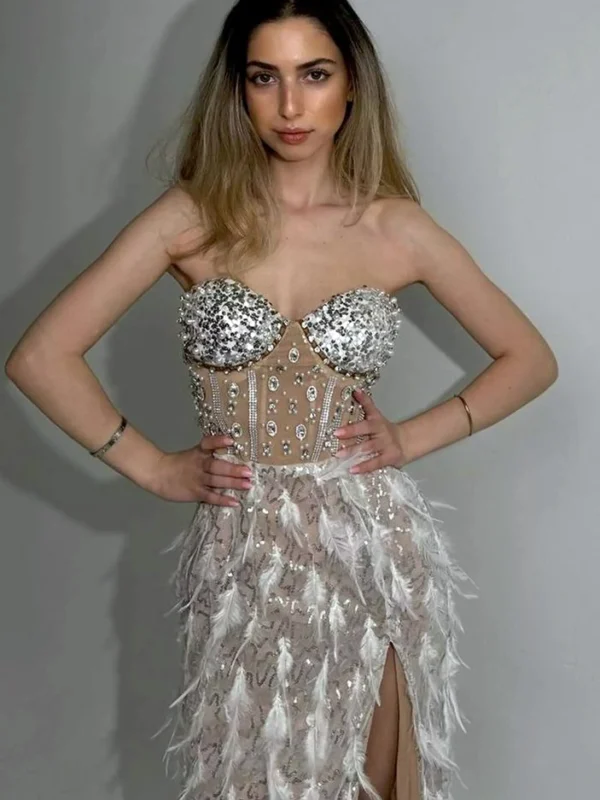
Below a short dress, shoes and a larger leg area form a clearer part of the overall surface. A long skirt may hide the shoe temporarily and reveal it again through an opening or while walking. Decide how strongly shoes should appear as a separate focus. The red version combines its front opening with a clearly visible shoe area. The short reflective look has a more open lower outline. Assess that relationship with your own shoes rather than an abstract name for the correct footwear.
Bring the exact pair you intend to wear to the length fitting. Walk, stop briefly and change direction. With the long dress, check whether you step on the hem or keep wanting to carry it. With the short look, observe the space between hem and shoe finish. Another heel height requires another real trial rather than being an automatic improvement. The party outfit for women guide adds coordination questions after the lower line has been selected. Use the comparisons relevant to your own actual length.
Include routes and outer layers in the length decision
Consider the real sequence of the evening. Will the route include steps or a longer seated period? Will you remove a jacket at the entrance? Record those situations without turning them into a universal rule for parties. A long area spread on the floor may appeal for one moment yet need specific handling when moving on. Ask what arrangement the actual garment provides and whether it supports your plan. A photograph presents a stationary moment, not your route or available space around tables.
Try the outer layer open and closed over both favourites. Beside a short skirt, a longer jacket may create another lower finish. With a long dress, an extra horizontal edge may appear higher up. Decide whether you enjoy both states. Hold the bag in its intended position too. The outfit may look different once the jacket is removed; the useful point is having compared that change deliberately with real pieces. Note any favourite hem detail that disappears underneath, then test whether another outer length works better.
Avoid confusing length with neckline or reflections
The short reflective version has long sleeves and a deep front line. The short black example stays one-sided above and adds a paler shoulder accent. Length is only one shared feature. You can prefer a mini while wanting different upper coverage. Describe the hem preference independently of the neckline. This avoids excluding a suitable shape merely because another area in its photograph does not appeal. Shine and exposed areas need not be adopted as a fixed package; choose each on the real garment.
The long references also have different surfaces. Red joins a stronger colour impression to an open leg line; the pale version carries larger ornamental lines through a narrower lower shape. For a deliberately different hem idea, the high-low party dress guide adds questions about unequal front and back finishes. This does not rename the references here. An angled short dress and a long slit version are other actual shapes to assess on their own terms. Keep the comparison question clear rather than treating every uneven line as the same design.
Decide through two completed length alternatives
Clarify the celebration’s actual clothing expectations first. Images do not create a universal ranking in which long is always more appropriate or short always more practical. Finish one short and one long outfit afterwards. Keep shoes or bag similar where that serves the comparison. Record your preferred visible leg area and any situation that still fails to work. A precise open question makes the next fitting more useful than an indefinite search for the perfect party dress. Keep the decision tied to your own evening.
Discuss a necessary alteration on the real model and repeat the same movements afterwards. Read product information and its own label; GINETEX explains care symbols. A shiny or quiet surface does not establish fibre or treatment. Your result is a length decision for a specific evening, with a deliberate opening, actual suitable shoes and coverage you have assessed standing and seated. It rests on more than a single photographed pose and can guide the next real candidate you compare.
Choose hem height separately from slit, neckline and shine. Compare both lengths with your intended shoes while sitting and walking.
Frequently asked questions
Does a long high-slit dress cover like a closed long skirt?
No. Overall length and opening are separate choices. Test the visible leg area standing, walking and seated on the real version.
Do I need high heels with a long party dress?
The appropriate length must be checked with the shoes you actually intend to wear. A photograph does not prescribe a heel height for your outfit.
How should I assess an angled short hem?
Inspect the shorter and longer sides with relaxed arms and after sitting. Check the actual adjustment of any side gathering on the product separately.
Must I adopt the shine along with the length?
No. The references combine length and surface differently. Seek your preferred length independently of decorated or quiet fabric appearance.