A wedding dress with technology needs more than an impressive image. What matters is the function documented and demonstrated on the actual dress offered. Define the effect you want first. Separate the visible shape, manufacturing method and a possible active function afterwards. Shiny details or a modern background do not explain those properties. Our six bridal references support style selection; none establishes embedded electronics, active colour change or another technical function. Keep your visual preference alongside a separate request for real product information.
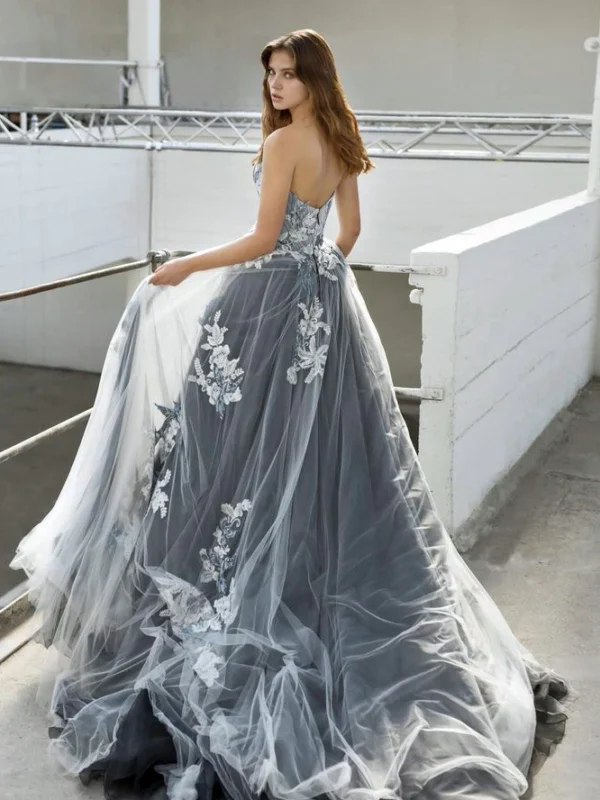
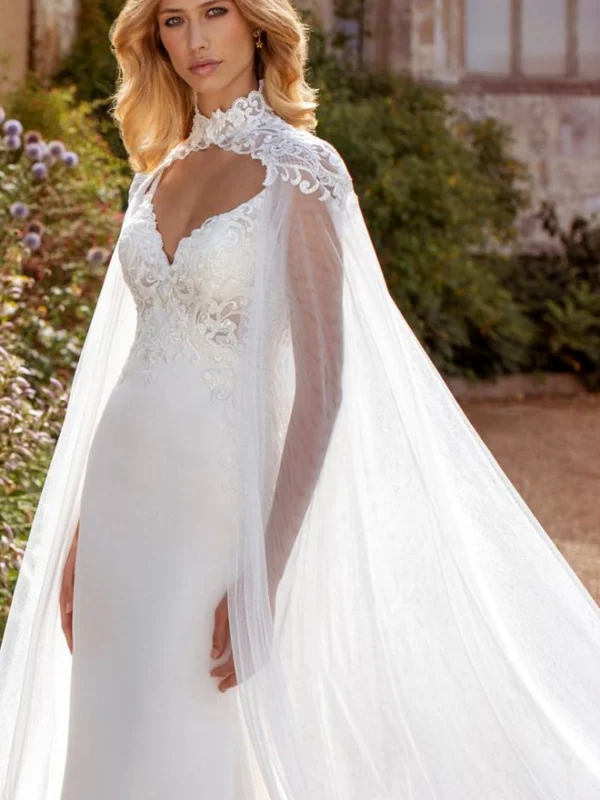
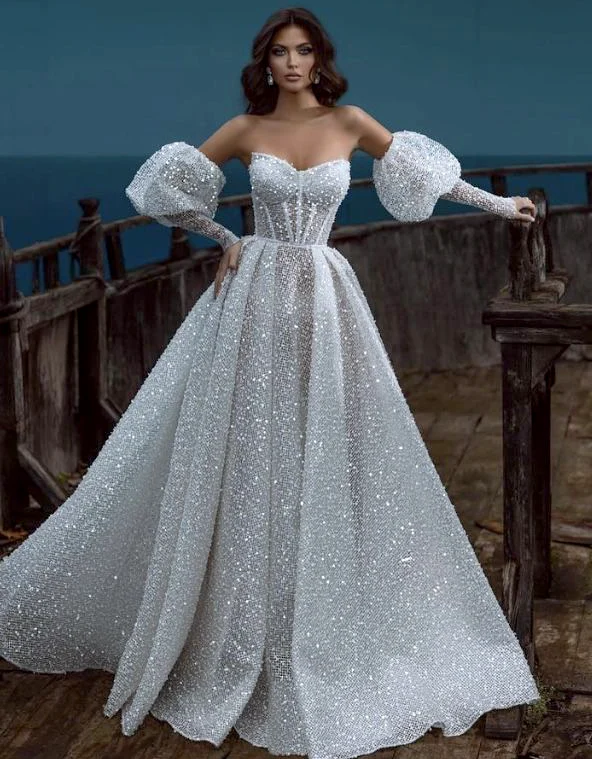
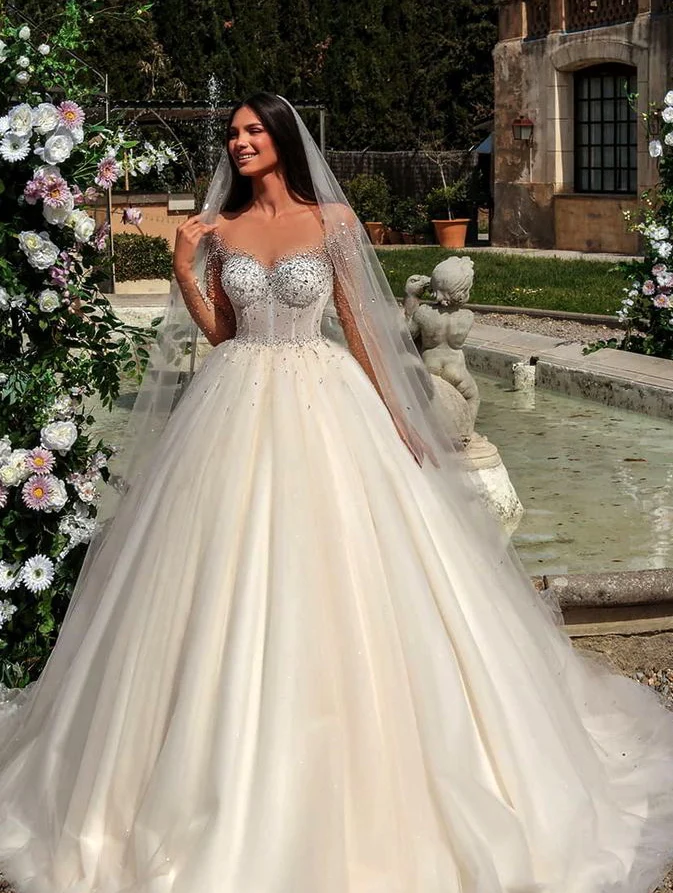
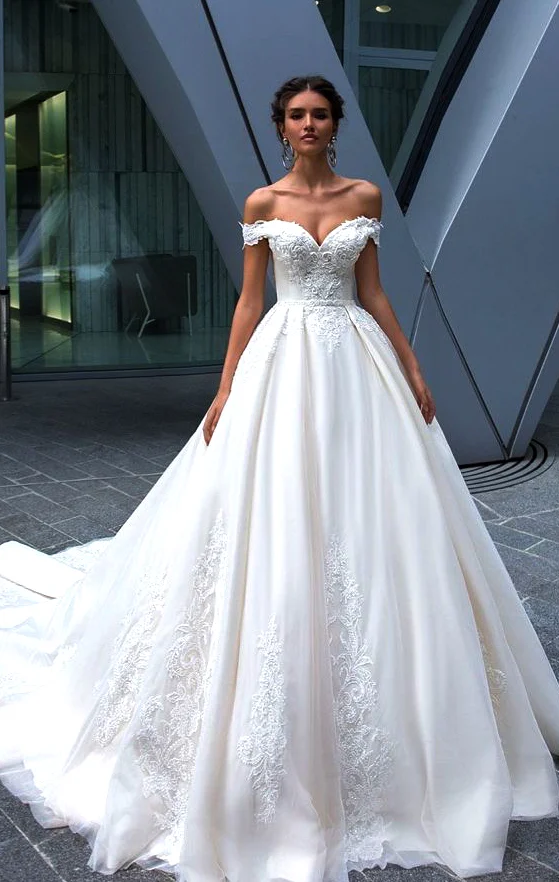
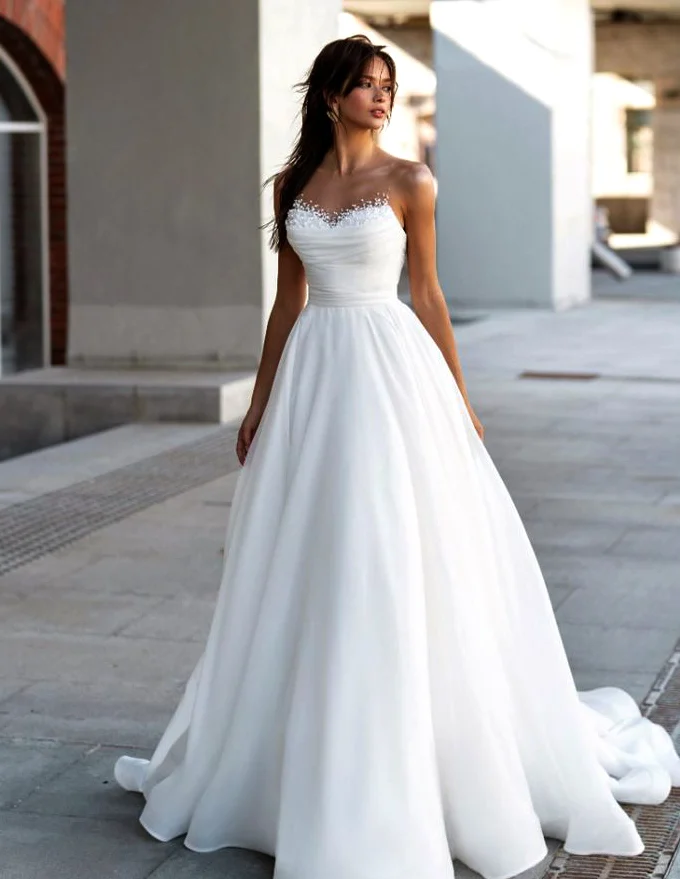
The selection shows different necklines, floral surfaces, wide skirts, a decorated open back and longer veils. Use them to describe the shape and decoration you like independently of technology. An actual technology request adds another assessment: what is specifically offered, how can it be demonstrated and which pieces are included? Separating those questions makes an enquiry clearer than inferring several unconfirmed functions from an attractive image. A preferred appearance and a product specification are different parts of your selection process.
1. What should the wedding dress with technology actually do?
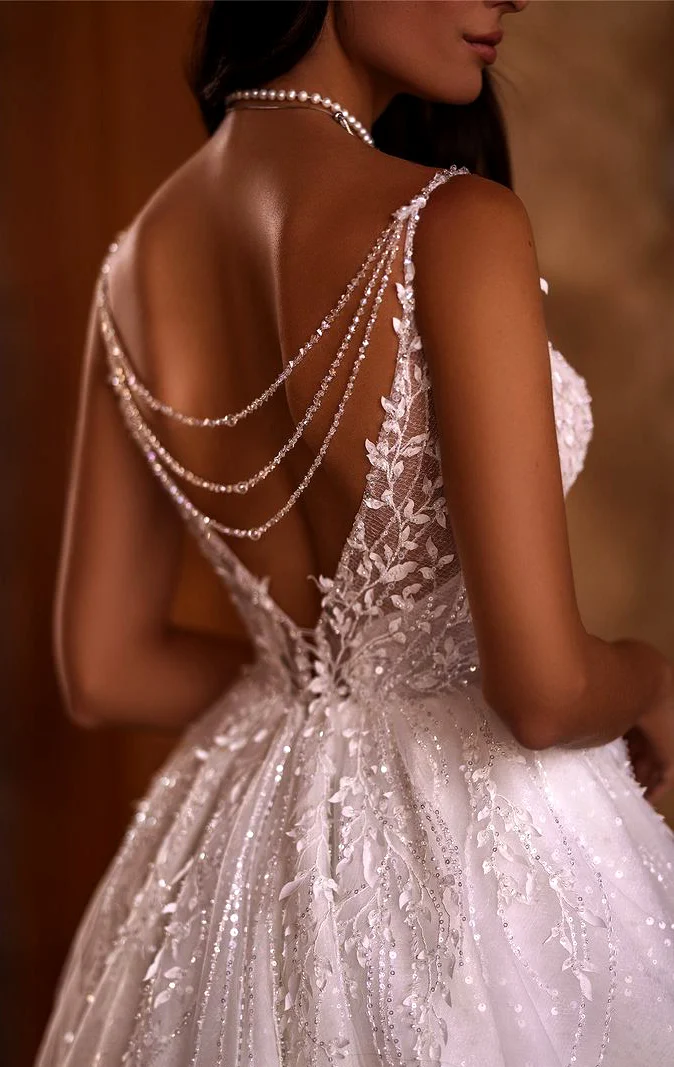
Express the preference as an observable result first. Do you want a surface that changes while being worn, or mainly a particular reflective appearance? Those raise different questions. The close back image in our selection has curved strand-like details with light reflections. It helps with decoration placement, rather than establishing a confirmed light source. Record which part of your idea is a style preference and which is a function that needs separate evidence. Turn the latter into a specific request for the product offered.
For a corresponding offer, request a description of the intended version. Ask which dress is used in the demonstration and whether it uses the pieces actually supplied. An uninterrupted view with a clear sequence can answer different questions from one edited-looking photograph. You do not need to identify the production method yourself. Make the enquiry precise: what change should be visible and under which conditions do you want to see it while wearing the dress? Record the answer for that actual model instead of substituting another design’s presentation.
2. What does a genuine research demonstration establish?
Adobe Research provides a dated example. Its MAX 2023 article describes Project Primrose as an interactive dress demonstrated with flexible, non-emissive textiles for displaying content. That is a specific research example with its own source. It does not identify our bridal images or by itself establish a wedding dress available to order with the same properties. Use the named case to distinguish a documented demonstration from an unspecified promise, rather than as a product commitment for your own search.
Classify a source by what it actually describes: a past demonstration, a specific item currently offered, or a general idea. Your selection needs information about the actual offer. Ask for model, version, included components and fitting procedure. A recognized project name can explain a direction. Whether a particular bridal version with your desired properties is offered remains a question for the specific provider. It cannot be answered solely by naming a research demonstration, even when that example is useful for explaining the effect you have in mind.
3. Is manufacturing technology the same as an active function?
Separate how something is made from how the finished garment behaves. A particular digital design or production process does not automatically establish an effect that later changes during wear. Our 3D-printed wedding dress comparison addresses the distinction between a shape reference and confirmed manufacture. Transfer the question about specific evidence. A geometric-looking detail or reflective surface need not have a particular technical production history merely because it appears that way in a photograph. Name the manufacturing claim and intended behaviour separately in your enquiry.
Record two points: how is the actual product described, and what should it demonstrate during your fitting? Modern is not a sufficient specification either. The comparison of modern wedding dresses with floral details offers another route to a contemporary appearance through visible lines and patterns. You can choose that shape without claiming an additional function. This keeps your preferred modern look clear even when you do not need a particular active effect. Use technology as a specific property to confirm, rather than a general expression of visual preference.
4. How should you compare the effect within the complete look?
Assess the real version alongside the dress you would actually wear. Request a demonstration of the intended effect under the proposed conditions, then view the complete front, sides and rear. Ask how the surface looks when the discussed function is not active as well. That is a styling decision: do you also like the underlying shape, and which areas should remain visible independently of the extra effect? Your own intended appearance provides the basis for that answer. One pronounced detail does not settle the complete dress choice.
Add hair, a veil and jewellery one at a time. A long veil overlays a broad skirt in our selection, while the close back reference shows open area and curved decoration. Those are different ways of planning visible surfaces. Try your own combination while turning and walking. Another layer can create a different appearance without an active function; the bridal cape comparison supports that separate choice. Any specific detachability or connection also needs confirmation for the actual piece offered, rather than an assumption from parts photographed together.
5. Which pieces and handling steps belong to the offer?
Have the intended parts named and shown individually. Ask who operates a proposed function, where the controls are and which steps are planned for the fitting. If extra pieces are needed, include them in your selection. Do not adopt an assumed operating duration, weight or placement from another project. Request details for the actual version and a demonstration that considers your intended sequence of wear. Record parts still proposed for later addition separately from those already demonstrated, making it clear which questions remain unanswered.
Note the agreed scope alongside any dress alterations. What is supplied, what is offered separately and when can you try the complete arrangement again? Test the movements you need with the intended shoes and accessories. Another hem or additional outer layer may require the visible effect to be considered again. Discuss that in the specific proposal instead of assuming any desired retrofit from the image. Your comparison note should separate confirmed components, open questions and your own visual preferences, so the work agreed does not become confused with an inspiration image.
6. How should you plan treatment and the final choice?
Confirm transport, storage and care for the actual complete version agreed. A textile label does not automatically explain the handling of possible additional components. GINETEX explains textile care symbols; other parts need their accompanying product information. Ask for a clear explanation of the intended steps and responsibilities. Do not infer cleaning or handling instructions from a shiny photograph or transfer a research project’s instructions to another offered dress without confirmation. Knowing the separate pieces is a starting point for asking how the complete product should be treated.
Finish with three separate assessments: do you like the visible dress shape, is the desired function explained and demonstrated for the real offer, and is the agreed handling understandable? You can select a style idea without the extra effect or seek another actual offer. Keep the confirmed version beside your fitting notes. The gallery remains a collection of visual references supporting shape selection. Technical assessment uses the specific description and demonstration. These sources can work together without requiring one photograph to answer every question about the finished garment.
Request a specific explanation and demonstration of a function offered on a wedding dress with technology. Choose the visible dress shape separately, then assess both in the complete actual version.
Frequently asked questions
Do reflective details establish a wedding dress with technology?
Reflective details do not establish a wedding dress with technology. Shine, strands or modern surroundings establish no active function. Request documentation and demonstration on the actual offer; the gallery provides style references.
Does Project Primrose confirm a wedding dress with technology available to order?
A wedding dress with technology available to order is not established by the named Project Primrose source. It describes an interactive demonstration at MAX 2023. Establish separately whether a specific bridal version with the properties you want is offered for the actual product.
Does 3D manufacture automatically mean an active function in a wedding dress with technology?
For a wedding dress with technology, manufacturing method and the behaviour of the finished garment are separate information. Ask about both confirmed construction and intended function for the actual model.
How should I establish care for a wedding dress with technology?
For care of a wedding dress with technology, use information for the agreed complete version. Textile care symbols and instructions for possible additional pieces need to be understandable together; do not transfer another project’s guidance to your dress.