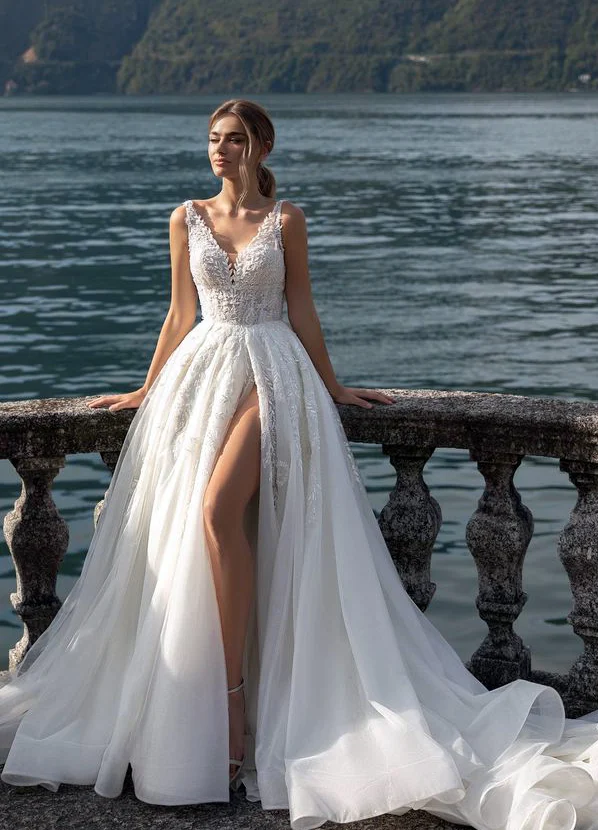
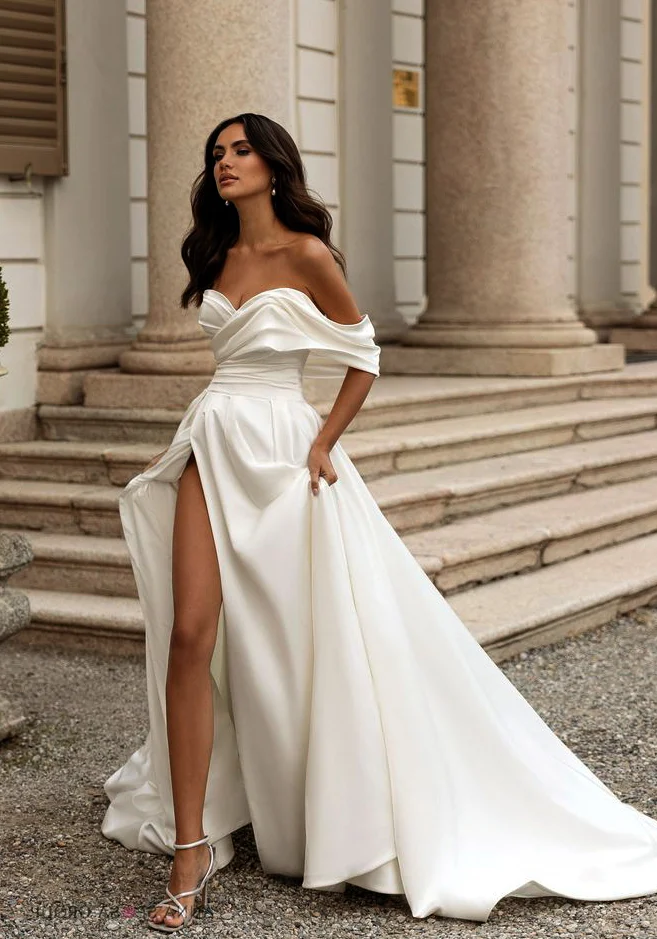
A wedding dress with a slit can reveal the leg and shoe clearly even when the skirt is full. The reference with a floral bodice and broad straps shows a high opening at the front of a wide skirt. An off-shoulder dress with folded upper sections and a strapless candidate with a shaped neckline offer other combinations. Do not choose the slit only by its highest visible point. Its edges in your normal stance and beside the remaining skirt matter just as much.
An alternative slit arrangement must belong to the particular offer. Justin Alexander explicitly lists an option to order the separate Everley model without its slit. That is model-specific information rather than an alteration promise for our image references. Ask just as specifically about options on your preferred gown. If fabric also trails behind, the dress with a train guide helps separate the front opening from the rear fabric area.
Choose the leg opening of a wedding dress with a slit
Start in the actual garment with your feet together and your body relaxed. Name where the opening starts and the direction of its edges. On the floral strap dress, plenty of skirt remains beside the extended leg, beneath a clearly defined waist transition. If the opening is the main feature you enjoy, you can seek it with a differently decorated bodice. Slit, pattern and neckline are three separate choices rather than a single package.
Take a normal step and make a small turn next. Notice whether the edges overlap, move apart or finish somewhere you did not expect. Decide how much visibility you personally want. A higher opening in a posed image is not a required measurement for your choice. Record a view that resembles your usual stance, followed by a movement view you can meaningfully compare. Keep the same shoes on so the change comes from the action rather than a new outfit.
Keep skirt fullness separate from opening height
The three clearly open examples retain substantial skirt fabric at the sides. You may enjoy that silhouette, but it does not establish the available stepping room inside an offered garment. Carefully try the steps you plan to make. Sit on a chair and stand again too. Assess both the position of the opening and the fabric resting beside or behind you, rather than judging the skirt only when it has been arranged for a standing photograph.
If you are still choosing the whole lower shape, the full-skirt wedding dress guide compares width transitions and the waist. Here, the leg opening remains the main decision. A narrower slit skirt and a fuller skirt without a clear opening can be useful alternatives. You do not have to choose substantial volume simply because you like the visible glimpse of a shoe in one wide-skirt reference.
Compare a folded off-shoulder top with a strapless shape
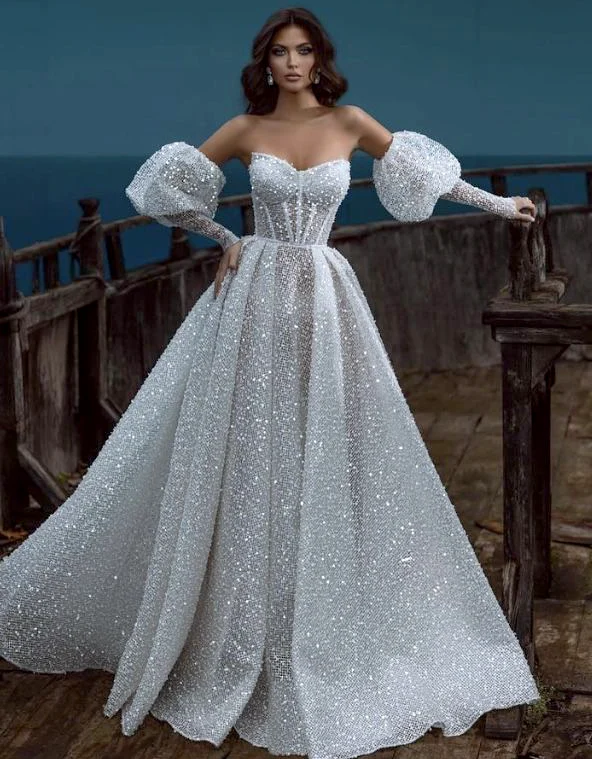
The off-shoulder reference has broad diagonal folds across the upper section, a defined waist and a gathered full skirt. One hand lifts fabric near the hip; this does not establish a pocket. A pale strappy shoe appears in the opening. Use this reference to decide whether you want exposed shoulders and a leg opening together or would rather make only one of them the strongest accent in your own outfit.
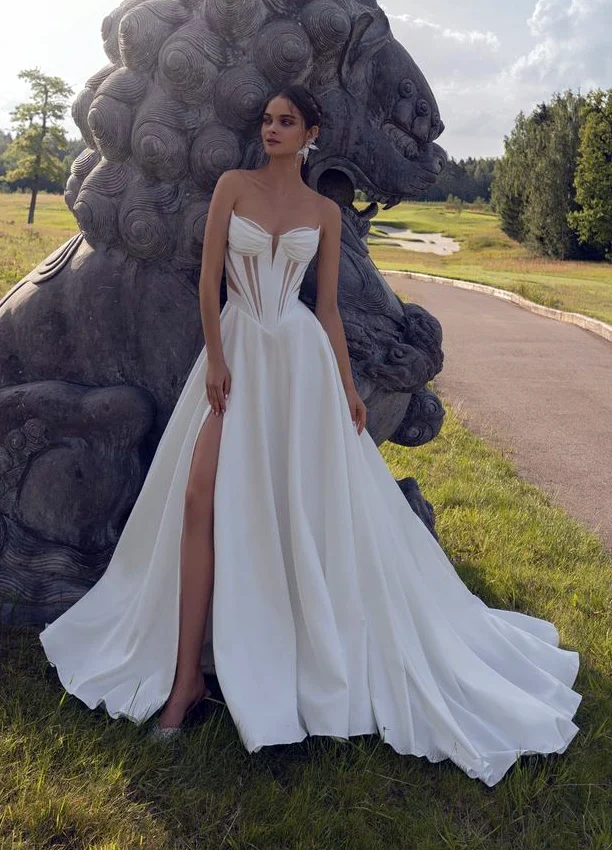
The strapless candidate places a shaped neckline with a deep central point and visible vertical sections above the open skirt. A dark pointed shoe front creates a different lower contrast from the pale straps. On the actual garment, assess the bodice fit without extending one leg into a display pose first. You can then choose whether you enjoy the combination, rather than holding a particular position to keep neckline and skirt arranged at the same time.
Recognise a waist opening as another choice
The long broad-strap dress has a side opening beside crossed-looking waist bands. This is not a skirt slit. Its lower shape follows the body more closely before widening farther down. Compare it when deciding between an exposed waist and a visible leg. These openings do not have to appear together, and they do not emphasise the same part of your outfit. Name the feature you actually want before requesting further candidates from a shop.
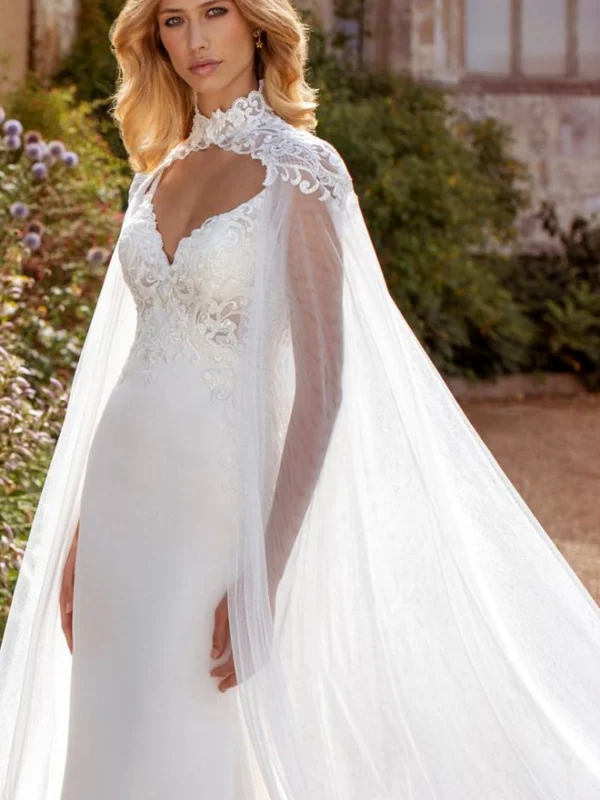
The other comparison has a floral bodice, long fine sheer-looking sleeves and a train spread behind. A comparable high leg opening is not clearly visible here. Use a real garment to decide whether you prefer a more closed front skirt line. The cut-out evening dress guide supplies further opening comparisons. Keep the waist decision separate from the bridal skirt decision when using it; different placement may require a different actual underlayer trial.
Test shoes and underlayers beside the whole skirt
Pale narrow straps on the floral dress leave much of the foot visible. The darker pointed front on the strapless candidate creates a more defined dark finish within the opening. Choose more than shoe colour. Compare the visible lines on your feet and move in the intended heel height. Sit down afterwards to see how shoe and skirt edge relate in that position. If you are choosing between two pairs, assess both with the same garment.
Try the real underlayers at the same appointment. Check their length and colour beside the open skirt in quiet front and side views. If you want changes to the slit, lining or overall length, discuss a specific result and have the proposed solution demonstrated. A photograph cannot confirm that an apparently simple extra seam is possible. Note what you want changed, then ask how it could be achieved on the actual available model.
Complete the slit choice around your day’s actions
Finish with a short sequence: rise from a chair, take several steps, use a step if your plans include one and put on your outer layer. Practise handling extra skirt fabric without assuming you must carry a bag, drink and hem simultaneously. If a particular fastening or alteration is offered, include its demonstration in this appointment. Choose the garment whose intended opening you have assessed in the situations that matter to your own day.
A wedding dress with a slit also needs clear product information. Read the actual composition and care label; the GINETEX care symbols help explain the specified treatment. This does not determine slit height, but it completes the purchase decision. Keep a photograph of the final worn outfit with shoes and record outstanding alterations, so skirt length, edge position and your preferred coverage refer to the same finished model.
Choose a wedding dress with a slit in a normal stance and while walking. Then assess overlap, shoes and the remaining coverage as separate decisions.
Frequently asked questions
How high should the slit be?
Choose the height on the worn dress in a relaxed stance, seated and walking. A photograph with one leg deliberately extended is not enough for that personal decision.
Can an existing slit be closed further?
Ask about the actual construction and a possible alteration before ordering. Have the resulting edge position and remaining movement room demonstrated on the garment.
Does a slit require particularly noticeable shoes?
No. Compare the visible shoe shape with the leg opening first. A pale narrow strap and a darker pointed front make different accents; choose around the complete outfit.
How do I combine a slit with other open sections?
Choose leg exposure separately from neckline or waist exposure. Try the complete outfit to assess your preferred coverage during the actions planned for your day.