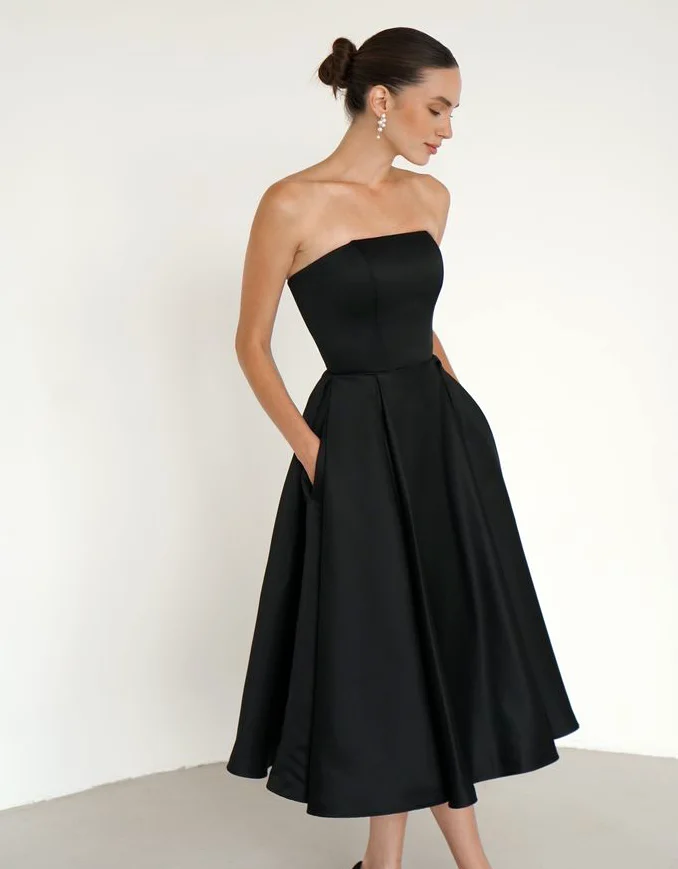
A simple evening dress need not be black or fitted. These four references show plain unpatterned areas on a pale dress with broad straps, a dark strapless design, a fitted asymmetric dress and a longer navy option. Their differences chiefly occur at neckline, waist and skirt. Choose those lines before introducing more attention through jewellery or a bag. Simplicity then becomes a specific styling decision: which shape do you want clearly visible, and which individual detail should stand out beside it? These are different garments, not merely colour versions of one outline.
Reduced decoration can give the dress outline more prominence. The V&A describes this design approach in Chanel’s work, alongside black-on-black embellishment. Use that distinction for your own selection without assigning any unidentified reference dress to the brand.
An outer layer changes clear lines too. The cape evening dress examples introduce extra side areas. Assess that idea with your existing dress before adding it as another accent beside bag and jewellery.
Choose a simple evening dress through its visible lines
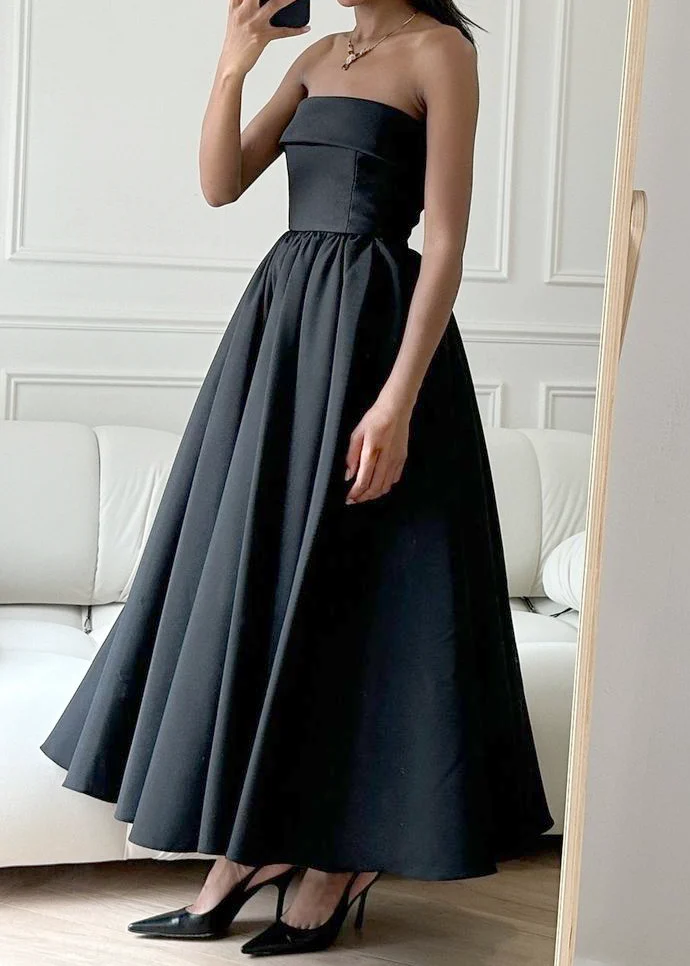
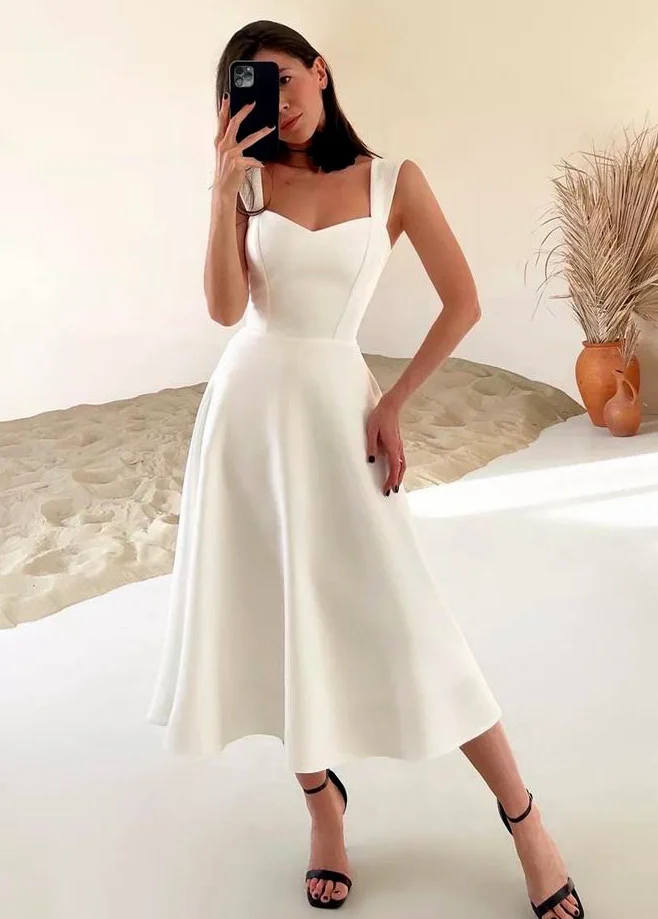
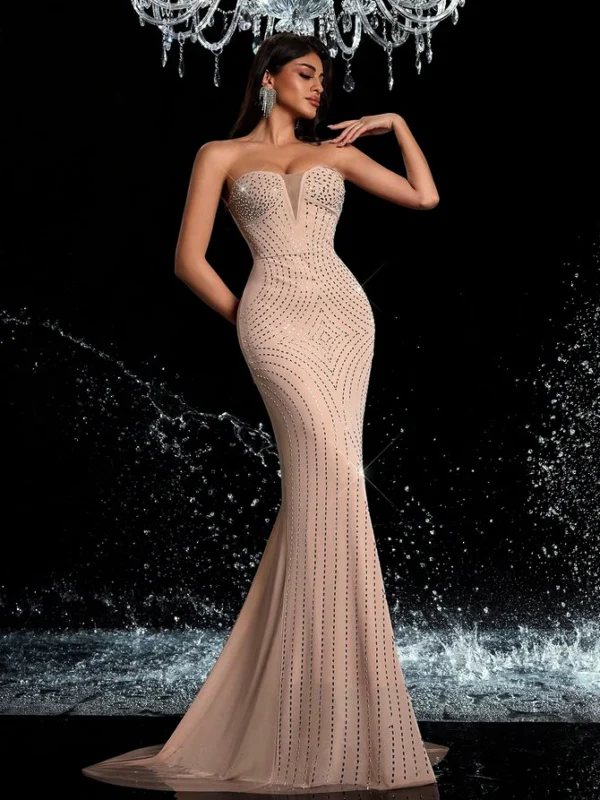
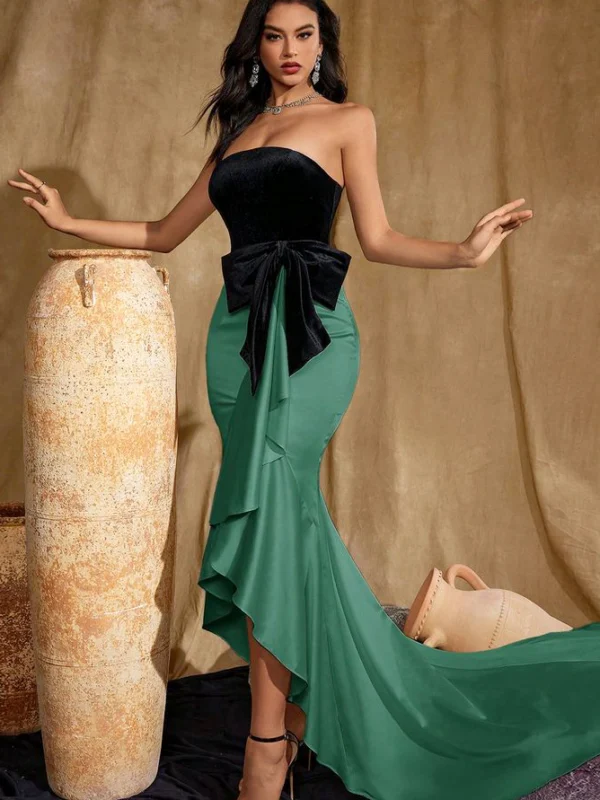
Begin without holding accessories in front of the dress. In the pale reference, visible vertical bodice lines travel from waist towards broad straps. The upper edge is softly shaped and the skirt flares noticeably. The dark strapless dress instead places a broad folded edge above a fuller skirt. Both are largely unpatterned but have different forms. Decide whether you want attention to follow a shoulder line, a horizontal edge or a defined waist before selecting another focal point beside it.
Compare two actual candidates from similar distances. Watch the visible bodice-to-skirt connection rather than enlarging one attractive detail alone. If a seam line catches your attention on the plain dress, assess it from the front and slightly to the side. You are choosing its visible route, not automatically identifying an internal construction. Have a proposed alteration explained on the available model. A differently placed detail on a second dress does not establish an available conversion of the first, so separate a supplied option from a suggested change.
Keep the waist quiet or mark it deliberately
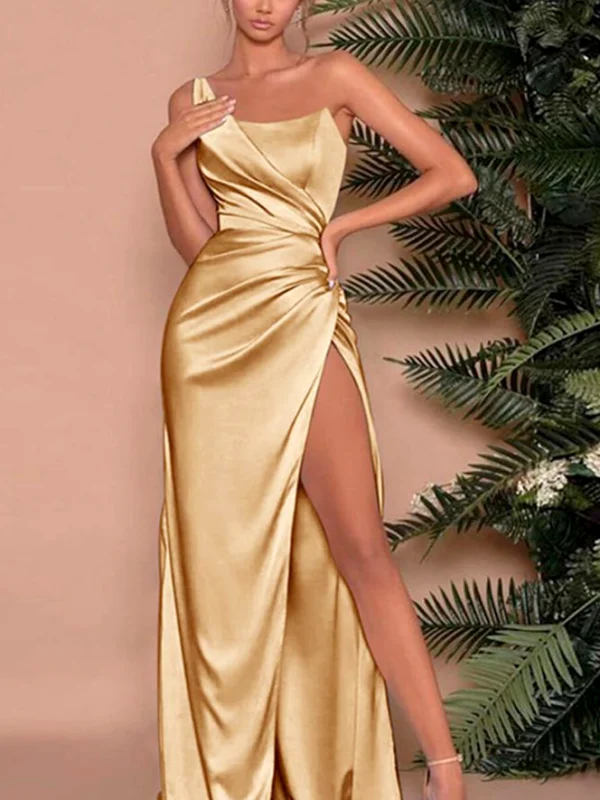
The dark strapless reference has a clear boundary between the smoother bodice and more gathered skirt. A dark glossy-looking waist strip adds another horizontal line to the asymmetric knee-area dress. Compare these approaches first: should the cut itself define the waist or should a visible band emphasise it? Keep other accessories unchanged. A simple evening dress does not need an added belt when its existing transition already appeals. Judge that choice in the proportions of the whole garment rather than from a waist close-up alone.
If considering a belt, try an actually suitable piece in its intended position. Compare the version without it and inspect side proportions as well. Do not decide only from the front fastening. Sitting can move that extra line differently from standing. Select the effect on the real combination; a broad pictured band does not promise the same position or result on every dress. Stand again after the trial and assess how it settles, seeking a comfortable arrangement rather than continually tightening the accessory to preserve one mirror pose.
Settle the neckline before jewellery quantity
Broad shoulder areas on the pale dress expose a different space from the dark strapless design. The asymmetric reference carries fabric diagonally towards one shoulder while leaving the other bare. Navy combines broader straps with a softly shaped edge. Find the line you actually want to wear first. Separate your preference for exposed shoulders from the quantity of jewellery you might add afterwards. An open upper area does not automatically require a necklace; viewing the dress without it helps keep those choices distinct.
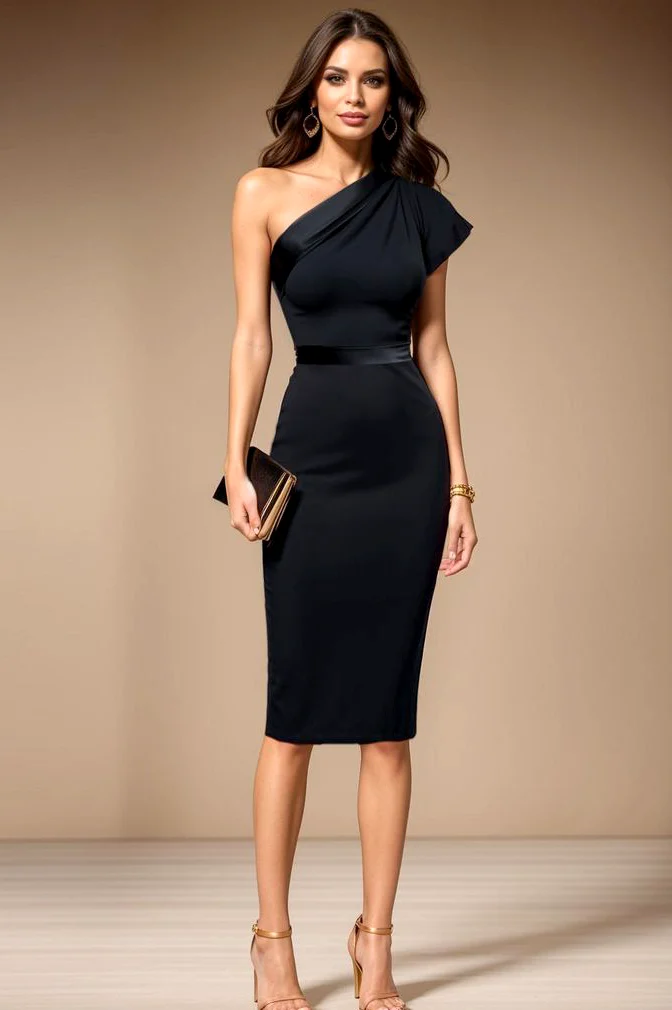
Try an earrings-only combination and your intended necklace in turn. Keep dress and hairstyle unchanged. The asymmetric reference’s longer earrings suggest a pronounced accent beside the face, while the strapless dress’s small necklace offers another distribution. The jewellery with a statement dress guide expands the choice between positions. Even on a quieter garment, decide which area should carry the accent. Add other pieces after this comparison instead of changing the entire jewellery set and obscuring the difference you are trying to assess.
Change colour and surface in separate comparisons
The pale strapped reference has black open-toe strappy shoes beneath its broad plain area. The dark strapless dress appears with black pointed shoes, while the asymmetric version has warmer-coloured accessories. Compare your intended dress colour with the same existing shoes first. Change shoe colour afterwards. You can then distinguish liking the new garment shade from liking a completely different arrangement. Calling both dresses simple does not turn their colour and accessory differences into one choice; note which items remain unchanged during the trial.
View the actual dress in the room where you will get ready, adding daylight where possible. Broad unpatterned areas reveal different folds and reflections. Choose the appearance you enjoy on the worn model without deriving a specific fibre from it. When comparing two surfaces, keep their forms reasonably similar. Introduce a patterned bag or more decorated jewellery as a separate deliberate change afterwards. Assess how much of the whole outfit the surface occupies, from bodice to skirt, instead of relying only on an enlarged fabric photograph.
Try a bag as the individual special detail
The dark rectangular bag with warmer-coloured edging is clearly visible beside the plain asymmetric dress. Navy has a smaller paler bag partly visible at the side of the body. Use them as separate suggestions for scale and position. Hold your actual bag beside you and then in front. Check which dress line it covers. You can like a defined neckline while also moving attention downwards through a colourful or visibly textured bag; compare that distribution on the whole outfit rather than the accessory alone.
Set a quieter bag beside this version before choosing statement shoes too. If the bag is your leading accent, begin the other positions with restrained items you already have. Open the real bag and remove the object you expect to need outside. Its shape should work beyond the mirror. Decide which hand will hold it and how you will set a jacket aside. This connects the colour and line you enjoy with actual handling instead of leaving the practical arrangement to be solved during the evening.
Record the complete simple outfit
A simple evening dress can have a fuller or more fitted skirt. Choose length with actual shoes and assess front and side views. If seeking a floor-length option instead of the shorter pictured lines, the long evening dress guide develops lower volume and clearance from the floor. Visible footwear in a shorter reference is not complete information about another hem. Request that longer candidate’s own full view and settle length on the real garment rather than assembling it from different photographs.
Record two complete versions last: for example, the same dress with a noticeable bag and quieter jewellery, then with a small bag and more prominent earrings. Choose the effect you want to wear. Keep actual care information; the GINETEX care symbols help you interpret it. Plain unpatterned areas do not guarantee one treatment method. The outfit remains described through visible lines, one consciously placed accent and pieces genuinely tried together, making it possible to reconstruct your preferred arrangement on another occasion.
A simple evening dress can have a full or fitted skirt. Choose neckline and waist first, then try a statement bag, shoes or jewellery as one deliberate accent.
Frequently asked questions
Does a simple evening dress have to be black?
No. The pale and navy references also show largely unpatterned areas. Compare your preferred dress colour with the same shoes first, changing shoe colour afterwards.
Does a simple dress need a belt?
Not automatically. Assess the existing waist transition without an addition first. If you want a belt, try it on the actual dress from the front, side and while seated.
How can a bag provide the only statement accent?
Try the preferred bag colour, shape or edging with the same understated shoes and jewellery. Hold it at the side and in front, checking which dress lines it covers.
How should I choose between a necklace and earrings?
Try both ideas separately with the same dress and hairstyle. Begin without another new accent and decide whether you want attention at the neckline or beside the face.
Thoughts on this article