A simple draped wedding dress combines quieter areas with deliberately arranged folds. The useful question is where you want those folds: along the upper edge, diagonally across the hip or in both places. Four references show largely unpatterned pale fronts with different folds and upper lines. A fifth floral bodice is a deliberate contrast. Begin with the direction you actually want to see. A shiny or smooth-looking photographed surface does not explain fibre composition or replace a description of the garment being offered.
Small differences can change the overall impression of a simple draped wedding dress. Fine straps with a softly falling front edge look different from broad low shoulder bands or a V-like folded upper edge. There is also a visibly short skirt alongside longer views, some of which omit the lower edge. Compare these features one at a time. Changing neckline, length, pattern and shoes together can make it difficult to identify which difference actually caused your preference. Keep a separate note for each decision.
1. Where do you want the folds?
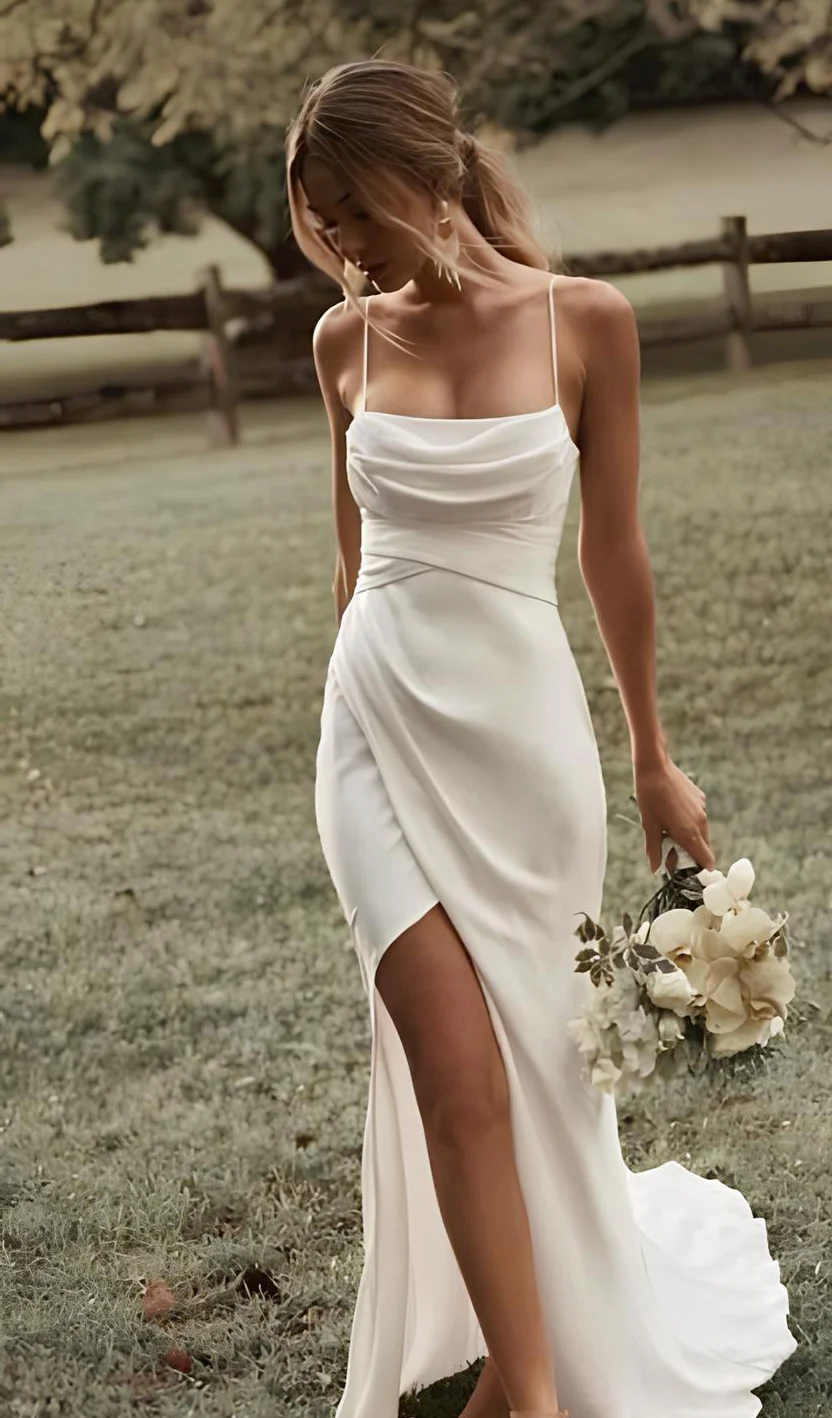
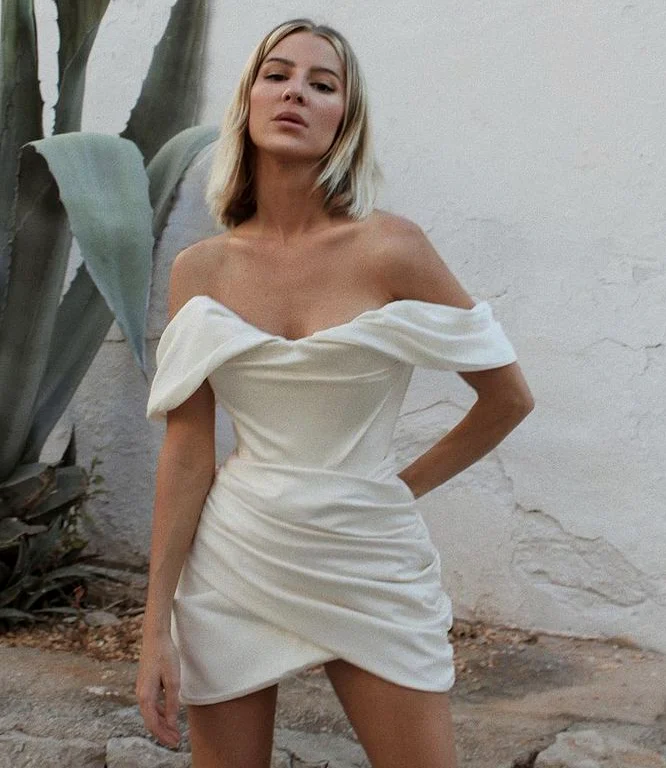
The long example with fine straps joins a softly falling front edge to slanting lines across the hip. The short dress puts a broader folded upper section beside a distinct lower overlap. Consider the upper area first. Do you want a softer centre between narrow connections or a broader line at the sides? Then record the direction you want at the hip separately. You do not have to take both fold areas from one reference as a complete package.
As a named product example, Adore by Justin Alexander describes Cezanne with a cowl front and off-the-shoulder straps, listing its silhouette separately. This separation can help organise questions about the actual offered version. It does not identify any of our photographs as that model. Our draped bridal bodice guide develops the upper fold direction. Here, add the complete skirt and its relationship to the hip rather than stopping at the bodice alone.
2. How much quiet space do you want beside the folds?
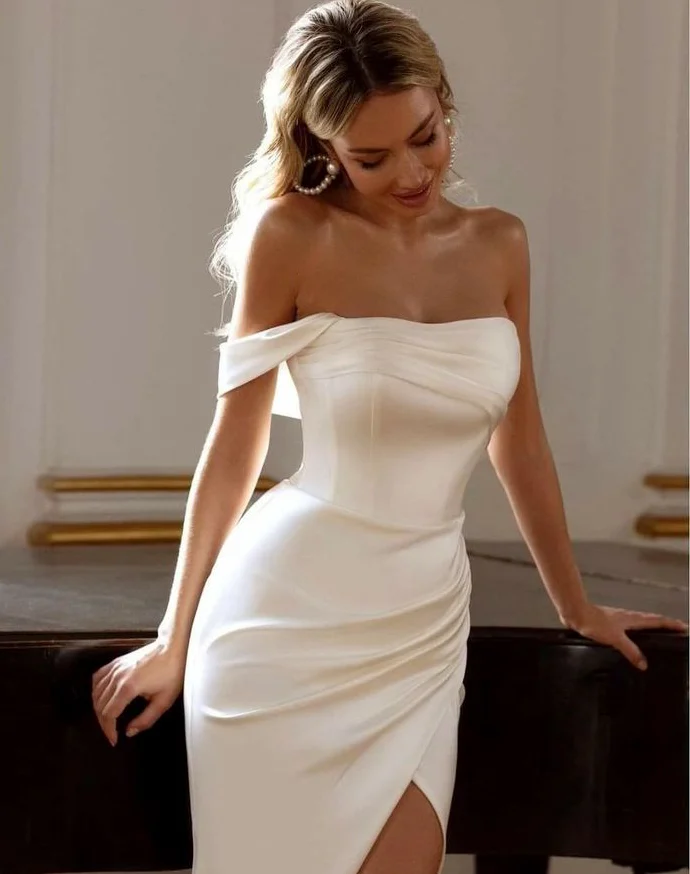
On a simple draped wedding dress, compare the distance between the more strongly folded areas first. The closer view with a shoulder band visible on only one side shows a quieter middle between them. In the photograph by the piano, the upper fold draws towards the centre in a V-like shape, with several lines gathering at one side below. This distribution is a separate preference. You may want a clearly shaped neckline while preferring a quieter surface over the rest of the bodice.
The floral contrast with broader shoulder connections and a deep V-shaped front uses a different surface language. Its drawing continues into the skirt around the waist. Use it to check your preference for quietness: do you miss a motif, or would you rather let the fold remain the main detail? Our simple wedding dress comparison examines quieter areas more broadly. Your narrower question here is their combination with the visible fold direction at neckline and hip, considered on the same actual garment.
3. Which skirt length and opening belong to your choice?
The short folded dress shows bare legs beneath a sloping front edge. The more completely visible version with fine straps places a longer side area beside a front opening instead. Several closer photographs do not show the bottom hem at all. Keep the fold idea separate from the length question. You can choose an upper detail from a photograph, but the complete length of your candidate must come from its own information and matching views.
Wear the intended shoes for the real length check and let the skirt fall without holding its sides. Take several ordinary steps and turn. Observe the front opening during these movements as well as while standing. The photographed leg position does not demonstrate every movement you need. Record the lower line you want to see on your worn simple draped wedding dress. Discuss any changed length together with the actual front overlap rather than treating the two as unrelated alterations.
4. How do you assess the upper edge during a fitting?
Bring the undergarments intended for your actual simple draped wedding dress candidate. View the upper edge from the front and side. Bring your hands together in front and sit on a suitable ordinary seat, then see where the folds lie. A pose with an arm held behind the body offers an additional picture impression. It does not replace the position in which you intend to wear the dress yourself or the movements you have asked to try.
Ask about size, inner construction and a specific alteration if one is offered. Visible vertical lines or a closer middle do not give all that information. The different shoulder connections also belong in the fitting: fine straps, broad low bands and the arm area visible on only one side raise different questions. Our strapless wedding dress fitting guide develops movement observations for the corresponding actual version. Its advice does not establish properties of every photographed dress in this comparison.
5. Which addition should sit beside the draping?
Try your simple draped wedding dress with the intended hairstyle and without an extra necklace first. Add earrings, a bouquet or a veil one at a time. The fine-strapped example makes the soft front edge a distinct central feature; a necklace would add another line there. Assess the actual combination rather than turning the picture into a general jewellery prohibition. The more noticeable round earrings in another reference do not have to become part of your own selection either.
Hold the bouquet in its intended position, then to the side for comparison. Which hip folds remain visible? Assess a bag or outer layer in the same way afterwards. If it covers the gathering point you preferred, you can reconsider its position or your intended emphasis. Change one addition at a time where possible. This helps you recognise whether you want a different fold direction or simply to place an accessory differently beside the real dress.
6. What should you clarify before alteration and care?
If you want a different fold position, indicate the specific place on the offered dress. Ask what the discussed alteration is intended to change at the upper edge or lower overlap and when you will try the result again. A simple draped wedding dress is not explained solely by moving one visible line. Its actual connections and construction belong in the professional assessment of the garment. Repeat the movements afterwards and add the same intended pieces used at the first fitting.
Finally, record the upper fold direction, desired hip line and confirmed length with your shoes. Use the finished garment label and information for treatment. GINETEX explains textile care symbols; a smooth pale surface supplies no independent ironing or washing instruction. Your choice then rests on a specific combination of quiet areas and folds. The floral comparison helps with the style question, while measurements, alterations and care continue to concern the actual candidate you choose.
Choose the direction of neckline and hip folds separately. Compare the complete length on the real dress, then add jewellery and discuss any intended alteration.
Frequently asked questions
Does a simple draped wedding dress need a cowl neckline?
No. The references show different upper folds and shoulder connections. Choose the upper edge of your simple draped wedding dress independently of the fold direction you want at the hip.
Does a smooth area on a simple draped wedding dress prove a particular fibre?
A smooth area on a draped wedding dress establishes no particular fibre. Shine, quietness and visible folds do not determine composition. Use the actual offered garment’s information and care label.
Can I fill in the skirt length from a closer bodice photograph?
A closer bodice photograph supplies no complete skirt length when the hem is outside the frame. A full view and information about that same model are needed; another dress supplies no reliable measurement.
How do I discuss an alteration to a simple draped wedding dress?
Discuss an alteration to the draping at the specific upper or lower fold area of the actual bridal dress. Clarify the intended result and try it again with the same shoes, additions and movements before making your final choice.


