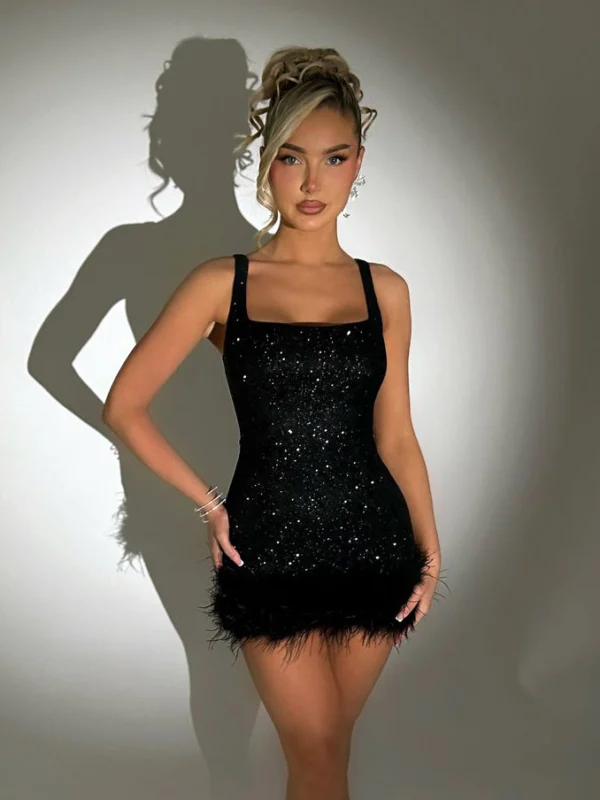
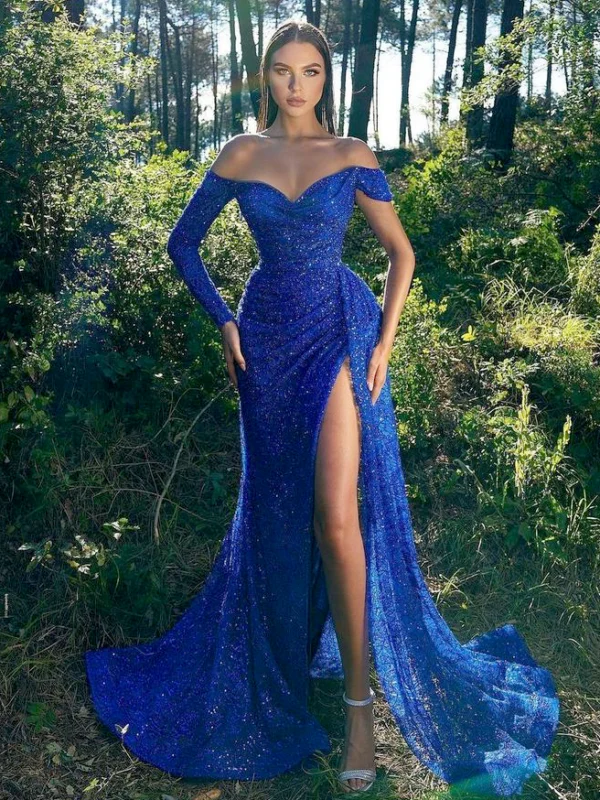
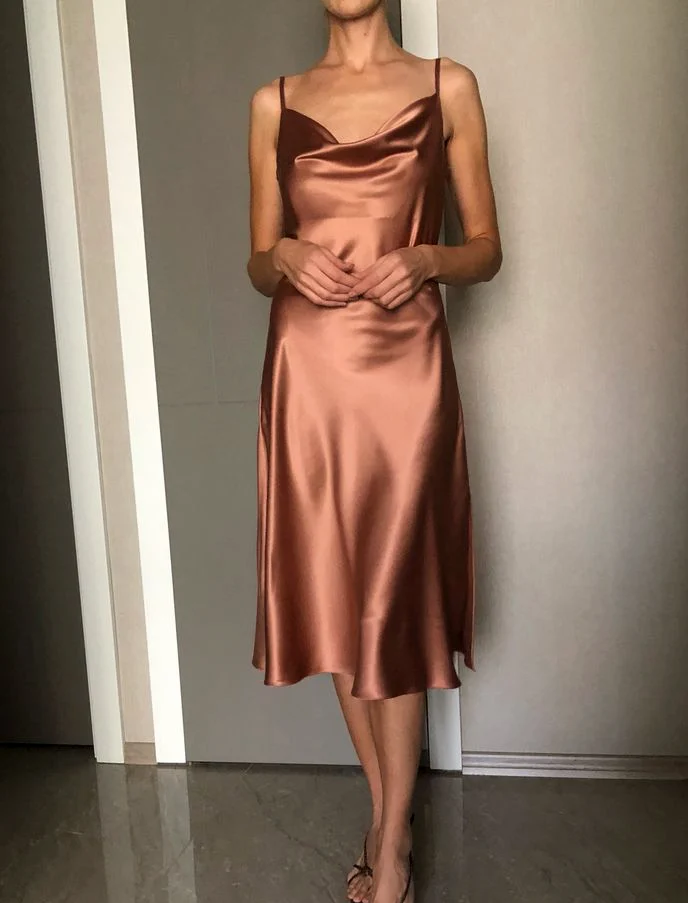
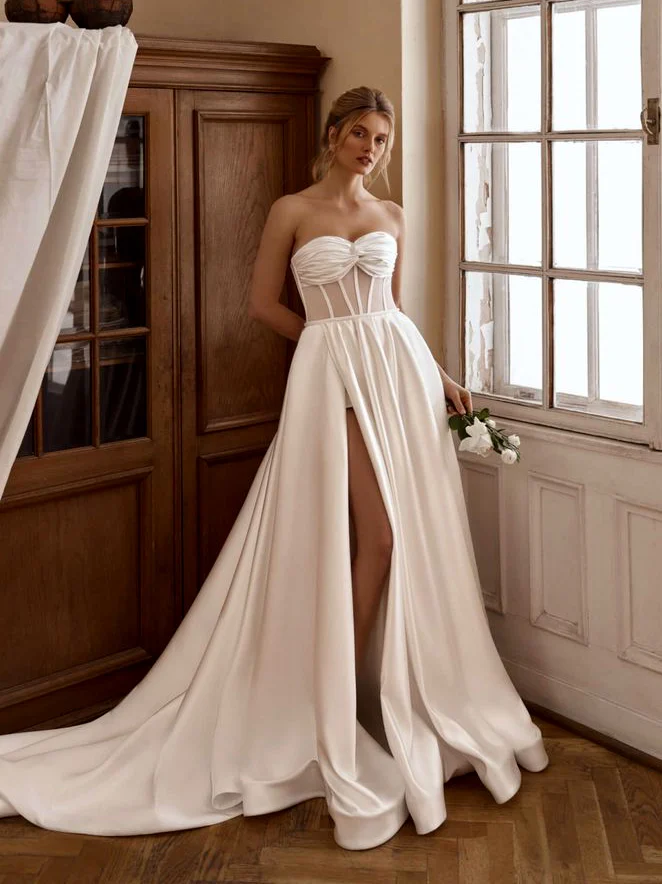
Choosing a satin party dress becomes more precise when you consider sheen, shape and material information separately. A photograph can show a broad quiet reflection or many small bright points. Both reflect light, but they do not answer the same question. The four references here compare a copper-toned draped upper area, a long pale form and two examples with much smaller bright marks. They do not establish a shared fabric or maker.
Start with a concrete choice: do you want larger quiet light areas, a particular upper outline or a particular visible length? Describing those wishes separately lets you check them against the actual offer. The word satin alone does not explain the neckline, fibre or placement of folds. Use the photographs to compare visible features rather than as material certificates for the dresses they show.
Separate the weave from a glossy photograph
The guide Identifying Fibres and Fabrics by DATS with the V&A describes satin through a smooth, largely unbroken surface and longer thread floats. That explains a weave construction. The same guide also explains limits to identifying fibres by eye and hand. An apparently similar surface in an archive photograph is therefore not a verified weave or fibre identification.
Ask for the exact fabric description and composition of the offered dress. If a sample is available, connect the answer to that sample and its model. Do not transfer information from another dress photographed with similar reflections. This keeps your preferred surface effect in the discussion while tying the material answer to the actual piece you are considering. Request the model’s information rather than relying on a broad collection description.
Choose between broad sheen and small bright points
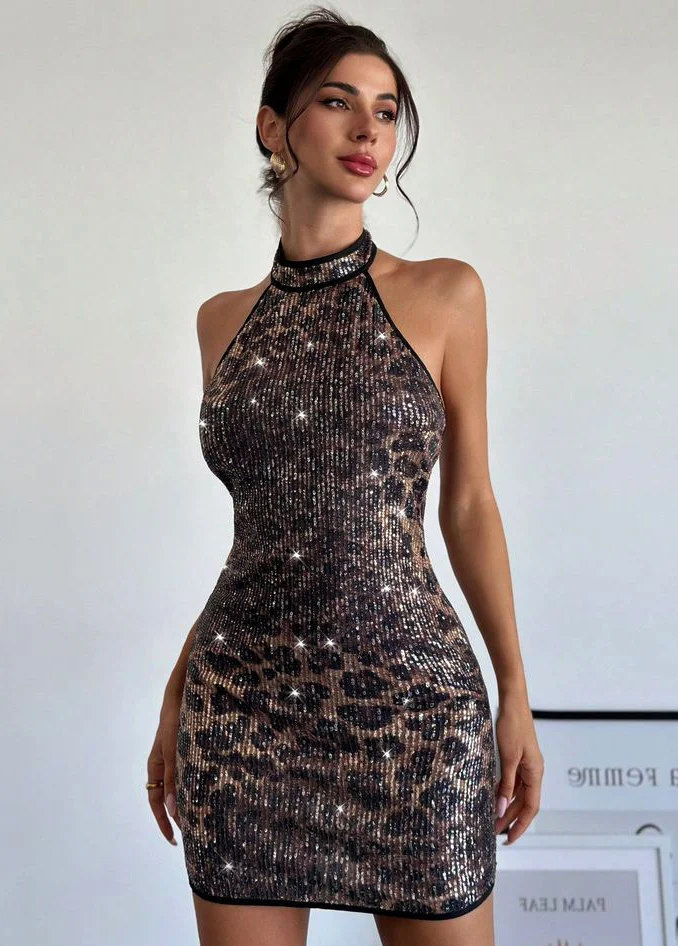
The copper-toned dress has larger quiet reflections across a comparatively even front. In the long pale reference, broad light areas follow the folds. The short patterned halter dress and the long black dress instead show many small bright points. Their photographs establish the visible distribution, not a particular embellishment technique or a common weave.
If those smaller reflections are what interest you, the shimmering party dress comparison develops that choice. First describe whether you want larger connected areas of light or individual bright marks. That description helps when choosing a different actual model without assigning its fabric from a picture. Ask for a quieter close view of the same surface if the distinction matters to your decision.
Choose the upper outline in its own right
Thin straps sit beside a softly draped upper area on the copper-toned example. The long pale dress has a shaped strapless edge and gathered centre. The short patterned reference frames the neck with a higher halter area, while the black dress has a diagonal edge and one long sleeve. These differences remain relevant even if you temporarily leave the reflections out of the comparison.
Write down which line describes your actual request. A cowl-like drape, shaped strapless edge and higher neck finish are not interchangeable names for sheen. Ask for the offered dress’s precise front view when a small detail matters. The visible front also does not establish a back fastening or a removable connection. Request the missing view of the same model instead of completing it from another reference.
Compare visible lengths rather than general formality
The copper-toned reference ends around the calf, while the patterned halter dress has a short visible hem. The wide pale form and the black one-sleeve example extend much farther down. Some pale cloth also spreads onto the floor; the black image shows a higher leg opening. These different lengths do not establish a shared occasion or a binding dress code.
Use the short or long party dress comparison when you want to settle the lower finish first. Request a complete view of the actual model down to its hem with your intended shoes. Do not supply missing feet from another photograph. A complete lower view and a closer upper view answer different questions, particularly for the longer forms. Make sure both belong to the same offered model.
Check the combination with your own pieces
The hands are together in front of the waist in the copper-toned photograph. In the long pale example, a bouquet is held low at the side of the hip. Such objects and poses can hide particular areas without changing the cut. Compare the visible shape first, then ask for a view of the same actual dress without the obstruction if necessary. Do not assume a seam behind the hands where the picture cannot show it.
An added jacket is another separate decision. The party outfit with a blazer guide helps you consider an upper edge alongside an outer layer. Check your intended dress with your own shoes, bag and planned jacket. None of the four references establishes how that unknown combination will look or which extra pieces are included in an offer. Confirm a separate accessory rather than describing it as part of the dress.
Confirm care and what the offer includes
The GINETEX care symbols explain textile care markings. They do not replace the label on the actual piece. Do not infer a washing temperature, ironing method or cleaning procedure from copper-toned sheen or a pale surface. Ask for the model’s own care information when it is missing.
Finish with a short description: your preferred distribution of sheen, upper outline, visible length and the pieces you intend to add. Confirm exact material information and included items separately. Keep a brief list of missing views, such as the front without hands, a neck connection or the complete hem. Connect each request to the exact model name so that a reply about a similarly glossy collection does not replace the information you need for the dress itself.
Compare the distribution of sheen and the visible shape before choosing a satin party dress. Confirm weave, fibre and care on the actual offered model.
Frequently asked questions
Do the photographs prove that every party dress shown is satin?
The satin party dress comparisons show different reflections. Weave and composition need to be confirmed on the actual offered dress.
Does satin automatically name a particular fibre?
For a satin party dress, separate the weave description from fibre composition. Ask for the offered model’s exact material information rather than inferring it from sheen.
Does a long glossy party dress automatically meet every dress code?
The satin party dress references do not establish a dress code. Check the actual occasion’s requirements and your own complete combination.
Can I identify care for my satin party dress from a photograph?
Care for a satin party dress follows the markings on the actual piece. A photograph of sheen or folds does not establish a care procedure.