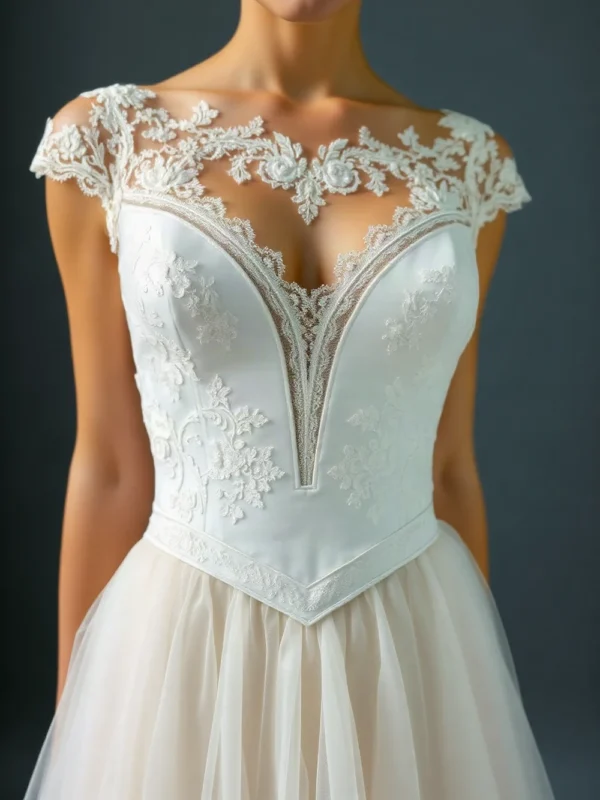
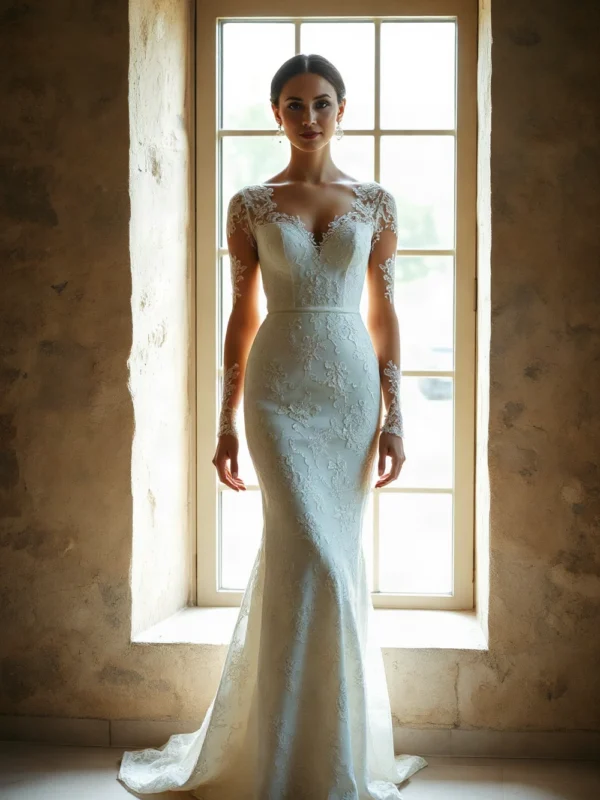
Comparing plus-size wedding dress styles only by whether the skirt is fitted or wide misses much of the visual story. Neckline direction, waist position and treatment, arm or shoulder coverage, and the framing of the back can transform similar silhouettes. These six images move from a relaxed beach wrap dress to a fitted gown with a cape, a botanical A-line, and two contrasting open backs.
They are visual references for shape and styling, not evidence of purchasable products or a single universally ideal dress. The useful question is which details suit an individual balance of movement, support, setting, and style. Assess each option from the front, side, and back, then test walking, sitting, raising the arms, and turning. This separates an effective pose from a design that can stay comfortable throughout a celebration.
A Wrap Neckline, Shoulder Bows and Moving Front Opening
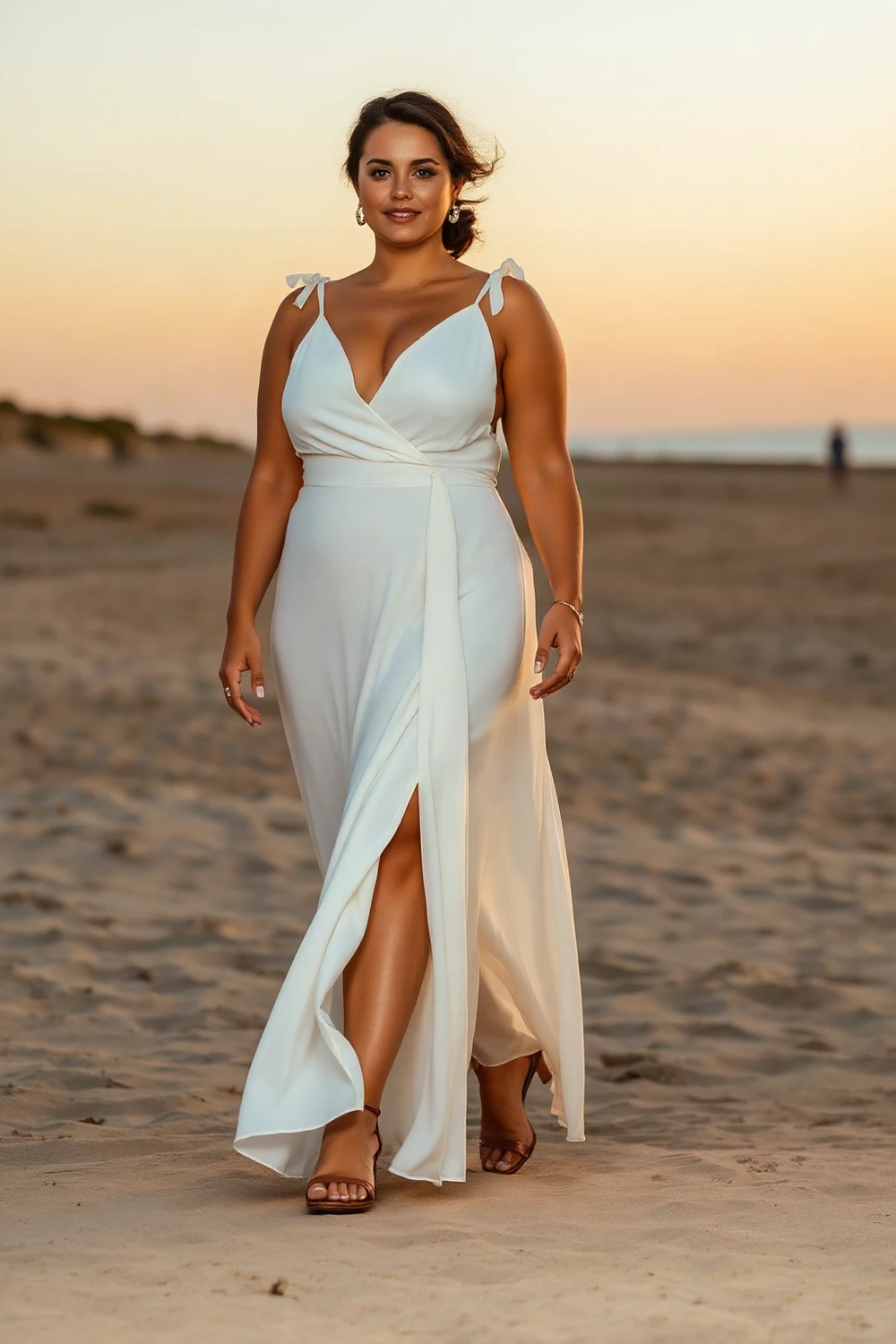
In the first image, a wrap bodice draws a diagonal from a deep V-neckline toward a broad waist section. Small shoulder ties soften the upper frame; the fluid, plain skirt uses layered direction rather than lace or sparkle to guide the eye, and its front opening reveals the shoe and leg in motion.
This relaxed concept suits an outdoor setting, but test the opening’s height in wind and while seated, neckline stability when bending, and pressure from the tied straps. A long back hem may drag on sand or another irregular surface, so coordinate shoe height and dress length. For more coverage, compare the final image: it keeps a similar wrap line but closes the lower half.
A Sheer Cape over a Fitted Silhouette
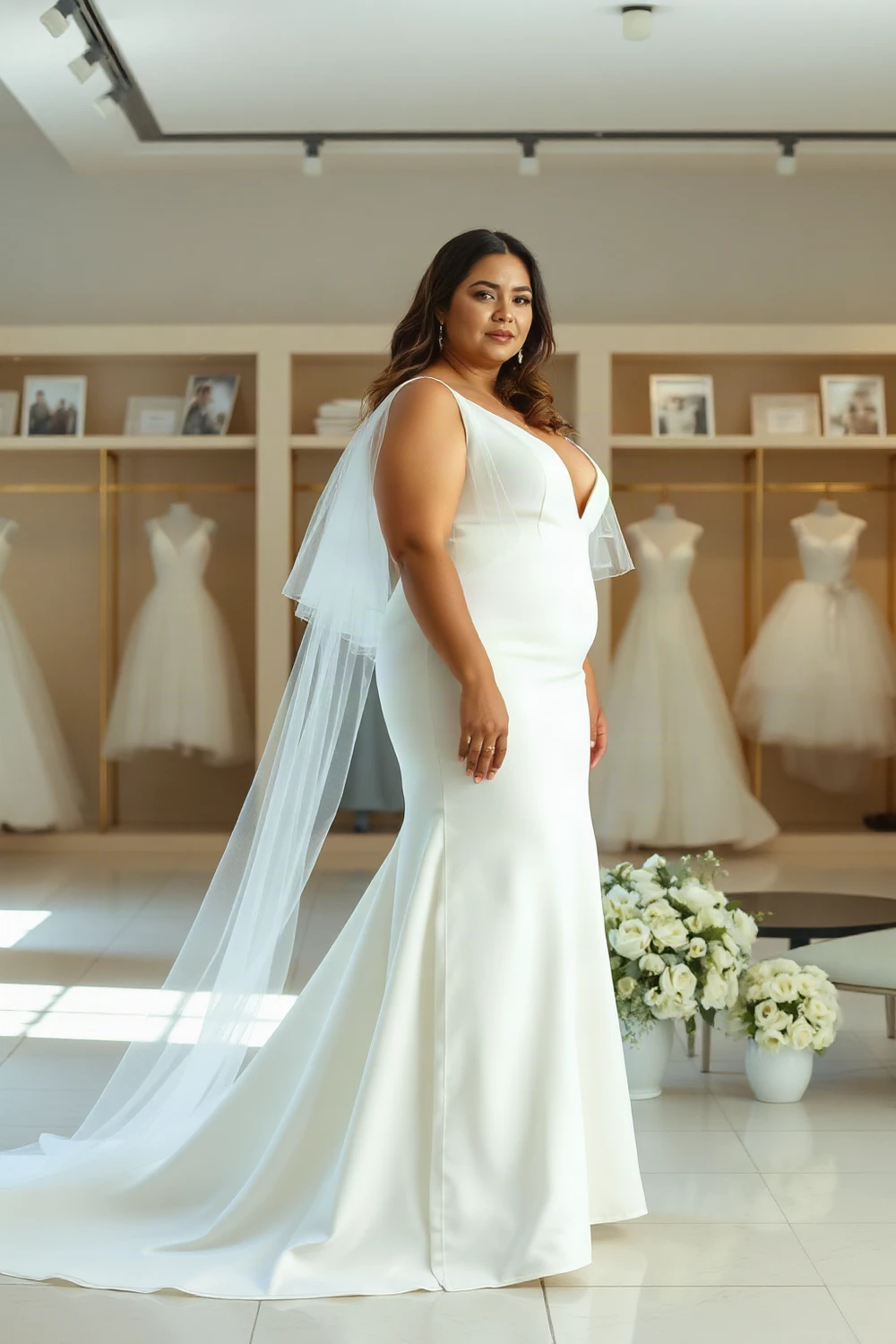
The second design follows the bodice and hips, then opens below the knees. Slim straps and a deep V-neckline stay understated. From the shoulders, a sheer cape briefly covers the arm sides and falls to the floor behind, adding a moving rear feature without obscuring the sharply defined base shape.
Unlike a hair-attached veil, the cape’s shoulder connections respond directly to arm movement. During a fitting, raise the arms, embrace someone, and sit to expose tension or bunching. Test the close skirt with full steps and stairs, not just standing. A long veil combined with the cape may create more overlapping material than intended; making one the principal rear feature preserves a clearer outline and simpler layers.
A Pocket and Placed Botanicals on an A-Line Skirt
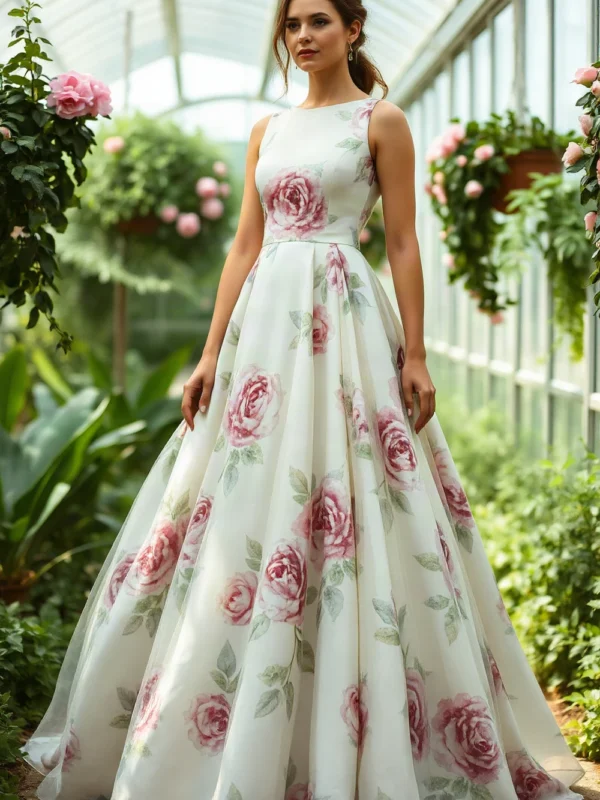
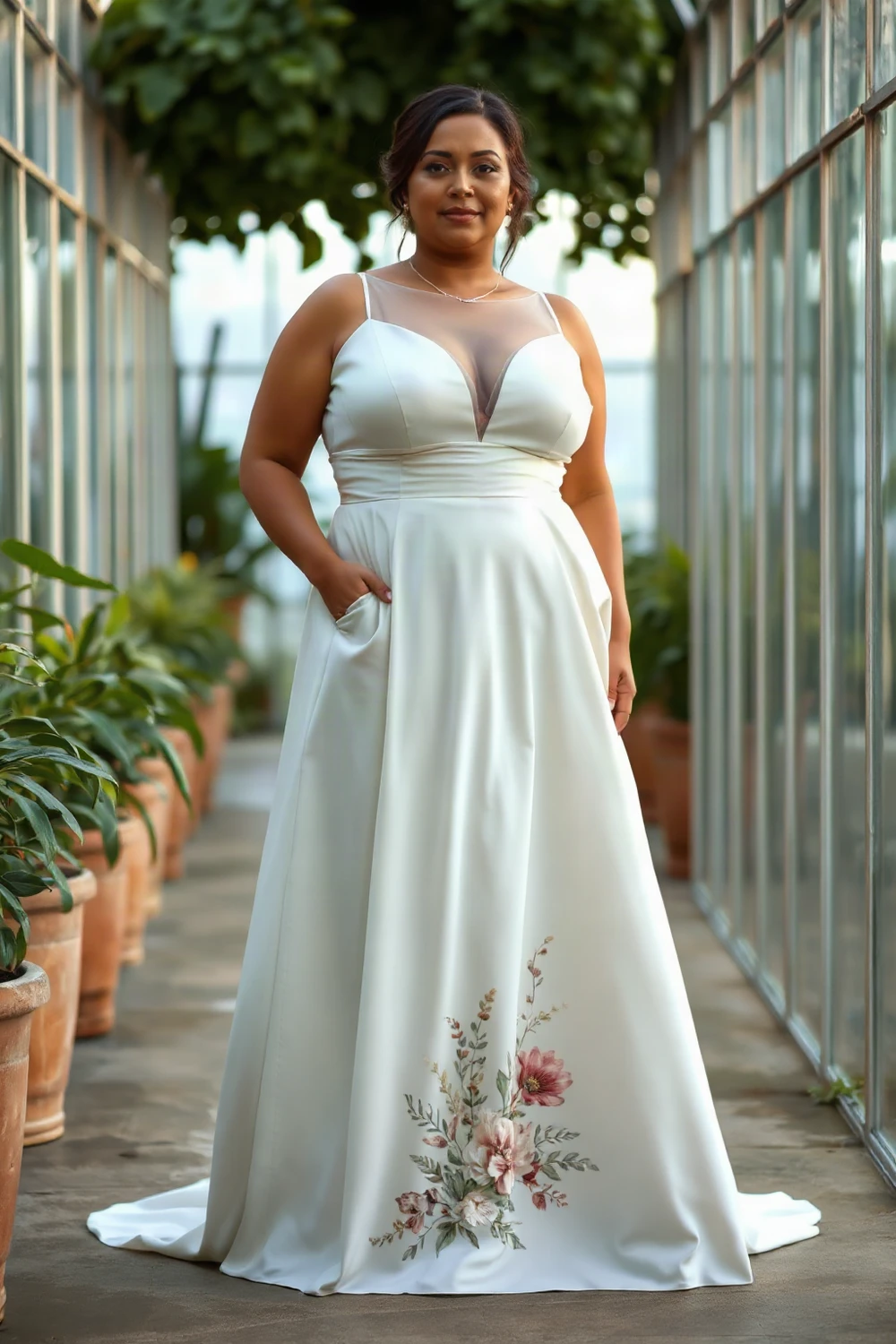
The third image pairs a full A-line skirt with slim straps, a sheer-looking upper neckline, and horizontal waist folds. Pink and green botanicals sit near the lower front instead of repeating across the white surface. A pocket offers a relaxed hand position and potential utility without breaking the main vertical line.
Plan hem changes before fixing any placed motif: decoration near the floor complicates simple shortening, while moving it upward redistributes attention between skirt and waist. Check whether a hand or small object makes the pocket bulge. This shape gives the legs more space than the fitted second and fifth concepts, but its width still needs testing in narrow aisles, closely arranged chairs, and while seated.
Neck Support and Draping around an Open Back
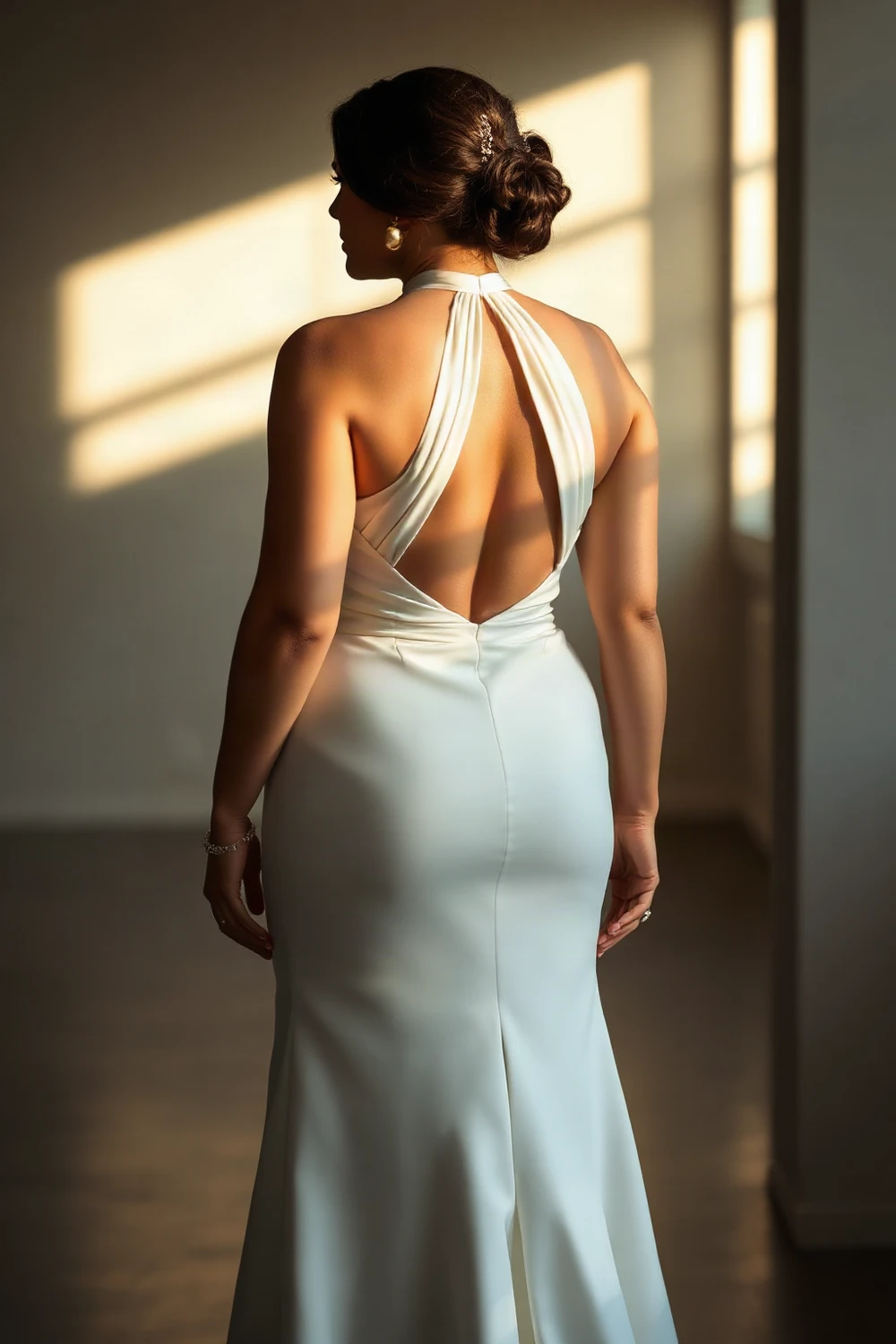
The fourth concept centers on a feature hidden from the front. Broad drapes descend from a neck band to frame a long, deep opening, cross at the waist, and meet a smooth, close-fitting lower section. An updo and restrained jewellery keep the open shape and its edges visible.
With halter support, consider sustained neck pressure as well as the opening. A fitting should reveal how weight is distributed through the back and waist and whether the drapes shift when the arms reach forward. Because a conventional bra back would show, plan support with the dress from the outset. Compared with the fifth image’s framed low back, this version emphasizes plain, elongated draping; the next uses ornamental edges and a stronger horizontal waist marker.
A Low Back Framed by Lace-Like Edges and a Train
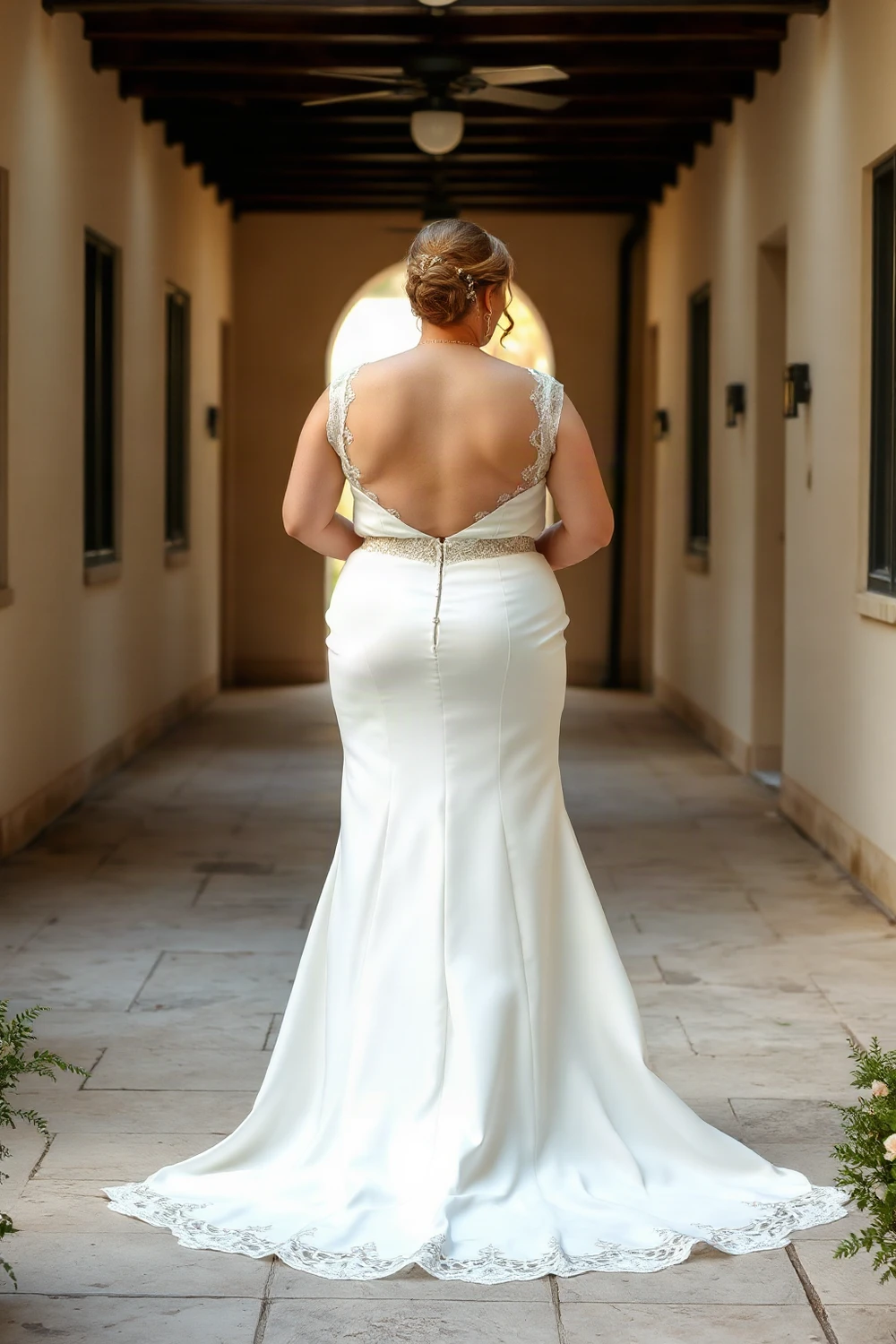
The fifth design also prioritizes the back but frames it with lace-like edges descending from the shoulders. A subtly sparkling horizontal band marks where the fitted skirt begins. Near the floor, the skirt widens into a short train with a scalloped ornamental border.
Related decoration at the back, waist, and hem creates continuity but connects several alteration points. Before changing shoulder length, waist, or hem, ask how the edging and waist panel will be preserved. A train crisp on stone may behave differently on grass or sand, so test its path through turns and its lifting method for dancing. From behind, confirm that the low edges stay against the body when seated, the central closure lies flat, and the waistband remains level rather than shifting around the torso.
Wide Sleeves and a Waist Panel as a Soft Frame
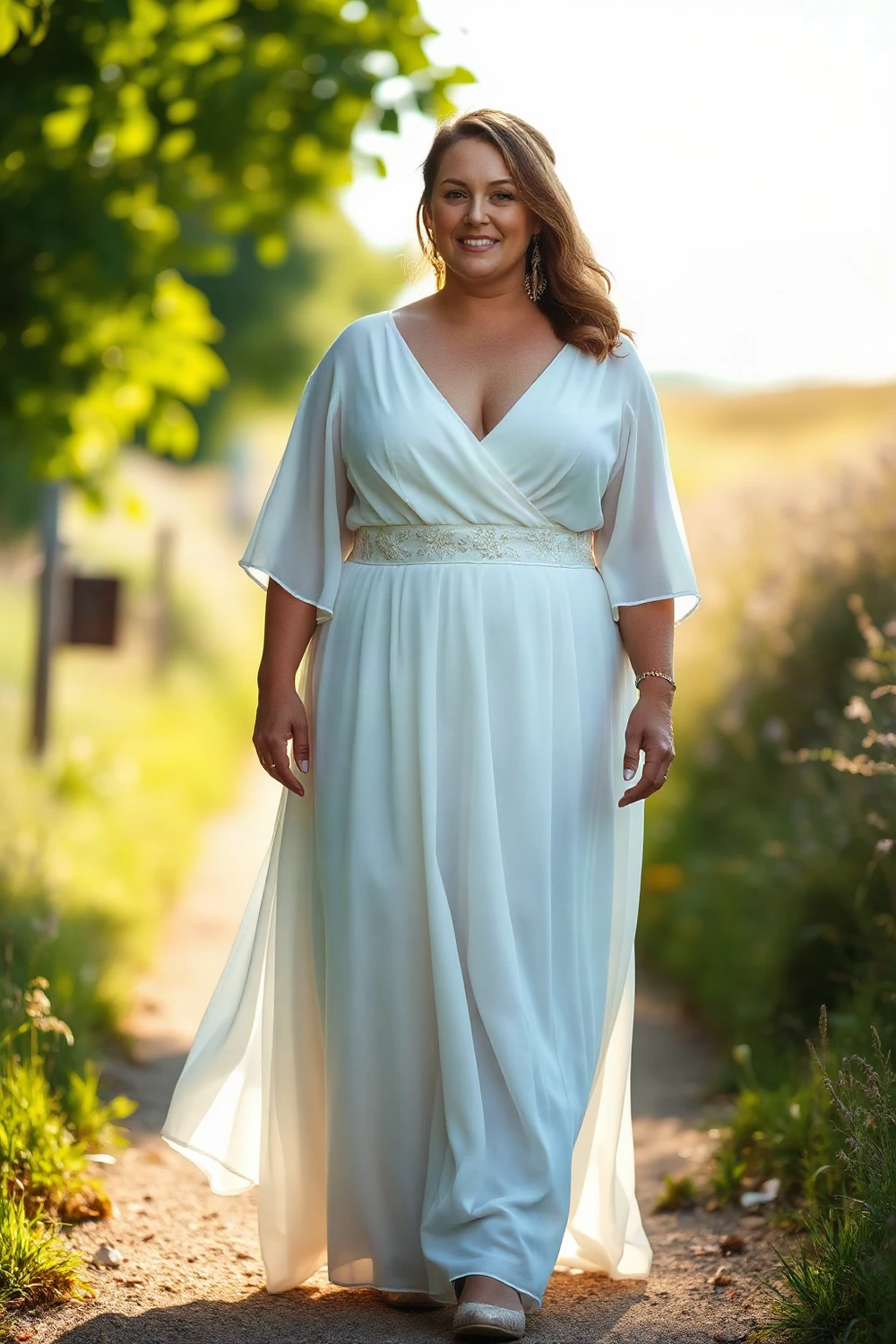
In the final image, a wrap V-neckline, wide elbow-length sleeves, and a clearly defined, embellished-looking waist panel create a soft outdoor silhouette. Loose upper layers meet at the waist, while the long skirt falls in vertical folds without a front opening. The arm coverage therefore appears neither rigid nor visually heavy.
Wide sleeves add movement and frame the upper body, but test their open ends around a bouquet, bracelets, and a dining table. The neckline should keep its depth in motion, and the waist remain smooth when seated. Panel placement affects proportion: even a small shift above or below the natural waist changes the apparent bodice and skirt lengths. Compared with the beach dress, this design shares a diagonal wrap line but adds fuller sleeves and a closed skirt. Without a floor-length cape, it may also be easier to manage from behind.
Together, these six approaches show that plus-size wedding dresses have no single correct silhouette. A moving front opening suggests a relaxed beach mood; a cape animates a close fit. Placed botanicals concentrate colour, the open backs contrast clean halter draping with a decorative lace-like frame, and wide sleeves balance coverage with lightness.
Start a shortlist with the essential practical priority: movement, internal support, arm coverage, a memorable rear view, or an easily managed skirt. Try that silhouette with the intended underlayers and shoe height, inspect every side, and sit, walk, turn, lift the arms, and take a full step. The best choice is not merely a detail striking in one photograph, but a complete arrangement that maintains position, proportion, and comfort throughout the event.
Compare flowing skirts, fitted shapes, open backs, a shoulder cape, sleeves and focused floral decoration. This guide considers how visible details affect movement, support and setting as well as the overall look of plus-size wedding dress styles.
Frequently asked questions
How can a deep V-neckline be checked for stability?
During a fitting, sit, bend slightly, raise your arms and walk rather than remaining still. Check from several angles that the edges do not open, the wrap layers do not pull and the intended support remains concealed.
When should support be planned for an open-back dress?
Consider it with the dress before the first substantial alteration. The depth of the back, neck fastening, waist construction and any underlayer that must remain hidden will determine which support options and adjustments are practical.
Could a cape be more practical than a long veil?
A cape moves from the shoulders without covering the hairstyle, while a veil creates a different frame from the head. The venue surface, wind, shoulder comfort and desired amount of material at the back should guide the choice.
Does placed skirt decoration affect hem alterations?
It can. A single motif or border near the hem may limit straightforward shortening. Once the shoes and required finished length are known, discuss whether the decoration can be preserved or repositioned without disrupting its composition.
How can someone choose between a train and a front slit?
A front slit reveals the shoe and leg in motion, whereas a train creates a stronger rear line. Compare the floor, wind, stairs, dancing plans and who will help manage the skirt during the event.