Lace wedding dress styles differ not only in motif density, but also in the silhouettes, necklines and sleeves those motifs accompany. The same romantic language can feel gentle on an empire waist, restrained on a close-fitting midi dress or dramatic along a fit-and-flare outline. A detail is therefore best judged within the gown’s complete proportion.
These images are visual concepts, not listings for specific purchasable dresses. They compare a lace-look bodice, cap sleeves, a covered back, flared cuffs, a narrow-strapped fit-and-flare skirt and a structured sweetheart bodice. Consider the celebration’s formality, venue surface, time spent seated or walking, preferred coverage and needed range of movement. These questions separate a beautiful first impression from a direction that suits the event.
A Fluid, Comfortable Proportion with an Empire Waist
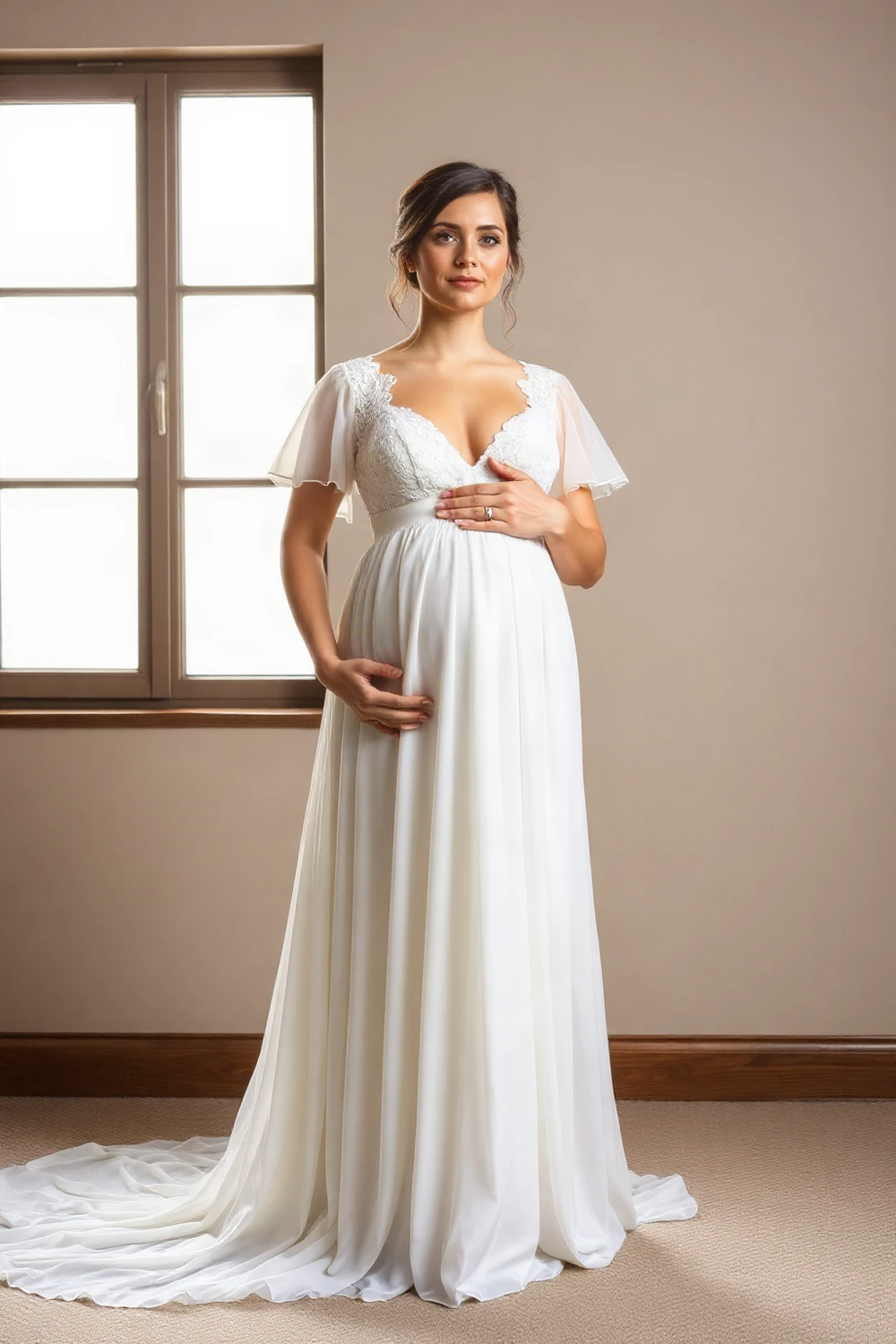
In the first look, a lace-look V-neck bodice meets a long plain skirt at a narrow under-bust band. The raised waist gives the pregnant abdomen room while directing attention to the face, neckline and shoulders. Short flutter sleeves add light upper-arm coverage and movement without interrupting the skirt’s quiet vertical fall. Compared with shapes tracing the natural waist and hips, this is softer and less restrictive.
Comfort still depends on fitting. The band should not restrict breathing, the neckline should stay in place when leaning, and the sleeve openings should allow lifted arms. A floor-length hem may brush uneven outdoor surfaces, so test walking, sitting and steps in the intended shoes. If measurements may change, discuss fitting timing and possible adjustments early.
Controlled Romance with a Midi Hem and Cap Sleeves
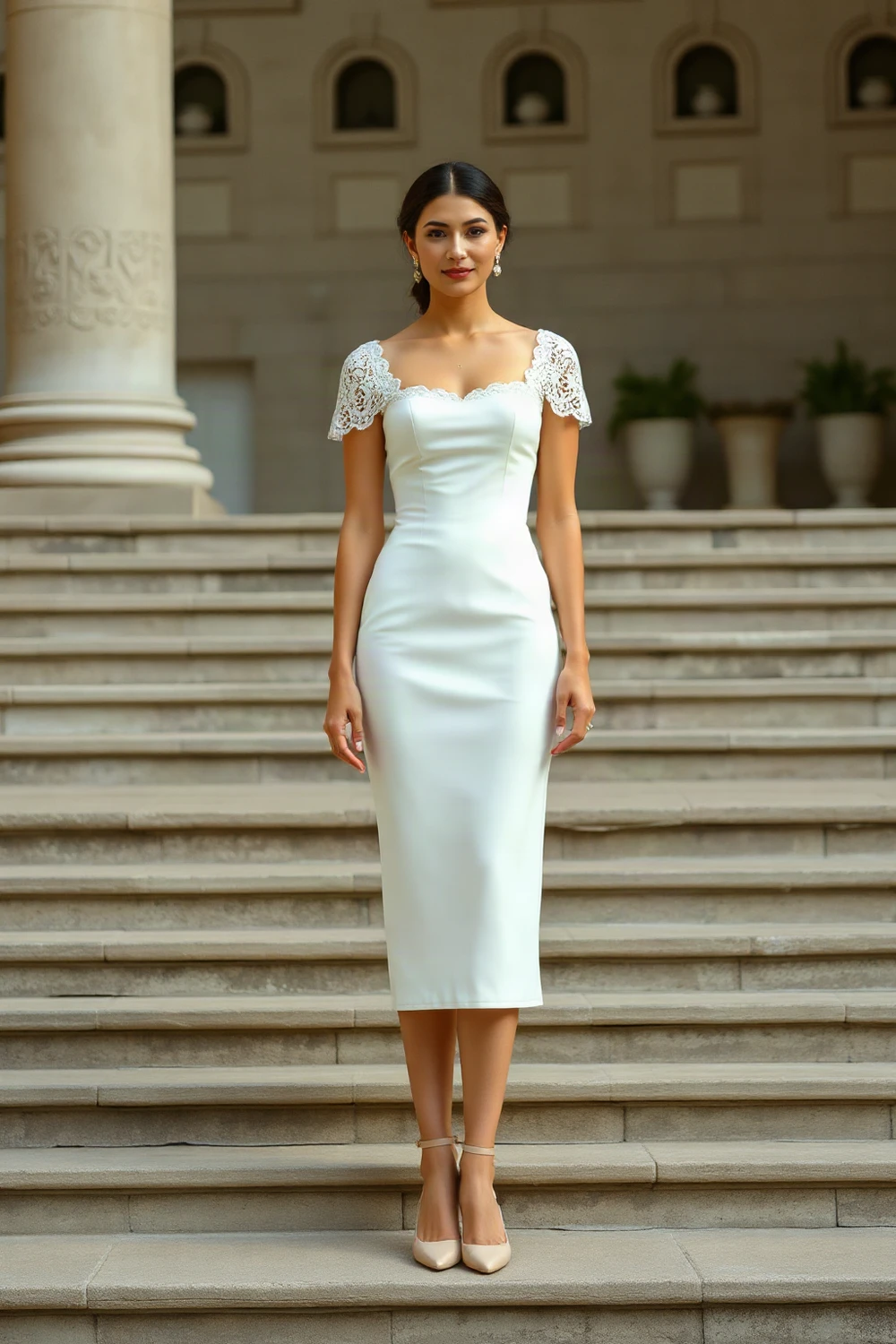
The second design concentrates pattern around the neckline and broad cap sleeves instead of covering the dress. Its smooth, fitted body and calf-length hem feel clean and urban, while open lace-like motifs soften the shoulders. With no long train, it may suit a civil ceremony, intimate reception or travel between venues, and visible shoes become important to the composition.
On a narrow midi dress, circumference matters as much as length: a balanced-looking skirt can restrict a normal stride or feel uncomfortable when seated. The cap-sleeve edge should not press the widest part of the arm, and raised arms should not pull the neckline upward. It may feel understated to someone wanting a long skirt’s ceremonial presence, yet shows how limited pattern can make a concise silhouette distinctly bridal.
Balancing a Covered Back with Semi-Sheer Sleeves
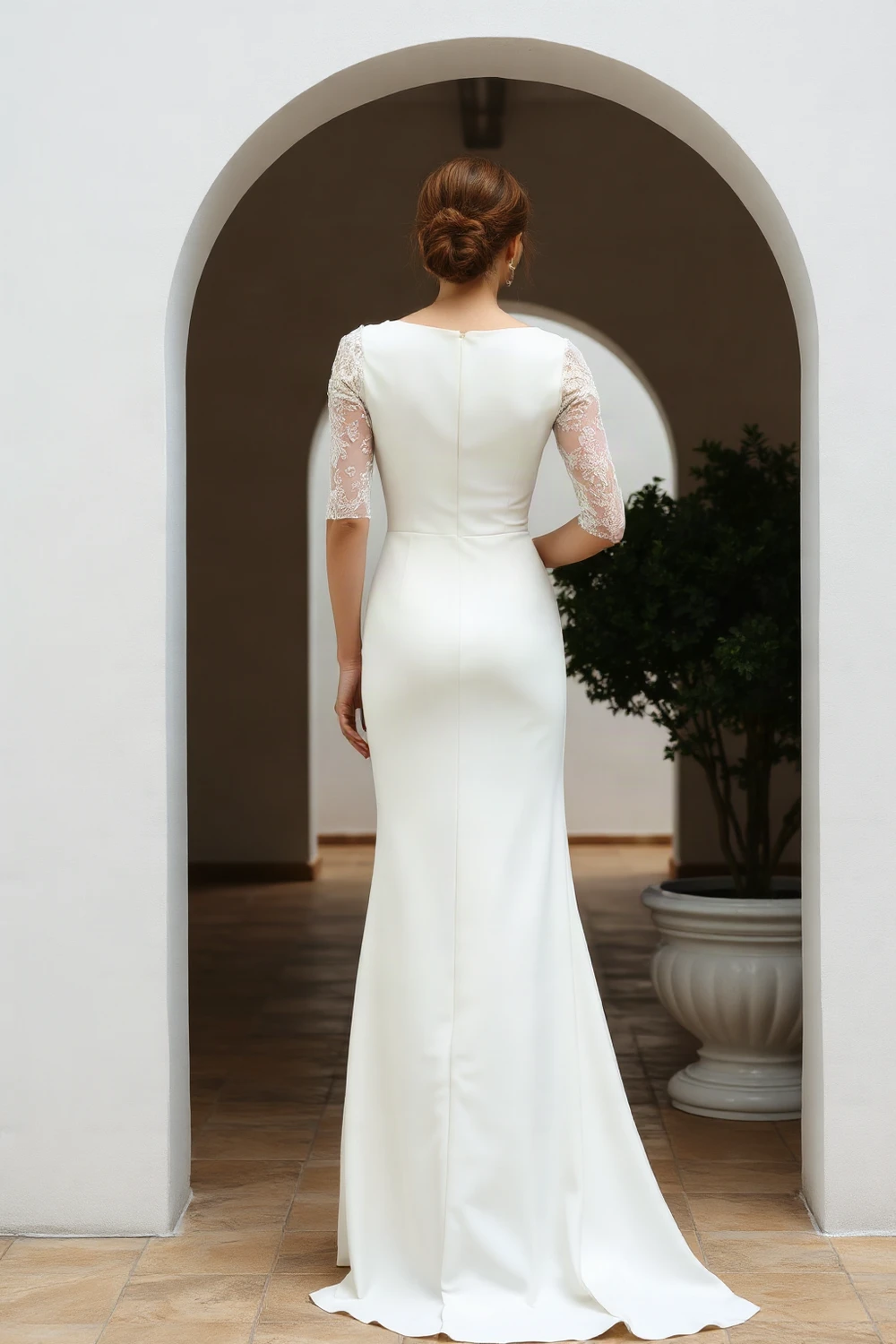
The third image emphasizes the rear view. A smooth, fully covered back sits between semi-sheer patterned sleeves reaching toward the elbows. A fine central closure and defined waist seam organize the bodice, while the narrow long skirt ends in a small floor-level sweep. The design balances coverage and lightness without spreading pattern everywhere.
Coverage also requires sound fit. Too little room can create horizontal strain lines when seated; too much can weaken the clean outline. Sleeves need ease for bending during dining and dancing. An updo displays the central seam and sleeve placement, while loose hair conceals some detail. If wearing a veil, try it with the gown so competing patterns do not crowd the restrained back.
A Bohemian Line with Flared Cuffs and a Deep V
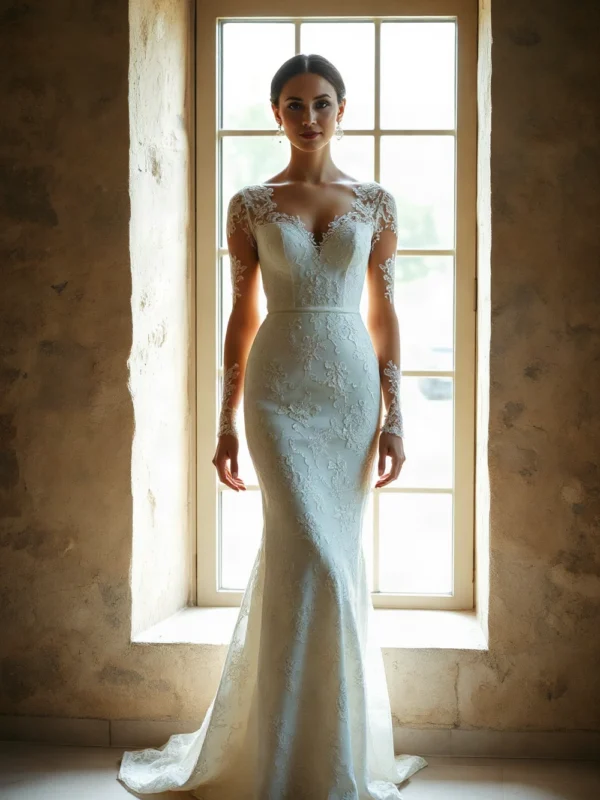
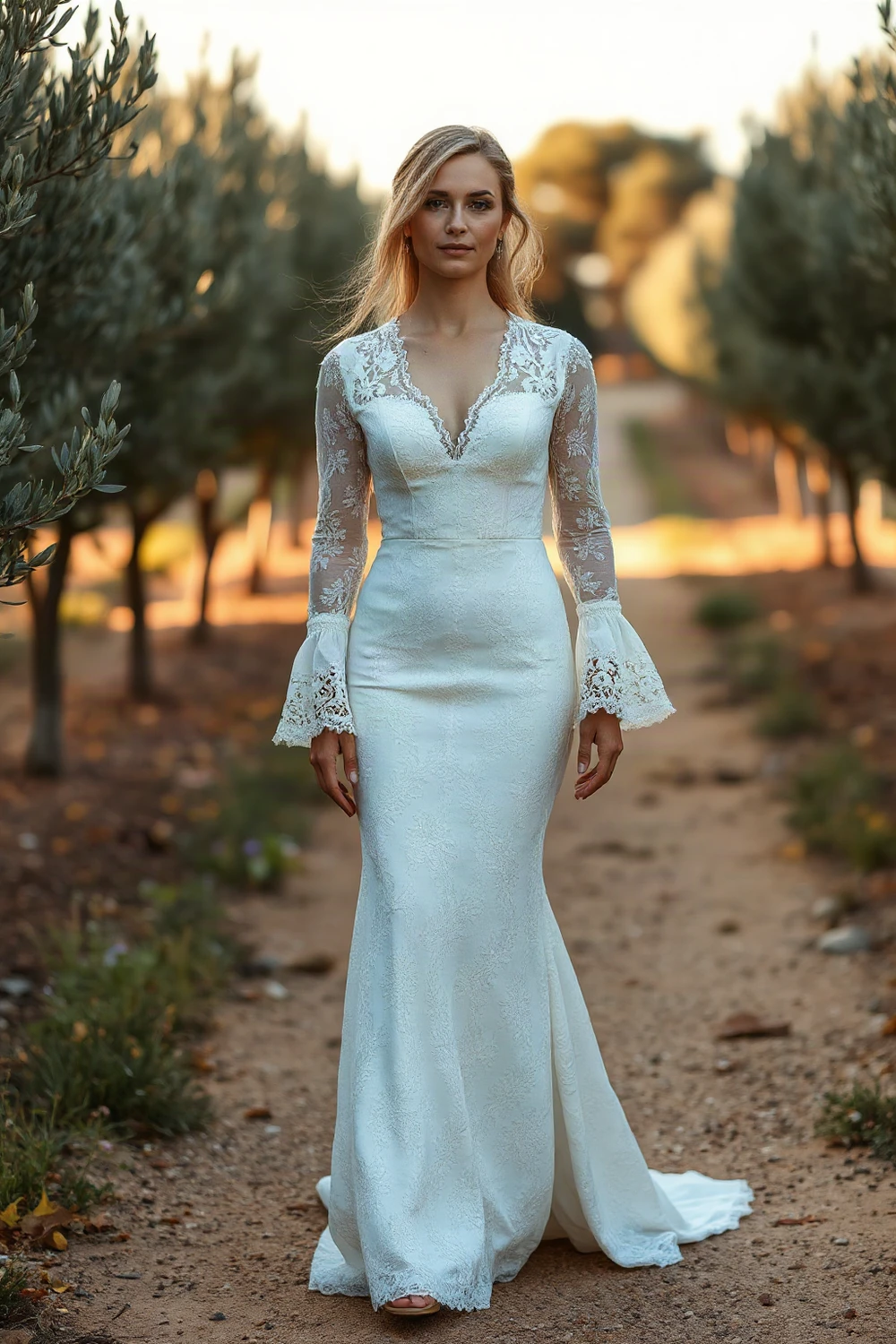
In the fourth concept, long semi-sheer sleeves and patterned cuffs flaring at the wrists supply much of the romance. A deep V creates vertical focus, and a narrow waistband separates the close bodice from the gently widening skirt. Lace-like texture continues down the body, creating a more unified effect than the plain-bodied midi or covered-back options. The tree-lined outdoor setting supports the relaxed, slightly bohemian direction.
Expressive cuffs must work in motion. Their broad edges may approach a bouquet, table setting or bracelet, so test reaching, arm lifting and sitting. Evaluate the deep neckline while walking, leaning and dancing, not only while still. Outdoors, consider how the floor-length hem and short sweep handle soil or gravel, and whether the skirt can be lifted temporarily without losing its shape.
Motif Flow on a Narrow-Strap Fit-and-Flare Shape
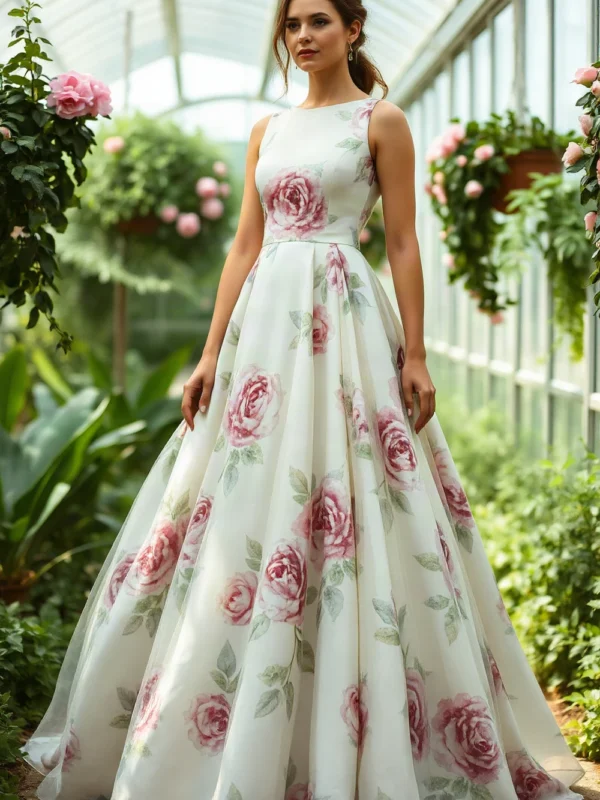
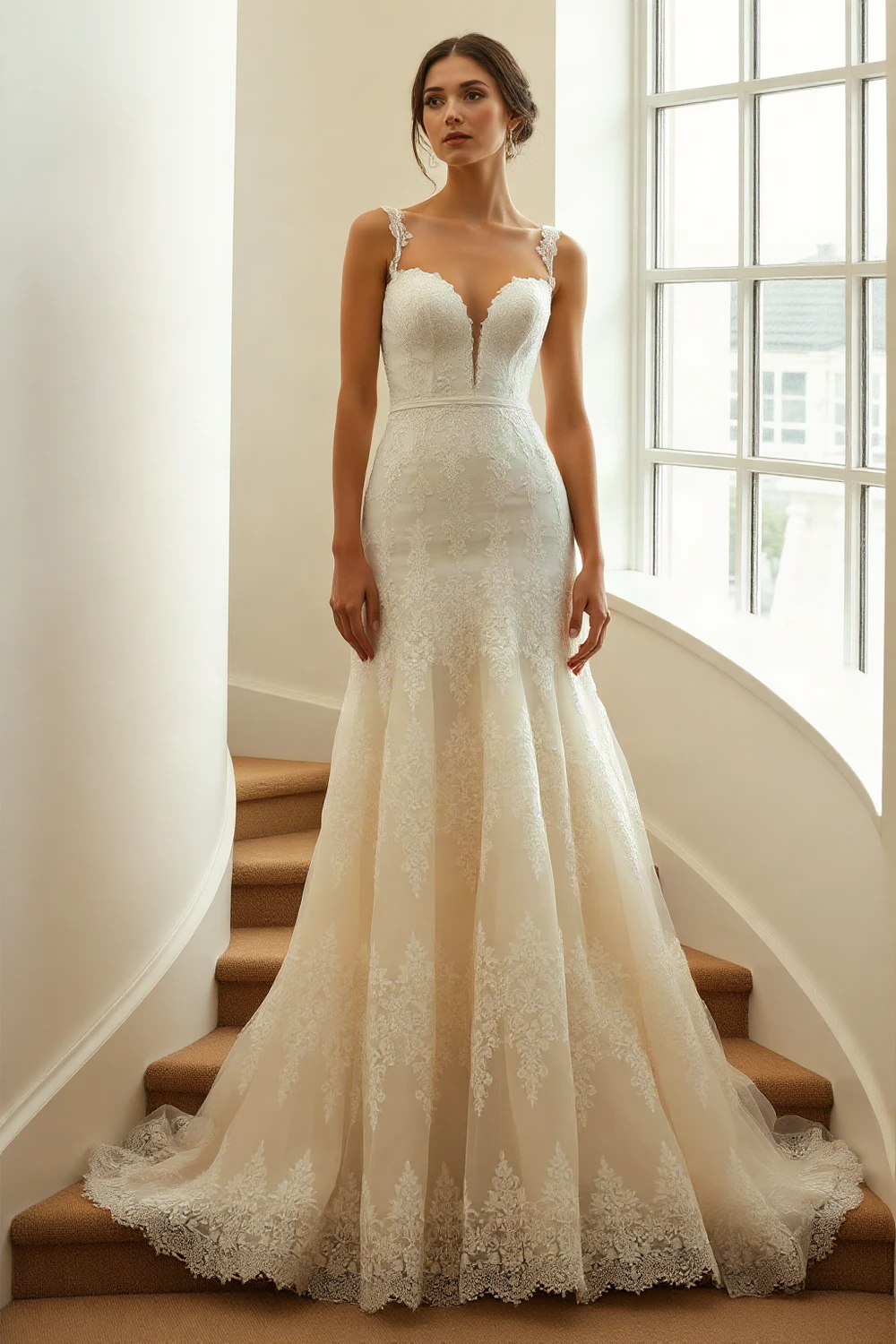
The fifth look pairs slim patterned straps and a deep neckline effect with a skirt that follows the body before flaring. Floral motifs sit densely over the bodice and hips, then descend in clusters across the widening lower skirt. This vertical flow emphasizes the change of shape near the knees. Compared with the empire waist’s open volume, the look is more structured and deliberately defines the torso and hips.
The flare point affects both appearance and movement: a low opening can shorten the stride, while a higher one may ease movement but change the outline. Test ordinary walking, stairs, sitting and turning. Narrow straps should not dig into the shoulders, and the neckline must stay stable as the torso moves. Because the silhouette and extensive motifs already command attention, assess the veil, jewelry and hair ornaments with the dress.
Structure in Sweetheart Curves and Bodice Seams
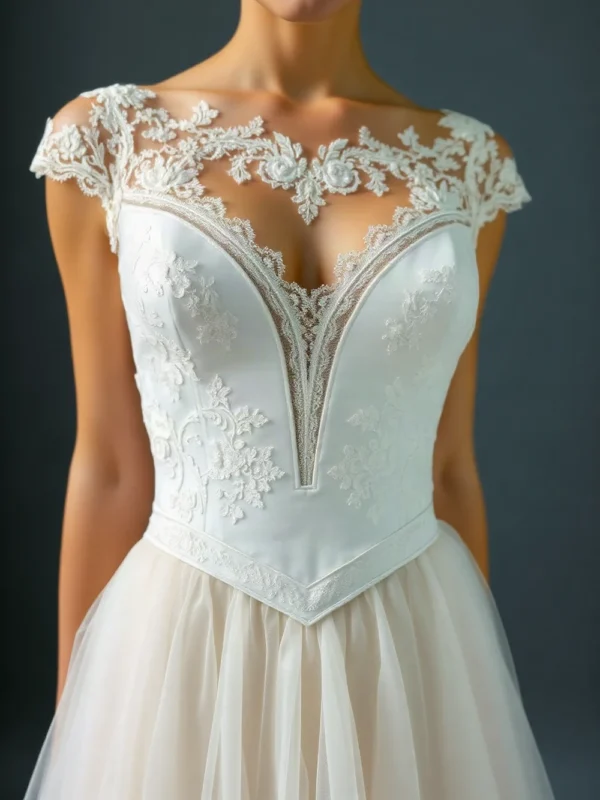
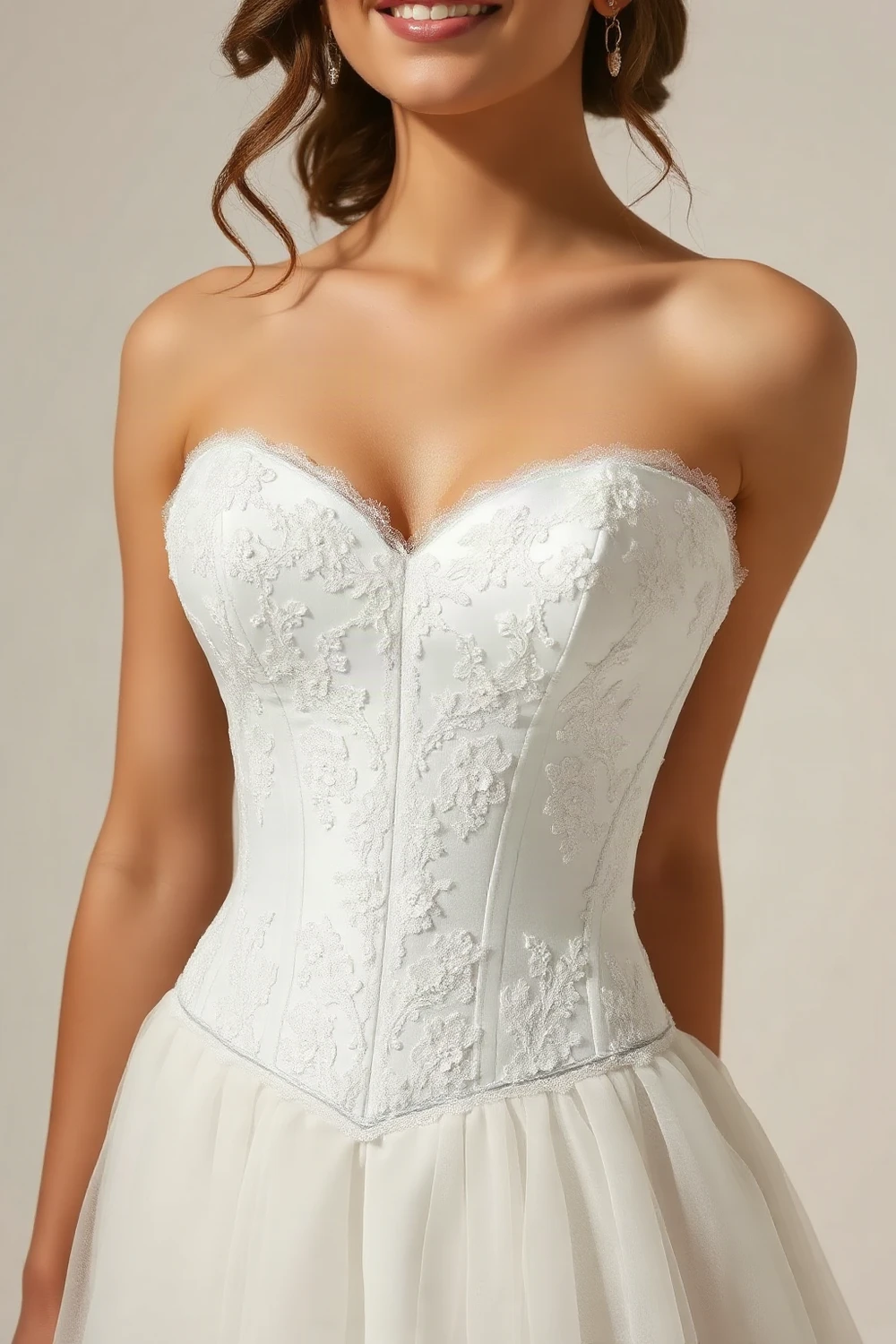
The final image closely examines a strapless sweetheart bodice rather than the full silhouette. Vertical panel seams supply structure; spaced floral motifs add romance without hiding the pale ground. A fine textured finish softens the curved neckline, while a slight central point at the lower edge marks the transition to a softly gathered skirt. Lace placement works with construction lines, not as pattern alone.
The fitting challenge is balancing security with compression. The bodice should stay in place when the arms rise without making breathing or sitting difficult. Its pointed edge should not press the waist, and the skirt join should allow easy movement. Open shoulders leave space for earrings, a necklace or hairstyle, but offer less coverage than lace sleeves. Because the crop omits the full skirt, judge only after seeing and testing the complete silhouette.
The key difference among these lace wedding dress styles is how pattern supports shape: an empire waist favors fluidity, a midi hem concise movement, a covered back controlled coverage, flared cuffs animated arms, a fit-and-flare skirt defined curves and a sweetheart bodice upper-body structure. Choose the combination that serves the whole day, not one detail that appeals in a still image.
Try comparable necklines, waist positions and sleeves with the intended shoe height and, where possible, planned underlayers. Sit, walk, raise the arms and review several angles. Add the veil and accessories after the main proportion feels resolved, allowing lace-like detail to support movement, coverage and personal style rather than compete with the silhouette.
A practical comparison of romantic lace wedding dress styles, from an empire waist and fitted midi length to covered backs, bell cuffs, fit-and-flare skirts and structured sweetheart bodices.
Frequently asked questions
What should be checked when choosing an empire-waist gown during pregnancy?
Ensure the under-bust band does not restrict breathing, the skirt falls without clinging to the abdomen and the neckline stays stable with movement. Fitting timing should also allow for expected measurement changes.
Which shoes should be worn when fitting a lace midi wedding dress?
Use shoes close to the intended heel height because the hem leaves them visible. Toe shape, color and ankle straps should be assessed together with where the skirt meets the calf.
Are flared lace cuffs practical for a full ceremony day?
That depends on their width and the schedule. Test holding a bouquet, dining, sitting and dancing to ensure the edges do not catch on the hands, jewelry or table settings.
What feature most affects walking comfort in a fit-and-flare skirt?
The point where the skirt begins to widen directly affects stride length. Test ordinary walking, stairs, sitting and turning instead of judging mobility from a standing pose.
Does a strapless bodice offer as much coverage as lace sleeves?
No. Lace sleeves and a covered back conceal more of the shoulders and arms, while a strapless bodice exposes the collarbones. Choose according to comfort, movement and the ceremony setting.