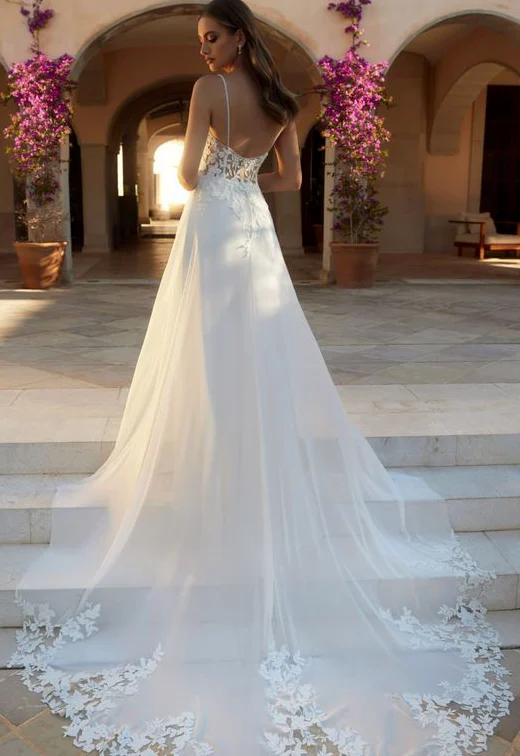
The wedding dress with a floral train border has thin shoulder straps, a lower curved back edge and floral forms across the upper rear section. Below the waist, a larger area of flared skirt remains quieter. The long translucent-looking outer area continues across several steps and finishes with distinct floral motifs. The head is turned to the side; shoes and the front hem are not shown. This image particularly contrasts a quieter centre with a more decorated lower frame, without establishing a particular fabric type from the appearance.
Use it if the finishing edge behind the dress especially appeals. Have your actual candidate’s border lie naturally first and then spread it more widely. Compare how much of the flowers remains visible in each arrangement. Before shortening, ask about the specific new finish and which motifs would be affected. Add side and front views with your shoes, because the steps arrangement does not explain front length. Your own stepped route also needs a fitting and the intended handling, rather than simply adopting the photographed placement.