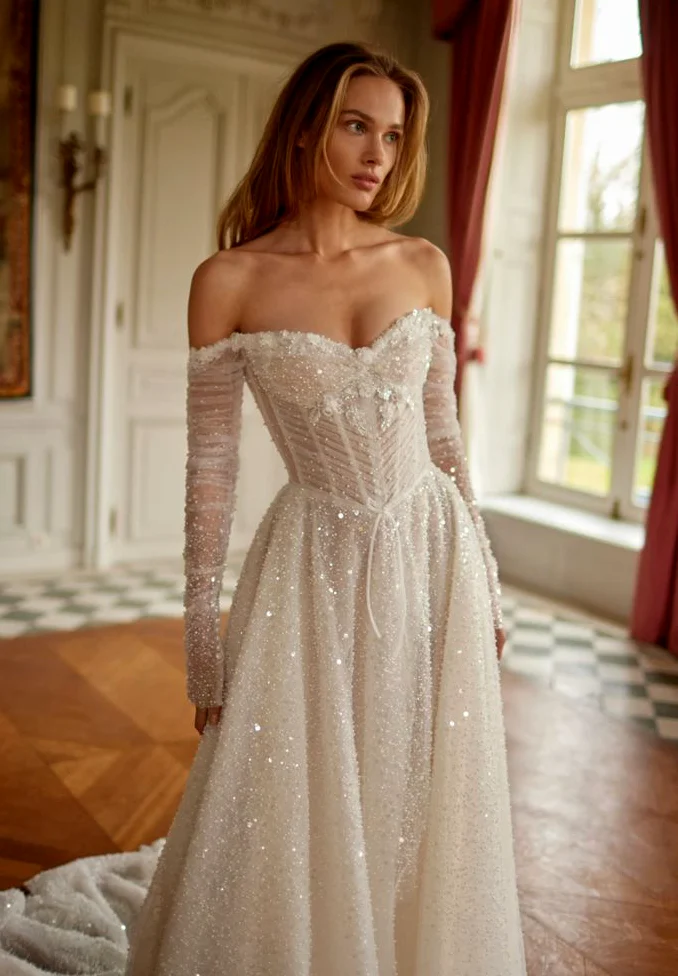
Diagonal bodice rows lead from the sides towards a lower central boundary. Larger flower-like shapes sit near the upper edge, while smaller pale points spread across the surface. The shoulder tops remain bare. Longer sleeves sit closer around the arms than the broader sleeve areas in the other reference. Below the strongly drawn bodice begins a broader pale skirt. Loose hair lies beside the fully visible head. The complete lower hem and feet are absent from the crop.
Compare the direction of the visible rows with the bodice’s actual outside boundary. They meet towards the middle but do not explain a particular internal support system. Their arrangement also establishes neither a fibre nor the composition of the smaller reflective points. Name the visible route you want before assigning a construction to it.
For a similar candidate, request an ordinary front, both sides and the matching rear. Reach forward and observe the upper edge in your own movement. The preferred line, sleeve width and complete lower shape can then become three separate questions. None needs to be answered by assuming the rest of a cropped photograph.