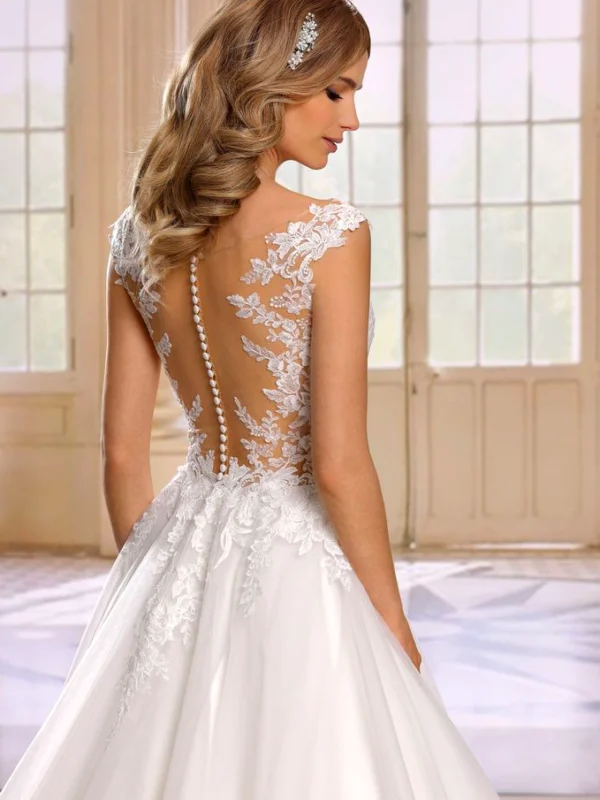
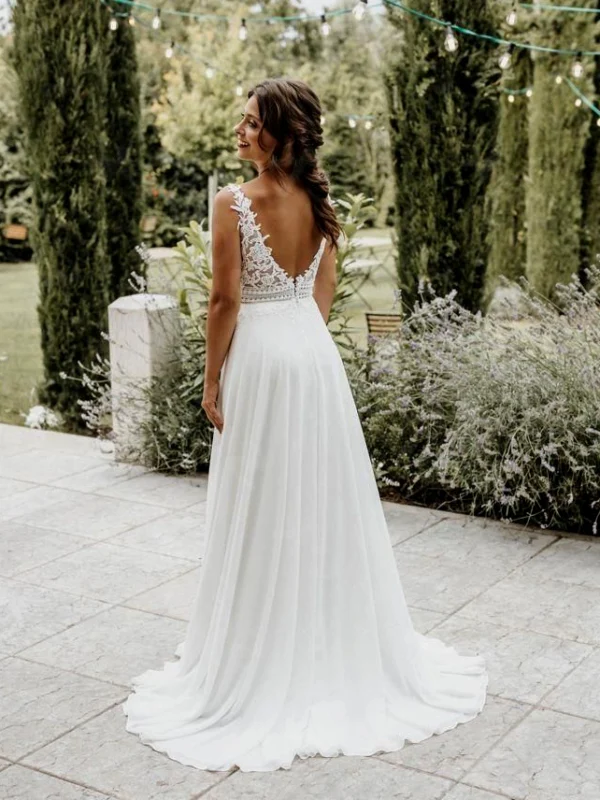
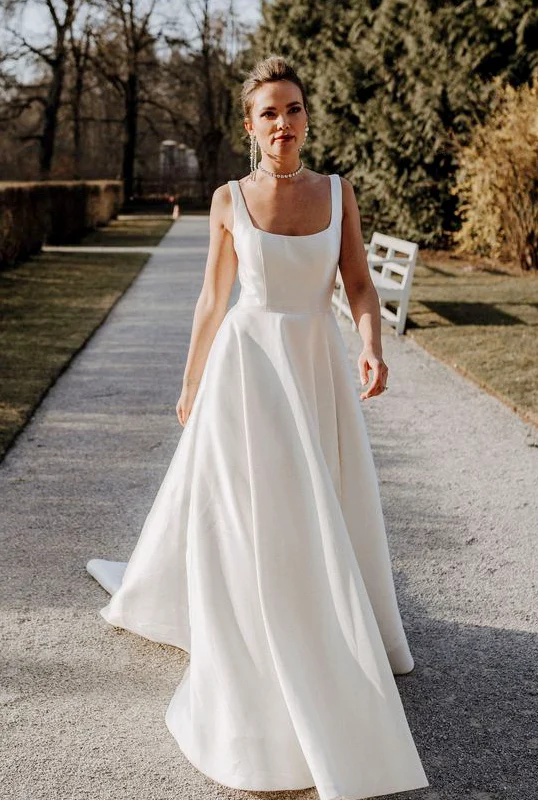
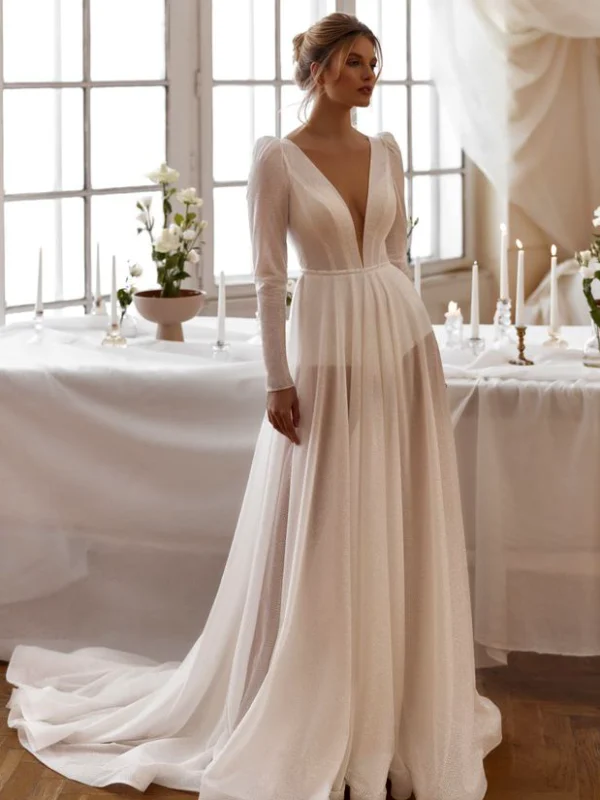
Wedding dress backs are compared here through two actual rear arrangements and two front views. The close floral back has a long central row of pale round details over a translucent-looking section. The fuller rear view combines an open V with a shorter detail near the waist. The plain broad-strap front and long-sleeved V bodice do not show their corresponding backs. They supply upper comparisons rather than evidence that either has a particular rear button row. Keep those different amounts of information clear when choosing your next fitting candidate.
Choose whether you want the centre emphasised throughout or mainly where the skirt begins. Compare the preferred front neckline next without silently combining features from separate dresses. Request related front, side and rear pictures of your actual favourite. Include hair and any intended veil in the back fitting. Finally, have the real opening and fastening demonstrated. The visible row supplies an appearance to seek; the demonstration explains its role on the offered garment. You can then discuss a real order with a specific back preference rather than an imaginary mixture of unrelated photographs.
Guide to comparing these images
Read the point row and other drawing at the same scale
The close floral back shows many smaller details around its long centre. The wider V-back reveals more of the quieter skirt. Place both pictures at similar size first, separating the central row from side motifs. A tight crop can make a smaller point appear prominent without establishing its actual size.
Keep the quiet front as its own surface idea
Broad straps and a rounded-square neck edge sit above a quieter white bodice. The long-sleeved version distributes finer drawing into the arms and descends further at the front middle. This comparison can clarify your front-surface preference while the rear row remains a separate choice.
Label each crop’s purpose: rear detail density, complete rear line or front distribution. During a real fitting, add your bag with relaxed arms. Carry it at the side first, then at the intended ordinary position. Check whether strap or hand covers the selected middle before settling that companion.