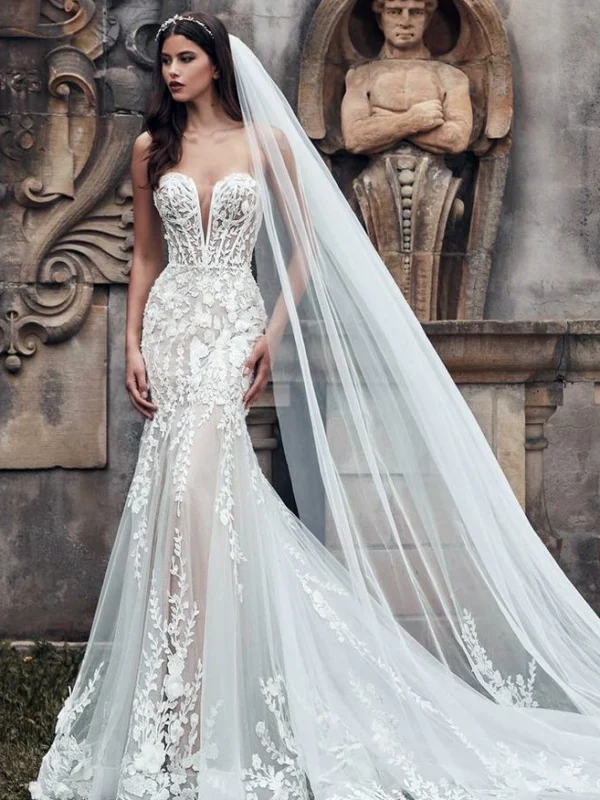
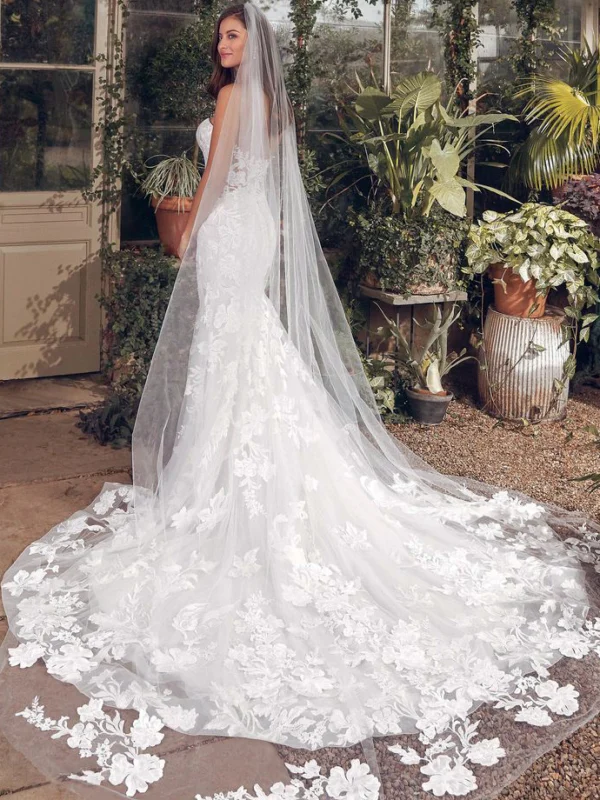
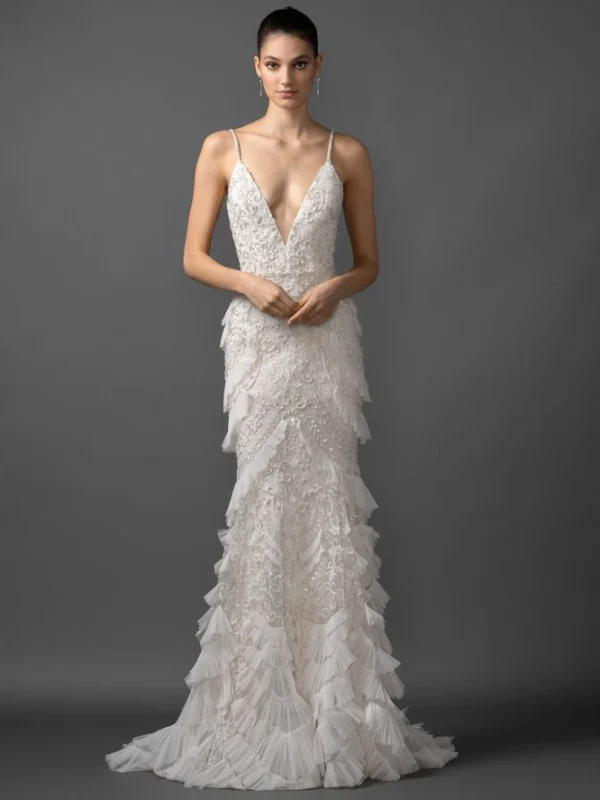
Veil and dress hem appear as separate finishes in this selection. The frontal view shows a long, largely quiet veil beside a close-fitting dress that opens towards the bottom. The rear three-quarter photograph draws attention to a wide floral veil border and the patterned dress area beneath it. The third photograph instead shows repeated skirt tiers without a visible veil.
Guide to comparing these images
Compare the two edges through their visible sections
Start by deciding where you want a clear interval. A side panel can sit beside the beginning of the flare while the rear border continues beyond the dress finish. Where two patterns overlap, check which pattern remains individually readable from an ordinary viewing distance. A carefully arranged floor display is one possible position, rather than a record of the whole movement sequence.
Use these views to prepare your own frontal, side and rear fitting photographs. Complete the outfit with the intended hairstyle and actual shoes. Walk a few steps before assessing the edges again. None of the images imposes a compulsory length or establishes the veil fastening. Those questions need the real pieces, a demonstration and your own practical comparison.
Begin with the frontal photograph and follow the veil from the head down to the floor area at the side. Its largely quiet surface leaves the floral dress outline clearly visible beside it. Move to the rear three-quarter photograph next. Here, the patterned areas overlap more closely, while the broad floral outside border lies against the ground and plants behind it. Do not compare only the total size of the arranged floor area. First ask where you can distinguish veil from dress. An edge may be clear at the side and much less distinct within the central overlap.
The third photograph supplies a different starting point: repeated diagonal tiers divide the skirt before any additional veil pattern is introduced. Consider those existing divisions before imagining another floral border over them. It is another dress, rather than a documented version of either veiled outfit after removal. For your own comparison notes, mark three places: the side interval, the overlapping rear area and the outermost finish. Keep camera height and distance similar when comparing real combinations, so a changed viewpoint does not accidentally suggest a different veil length. Also notice the background against which you judge the border: a pale edge can merge into a pale floor and stand out elsewhere.