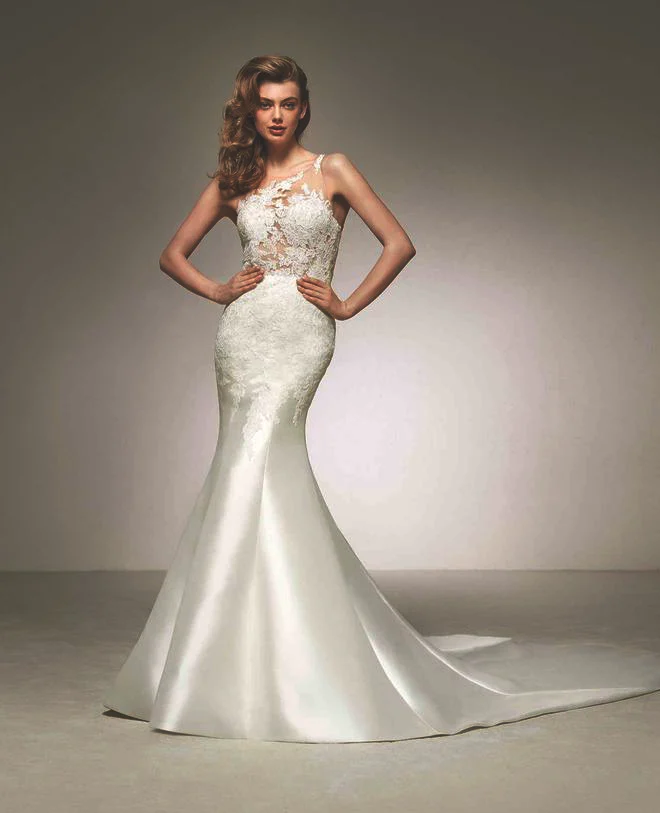
The asymmetric front starts with a diagonal finely drawn upper connection beside a denser floral middle. The form follows waist, hip and upper leg more closely. A quieter surface opens farther down, with additional fabric on the floor to the right picture border. Both hands rest at the waist, framing that centre. Head and face are fully included, beside longer loose hair on one side. Shoes remain hidden under lower cloth rather than demonstrating the footwear height of your own outfit.
Compare the pictured waist with hand position first. A second view with lowered arms helps examine the real candidate’s middle without that side framing. A closer line proves neither a fixed size nor particular inner support. Floral drawing identifies no decoration technique either. Keep arm position consistent when adding another piece to compare what it obscures.
Request corresponding rear and side perspectives with actual shoes for the whole comparison. Side floor cloth shows photograph arrangement rather than complete rear fastening. Record whether asymmetric upper edge or later lower fullness interests you, then examine those preferences together on the real dress.