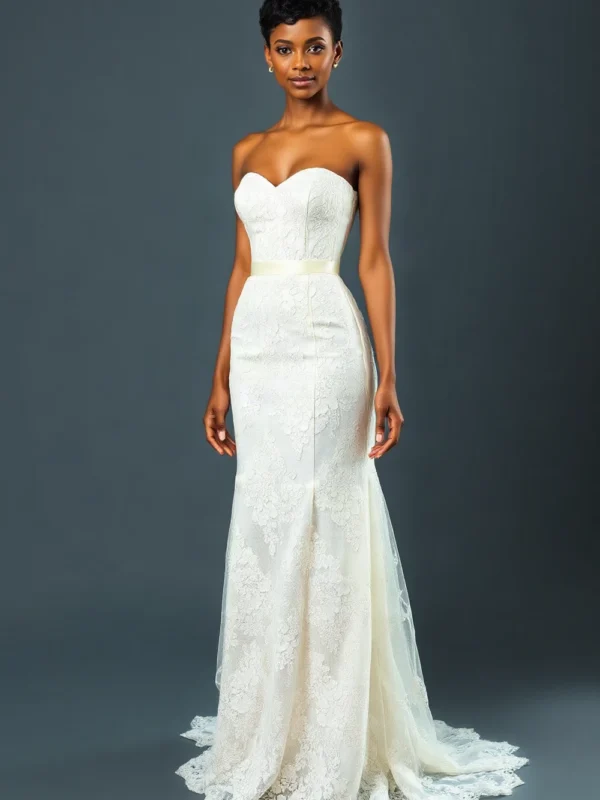
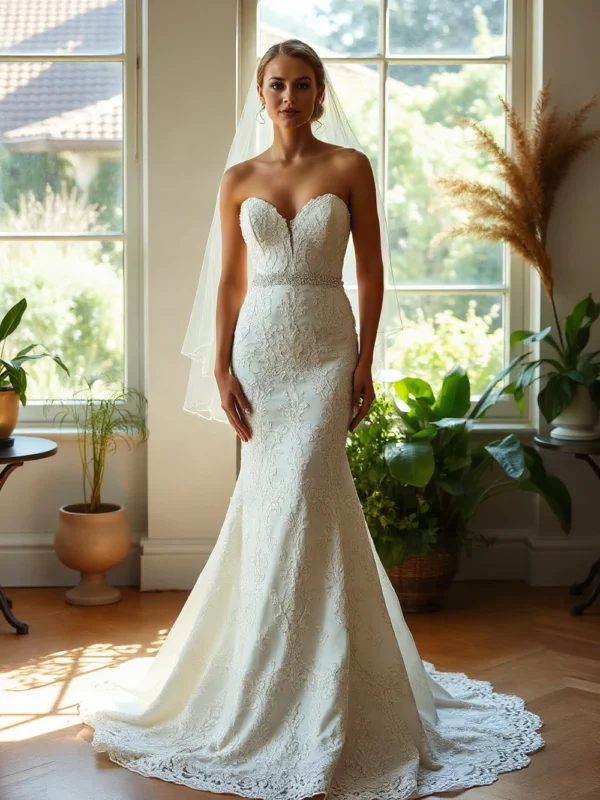
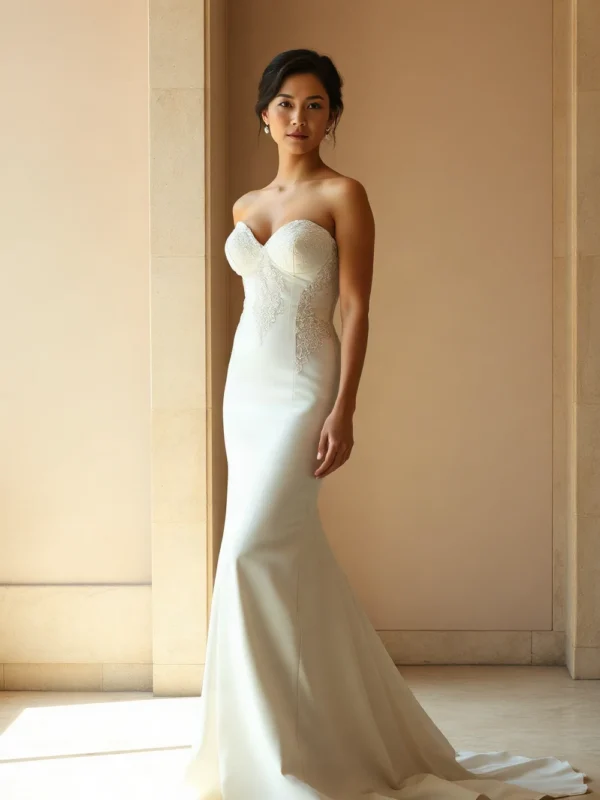
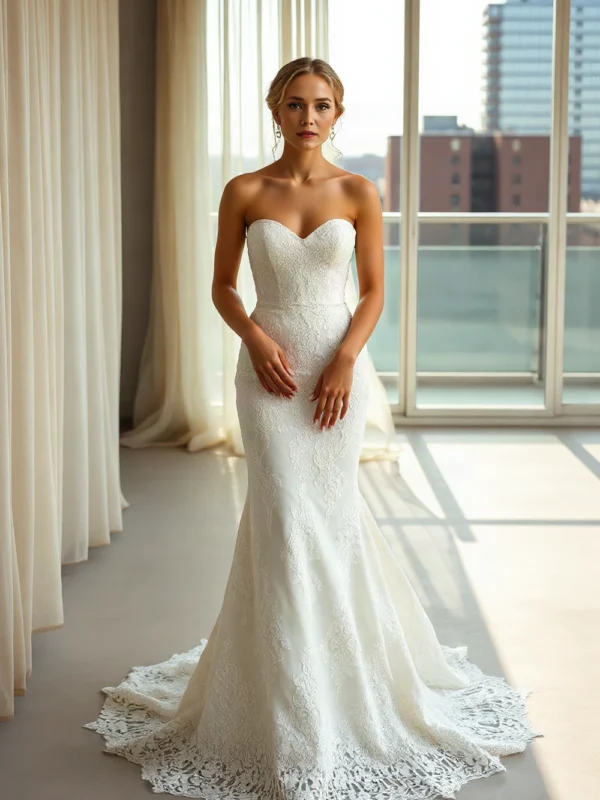
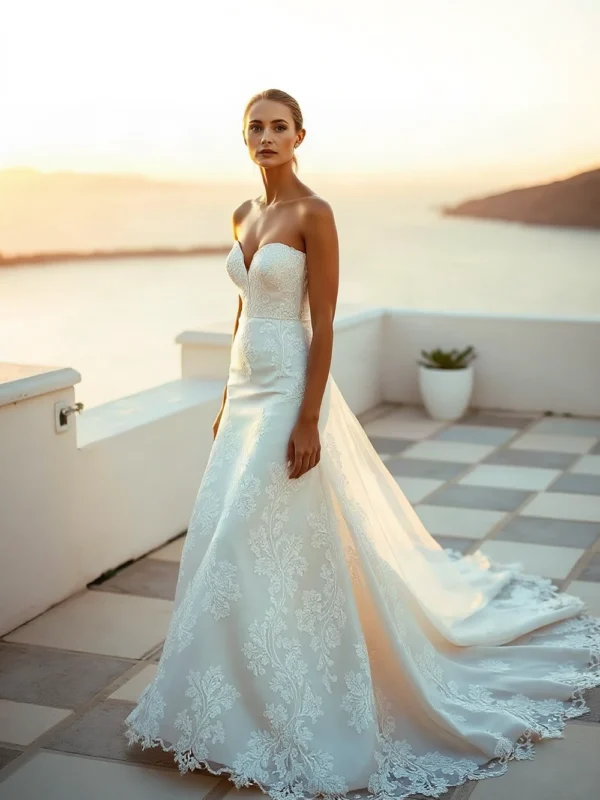
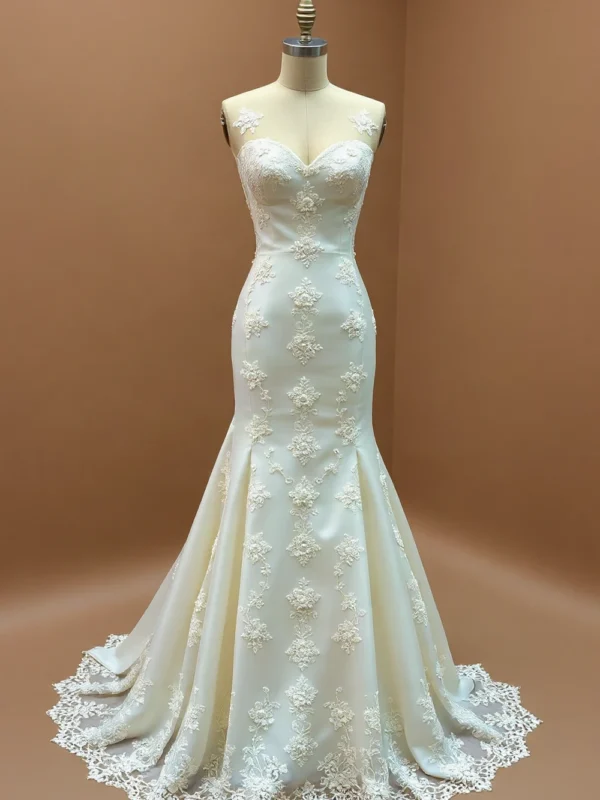
The gallery shares a clear visual grammar: an ivory strapless sweetheart bodice, a torso-skimming line and a skirt that expands toward the floor. What changes is the distribution of lace, the softness or depth of the neckline and the footprint of the train. Studio gray, domestic greenery, warm stone, city windows and a sunset terrace also alter how white, relief and volume register.
The first concept uses small, continuous motifs and a slim waist band for a restrained result. In the third, smooth surface dominates while lace-like decoration sits beneath the bust and along the sides, making the structural panels more visible. The first suits a preference for uninterrupted texture; the third offers a cleaner line with decoration used as an accent rather than a field.
The second and fourth concepts explore denser lace in different ways. A deep center notch, sparkling waist, veil and leafy window setting give the second several romantic layers. The fourth removes the belt and lets its texture continue from neckline to a broad scalloped train. One creates multiple focal points, while the other relies on surface continuity and a decorative perimeter.
The fifth uses large botanical motifs with ample space between them, so they remain legible against the glowing coastal setting. The sixth is more formal and centered: symmetrical vertical appliqués lead toward a wide flare and ornate border. Its mannequin presentation is useful for studying placement, but it cannot demonstrate support, walking ease or the way the train moves on a person.
Begin selection with three questions: should the surface make its strongest impression close up or at a distance, how early should the skirt open, and how much floor space can the venue accommodate? Then test neckline security, sitting comfort and the behavior of the hem during a fitting. Choosing a veil, belt and jewelry afterward helps prevent those elements from competing with the primary lace pattern.