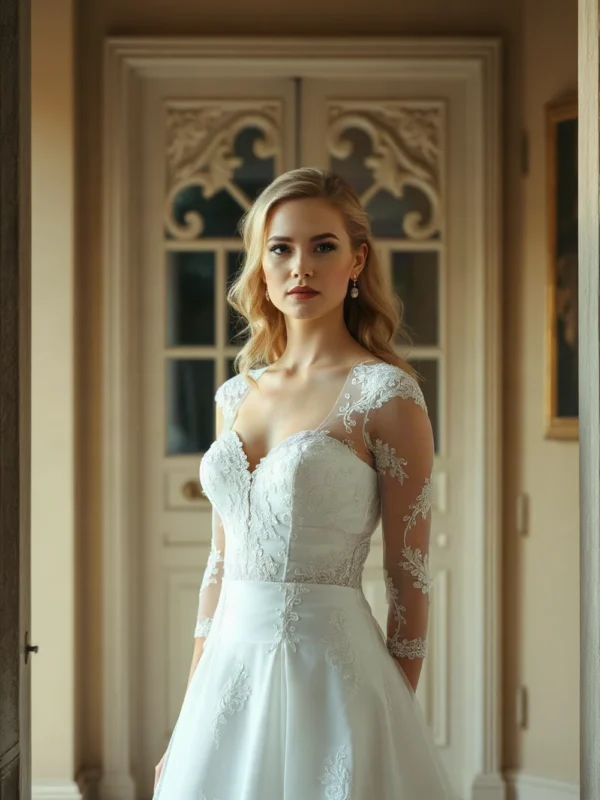
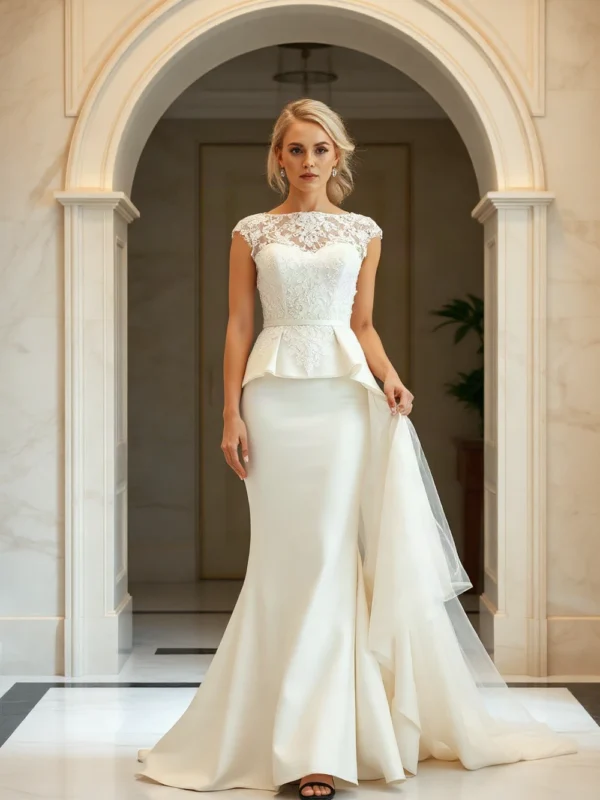
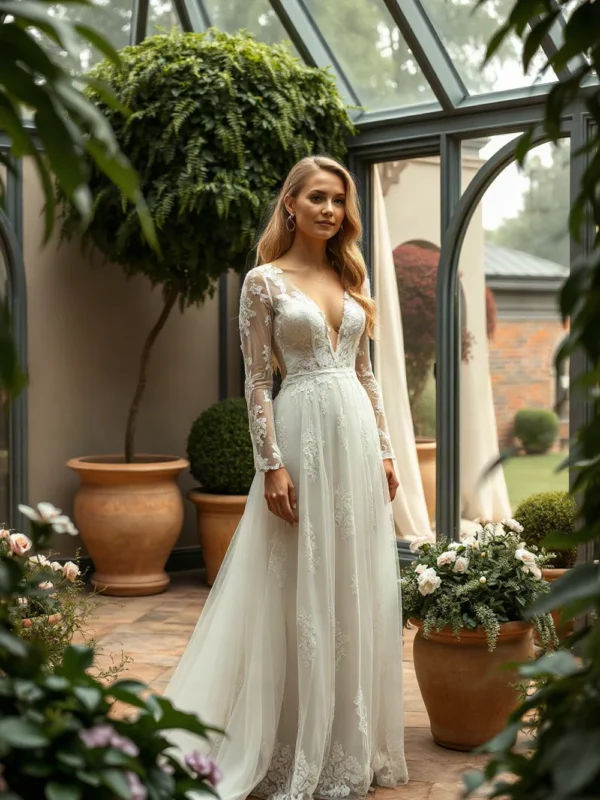
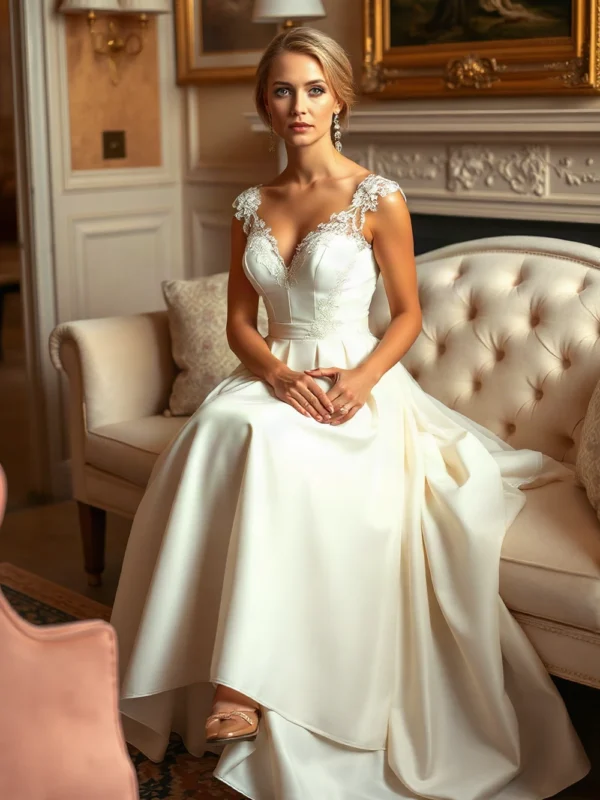
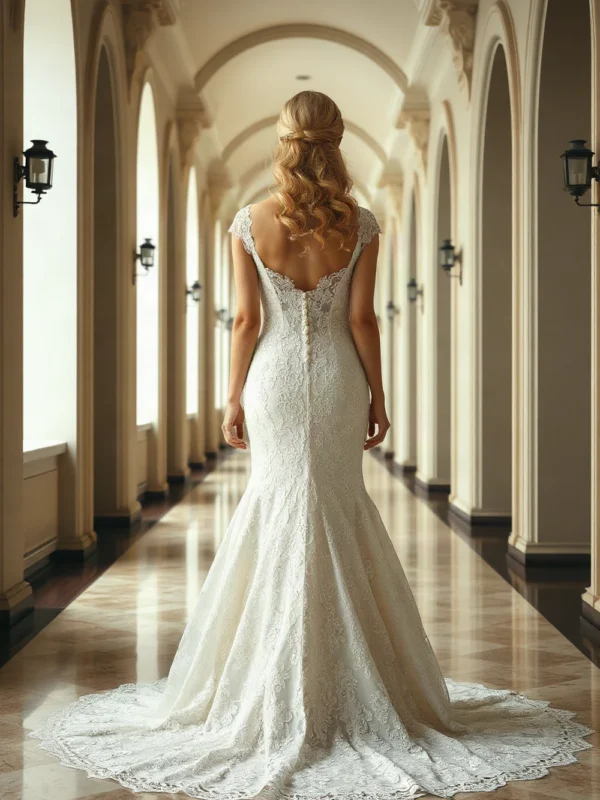
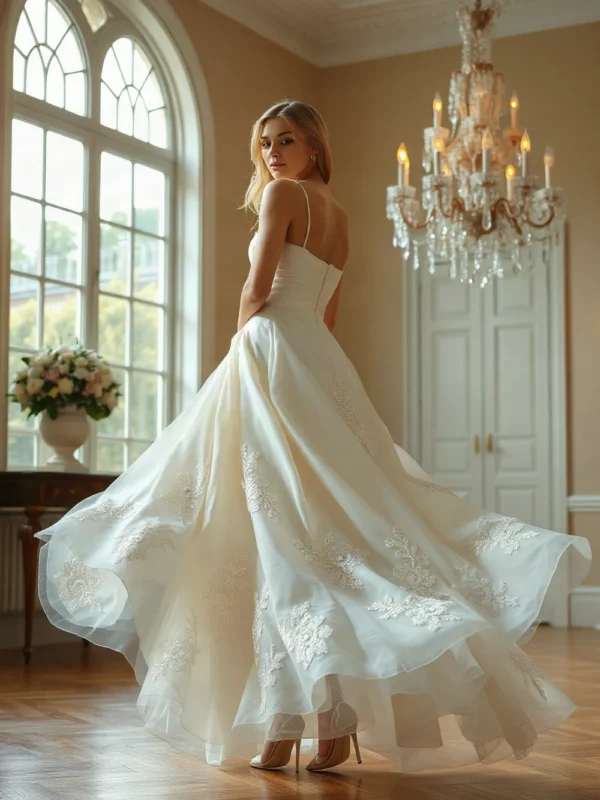
The shared visual language comes from off-white tones, floral lace and classically styled surroundings, yet the proportion of lace changes in every frame. Some looks concentrate texture around the bodice; others cover the complete silhouette or leave isolated motifs on a broad, smooth skirt. That distribution lets the same romantic theme read as delicate, graphic or dramatic.
The first image balances three-quarter illusion sleeves with a widening skirt. The fourth offers a similarly defined waist and ample lower half, but replaces sleeves with lace-edged shoulders and larger areas of uninterrupted fabric. For more arm coverage and continuity of motif, the first is the clearer reference. For an open shoulder line and a calmer skirt surface, the fourth provides a useful alternative.
The second and fifth frames examine close-fitting shapes from opposing viewpoints. In the second, a high illusion neckline, short peplum and smooth flared skirt echo the symmetry of the architectural arch. In the fifth, a low V-back, central buttons, allover lace mermaid line and broad train create a complete rear composition along the corridor. The second is informative when a front-facing waist accent matters; the fifth prioritises the back and train.
The third dress has the lightest, most garden-related character. Long sheer sleeves, a plunging V and vertically spaced appliqués extend the soft A-line downward. The sixth reverses that restraint by enlarging both volume and movement: narrow straps and a simple upper section become a quiet starting point for a full luminous skirt and widely separated motifs. Its layered edges are most expressive while turning rather than standing still.
Before choosing how much lace to use, decide where the eye should settle. An illusion neckline or lace sleeve frames the face and shoulders; a peplum or defined waistband emphasises the waist; a low back and train direct attention rearward. Consider train management in narrow passages, the way a full skirt folds while seated and the weight and reach of layers when dancing. Hair and jewellery should reveal the selected details rather than obscure or duplicate their visual work.