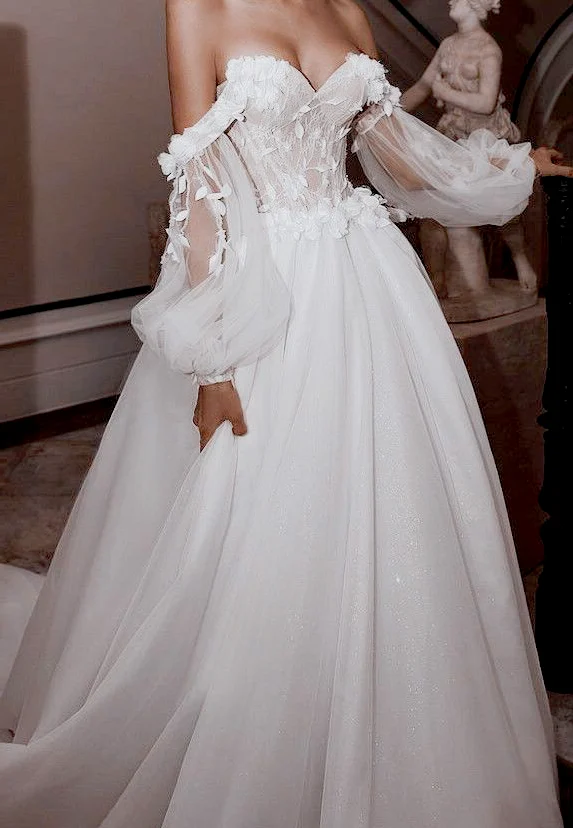
A loose sleeve reaching the hand follows a long sheer-looking course in this front view. Its ending gathers at the wrist. Patterns lie across bodice and arms, while the longer skirt below looks quieter. The upper edge is curved. One hand holds part of the skirt surface at the side. That arranges the lower outline differently from relaxed-arm posture, so sleeve position should not be chosen only from this particular pose or its relationship with the lifted skirt.
Request a view without holding the skirt on the actual candidate first. Look at both endings beside the hands. Is the length suitable, and do you like the loose surface immediately above it? Assess those questions separately before combining the whole upper-body effect with skirt quantity. A clear end position makes the next comparison more specific.
Bring hands towards the bouquet afterwards and sit in an appropriate place. Observe the visible course rather than inferring a particular feel from the photograph. If alteration is discussed, indicate the desired ending. A similar loose sleeve may distribute differently on a real garment, making its long course and gathered end more useful enquiry details than a guessed fabric name.