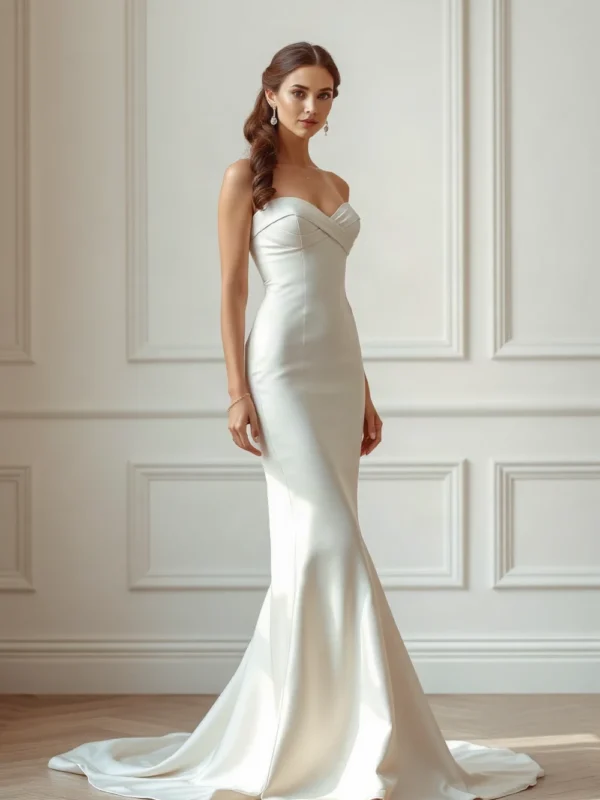
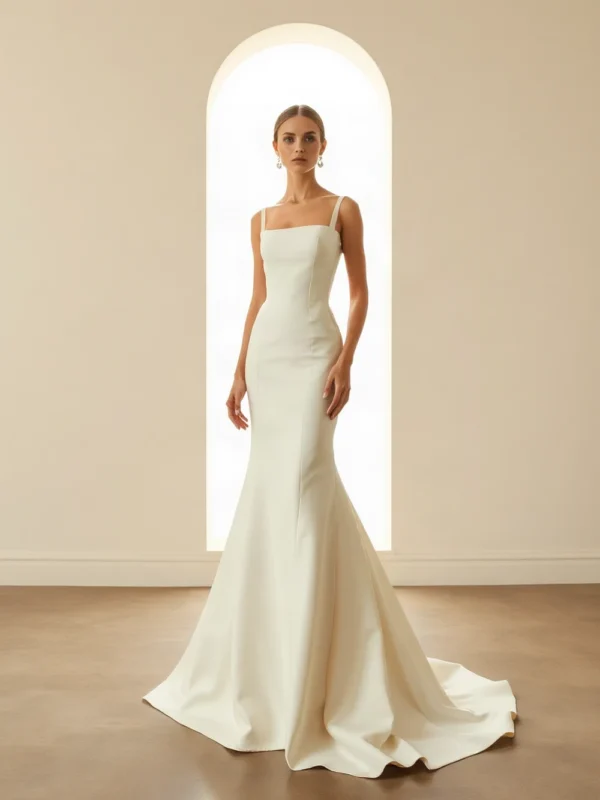
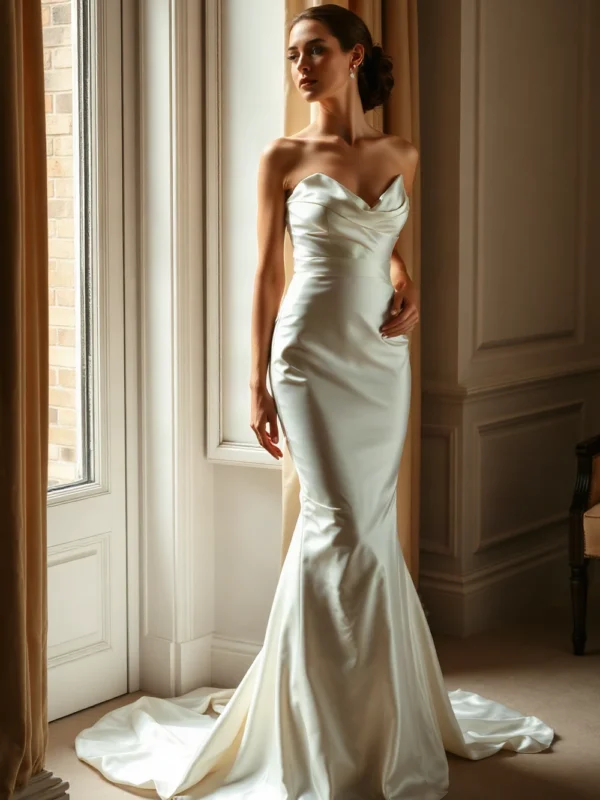
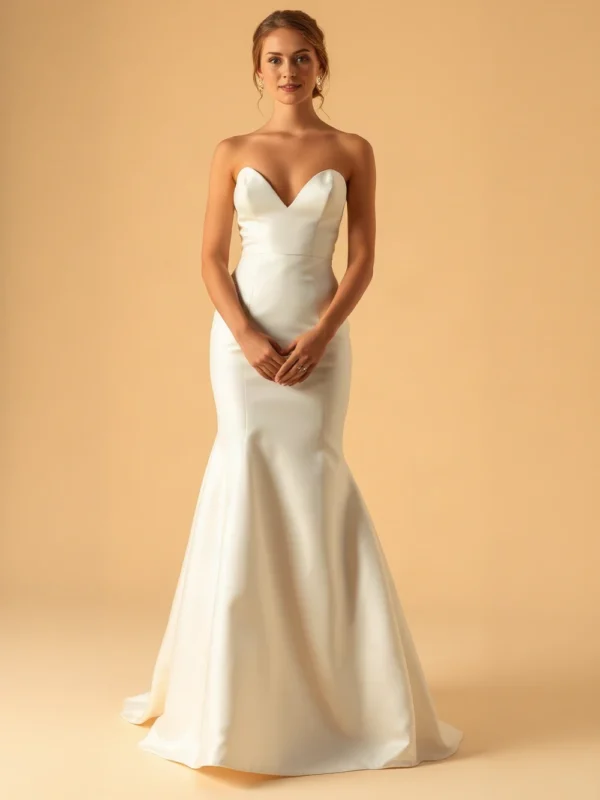
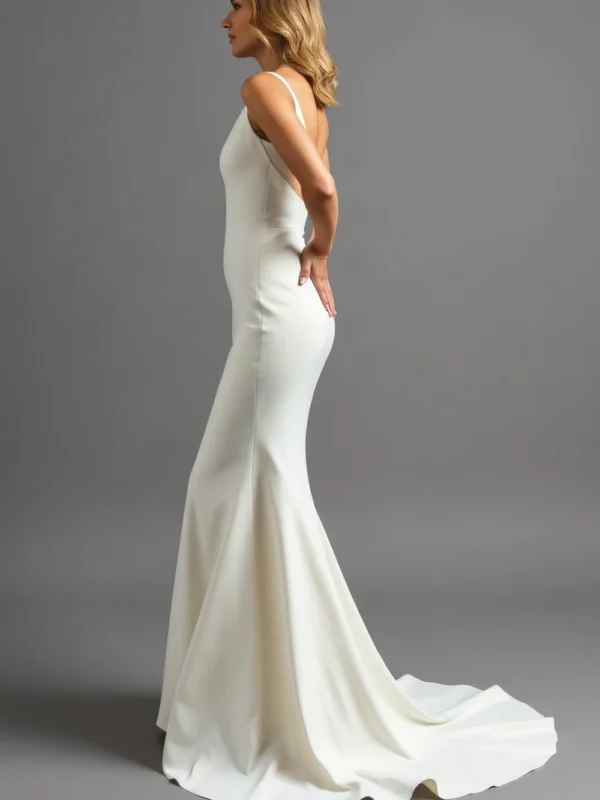
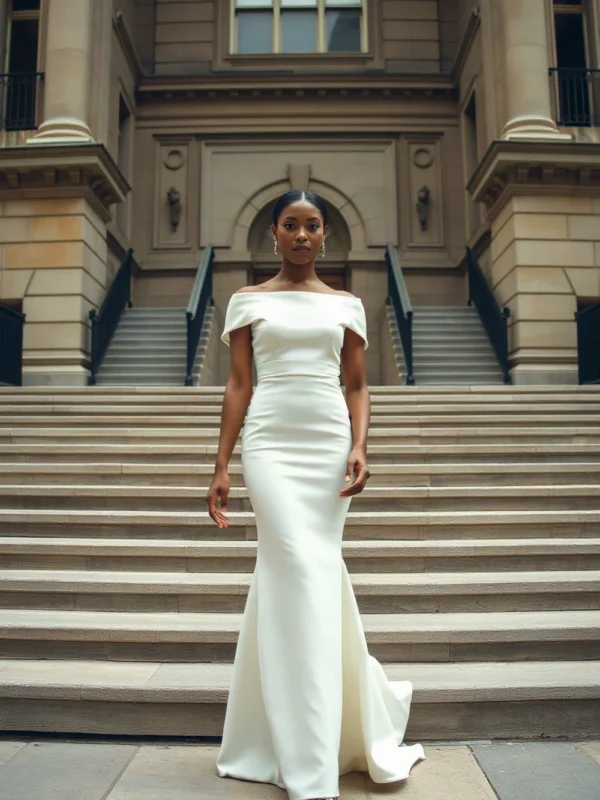
The shared theme is a sculpted mermaid silhouette defined primarily by cut and proportion rather than ornament. Every image combines a close upper shape with a widening skirt, yet the neckline opening, surface folds, flare point, and amount of fabric trailing behind create distinctly different impressions.
The first three concepts bring varying degrees of movement to the bodice. In the first image, crossing folds soften a strapless neckline, while the second uses a square neck, narrow straps, and long vertical seams to establish a geometric order. The third turns the neckline into the focal point through raised tips, loose draping, and a surface that catches strong window light.
The fourth look pairs a sharply defined sweetheart neckline with a comparatively broad skirt base, producing a clear front-facing balance. Image five supplies the profile view missing from the others: its low open back, close hip line, lower flare, and long rounded train show why a mermaid dress should not be assessed only from the front. In the final image, a wide off-shoulder band creates a horizontal counterpoint to the long skirt.
Begin a comparison by deciding where you want the visual emphasis. A pronounced neckline directs attention toward the face and shoulders; a restrained square neckline allows seams and proportion to lead. A long train can strengthen the ceremonial profile, while a controlled hem and shorter extension may be easier to manage on steps, through narrow routes, or during an active reception.
Do not judge these ideas only in a still, frontal pose. Check how the neckline responds when sitting and raising the arms, how much space the skirt leaves around the knees, and how the train gathers during a turn. Shoe height, hairstyle volume, and any veil should be considered as parts of the complete proportion rather than as later additions.