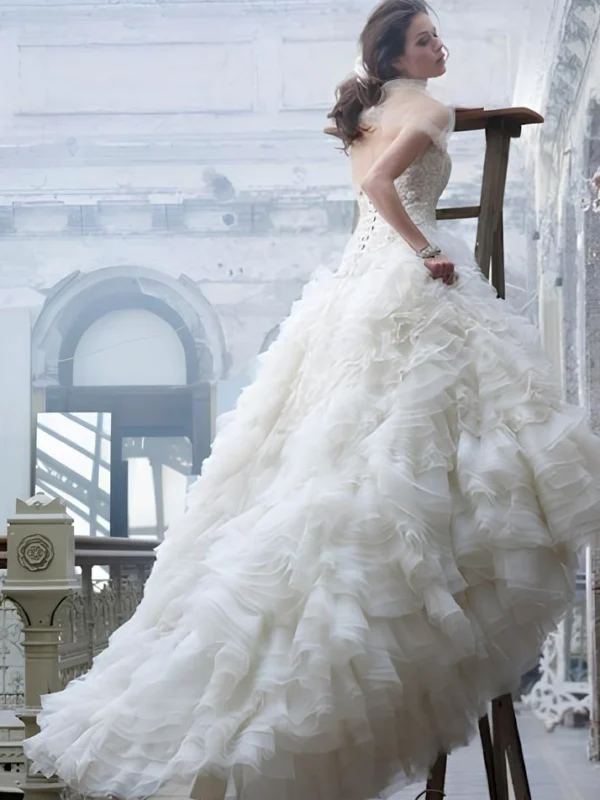
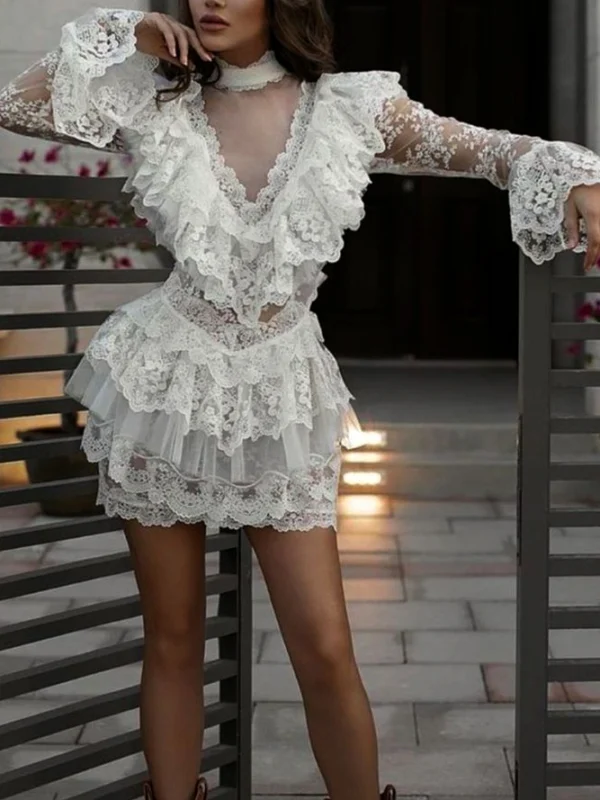
Ruffle placement differs markedly between these two references. A broad pale skirt shows large cascading edges, while a short pale form repeats smaller ruffles around its V-neckline, sleeve ends and skirt. Open an individual image page for its visible details. These are different dresses rather than a shared model description. The selection helps name the location, direction and extent of your preferred drawing, while actual construction and missing views remain questions for the real offer.
Guide to comparing these images
Large lower areas and repeated smaller edges
Begin with the area containing the most prominent edges. The larger movement starts beneath a closer bodice in the broad skirt view and occupies much of the lower image. Several smaller lines already appear around the upper V-frame and flared sleeve ends in the short form. Decide whether your preference mainly concerns the skirt or upper framing. You need not adopt every edge or assemble one imagined dress from both pictures. Name the preferred area before comparing actual candidates through that question.
Return to pattern drawing next. A smaller patterned bodice remains visible beside the broad pale cascades. The short form distributes a lace-looking drawing over several areas and repeats frilled finishes alongside it. Neither picture explains the fibre or construction of the other. Record whether you prefer a transition from smaller pattern to larger wave, or repeated drawing with several smaller edges. Actual composition belongs to the selected model’s product description; keep visible pattern as a comparison detail rather than a material identification.
Finally, consider the entire length. The broad lower area hides the feet; its arrangement beside the wooden frame establishes no normal freely standing outline. The short reference retains a tiered skirt finish and parts of tall brown boots. Name that difference explicitly. A close look at the V-edge alone would leave it out. Request complete front, side and rear views of the actual favourite with freely falling fabric. The references help explain preferred placement instead of deriving complete fit or fixed length from one projecting wave. Use further pictures of the same product to answer a missing direction.