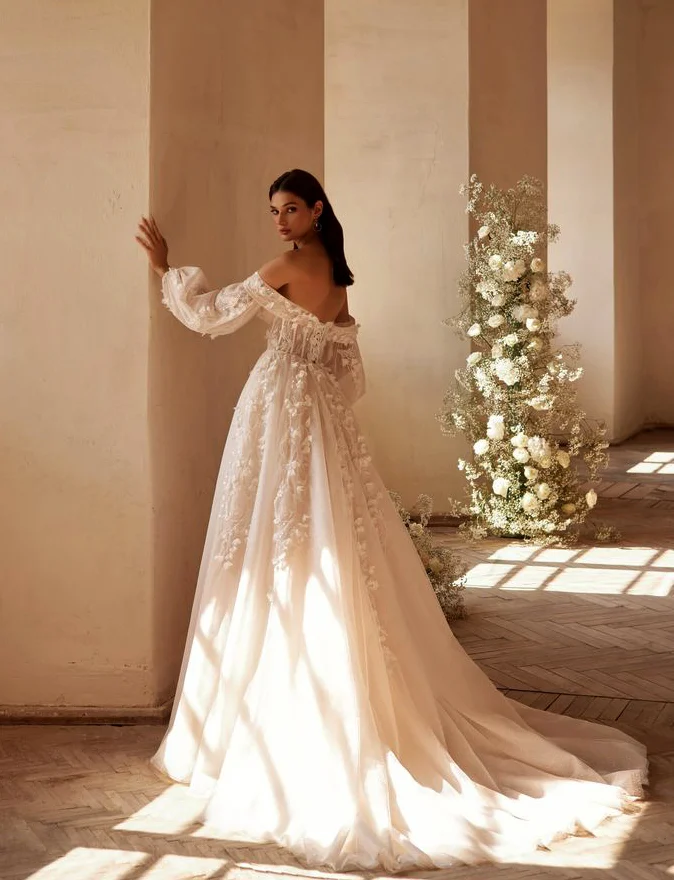
The rear view beside a pillar shows the dress at an angle from behind. A horizontal edge passes below the exposed upper back. Long loose sleeves look sheer in places and finish more narrowly at the wrists. Floral shapes occupy the back bodice and waist. Below, the rear area broadens and follows a quieter outline to the floor. The hair is gathered higher. One palm touches the pillar while the other arm is not fully visible.
Use this picture to ask about your actual candidate’s own back. Would you prefer a larger exposed upper-back area or more visible pattern there? Describe that particular zone. Do not automatically treat this angle as the reverse of another floral dress; a confirmed connection is missing.
Add a straight rear view with arms relaxed down on the real model. Then inspect the lower area and sleeve outline during your own movement. The picture shows their external width rather than guaranteed freedom of movement or a particular fibre. Those properties need the actual construction and your own trial.